
 Anjar Salim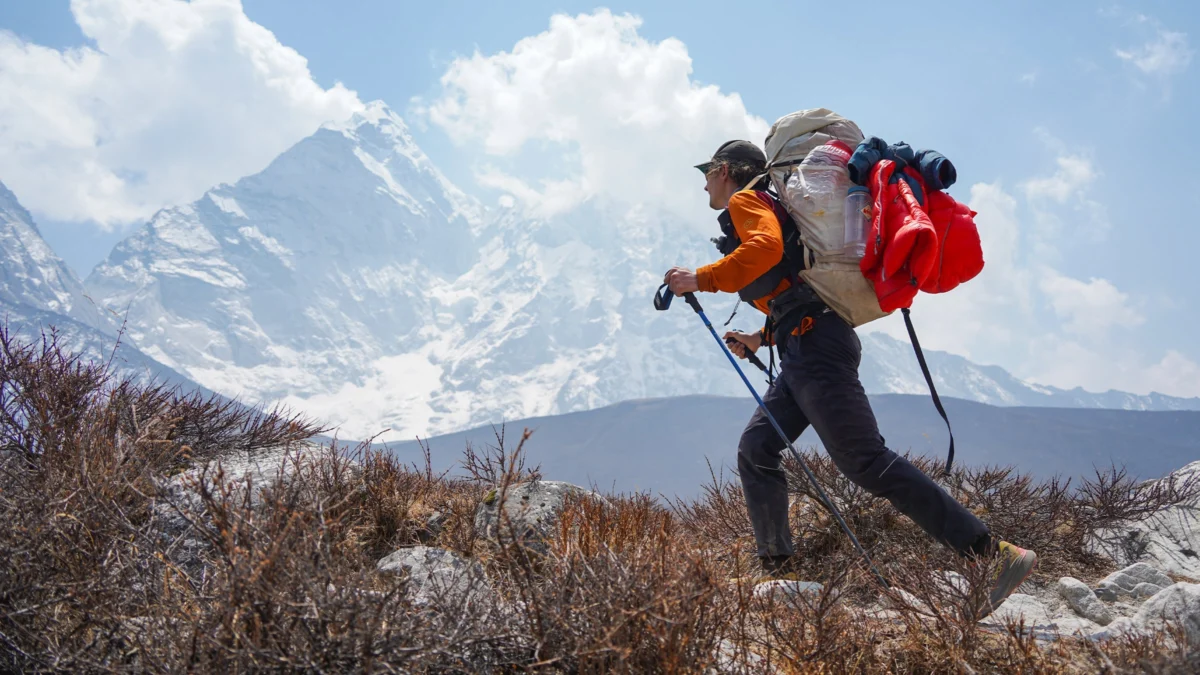
American endurance athlete Tyler Andrews has officially established a new benchmark for speed climbing on Mount Everest, completing the ascent from Base Camp to the summit in 9 hours and 55 minutes. This achievement, recorded on May 28, 2026, marks the fastest known time (FKT) for the South Side route in Nepal, surpassing a record that had stood for more than two decades. Andrews reached the 29,032-foot summit during his eighth attempt over a grueling two-year period, a project that required significant financial investment and physical preparation. While the feat has been celebrated as a pinnacle of modern mountain athleticism, it has also sparked discussions within the mountaineering community regarding the use of high-flow supplemental oxygen in speed records.
The Record-Breaking Ascent
The successful climb began at 7:11 P.M. on May 27, 2026, when Andrews departed from Everest Base Camp (EBC), situated at approximately 17,600 feet. Moving with extreme efficiency, he navigated the treacherous Khumbu Icefall—a shifting glacier known for its deep crevasses and falling ice towers—reaching the top of the feature in just two hours and eight minutes. Upon reaching Camp I, Andrews began using supplemental oxygen, a strategic decision that deviated from his original goal of an unassisted record but facilitated a significantly higher pace.
As he transitioned through the Western Cwm to Camp II, the route was uncharacteristically clear of the crowds that typically bottleneck the South Col route during the peak May climbing season. Andrews reached Camp III, located at 24,000 feet, and continued his rapid ascent to Camp IV at the South Col (26,000 feet). The final push from the South Col to the summit took nearly three hours. At 5:06 A.M. on May 28, Andrews stood on the highest point on Earth.
His total ascent time of 9 hours and 55 minutes broke the previous overall record set by Lhakpa Gelu Sherpa in 2003, who completed the climb in 10 hours and 56 minutes. Andrews’ round-trip time, returning to Base Camp by 11:44 A.M., was clocked at 16 hours and 32 minutes, including a 25-minute stay at the summit.
A Two-Year Chronology of Persistence
The record was not the result of a single expedition but the culmination of three separate seasons and eight distinct attempts. Andrews’ journey illustrates the volatile nature of high-altitude record-chasing, where success is often dictated by factors beyond an athlete’s control, such as equipment failure and meteorological shifts.
The 2025 Spring Season
Andrews’ first attempt took place on May 10, 2025. He demonstrated elite-level pacing early on, reaching Camp III in 4 hours and 32 minutes. To maximize speed on the lower sections, he wore running shoes equipped with microspikes. However, a critical equipment failure occurred at 24,000 feet when a zipper on his high-altitude mountaineering boots broke, exposing his foot to sub-zero temperatures. The risk of frostbite forced an immediate termination of the attempt. Two subsequent tries that season were thwarted by deteriorating weather conditions and physical exhaustion.

The 2025 Autumn Season
Returning in the post-monsoon season, Andrews hoped for a quieter mountain. He attempted to leverage the route-breaking efforts of a concurrent Red Bull ski expedition. However, the autumn of 2025 brought heavy snowfall, which increased the risk of avalanches and made the deep-snow trekking too slow for a record attempt. After two more failed bids, Andrews returned to the United States to recalibrate his training.
The 2026 Spring Season
The final expedition in 2026 saw Andrews employ an even more aggressive acclimatization strategy. Before arriving at Everest, he completed training laps on Mera Peak (21,250 feet) and Makalu (27,838 feet). To further prepare his cardiovascular system, he utilized a hypoxic generator while exercising on a stationary bike, simulating altitudes of up to 36,000 feet for ten hours a week.
On May 23, 2026, his sixth attempt reached 26,000 feet before high winds and logistical complications forced a retreat. Knowing the Khumbu Icefall route was scheduled to be dismantled by the "Icefall Doctors" (the Sherpa team responsible for route maintenance) on May 29, Andrews recognized that May 28 was his final possible window for success.
Technical Data and Oxygen Utilization
The use of supplemental oxygen remains a point of nuance in Himalayan record-keeping. Andrews had originally sought to break the no-oxygen record set by Kaji Sherpa in 1998, which stands at 20 hours and 24 minutes. Ultimately, the constraints of time and the desire for safety led him to choose a "supported" style for his final attempt.
Data from the Himalayan Database and modern tracking shows a significant evolution in how these records are achieved:
- Oxygen Flow Rates: While standard commercial climbers typically use 2.5 liters per minute (L/min), Andrews utilized a high-flow system ranging between 4 and 6 L/min.
- Comparison to 2003: Lhakpa Gelu Sherpa’s 2003 record was set using oxygen only above Camp IV, utilizing the technology available 23 years ago. Andrews began his oxygen use at Camp I (approx. 19,900 feet).
- Acclimatization: Andrews’ simulated training at 11,000 meters (approx. 36,000 feet) is considered among the most extreme preparations ever documented for a non-professional mountaineer.
Andrews has been transparent about these choices, citing the "binary" nature of record-chasing. He noted that a no-oxygen attempt would have required a 30-hour round trip, potentially placing him on the summit during an afternoon snowstorm just as the mountain was closing for the season.
Economic and Physical Costs of the Project
The pursuit of an Everest speed record is an endeavor that requires substantial capital. Andrews confirmed that his three expeditions cost well into "six figures," funded largely through his own resources and sponsorship. These costs include climbing permits (which rose significantly in recent years), high-altitude porter support, specialized equipment, and the logistical overhead of maintaining a presence at Base Camp for months at a time.
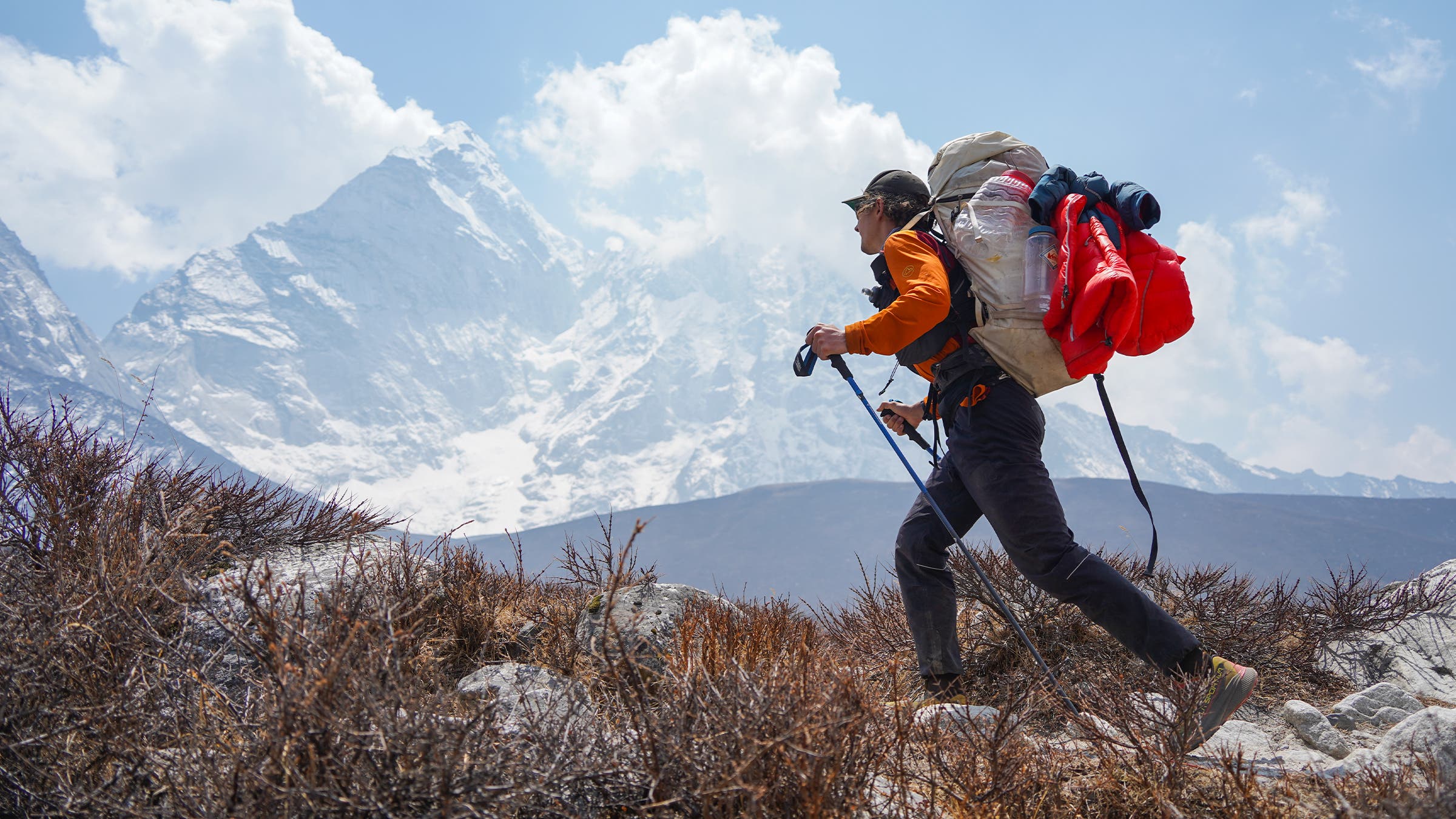
Physically, the toll of multiple attempts at 8,000 meters is profound. "Record chasing is binary," Andrews stated, describing the psychological strain of returning to Kathmandu after failed attempts. The physiological stress of repeated high-speed ascents in the "Death Zone"—the altitude above 8,000 meters where oxygen levels are insufficient to sustain human life—requires months of recovery.
The Controversy of "Style" in Mountaineering
The mountaineering community often distinguishes between records set with supplemental oxygen and those set without. While Andrews now holds the fastest time for any human from Base Camp to the summit on the South Side, the 1998 record by Kaji Sherpa remains the benchmark for unassisted speed.
Critics of high-flow oxygen use argue that it "lowers" the mountain, effectively reducing the physiological challenge to that of a much lower peak. However, supporters of Andrews point out that his 9-hour and 55-minute time represents an extraordinary feat of human endurance and logistics, regardless of the assistance. The debate highlights a growing rift in the sport between traditional alpinism, which emphasizes self-reliance, and "mountain running," which focuses on pure speed and performance metrics.
Broader Implications and Future Prospects
Andrews’ record comes at a time when the Nepalese government and the mountaineering community are grappling with the sustainability of Everest tourism. The 2026 season saw continued concerns regarding overcrowding and the environmental impact of large expeditions. By choosing a late-season window when most climbers had already departed, Andrews avoided the "traffic jams" that have plagued the mountain in recent years, potentially offering a blueprint for future speed attempts.
Despite his success, Andrews has expressed a definitive end to his pursuits on the South Side of the mountain. He cited the inherent dangers of the Khumbu Icefall as a primary reason for his departure, stating he would not return to that specific route regardless of the incentive. However, he has not ruled out an attempt on the North Side of Everest (Tibet), where the terrain is different and the records are held by legendary climbers like Kilian Jornet.
As of June 2026, the mountaineering world is left to digest a performance that has effectively rewritten the speed capabilities of a human on the world’s highest peak. While the debate over "gas vs. no gas" will continue, the 9:55 mark stands as a testament to the intersection of modern sports science, extreme endurance, and the unrelenting pursuit of a singular goal. For now, Tyler Andrews’ name sits at the top of the Everest speed charts, concluding a three-year saga that pushed the limits of what is possible in the high Himalaya.




 Chandra Hamzah
 Tatiana Tantri Indah Sari
 Budi Mulyono
 Lukman Taruna Persada Ramadan