
 Tatiana Tantri Indah Sari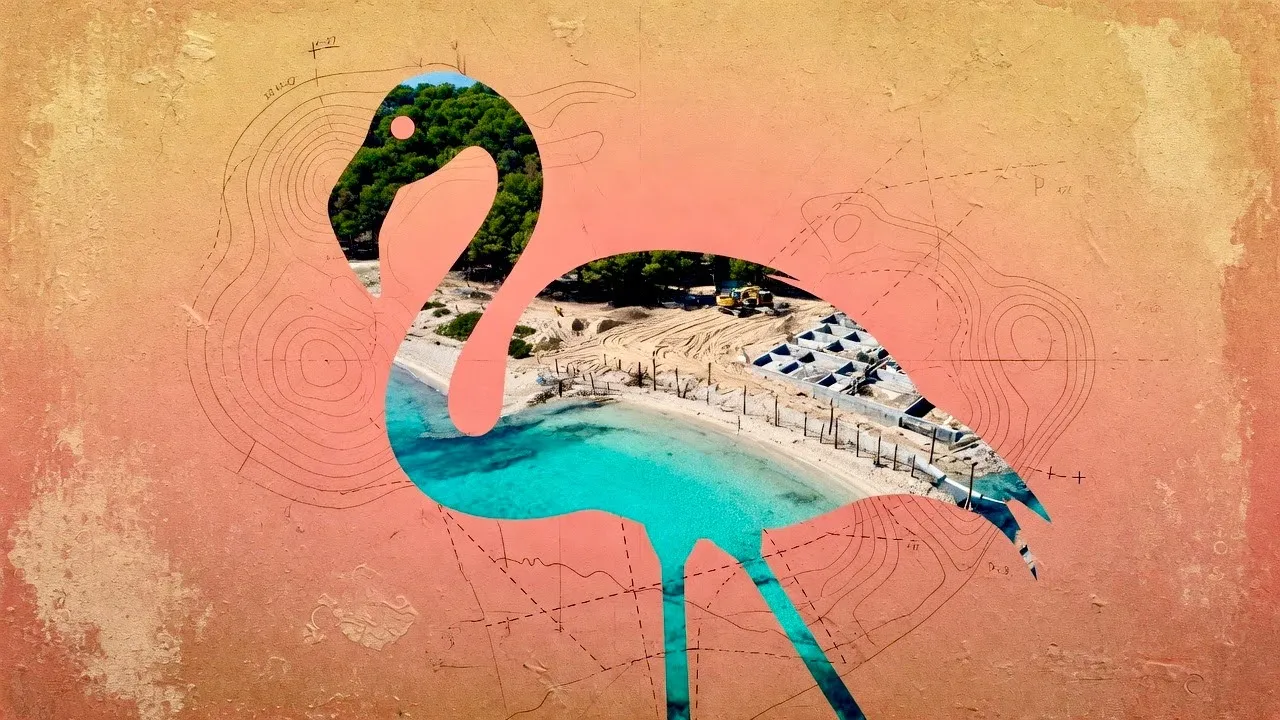
The global landscape of tourism-real estate development is increasingly marked by a pervasive trend: mega-deals, often backed by sovereign capital, that arrive with demands for exceptional treatment, including special investor status, rewritten protections, and bypasses of established consent mechanisms. Albania, with its recent "Flamingo Revolution" and the controversy surrounding high-profile coastal projects, stands as the latest and perhaps loudest illustration of this phenomenon, revealing governance failures that echo across numerous developing nations.
For more than three weeks, Albania has witnessed the "Flamingo Revolution," a sustained wave of protests representing the largest mobilization since the fall of communism. This public outcry has been amplified by a European Parliament resolution calling for a construction moratorium and the initiation of a formal anti-corruption investigation. At the heart of this dispute are multi-billion dollar tourism developments, most notably the $1.4 billion Sazan Island resort and associated coastal projects, directly linked to Jared Kushner’s Affinity Partners, whose investor base notably includes Saudi Arabia’s Public Investment Fund and significant Qatari capital.
Albania’s Ambition and the Lure of Tourism
Albania, a nation with a rich history, a strategic Adriatic coastline, and a burgeoning desire for European Union integration, has long identified tourism as a cornerstone of its economic development strategy. Following decades of isolation under communist rule, the country embarked on a path of market liberalization and economic reform in the early 1990s. While initial growth was uneven, the early 21st century saw a renewed focus on leveraging its natural beauty – its pristine beaches, rugged mountains, and ancient heritage sites – to attract foreign investment and tourists.
The government, led by Prime Minister Edi Rama, has consistently promoted Albania as an attractive destination for foreign direct investment, particularly in the tourism sector. This drive is rooted in the belief that high-end tourism can generate substantial revenue, create employment opportunities, and elevate Albania’s international profile. Indeed, tourism has become a significant contributor to Albania’s GDP, growing steadily over the past decade. In 2023, the country recorded an unprecedented 10.1 million foreign visitors, a substantial increase from previous years, signaling the sector’s immense potential but also putting immense pressure on its delicate coastal ecosystems. The government projects tourism’s contribution to GDP to reach over 15% in the coming years, up from approximately 10% currently, underscoring its strategic importance.
The Genesis of Controversy: Sazan Island and Durrës Marina
The current wave of discontent is not an isolated incident but rather the culmination of a series of decisions that have increasingly prioritized large-scale development over environmental protection and transparent governance. The Sazan Island project, a proposed luxury resort, has become the flashpoint. Sazan Island, a former military base, is a strategically important and ecologically sensitive area located at the mouth of the Bay of Vlorë, part of a protected marine park. The development plans envision transforming this island and adjacent coastal areas into an exclusive tourism destination.
Prime Minister Edi Rama’s government granted the Sazan Island project "strategic investor" status. This designation, while intended to streamline significant investments, comes with a suite of extraordinary privileges: special-law applications, exemptions from standard tender processes, and significant bypasses of conventional planning and environmental regulations. This is not the first time such an approach has been utilized. The same designation and associated concessions were previously extended to Eagle Hills, an Abu Dhabi-linked developer behind the massive Durrës marina project.
The Durrës marina project, a multi-billion dollar development on Albania’s central Adriatic coast, envisioned a sprawling complex of luxury residences, hotels, and a yacht marina. While proponents hailed it as a transformative project for the city of Durrës, critics pointed to its location within an ecologically sensitive area and the significant regulatory shortcuts afforded to the developer. These precedents set the stage for the public’s current skepticism regarding the Sazan Island plans.
A Chronology of Discontent: The "Flamingo Revolution" Unfurls
The roots of the "Flamingo Revolution" can be traced back to early 2024 when the Albanian Parliament, dominated by Prime Minister Rama’s Socialist Party, enacted a controversial amendment to the Law on Protected Areas. This legislative change explicitly permits the construction of luxury resorts within designated conservation zones, effectively opening up previously safeguarded natural habitats for commercial development. This move was widely seen as tailor-made to facilitate projects like Sazan Island, which falls within a protected marine area.
- Early 2024: Parliament amends the Law on Protected Areas, sparking initial concerns among environmental activists and civil society organizations. The amendments are criticized for weakening environmental safeguards and prioritizing economic interests over biodiversity conservation.
- March-April 2024: Details of the Sazan Island project and its "strategic investor" status become more widely known, particularly the involvement of Jared Kushner’s Affinity Partners and sovereign wealth funds. Public concern mounts over the scale of the project, its potential environmental impact on a marine protected area, and the perceived lack of transparency in the approval process.
- Late April – Early May 2024: Environmental groups, local activists, and opposition parties begin to organize, coalescing around the symbol of the flamingo, a species found in Albania’s wetlands that are threatened by coastal development. The "Flamingo Revolution" takes shape, characterized by sustained protests in Tirana and other major cities. Demonstrators demand a halt to the projects, a repeal of the amended Law on Protected Areas, and greater transparency and public consultation in investment decisions.
- Mid-May 2024: The protests gain significant traction, attracting thousands of participants and drawing international attention. News reports highlight the unprecedented nature of the sustained mobilization since the end of communist rule.
- Late May 2024: The European Parliament passes a resolution expressing concern over the state of rule of law, environmental protection, and anti-corruption efforts in Albania, specifically referencing the controversial construction projects in protected areas. The resolution calls for a moratorium on such developments until proper environmental impact assessments and public consultations are conducted.
- June 2024: Albanian prosecutors launch a formal anti-corruption investigation into aspects of the strategic investment deals, including those related to coastal development. This move signals increasing domestic and international pressure on the government to address concerns about transparency and legality.
The Environmental and Legal Stakes
The areas targeted for these developments are not merely picturesque; they are ecological treasures. Sazan Island, along with the Karaburun Peninsula, forms part of the Karaburun-Sazan Marine National Park, Albania’s only marine park. This area is a biodiversity hotspot, home to endangered monk seals, sea turtles, various species of dolphins, and a rich array of marine flora and fauna. Terrestrial ecosystems on the island also support unique plant species and migratory birds. Developing luxury resorts in such a sensitive zone poses an undeniable threat to these ecosystems, risking habitat destruction, increased pollution, and disruption of delicate natural balances. Environmental impact assessments (EIAs), which are standard procedures globally for projects of this scale, are often criticized for being either inadequate or circumvented entirely under the "strategic investor" framework.
From a legal perspective, the rewriting of the Law on Protected Areas in 2024 is a critical concern. Critics argue that this legislative maneuver undermines the very purpose of environmental protection laws and sets a dangerous precedent. It effectively allows political decisions to override scientific and ecological imperatives, raising questions about Albania’s commitment to international environmental conventions and its own national heritage. The "strategic investor" law itself, while designed to attract investment, is frequently accused of creating a two-tiered system where powerful foreign entities receive preferential treatment, potentially at the expense of fair competition, local businesses, and democratic oversight.
Official Responses and Conflicting Narratives
The Albanian government, through Prime Minister Edi Rama and other officials, has consistently defended these projects as vital for the nation’s economic progress. Their narrative emphasizes:
- Economic Development: "These projects are indispensable for Albania’s economic future, bringing much-needed foreign investment, creating thousands of jobs, and stimulating local economies."
- Modernization: "High-end tourism infrastructure will modernize Albania’s image, attract affluent visitors, and integrate our country into the global luxury tourism market."
- Sustainable Growth: "We are committed to sustainable development. These projects will adhere to international standards and contribute to the long-term prosperity of our nation, balancing economic growth with environmental responsibility." (This claim is often met with skepticism by environmental groups.)
Conversely, the chorus of voices from the "Flamingo Revolution" – comprising environmental activists, civil society organizations, opposition politicians, and concerned citizens – presents a starkly different perspective:
- Environmental Destruction: "These developments are an attack on our natural heritage, threatening irreplaceable ecosystems and species for short-term profits."
- Lack of Transparency and Corruption: "The ‘strategic investor’ status is a smokescreen for opaque deals that benefit a select few. There’s a blatant disregard for public consultation and due process, fueling suspicions of corruption."
- Violation of Rule of Law: "Rewriting laws to accommodate private interests undermines the very foundation of our legal system and democratic governance. It’s a betrayal of public trust."
- Disenfranchisement: "Local communities are being sidelined, their concerns ignored, and their future compromised by decisions made behind closed doors."
International bodies, particularly the European Union, have also weighed in. The European Parliament’s resolution, while non-binding, carries significant moral and political weight, especially for an EU candidate country like Albania. It signals that adherence to rule of law, environmental protection, and good governance are not merely internal matters but are critical benchmarks for Albania’s aspirations for closer integration with Europe. The formal anti-corruption investigation, initiated by Albanian prosecutors, underscores the seriousness of the allegations and the domestic legal system’s response to public and international pressure.
Broader Impact and Global Implications
Albania’s struggle is not unique; it is a microcosm of a broader global challenge. The original insight that "the largest tourism-real-estate deals increasingly arrive with a demand for exceptional treatment…the governance failure is the same everywhere" resonates deeply here. Sovereign wealth funds, with their vast capital and long-term investment horizons, often wield significant leverage in negotiations with host countries eager for investment. This can lead to a "race to the bottom" where nations, desperate for economic growth, might compromise environmental regulations, labor laws, and democratic processes to attract these powerful investors.
The implications of these developments for Albania are multifaceted:
- EU Accession: The controversies could significantly impede Albania’s progress towards EU membership. The EU places a strong emphasis on good governance, the rule of law, and robust environmental protection. The perception of systemic corruption, lack of transparency, and disregard for environmental safeguards could lead to delays or even setbacks in its accession process.
- Environmental Degradation: Irreversible damage to protected areas would not only result in ecological loss but also diminish Albania’s long-term tourism appeal, which is largely predicated on its pristine natural beauty.
- Social Cohesion: The deep divisions between government and civil society, fueled by perceived injustices and lack of consultation, could erode social cohesion and trust in democratic institutions.
- Precedent Setting: Allowing such concessions for major projects sets a dangerous precedent for future developments, potentially encouraging further erosion of environmental and regulatory standards.
- Economic Dependency: While foreign investment is beneficial, an over-reliance on a few large, politically connected projects can create economic dependencies and vulnerabilities, rather than fostering diverse, sustainable growth.
The "Flamingo Revolution" in Albania serves as a powerful reminder that the pursuit of economic growth, particularly through large-scale tourism development, must be carefully balanced with environmental stewardship, transparent governance, and genuine public participation. The struggle in Albania highlights the critical need for robust legal frameworks, independent oversight, and empowered civil society to ensure that development truly serves the long-term interests of a nation and its people, rather than just a select few. The outcome of this ongoing battle will not only shape Albania’s future but also offer valuable lessons for other nations grappling with the pressures and promises of global sovereign capital in their most cherished natural landscapes.



 Anjar Salim
 Chandra Hamzah
 Budi Mulyono

