
 Tatiana Tantri Indah Sari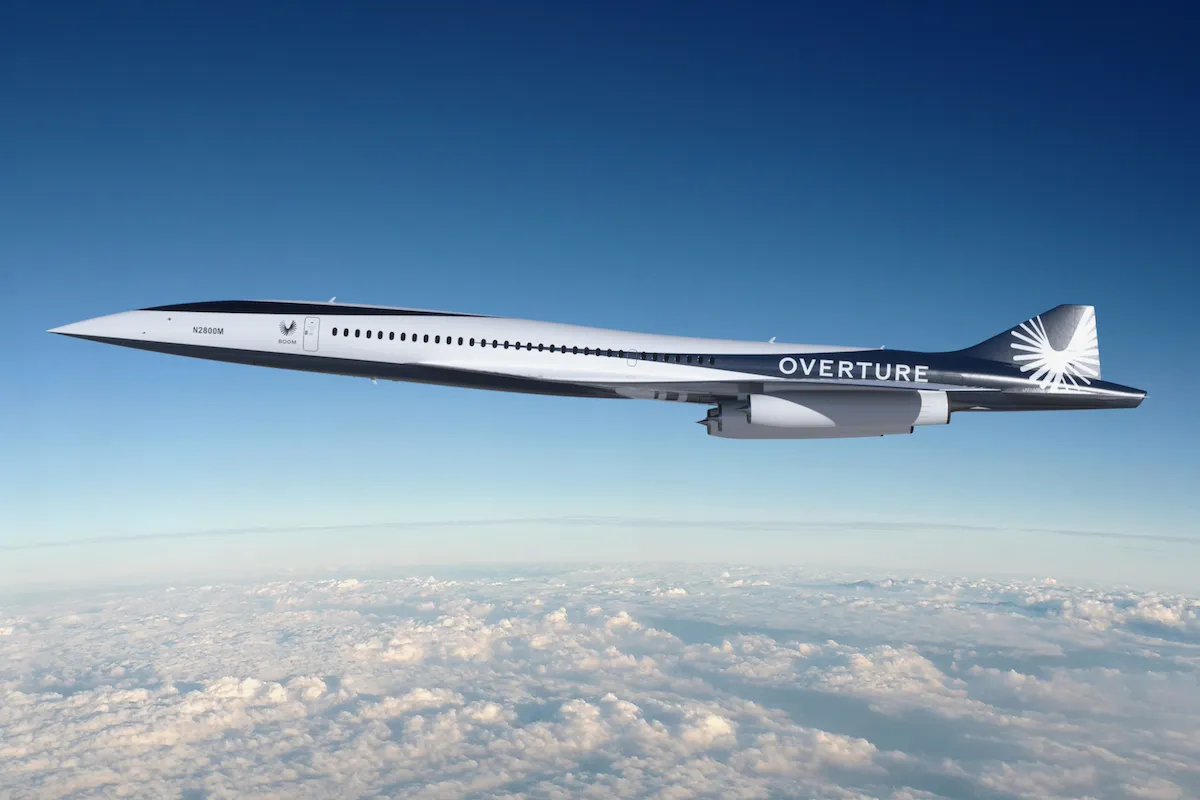
The United States is poised to usher in a new era of commercial aviation, with the Trump administration having announced its intent to lift a 1973 ban on supersonic flight over land. This pivotal decision, reinforced by a proposed rule from the Federal Aviation Administration (FAA) to establish a noise-based certification standard, marks a significant step towards enabling jets that could transport passengers from New York to London in a mere three hours, dramatically reshaping global travel. The FAA’s initiative to dismantle the 53-year-old prohibition is a testament to renewed interest and technological advancements in supersonic aviation, promising to clear a path for next-generation aircraft to operate within U.S. airspace.
A Decades-Long Ban Nears Repeal
The original ban on commercial supersonic flight over U.S. land was enacted in 1973, primarily in response to widespread public concern regarding the disruptive phenomenon of the "sonic boom." This powerful shockwave, generated when an aircraft exceeds the speed of sound, was reported to cause significant noise pollution, rattle structures, and disturb communities below. Public opinion surveys at the time heavily influenced the FAA’s decision, prioritizing environmental and quality-of-life considerations over the nascent commercial supersonic ambitions of the era. The ban effectively relegated supersonic travel to oceanic routes, severely limiting its practical application and commercial viability for the Anglo-French Concorde, which entered service in 1976.
The Concorde, a marvel of engineering, epitomized the dream of supersonic passenger flight. It could cruise at Mach 2.04 (approximately 1,350 mph or 2,179 km/h), cutting typical transatlantic flight times by more than half. A journey from New York to London, which takes around 7-8 hours on a conventional subsonic airliner, was completed by Concorde in just under 3.5 hours. However, its operational limitations, primarily due to the U.S. over-land ban, meant it could only fly at supersonic speeds over the Atlantic Ocean. This, coupled with its high operating costs, limited passenger capacity, and significant fuel consumption, ultimately contributed to its retirement in 2003, following a fatal crash in 2000 and a subsequent decline in demand after 9/11. The legacy of Concorde, while iconic, underscored the challenges that future supersonic aircraft would need to overcome, with noise mitigation being paramount.
Technological Leaps Pave the Way Forward
The prospect of lifting the 1973 ban is not merely a political or regulatory shift; it is fundamentally driven by profound advancements in aerospace engineering and acoustic technology. Modern designers and engineers are tackling the sonic boom problem head-on, moving beyond simply avoiding it to actively shaping and mitigating its effects.
One of the most promising innovations is the concept of a "quiet" or "low-boom" supersonic flight. Unlike the distinct, sharp "boom" produced by earlier supersonic aircraft, new designs aim to spread the pressure waves over a larger area, reducing the intensity of the sound perceived on the ground to a mere "thump" or even a "whisper." NASA, through its X-59 Quiet Supersonic Technology (QueSST) project, in partnership with Lockheed Martin, is at the forefront of this research. The X-59, designed to demonstrate quiet supersonic flight, aims to prove that a shaped sonic boom is not only feasible but also acceptable to communities below, paving the way for regulatory changes. The aircraft’s unique aerodynamic profile is specifically engineered to prevent shockwaves from coalescing into a loud boom, instead dispersing them to produce a much quieter sound signature.
Beyond sonic boom reduction, advancements in engine technology are also addressing noise concerns at airports during takeoff and landing, another key factor in the original ban. Modern turbofan engines are significantly quieter and more fuel-efficient than their predecessors. New materials science is enabling lighter, stronger airframes, which contributes to overall efficiency and performance. Computational fluid dynamics (CFD) and advanced simulation tools allow engineers to optimize aircraft designs for both speed and acoustic performance with unprecedented precision. These technological leaps represent a fundamental departure from the design philosophy of the 1960s and 70s, offering tangible solutions to the very problems that grounded commercial supersonic flight over land for decades.
The Trump Administration’s Strategic Push
The Trump administration’s announcement on a Tuesday, indicating its active efforts to enable supersonic flight over the continental U.S., signaled a clear policy directive aimed at fostering innovation and reasserting American leadership in aviation. This move was framed as part of a broader strategy to support advanced aerospace industries, create jobs, and enhance global connectivity. The administration highlighted the potential economic benefits, including manufacturing jobs, research and development investments, and the competitive advantage of being able to develop and operate next-generation supersonic aircraft domestically.
The administration’s stance aligned with a growing sentiment within the aerospace sector that the time was ripe for a re-evaluation of the outdated regulations. Companies like Boom Supersonic and Aerion Supersonic (though Aerion ceased operations in 2021, its earlier efforts were part of this push) had already been investing heavily in developing commercially viable supersonic jets, with delivery targets set for the mid-to-late 2020s. These private ventures needed a clear regulatory path to market, particularly concerning over-land flight, to justify their significant investments. The political will demonstrated by the administration provided the necessary impetus for the FAA to accelerate its regulatory review process.
FAA’s Regulatory Framework Takes Shape
Following the administration’s directive, the FAA proposed a crucial rule that would establish a noise-based certification standard for supersonic flight. This is a monumental shift from the previous blanket prohibition. Instead of an outright ban, the FAA is moving towards a performance-based regulation, where any supersonic aircraft demonstrating compliance with specific noise limits would be permitted to operate.
The proposed rule outlines a detailed framework for how these noise levels would be measured and certified. It would involve a rigorous testing regime, likely utilizing advanced acoustic monitoring equipment and flight test campaigns to ensure that new supersonic aircraft meet acceptable noise thresholds, both during takeoff/landing and when flying supersonically. The FAA’s approach signifies a move towards harmonizing U.S. regulations with potential international standards, recognizing that future supersonic aircraft will operate globally. This regulatory clarity is vital for manufacturers, as it provides them with concrete targets and parameters for their designs, reducing uncertainty and accelerating development cycles. The public comment period following the proposed rule would allow various stakeholders, including environmental groups, community organizations, and industry players, to provide feedback, which the FAA would then consider before finalizing the regulation. This iterative process is standard for significant regulatory changes and ensures a comprehensive review of all potential impacts.
Industry Responds: A New Supersonic Race?
The prospect of the ban’s repeal has invigorated the aerospace industry, sparking what some observers are calling a new "supersonic race." Several companies are actively developing supersonic or even hypersonic passenger aircraft, betting on a future where speed is once again a premium commodity in air travel.
Boom Supersonic is perhaps the most prominent player, with its Overture airliner designed to carry 65-88 passengers at Mach 1.7 over water and potentially Mach 1.0 over land, if regulations permit. The company has already secured significant interest and pre-orders from major airlines, including United Airlines and American Airlines, signaling confidence in the market demand for faster travel. Boom’s strategy emphasizes fuel efficiency, lower operating costs, and a design aimed at meeting future noise regulations.
While Aerion Supersonic, another key player in the early 2020s, unfortunately ceased operations due to funding challenges, its efforts with the AS2 business jet (designed for Mach 1.4) underscored the technical feasibility and market appetite for supersonic private and business aviation. Other companies like Spike Aerospace are also exploring supersonic business jet concepts. NASA’s X-59 QueSST, while a research aircraft, plays a critical role in providing the foundational data and demonstration needed to convince regulators and the public that quiet supersonic flight is achievable. The collaboration between government agencies and private industry is crucial for this new era of aviation to take flight.
Broader Implications and Potential Challenges
The repeal of the supersonic flight ban carries profound implications across economic, environmental, and social dimensions, though it also presents significant challenges.
Economic Windfalls and Job Creation: Lifting the ban is expected to inject substantial capital into the aerospace sector. Estimates suggest the supersonic market could be worth tens of billions of dollars over the next few decades, generating thousands of high-tech manufacturing, engineering, and service jobs. Faster travel times could boost global commerce, facilitating quicker business trips and strengthening international trade links. It could also stimulate tourism by making distant destinations more accessible for shorter trips. Airlines that adopt supersonic fleets could gain a competitive edge, attracting premium passengers willing to pay for speed and efficiency.
Environmental Scrutiny and Sustainability Concerns: Despite technological advancements, environmental concerns remain a critical area of focus. While new designs aim for quieter operations, questions persist regarding fuel consumption and emissions. Supersonic aircraft, by their nature, consume more fuel per passenger mile than conventional subsonic jets, raising concerns about their carbon footprint. Manufacturers are working on more fuel-efficient engines and exploring sustainable aviation fuels (SAFs) as a long-term solution. The industry will face intense scrutiny from environmental groups and regulators to demonstrate its commitment to sustainability, especially in an era focused on climate action. The balance between speed and environmental responsibility will be a defining challenge for this new generation of aircraft.
Global Harmonization and Regulatory Hurdles: For supersonic flight to truly flourish, global regulatory harmonization is essential. While the U.S. is moving to lift its domestic ban, international standards for supersonic noise and operations will need to be established and agreed upon by other nations and international bodies like the International Civil Aviation Organization (ICAO). Fragmented regulations could complicate route planning and limit the global reach of these aircraft. Furthermore, the FAA’s proposed rule will undergo a rigorous review process, including public commentary, and any final regulation must withstand potential legal challenges from groups concerned about noise or environmental impacts. The certification of these complex aircraft will also be a lengthy and intricate process, requiring extensive testing and validation.
Societal Impact: The return of supersonic travel could fundamentally alter perceptions of distance and time, making the world feel smaller and more interconnected. It could facilitate new forms of international collaboration and cultural exchange. However, equitable access to such high-speed travel will also be a consideration, as initial supersonic flights are likely to command premium prices, catering primarily to business travelers and affluent tourists. The public’s perception of "quiet booms" will be crucial; even a muffled sound could be a source of annoyance for some communities, requiring careful public engagement and education from both regulators and manufacturers.
In conclusion, the U.S. government’s move to repeal the 1973 ban on supersonic flight over land marks a significant inflection point for the future of aviation. Driven by technological innovation, renewed industry ambition, and a supportive regulatory framework, the dream of faster-than-sound commercial travel is closer to becoming a widespread reality. While challenges related to environmental impact, global regulation, and public acceptance persist, the potential for economic growth and a dramatically more connected world positions this development as one of the most exciting transformations in modern air travel. The skies over the U.S. are preparing to welcome a new generation of aircraft, poised to redefine speed and efficiency for the 21st century.



 Budi Mulyono
 Anjar Salim
 Chandra Hamzah

 Lukman Taruna Persada Ramadan