
 Tatiana Tantri Indah Sari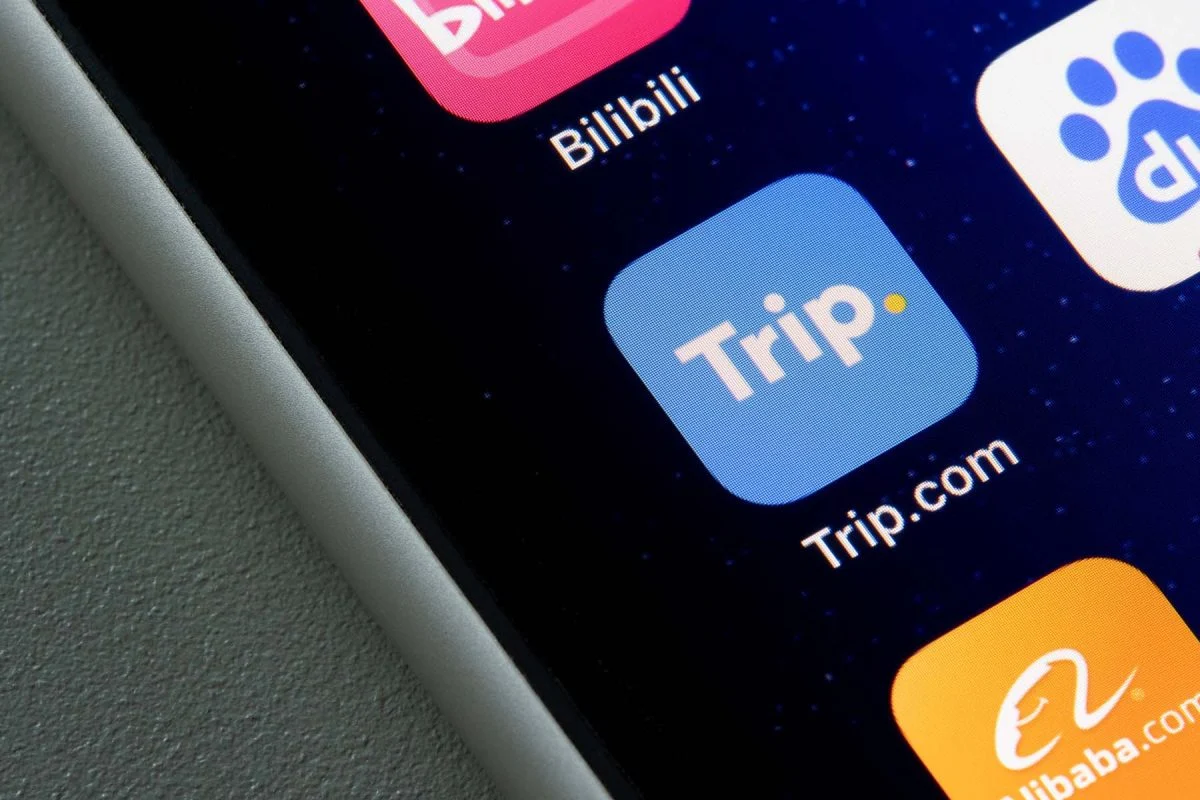
As the landscape of travel planning rapidly transforms under the influence of artificial intelligence (AI) agents, a fundamental shift in strategy is emerging among the titans of the online travel agency (OTA) sector. Traditionally, OTAs have competed fiercely for direct consumer engagement, but the advent of sophisticated large language models (LLMs) like ChatGPT has introduced a new dimension to this contest. Executives from industry giants such as Expedia and Booking.com have largely coalesced around a strategy that emphasizes their established brand equity and consumer trust as their primary differentiator in an AI-driven future. Their premise is straightforward: while AI-powered assistants may offer convenience, the inherent risk of "hallucinations" or inaccuracies by LLMs will compel travelers to revert to trusted, human-vetted travel brands for the ultimate booking of their trips. This approach prioritizes the direct relationship with the end-user, leveraging decades of brand building, customer service infrastructure, and robust, verified inventory systems to reassure a potentially wary public.
However, a divergent and potentially groundbreaking strategy was recently articulated by James Liang, Executive Chairman of Trip.com Group. During a recent earnings call, Liang acknowledged the critical importance of trust, but with a significant "twist." Rather than solely focusing on winning the trust of human travelers in an AI-dominated environment, Trip.com is actively positioning itself to win the trust of the AI platforms and AI agents themselves. Liang explicitly stated, "Our goal is not only to be the go-to app for travelers, but also the trusted infrastructure for AI agents." This declaration signals a strategic pivot that could redefine the role of OTAs, shifting from solely a direct-to-consumer interface to a critical business-to-business (B2B) enabler within the burgeoning AI ecosystem. This proactive stance by Trip.com Group, a global leader in online travel services with a significant presence across Asia and increasingly worldwide, reflects a forward-thinking approach to an evolving technological paradigm that promises to reshape travel distribution for decades to come.
The Rise of AI in Travel Planning and the "Hallucination" Conundrum
The integration of AI into daily life has accelerated dramatically, with generative AI models demonstrating unprecedented capabilities in information synthesis, content creation, and complex problem-solving. In the travel sector, this has manifested in AI agents that can interpret natural language queries, suggest itineraries, compare prices, and even simulate booking processes. The promise is a hyper-personalized, seamless travel planning experience, where a user can simply describe their desires ("a relaxing beach vacation for two in Europe next summer, under $3,000, with good food options") and receive a fully fleshed-out plan.
However, the rapid development of these technologies has also brought to light a significant challenge: the phenomenon of "hallucination." AI models, particularly LLMs, are designed to predict and generate coherent text based on patterns learned from vast datasets. While incredibly powerful, this mechanism can sometimes lead to the generation of plausible-sounding but factually incorrect information. In travel, this could mean an AI agent recommending a non-existent hotel, quoting an outdated price, suggesting a flight route that doesn’t exist, or even describing amenities that a property does not possess. Such inaccuracies, even if minor, can severely undermine the user experience, lead to financial losses, and erode confidence in the AI system itself.
This inherent unreliability in nascent AI travel planners has created a critical void: a need for verified, real-time, and dependable data. The global online travel market, valued at over $800 billion in 2023 and projected to exceed $1.2 trillion by 2028, is too significant to be left to the vagaries of AI hallucinations. This market scale underscores why trust, in whatever form, remains the ultimate currency.
Expedia and Booking.com: Doubling Down on Consumer Trust
For established players like Expedia Group and Booking Holdings (parent company of Booking.com), the response to AI’s rise has largely centered on reinforcing their core value proposition: reliability through direct consumer relationships. These companies have spent decades building massive user bases, investing billions in brand marketing, customer service infrastructure, and sophisticated data analytics. Their platforms are repositories of millions of verified reviews, comprehensive property listings, real-time pricing feeds from a vast network of suppliers, and robust booking engines backed by financial guarantees.
Executives from both companies have articulated a strategy that involves integrating AI into their existing platforms to enhance user experience – for example, AI-powered chatbots for customer service, personalized recommendations, or simplified itinerary builders within their trusted apps and websites. However, the ultimate transaction, the act of booking, is envisioned as remaining firmly within their walled gardens. Their argument posits that when it comes to committing money and planning crucial life events like vacations, consumers will naturally gravitate towards platforms they know and trust to deliver on their promises, mitigating the risk of AI-generated errors. This approach essentially positions them as the "safe harbor" in a potentially turbulent sea of AI-generated travel information. Their competitive edge, in this view, is not just about technology, but about the deeply ingrained psychological assurance that comes with a well-known, accountable brand.
Trip.com Group’s Strategic Pivot: Becoming the AI’s Trusted Infrastructure
In stark contrast to this consumer-centric trust model, Trip.com Group’s James Liang has unveiled a strategy that seeks to embed the company at a more foundational level of the AI travel ecosystem. Instead of solely competing with AI agents for consumer attention, Trip.com aims to become the essential backbone for those AI agents. This involves a deliberate effort to package and present its vast reservoir of travel data, verified inventory, real-time pricing, and reliable booking capabilities in a format that AI platforms and agents can seamlessly integrate and trust.
What does "trusted infrastructure for AI agents" entail? It signifies providing AI developers with robust Application Programming Interfaces (APIs) that offer:
- Verified Inventory: Access to a comprehensive, meticulously curated database of hotels, flights, tours, and car rentals, all validated to be real and available. This directly addresses the hallucination problem by providing factual, up-to-date data.
- Real-time Pricing: Dynamic pricing feeds that ensure any quote provided by an AI agent is current and accurate, minimizing discrepancies and customer dissatisfaction.
- Reliable Booking Capabilities: APIs that allow AI agents to initiate and confirm bookings directly through Trip.com’s system, complete with payment processing, confirmation, and post-booking support integration.
- Structured Data: Clean, well-organized, and easily parsable data formats that AI models can efficiently consume and interpret, reducing errors in understanding and generation.
- Performance and Security: Guaranteed uptime, low latency, and robust security protocols for data exchange, crucial for real-time applications.
This strategy positions Trip.com not just as a retailer, but as a wholesaler of critical travel data and services to the emerging AI economy. It acknowledges that AI agents, regardless of their sophistication, will always need access to reliable, external data sources to function effectively and avoid inaccuracies. By becoming the go-to provider for this essential data, Trip.com could achieve a pervasive influence across the entire AI travel ecosystem, regardless of which specific AI agent or platform gains traction with consumers.
Broader Industry Implications and the New Competitive Front
The differing strategies of Expedia/Booking and Trip.com Group highlight a critical juncture for the entire travel industry. This isn’t just a battle for market share among OTAs; it’s a fundamental debate about where value will reside in an AI-driven future.
For Other OTAs: The question for smaller and mid-sized OTAs is whether to follow the consumer-trust model, the AI-infrastructure model, or attempt a hybrid. Those with less brand recognition or smaller data sets may find it challenging to compete directly with the scale of Expedia/Booking on consumer trust, making the infrastructure play potentially more appealing if they can specialize in niche data or services.
For Hotels and Airlines: Direct suppliers, such as hotel chains and airlines, have long sought to drive direct bookings to avoid OTA commissions. The rise of AI presents both a threat and an opportunity. If AI agents primarily source information from OTAs like Trip.com, direct suppliers might find their direct booking efforts circumvented. However, if they can also make their inventory and pricing readily accessible and "trustworthy" to AI platforms, they might gain a new distribution channel that bypasses traditional OTA structures altogether. The challenge for them is standardizing data and API access on a scale that can compete with the aggregators.
For Global Distribution Systems (GDSs): Legacy GDS providers like Amadeus, Sabre, and Travelport have historically served as the backbone for travel agencies and corporate travel. They are essentially sophisticated data aggregators and distributors. Trip.com’s strategy directly encroaches on this territory, albeit for a new type of "agent" – AI. The GDSs themselves are actively exploring how to adapt their robust, real-time data infrastructures to serve AI platforms, indicating that the competition for "AI trust" extends beyond just OTAs.
For AI Developers and Platforms: The need for reliable, structured travel data is paramount for any AI company looking to build a robust travel planning product. Companies like Trip.com offering a "trusted infrastructure" become invaluable partners, potentially accelerating development and reducing the risk of errors. This could foster a new ecosystem of partnerships between travel data providers and AI innovators.
A Timeline of AI Integration and Strategic Evolution (Inferred)
- Early 2010s: Initial forays into AI in travel, primarily through rudimentary chatbots for customer service and basic recommendation engines on OTA websites. Focus was on internal efficiency and incremental user experience improvements.
- Mid-2010s: Increased investment in machine learning for personalized recommendations, dynamic pricing algorithms, and fraud detection. Still largely behind-the-scenes applications.
- Late 2010s: Voice assistants (e.g., Alexa, Google Assistant) begin to offer basic travel search capabilities, but limited in booking functionality. OTAs start exploring voice commerce.
- Late 2022 (ChatGPT Launch): The public release of OpenAI’s ChatGPT marks a watershed moment, demonstrating the power of generative AI and natural language understanding on an unprecedented scale. This ignites widespread speculation about AI’s potential to disrupt search and commerce, including travel.
- Early 2023: Initial reactions from OTAs often focus on integrating LLMs into their own platforms (e.g., Expedia’s ChatGPT plugin). The "hallucination" problem becomes more widely recognized.
- Mid-2023 onwards: The strategic divergence becomes clearer. Expedia and Booking emphasize brand trust for direct consumers, while Trip.com articulates a distinct vision of becoming the trusted data and booking infrastructure for AI itself, as highlighted in recent earnings calls. This period sees accelerated efforts by all players to define their niche in the emerging AI-powered travel ecosystem.
Analysis of Implications: A Platform of Platforms?
Trip.com’s approach could lead to a "platform of platforms" scenario, where AI travel agents, regardless of their consumer-facing brand, are ultimately powered by a foundational layer of trusted data and booking capabilities provided by companies like Trip.com. This could fundamentally alter the competitive dynamics, moving beyond just direct consumer acquisition to a two-pronged strategy: winning consumers directly, and winning the AI systems that guide consumers.
The success of Trip.com’s strategy will hinge on several factors:
- API Quality and Reliability: The robustness, speed, and ease of integration of their APIs will be crucial for AI developers.
- Data Accuracy and Freshness: Maintaining impeccably accurate and real-time data will be non-negotiable to build and sustain trust with AI systems.
- Scalability: The infrastructure must be capable of handling potentially massive query volumes from numerous AI agents simultaneously.
- Commercial Model: Developing attractive and sustainable commercial models for AI partners (e.g., revenue sharing, subscription fees for API access) will be key.
Conversely, the consumer-trust strategy of Expedia and Booking.com relies on the assumption that even with highly capable AI agents, the human desire for reassurance and accountability in high-value transactions will prevail. They are banking on their established brand equity, customer support, and dispute resolution mechanisms to remain irreplaceable.
The ongoing evolution of AI in travel is not merely about technological adoption; it’s a strategic re-evaluation of core business models and competitive advantages. The next few years will reveal whether the future of travel distribution is dominated by directly trusted consumer brands, or by the foundational data providers that power the AI agents themselves, or perhaps a complex interplay between both. What is clear is that the battle for trust, whether human or artificial, is the defining contest of this new era.




 Anjar Salim
 Chandra Hamzah
 Budi Mulyono
 Lukman Taruna Persada Ramadan
