
 Anjar Salim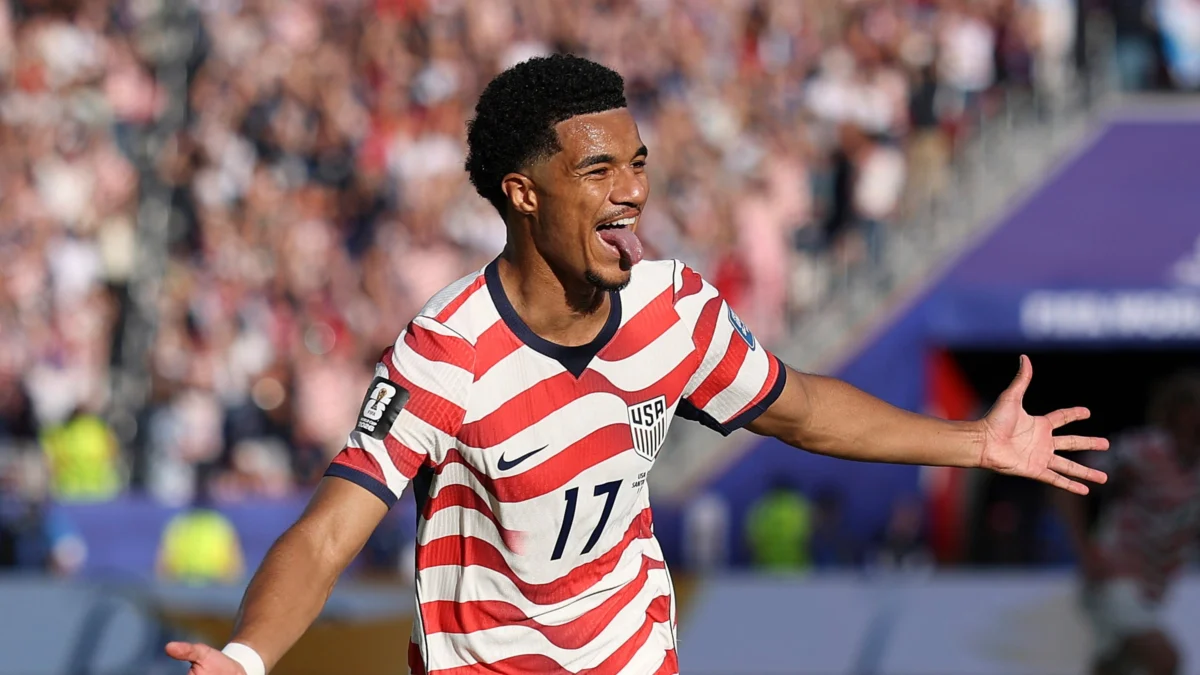
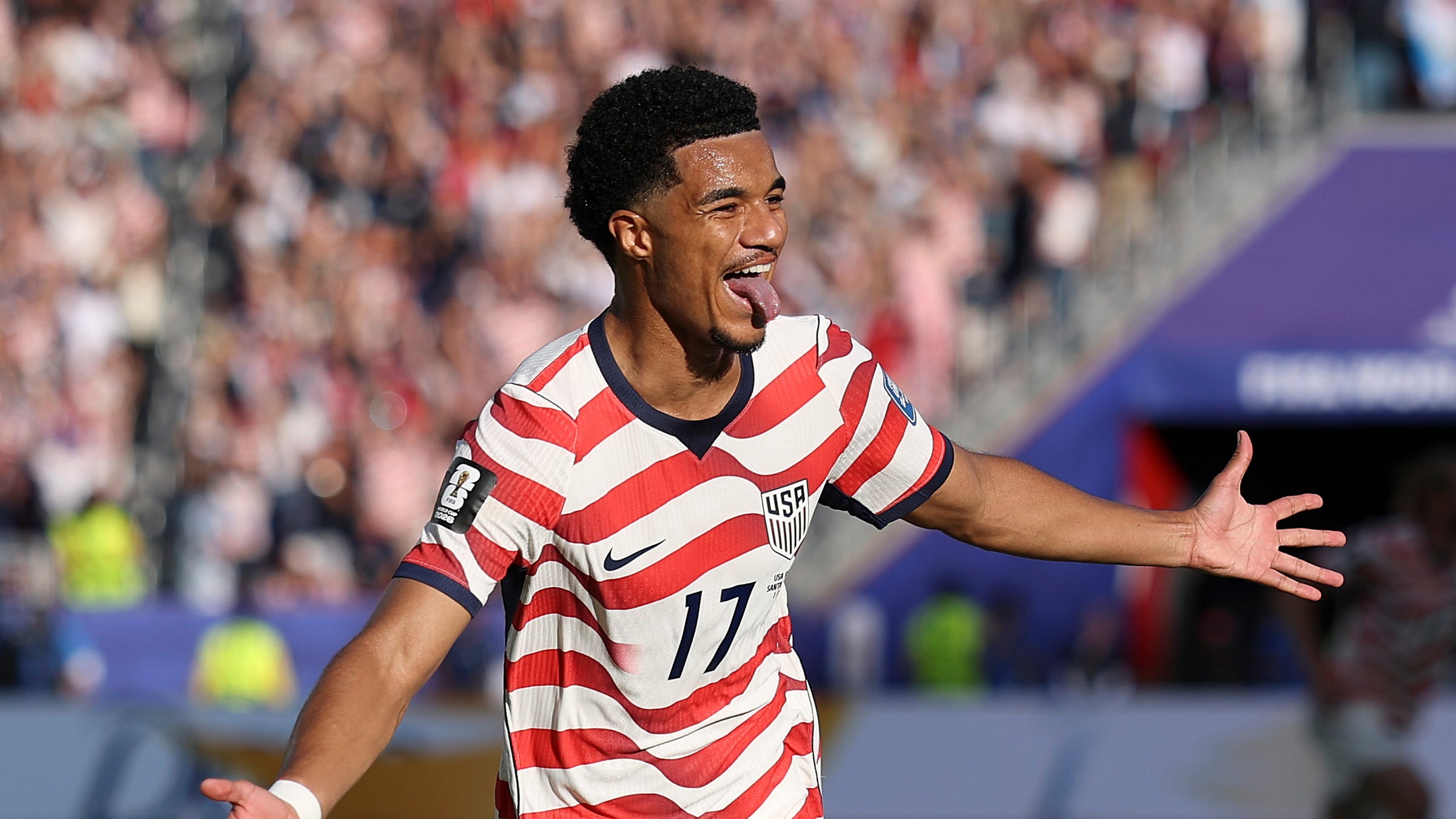
In a performance defined as much by tactical resilience as by individual flashes of brilliance, the United States Men’s National Team (USMNT) defeated Bosnia and Herzegovina 2-0 on Wednesday at Levi’s Stadium in Santa Clara, California. The victory marks a watershed moment for American soccer, representing the program’s first FIFA World Cup knockout round win in 24 years. Before a sellout crowd of 68,827, the United States overcame a mid-match crisis following a red card to star striker Folarin Balogun, eventually sealing the win through a spectacular late free kick from midfielder Malik Tillman.
The result propels the United States into the Round of 16, where they are scheduled to face Belgium on Monday, July 6, at Lumen Field in Seattle. Beyond the immediate tournament implications, the match served as a psychological breakthrough for a squad that entered a World Cup knockout fixture as the betting favorite for the first time in the modern era.
Early Dominance and the Balogun Opener
The United States entered the match with a clear tactical directive to exploit the wings and utilize the pace of Folarin Balogun. From the opening whistle, the Americans controlled the tempo, maintaining 62% possession throughout the first half. The Bosnian defense, led by Tarik Muharemović, adopted a physical, low-block strategy designed to frustrate the American creative core of Christian Pulisic and Malik Tillman.
The deadlock was broken in the 44th minute. Following a quick transition initiated by Yunus Musah, Balogun found space between the Bosnian center-backs. Receiving a precise through-ball, Balogun maintained his composure to slot the ball between the legs of the Bosnian goalkeeper. The goal, followed by Balogun’s signature "Silencer" celebration, sent the largely pro-American crowd into a frenzy and provided the U.S. with a deserved 1-0 lead heading into the interval.
Statistically, the first half reflected American superiority. The USMNT registered eight shots with four on target, while Bosnia was limited to a single speculative effort from distance. However, the physical nature of the game was already evident, with Bosnia committing nine fouls in the first 45 minutes, signaling the grueling nature of the contest to come.
The 64th-Minute Crisis: VAR and the Red Card
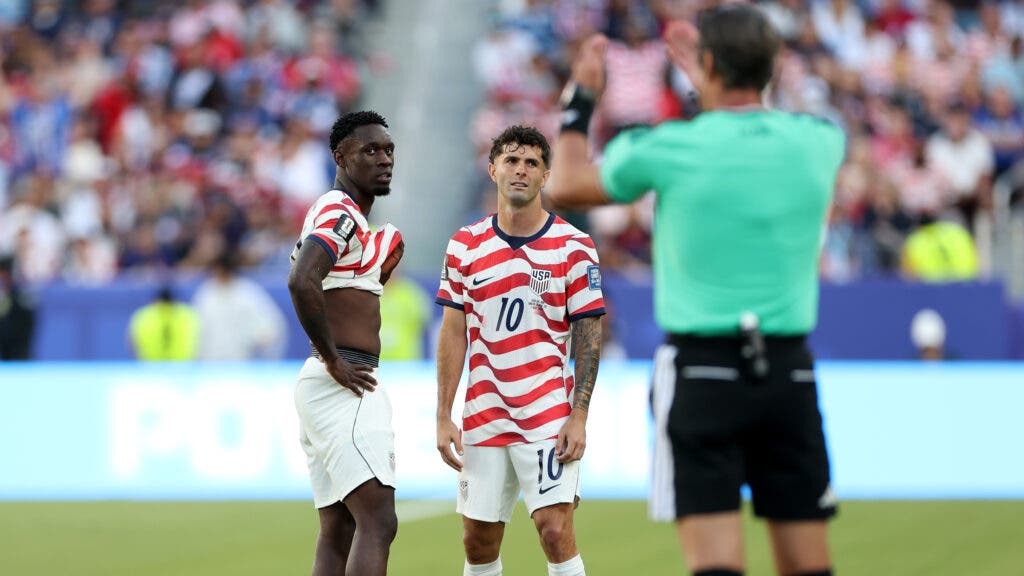
The momentum of the match shifted dramatically in the 63rd minute. During a contested ball in the final third, Balogun became entangled with Muharemović. While the initial contact appeared to be a standard collision, the Video Assistant Referee (VAR) intervened, prompting head official Wilton Sampaio to review the footage.
Slow-motion replays indicated that Balogun’s studs had caught Muharemović’s ankle as his weight shifted. Despite the lack of apparent malicious intent, the referee deemed the challenge "serious foul play" under FIFA’s Laws of the Game. Balogun was issued a straight red card in the 64th minute, reducing the United States to ten men for the final half-hour of play.
The dismissal forced USMNT head coach into an immediate tactical realignment. The U.S. shifted from a 4-3-3 to a more defensive 4-4-1 formation, with Pulisic acting as a lone outlet up front. The atmosphere in Santa Clara grew tense as the shadow of past knockout-round exits loomed over the stadium. The U.S. had not won a knockout game since the 2002 "Dos a Cero" victory over Mexico, and the prospect of a late Bosnian equalizer appeared increasingly likely as the visitors began to commit more players forward.
The Tillman Free Kick: A Masterclass in Execution
As the clock ticked toward the 80th minute, the U.S. faced a mounting injury concern. Malik Tillman, who had been instrumental in the midfield transition, was forced to the sideline to address a bleeding toe that had soaked through his sock. After a hurried equipment change and a new cleat, Tillman returned to the pitch just as the U.S. earned a free kick at the edge of the Bosnian penalty area following a foul on Pulisic.
In the 81st minute, Tillman stepped over the ball. With a compact run-up, he struck a curling effort that cleared the Bosnian wall and dipped sharply into the top corner, grazing the fingertips of the diving goalkeeper. The goal was only the second direct free kick ever scored by an American man in World Cup history, the first being Eric Wynalda’s famous strike against Switzerland in 1994.
The significance of the timing and the execution cannot be overstated. Tillman’s goal provided the two-goal cushion necessary to deflate the Bosnian attack and allowed the U.S. to focus entirely on defensive consolidation during the closing stages.
Historical Context and Statistical Significance
The victory at Levi’s Stadium is rich with historical parallels. The last time the United States hosted the World Cup in 1994, the knockout stages were held at the nearby Stanford Stadium. Tillman’s goal, occurring 32 years after Wynalda’s, serves as a symbolic bridge between the two eras of American soccer hosting duties.
Key Match Statistics:
- Final Score: USA 2, Bosnia and Herzegovina 0
- Shots (On Goal): USA 11 (6), Bosnia 7 (2)
- Possession: USA 48%, Bosnia 52% (Post-red card shift)
- Fouls: USA 14, Bosnia 18
- Yellow Cards: 3 (USA 1, Bosnia 2)
- Red Cards: 1 (Balogun, USA)
The win ends a 24-year drought in the knockout rounds, a period that included heartbreaking exits in 2010, 2014, and 2022. By winning as the favorite, the U.S. has demonstrated a level of maturity and "big-game" management that critics have long argued was missing from the program.
Tactical Analysis and Defensive Discipline
While the goals captured the headlines, the defensive performance following the red card was arguably the most impressive aspect of the American victory. Veteran defender Tim Ream and partner Walker Zimmerman were impeccable in the air, neutralizing Bosnia’s attempts to play long balls into the box.
The U.S. midfield, led by Tyler Adams, covered significant ground to close down passing lanes. Between the 64th and 90th minutes, the U.S. allowed only two shots on target, both of which were comfortably handled by the American goalkeeper. The discipline shown by the squad—avoiding further bookings and maintaining their shape under duress—reflects a high level of preparation.
Bosnia’s frustration boiled over in the closing minutes. Head coach Sergej Barbarez was issued a yellow card for dissent as the fourth official signaled ten minutes of added time. Despite the extended stoppage period, the U.S. remained composed, effectively "killing" the game by holding the ball in the corners and drawing fouls.
Post-Match Reactions and Managerial Assessment
Following the final whistle, the emotional weight of the victory was evident. Christian Pulisic, the team’s captain, spoke to the media about the team’s mental fortitude. "We had to dig deep for that one," Pulisic said. "Losing Balo [Balogun] was a massive blow, but we’ve talked about this scenario for months. We knew we had the quality to hold on, and Malik’s goal was just world-class. It’s a huge weight off our shoulders."
Malik Tillman, the man of the match, remained humble regarding his heroic contribution. "You never know when the moment is going to happen," Tillman told Fox Sports. "I’ve been practicing those free kicks since I was a kid. To have it come off in a World Cup knockout game, with a bloody toe and all—it’s a dream. But the credit goes to the guys who defended like lions for 30 minutes."
On the Bosnian side, Coach Barbarez expressed disappointment but acknowledged the American resilience. "The red card gave us an opportunity, but we were not clinical enough," Barbarez stated. "The U.S. showed they are a top-tier team. They defended very well, and the free kick was impossible to stop."
Broader Implications and the Road Ahead
The victory has sparked nationwide celebrations and solidified the 2026 World Cup as a potential turning point for the sport’s popularity in the United States. By reaching the Round of 16 through a gritty, shorthand performance, the USMNT has silenced skeptics who questioned their ability to handle the pressure of being a host nation.
The path forward, however, grows significantly steeper. Belgium, currently ranked in the top five of the FIFA World Rankings, represents a tier of opposition the U.S. has struggled against historically. The loss of Folarin Balogun for the next match due to the red card suspension will force the U.S. coaching staff to rethink their attacking options, potentially looking to Ricardo Pepi or a "false nine" system.
The U.S. squad will fly to Seattle on Thursday to begin preparations for the July 6 clash. With the momentum of a historic win and the backing of a galvanized fan base, the 2026 USMNT appears ready to challenge the traditional powers of world soccer. The "long shadow" of 1994 and 2002 has finally been lifted, replaced by the bright prospects of a team that has learned how to win when it matters most.




 Chandra Hamzah
 Tatiana Tantri Indah Sari
 Budi Mulyono
 Lukman Taruna Persada Ramadan