
 Budi Mulyono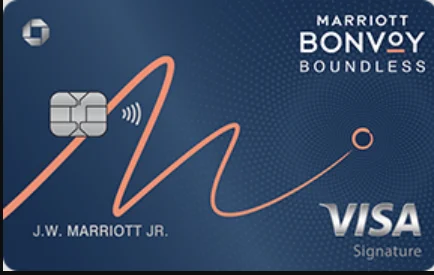
Marriott International, the world’s largest hospitality company, maintains a sophisticated and bifurcated credit card ecosystem through long-standing partnerships with JPMorgan Chase and American Express. As of late 2024, the Marriott Bonvoy portfolio consists of five distinct credit card products available to new applicants: two issued by Chase and three by American Express. This multi-issuer strategy allows Marriott to capture a wide demographic of consumers, ranging from entry-level travelers seeking a no-annual-fee entry point to ultra-premium "road warriors" who prioritize automatic elite status and luxury property benefits. Each card is positioned with a unique value proposition, defined by its annual fee, earning structure, and the tier of Marriott Bonvoy elite status it confers.
The current landscape of Marriott-branded financial products is the result of years of consolidation following the 2016 merger between Marriott International and Starwood Hotels and Resorts. This merger necessitated a complex integration of the "Marriott Rewards" and "Starwood Preferred Guest" (SPG) loyalty programs, which was finalized in early 2019 under the "Bonvoy" brand. Today, the distribution of cards is strategically split: Chase typically manages the entry-level and mass-market personal cards, while American Express handles the premium personal and small business segments.
The Entry-Level Segment: Marriott Bonvoy Bold and Boundless
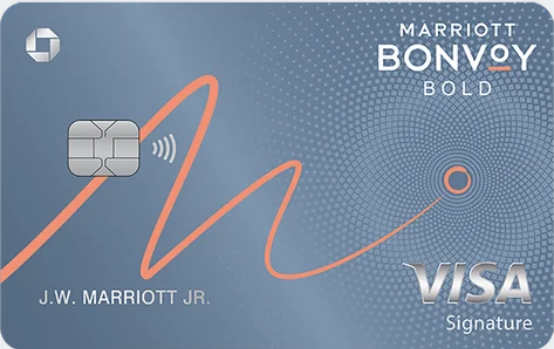
The foundation of the Chase-issued portfolio is the Marriott Bonvoy Bold® Credit Card. As the only product in the lineup with a $0 annual fee, it serves as the primary acquisition tool for casual travelers who are credit-conscious but wish to participate in the Bonvoy ecosystem. Despite the lack of a fee, the card provides 15 Elite Night Credits (ENCs) annually, which effectively grants the cardholder automatic Silver Elite status. While the earning rates are lower than its counterparts—typically 3 points per dollar spent at Marriott properties—it offers a risk-free path for consumers to begin accumulating points that can be redeemed across Marriott’s 30-plus brands.
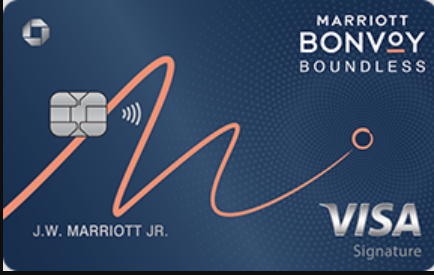
Positioned immediately above the Bold is the Marriott Bonvoy Boundless® Credit Card, widely considered the "workhorse" of the portfolio. With a $95 annual fee, the Boundless card is designed for the frequent but budget-conscious traveler. Currently, the card is featuring a high-value introductory offer: new cardholders can earn three Free Night Awards after spending $3,000 within the first three months, plus an additional Free Night Award after reaching a total spend of $4,000 within four months. Each of these awards is redeemable for stays up to 50,000 points, totaling a potential value of 200,000 points. The Boundless card also provides 15 ENCs and an annual Free Night Award (up to 35,000 points) starting on the first account anniversary, a feature that often offsets the $95 fee entirely.
The Mid-Tier and Small Business Offerings: Bevy and Business
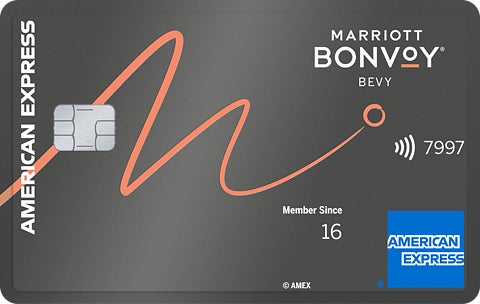
In 2022, American Express introduced the Marriott Bonvoy Bevy™ American Express® Card to fill a perceived gap in the mid-tier market. With a $250 annual fee, the Bevy card targets "aspirational" travelers who desire Gold Elite status without the high cost of ultra-premium cards. It offers 6 points per dollar at Marriott properties and 4 points per dollar on dining and groceries (up to $15,000 in combined purchases per year). However, the Bevy has faced scrutiny from analysts because, unlike the $95 Boundless card, it does not offer an automatic annual Free Night Award. Instead, cardholders must spend $15,000 in a calendar year to earn a 50,000-point certificate, making it a "spend-heavy" card compared to other options.
For the corporate and entrepreneurial sector, the Marriott Bonvoy Business® American Express® Card remains a critical component of the ecosystem. Priced at a $125 annual fee, this card is unique because its 15 Elite Night Credits can be "stacked" with the credits from a personal Marriott credit card. For instance, a traveler holding both the Chase Boundless and the Amex Business card would start each year with 30 Elite Night Credits, placing them only 20 nights away from Platinum Elite status. The card also features an annual Free Night Award (35,000-point level) and a 7% discount on standard room rates at participating Marriott Bonvoy properties, a benefit specifically designed to appeal to small business owners looking to reduce travel overhead.
The Ultra-Premium Tier: Marriott Bonvoy Brilliant
At the top of the hierarchy is the Marriott Bonvoy Brilliant® American Express® Card. With a $650 annual fee, it is positioned against other "heavyweight" luxury cards like the Hilton Honors Aspire or the Chase Sapphire Reserve. The Brilliant card underwent a significant refresh in late 2022, increasing its fee but substantially enhancing its benefits. Its most prominent feature is automatic Platinum Elite status, which grants cardholders room upgrades (including suites), late checkout, and complimentary breakfast at most brands.
The card also provides 25 Elite Night Credits annually, an $85,000-point annual Free Night Award, and a $25 monthly dining credit (up to $300 annually) that applies to restaurants worldwide. For high-frequency travelers, the Brilliant card is often viewed as a "membership" rather than a traditional credit card, where the tangible benefits—breakfast, lounge access, and high-value certificates—can easily exceed the $650 cost for those who stay at Marriott properties more than a dozen times per year.

Chronology of the Marriott-Amex-Chase Alliance
The current five-card lineup is the result of a complex evolutionary timeline. Prior to the Starwood merger, Chase held the exclusive rights to Marriott’s credit cards, while American Express held the rights to the Starwood Preferred Guest (SPG) portfolio. When the companies merged, the financial industry closely watched how the two banking giants would negotiate the rights to the combined 140-million-member loyalty program.
In December 2017, Marriott announced it would continue its relationships with both banks. Chase was granted the rights to "mass-market" and "no-fee" personal cards, while American Express was given the "premium" and "small business" segments. This led to a massive rebranding in February 2019, where the "SPG Luxury Card" became the "Bonvoy Brilliant" and the "Marriott Rewards Premier Plus" became the "Bonvoy Boundless." In 2022, the portfolio was further refined with the introduction of the Bevy and the sunsetting of older, "legacy" cards that are no longer open to new applicants but remain in the wallets of long-time members.
Strategic Application Rules and Eligibility
One of the most complex aspects of the Marriott credit card market is the eligibility matrix. Because the cards are split between two different banks, there are stringent "anti-stacking" rules designed to prevent consumers from earning multiple welcome bonuses across both Chase and American Express.
Prospective applicants must navigate the "90-day rule" and the "24-month rule." Generally, if a consumer has received a welcome bonus on a Chase Marriott card, they are ineligible for a bonus on an American Express Marriott card for 24 months, and vice versa. Furthermore, Chase’s "5/24 rule"—which restricts approvals for those who have opened five or more cards from any issuer in the past 24 months—applies to the Bold and Boundless cards. These restrictions have turned the acquisition of Marriott cards into a strategic long-term endeavor for many consumers, requiring careful timing to maximize the value of introductory offers.
Market Context and Broader Implications
The competition in the co-branded hotel card space has intensified as travel demand surged post-pandemic. Marriott’s primary competitors, Hilton and Hyatt, have also refined their offerings. Hilton, through American Express, offers a similar tiered structure, while Hyatt maintains a more exclusive partnership with Chase.
Data suggests that co-branded credit cards are a vital revenue stream for hotel chains. During quarterly earnings calls, Marriott executives have frequently highlighted the "stickiness" of Bonvoy members who carry a co-branded card. These members tend to stay more frequently and spend more per stay than non-cardholders. From a macroeconomic perspective, the shift toward higher annual fees (as seen with the Brilliant and Bevy) reflects a broader trend in the credit card industry where issuers are moving away from simple transaction fees and toward "subscription-style" annual fees in exchange for high-end lifestyle perks.
For the consumer, the choice of a Marriott card depends on a calculated assessment of "break-even" points. A traveler who stays at a Marriott property only once or twice a year may find the $0-fee Bold card sufficient. However, for those who stay five or more nights, the $95 Boundless card often pays for itself through the annual Free Night Award. The ultra-premium Brilliant card is targeted at a specific niche: the luxury traveler who values the "soft" benefits of Platinum status—such as the 4:00 PM late checkout—which can be difficult to quantify in dollars but significantly enhances the travel experience.
As the hospitality industry continues to evolve with dynamic pricing for award stays, the role of these credit cards as a "buffer" against rising travel costs becomes more pronounced. By earning points on everyday spend and utilizing annual certificates, cardholders can mitigate the inflation of hotel room rates. Marriott’s dual-issuer strategy remains a unique anomaly in the industry, providing a diverse range of financial tools that cater to the varying needs of a global traveler base. Whether seeking a simple way to keep points from expiring or looking to secure a suite upgrade at a Ritz-Carlton, the current five-card portfolio provides a structured path for every level of the Marriott Bonvoy loyalty program.




 Anjar Salim
 Chandra Hamzah
 Tatiana Tantri Indah Sari
 Lukman Taruna Persada Ramadan
