
 Tatiana Tantri Indah Sari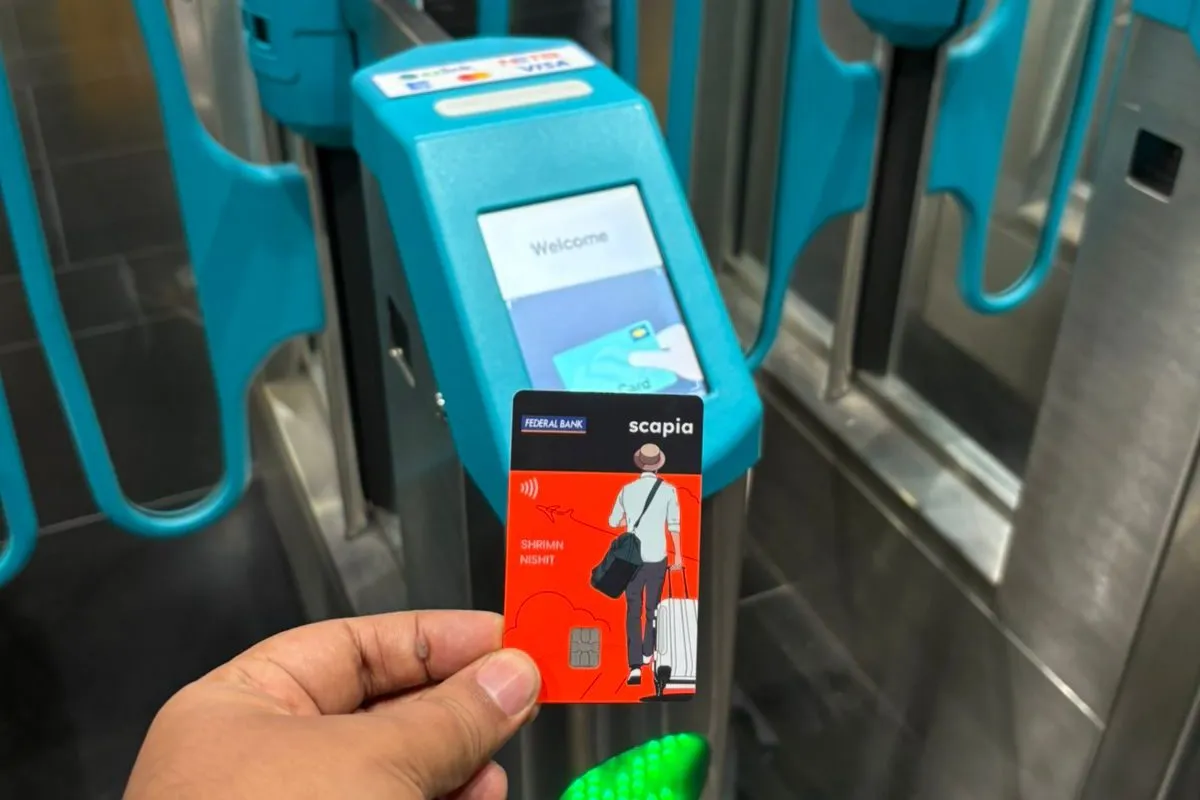
In a significant strategic departure from the fiercely competitive online travel agency (OTA) landscape in India, Bengaluru-based travel fintech Scapia is charting a course that prioritizes integrated payments, loyalty rewards, and a comprehensive travel ecosystem over direct price-based competition. This innovative approach, centered around a co-branded credit card, positions Scapia to capture the next generation of travelers by embedding travel rewards into everyday spending habits, culminating in a recently announced funding round that tripled its valuation to over half a billion dollars.
Disrupting a Price-Sensitive Market with a Holistic Approach
The Indian online travel market is notoriously price-sensitive, with established players like MakeMyTrip, Goibibo, EaseMyTrip, and Cleartrip frequently engaging in discount battles and promotional offers to attract and retain customers. This environment has historically made it challenging for new entrants to gain significant market share without substantial financial backing for price subsidies. Scapia, however, is deliberately avoiding this conventional battleground. Instead, its core proposition revolves around a seamless, closed-loop ecosystem accessible exclusively to its cardholders, integrating financial services with travel fulfillment.
At the heart of Scapia’s model is a co-branded credit card, issued in partnership with major Indian banks. This partnership is crucial, leveraging the existing banking infrastructure and trust while allowing Scapia to focus on its unique value proposition. Cardholders earn travel rewards, often termed "Scapia Miles" or similar, on their routine expenditures—from grocery shopping to utility payments—which can then be redeemed directly on Scapia’s proprietary booking platform. This platform is not merely a flight or hotel booking engine; it offers a comprehensive suite of travel services including flights, hotels, trains, buses, visa services, and even travel merchandise, creating a one-stop solution for a cardholder’s travel needs.
The strategic pivot from price to value and convenience is a calculated risk, but one that Scapia’s recent funding success suggests investors believe in. The company recently secured an additional $63 million in funding, pushing its total capital raised to $135 million and elevating its valuation to an impressive $539 million. This tripling of valuation in a relatively short period underscores the market’s confidence in Scapia’s potential to carve out a distinct niche and reshape consumer behavior within the Indian travel and fintech sectors.
The Evolution of Indian Travel and Fintech Landscapes
India’s digital economy has experienced explosive growth over the past decade, with fintech and online travel leading the charge. The Unified Payments Interface (UPI) has revolutionized digital payments, driving widespread adoption of cashless transactions and fostering a digitally native consumer base. Simultaneously, the online travel market, projected to reach over $40 billion by 2027, continues its robust expansion, fueled by increasing disposable incomes, a growing middle class, and improved connectivity.
However, despite this growth, the dominant narrative in online travel has remained competitive pricing. OTAs have heavily invested in marketing and technology to offer the best deals, often at wafer-thin margins. This environment has left a gap for a player that can offer a differentiated value proposition beyond just cost.
The co-branded credit card model itself is not new to India. Airlines, retailers, and fuel companies have successfully partnered with banks to offer cards that provide specific loyalty benefits, demonstrating the Indian consumer’s receptiveness to tailored rewards programs. What Scapia does differently is to fully integrate the earning and redemption within its own travel ecosystem, eliminating the need to transfer points or navigate complex redemption processes across multiple platforms. This simplification is key to its appeal, especially for a demographic increasingly seeking frictionless digital experiences.
A Deep Dive into Scapia’s Differentiated Offering
Scapia’s credit card comes packed with features designed to appeal to frequent travelers and those aspiring to travel more frequently. Beyond the core rewards system, the card boasts zero foreign exchange markup, a significant advantage for international travelers who often incur substantial fees on overseas transactions. This feature alone can lead to considerable savings, making the card particularly attractive for global itineraries.
Furthermore, the card offers "airport privileges beyond traditional lounge access." While specific details are often proprietary, this could encompass benefits such as priority check-in, expedited security, baggage services, or even exclusive dining offers at airports, enhancing the overall travel experience from the moment a journey begins. Another compelling feature is the option to convert travel bookings into three-month no-cost installments. This financial flexibility removes a significant barrier for many travelers, allowing them to manage their travel expenses more effectively without incurring immediate interest charges, thereby making aspirational trips more attainable.
The closed ecosystem is fundamental to Scapia’s strategy. By restricting access to its travel marketplace to cardholders only, Scapia creates an exclusive community, fostering loyalty and encouraging greater engagement within its platform. This approach also provides Scapia with rich data insights into its users’ spending and travel patterns, enabling more personalized offers and services, further strengthening the value proposition.
Chronology of Growth and Funding Milestones
While Scapia’s exact founding date is not widely publicized, its rapid ascent in the Indian fintech and travel tech space indicates a recent and aggressive growth trajectory. The company likely commenced operations within the last few years, identifying the underserved niche for integrated travel finance.
- Inception (Estimated Early 2020s): Scapia was founded with the vision of combining financial services and travel booking, moving beyond traditional price-driven OTA models.
- Initial Product Development & Partnerships: The early phase would have involved developing the proprietary booking platform, securing crucial partnerships with Indian banks for credit card issuance, and establishing relationships with airlines, hotels, and other travel service providers.
- Seed/Early-Stage Funding Rounds: Prior to the most recent announcement, Scapia would have secured initial funding rounds to build its team, technology, and market presence. The initial funding, leading up to the total $135 million, would have been critical for proving the concept and scaling operations.
- Recent Series B/Growth Round (Late 2023/Early 2024): The recent $63 million capital infusion marks a significant growth stage for Scapia, reflecting investor confidence in its market traction and future potential. This round has been instrumental in tripling its valuation to over $539 million, positioning it as a significant player in the Indian startup ecosystem. This funding will likely fuel further product development, market expansion, and customer acquisition initiatives.
Inferred Statements and Industry Reactions
Anurag Tandon, CEO and Founder of Scapia (Inferred Statement):
"Our vision for Scapia has always been to move beyond the transactional nature of travel booking and create a truly integrated and rewarding experience for the modern traveler. We believe that the next generation of travelers isn’t just looking for the cheapest flight; they’re looking for value, convenience, and a seamless journey from everyday spending to dream destinations. Our co-branded credit card, with its zero forex markup, unique airport privileges, and flexible payment options, is designed to be their ultimate travel companion. The overwhelming response from our users and the confidence shown by our investors in this latest funding round validate our belief that loyalty, payments, and an integrated ecosystem are the future of travel."
Industry Analyst (Hypothetical):
"Scapia’s strategy represents an intelligent disruption in a crowded market. By leveraging the immense growth of India’s fintech sector and combining it with travel, they are creating a powerful flywheel effect. The Indian consumer is increasingly sophisticated and values convenience and personalized rewards. While the traditional OTAs will continue to dominate the price-sensitive segment, Scapia is effectively targeting a segment that prioritizes an enhanced experience and tangible benefits from their everyday financial interactions. The challenge will be in scaling this model, maintaining competitive rewards, and expanding the breadth of their travel services to retain cardholder loyalty against established players and potential new entrants."
Banking Partner Representative (Hypothetical):
"Our partnership with Scapia aligns perfectly with our strategy to offer innovative financial products that cater to evolving consumer needs. Co-branded credit cards are a proven model for customer acquisition and loyalty, and Scapia’s unique proposition in the travel sector is particularly compelling. We see tremendous potential in combining our robust banking infrastructure with Scapia’s specialized travel platform to deliver superior value to our shared customer base and capitalize on the growing demand for integrated financial and lifestyle solutions."
Broader Impact and Future Implications
Scapia’s emergence and success carry significant implications for the Indian travel and fintech industries:
- Shifting Consumer Behavior: Scapia’s model could accelerate a shift in consumer behavior, moving away from purely price-driven decisions towards a preference for integrated loyalty programs that offer holistic value. This could encourage other players to innovate beyond discounts.
- Innovation in Fintech-Travel Convergence: The company serves as a prime example of successful convergence between fintech and travel tech. This integration could inspire further innovation, leading to more embedded finance solutions within various lifestyle verticals.
- Challenges for Traditional OTAs: While not a direct price competitor, Scapia poses an indirect threat to traditional OTAs by capturing a segment of high-value, loyal travelers. OTAs may need to explore enhanced loyalty programs, exclusive benefits, or their own financial product integrations to remain competitive.
- Increased Competition in Co-branded Cards: Scapia’s success could spur other niche players or even existing banks to launch similar vertical-specific co-branded cards, leading to a more competitive landscape for loyalty programs.
- Data-Driven Personalization: The closed ecosystem provides Scapia with a wealth of data on spending and travel patterns. This data can be leveraged for highly personalized offers, dynamic pricing, and curated travel experiences, potentially setting a new standard for personalization in the industry.
- Scalability and Regulatory Hurdles: For Scapia, the primary challenges will involve scaling its cardholder base rapidly while maintaining the quality of its travel services and rewards. Navigating India’s evolving financial regulations and ensuring robust cybersecurity measures will also be crucial for sustained growth and consumer trust.
- Potential for International Expansion: If successful in India, Scapia’s model could potentially be replicated in other emerging markets with similar characteristics—a large, digitally savvy population, growing travel aspirations, and a developing fintech ecosystem.
In conclusion, Scapia is not merely another player in the crowded Indian travel market; it represents a paradigm shift. By intricately weaving together everyday spending, robust loyalty rewards, and a comprehensive travel marketplace through a compelling credit card offering, Scapia is redefining how the next generation of Indian travelers interacts with and experiences travel. Its substantial funding and soaring valuation underscore a strong belief from investors that this integrated approach, rather than relentless price wars, will determine the future landscape of travel booking in one of the world’s most dynamic economies.




 Anjar Salim
 Chandra Hamzah
 Budi Mulyono

