
 Budi Mulyono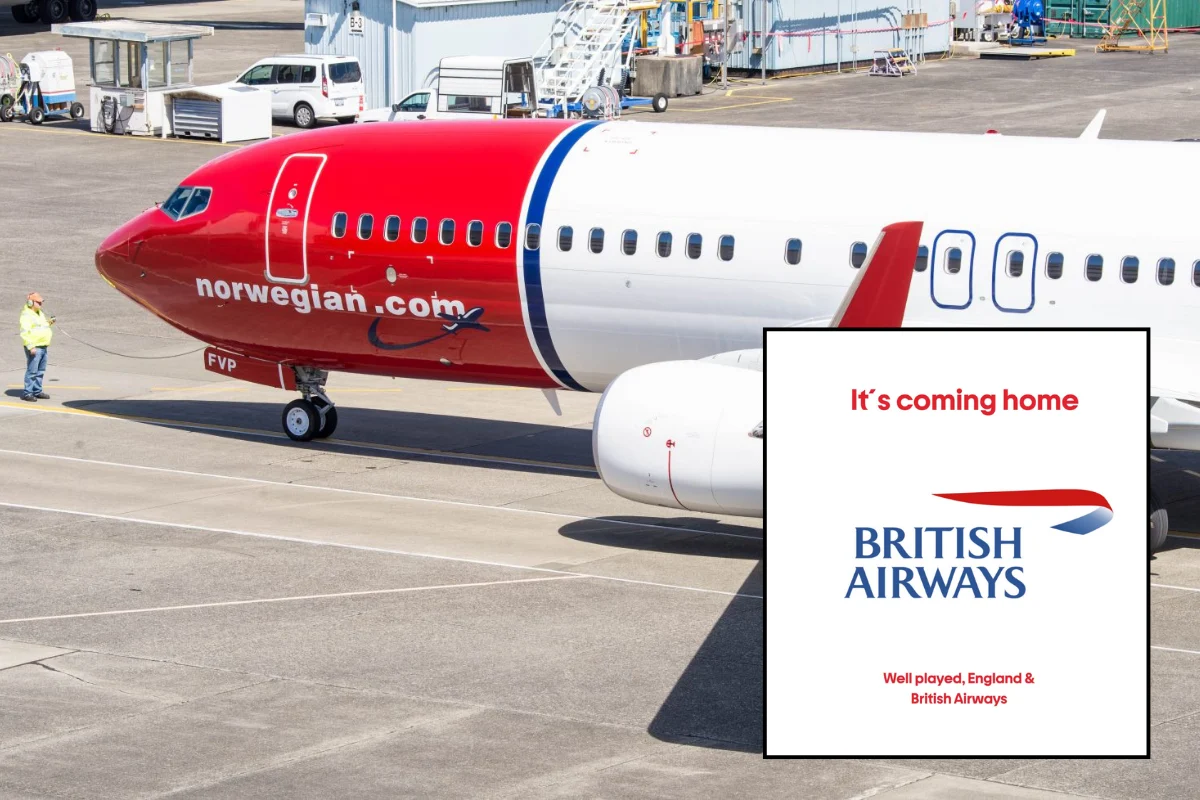
Norwegian Air, the Oslo-based low-cost carrier, has officially replaced its own corporate identity on its primary Instagram channel with the logo of its long-time rival, British Airways, after losing a high-stakes bet surrounding the FIFA World Cup. The transition, which saw the iconic Norwegian "Red Nose" branding temporarily shelved in favor of the British flag-carrier’s Speedmark logo, follows a quarterfinal match between England and Norway that captivated football fans and aviation enthusiasts alike. The match, held in Miami, ended in a 2-1 victory for England, triggering a series of pre-arranged digital forfeits that highlight a growing trend of "banter-based" marketing within the global aviation industry.
The Genesis of the Wager and Digital Diplomacy
The challenge began in the days leading up to the highly anticipated quarterfinal clash. Norwegian Air, known for its agile and often provocative social media presence, initiated a digital "troll" against British Airways. The Oslo-based airline proposed a formal wager: the losing side would be required to adopt the victor’s branding on their official Instagram page for a 24-hour period. While such public challenges are common among smaller brands, the participation of a legacy carrier like British Airways—a company often associated with traditional British reserve and rigorous corporate governance—was unexpected.
According to internal reports from both carriers, the proposal underwent a rapid but thorough review process. Surprisingly, the legal and brand management teams at British Airways’ headquarters, "The Waterside" near London Heathrow, granted the social media team the autonomy to engage in the rivalry. This approval marked a significant departure from standard industry protocols, where logo usage and brand representation are typically guarded by months of bureaucratic oversight.
To formalize the agreement, Norwegian Air dispatched an intern from Oslo to London via a commercial flight. The representative carried a physical USB stick containing high-resolution files of Norwegian’s logos, which were exchanged with British Airways officials at their Heathrow headquarters. This physical exchange of digital assets added a layer of tangible stakes to what began as an online interaction, signaling to the public that both airlines were committed to the outcome of the match.
Match Analysis: England vs. Norway in Miami
The quarterfinal match took place in Miami, serving as a neutral but high-energy backdrop for the European showdown. Norway entered the match with significant momentum, supported by a domestic campaign led by Norwegian Air that encouraged passengers to engage in the "Viking Row"—a rhythmic, synchronized celebration that has become synonymous with Norwegian national pride. Onboard flights across the carrier’s network, cabins were adorned with national flags, and crew members actively promoted the team’s prospects.
However, the English side, led by the tactical prowess of its midfield, proved too formidable for the Norwegian defense. The match was decided by Jude Bellingham, the Real Madrid star, who demonstrated why he is considered one of the premier talents in global football. Bellingham scored both goals for England, securing a 2-1 victory. Despite a spirited performance from the Norwegian squad, the final whistle confirmed England’s advancement to the semi-finals and triggered the immediate activation of the bet’s terms.
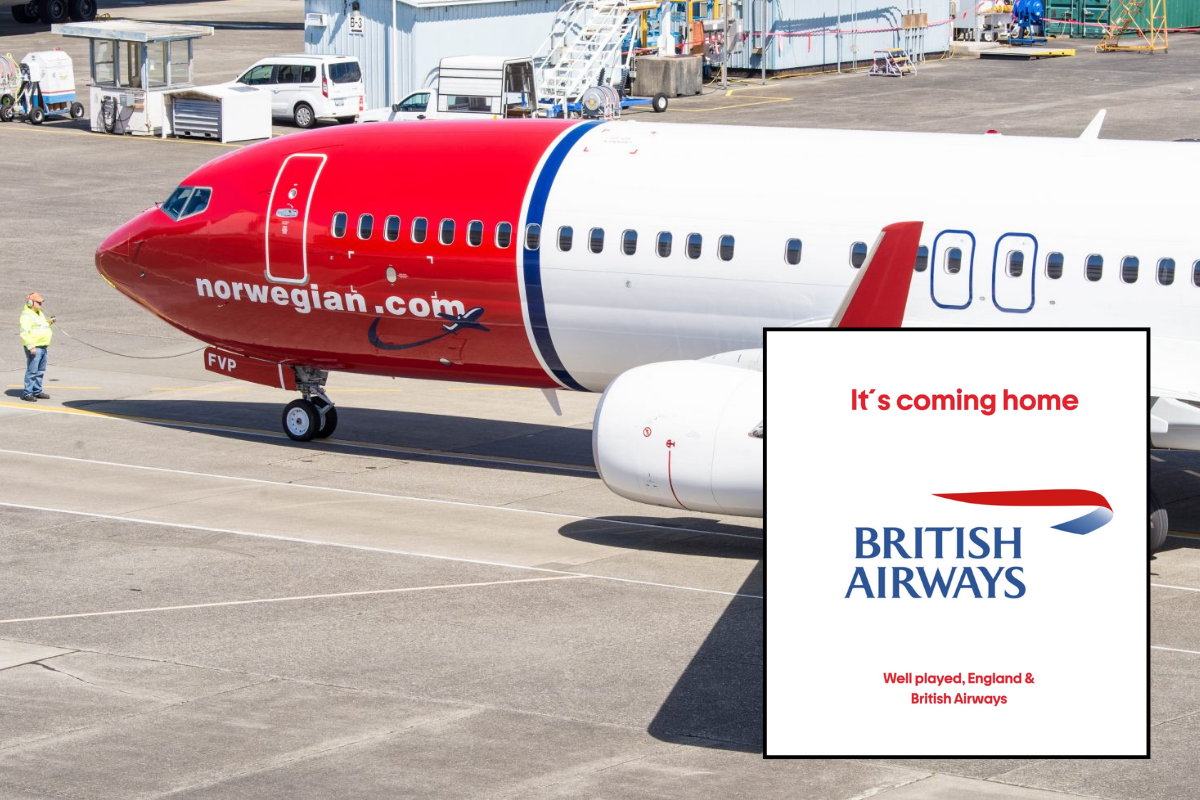
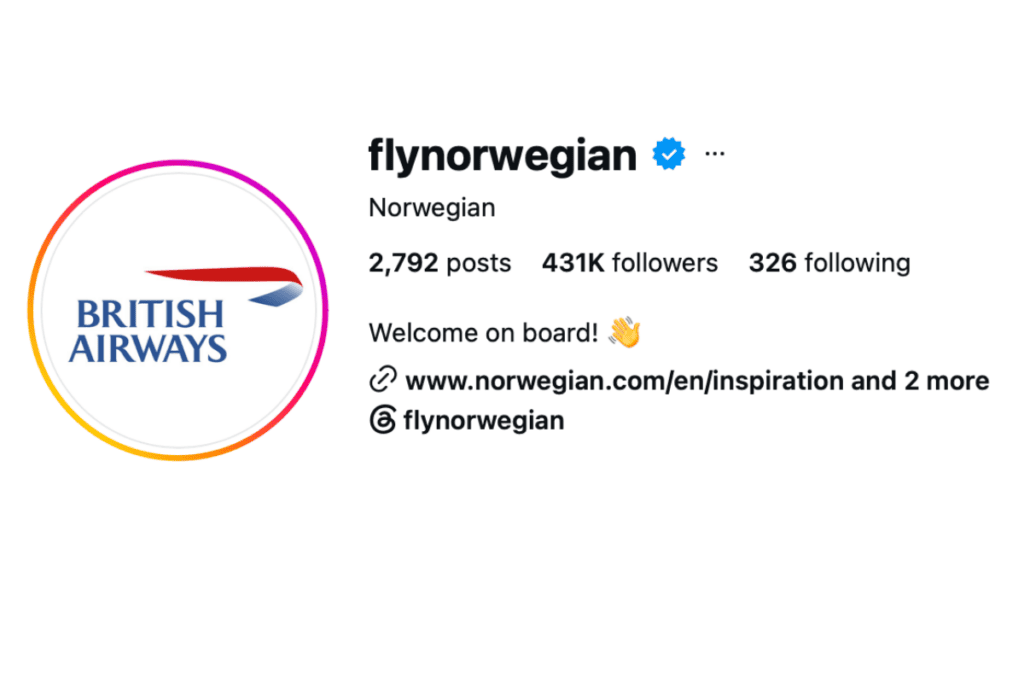
As celebrations erupted across England and within the British Airways social media offices, Norwegian Air moved to fulfill its obligation. By Sunday morning, the Norwegian Air Instagram profile, which serves hundreds of thousands of followers, displayed the British Airways crest.
Industry Reactions and Peer Engagement
The branding shift prompted an immediate wave of engagement from other major players in the aviation sector. The "oneworld" alliance members and other international carriers utilized the moment to bolster their own social media visibility through witty commentary. Qantas, the Australian flag carrier and a partner of British Airways within the oneworld alliance, commented on the post, stating, "felt cute might delete later xx," adopting the colloquial language of social media trends to acknowledge the temporary nature of the change.
Malaysia Airlines also weighed in, highlighting the administrative feat involved in such a rapid branding change. The airline noted that most major carriers require "six months and 14 approvals" to alter a logo, praising Norwegian Air for its agility and sportsmanship. This sentiment was echoed by industry analysts who pointed out that the stunt provided Norwegian Air with a level of organic reach and brand sentiment that traditional advertising spend rarely achieves.
In a follow-up post, Norwegian Air maintained its professional yet friendly tone, stating, "While the tournament is over for us, this friendly bet will forever live in all our hearts. We wish England and British Airways all the best in the semi-final, and we sincerely hope you’ll get to bring football home!" British Airways responded in kind, cheekily remarking that they "loved this new look" on their rival.
Strategic Marketing and Consumer Incentivization
Beyond the aesthetic changes to its social media profile, Norwegian Air leveraged the increased traffic to drive direct revenue. Hours after the match concluded, the airline released a promotional discount code specifically targeting passengers traveling between England and Norway. By converting the "loss" into a sales opportunity, Norwegian Air demonstrated a sophisticated understanding of real-time marketing.
This strategy is particularly relevant given Norwegian’s current business model. After a period of aggressive international expansion, the airline has refocused its efforts on its core Nordic markets and short-haul European routes. Campaigns that strengthen its identity as "Norway’s airline" while maintaining a visible presence in the UK market are essential for its long-term stability.
Historical Context: From Fierce Rivalry to Friendly Wagers
The current camaraderie between Norwegian Air and British Airways stands in stark contrast to their relationship a decade ago. During the mid-2010s, Norwegian Air was a primary disruptor in the transatlantic market, directly challenging British Airways’ dominance at London Gatwick Airport. Norwegian’s "low-cost, long-haul" model, utilizing a fleet of Boeing 787 Dreamliners, forced legacy carriers to reassess their pricing structures and service offerings.
However, Norwegian’s expansion was plagued by significant operational hurdles. The airline’s fleet of Boeing 787s was severely impacted by ongoing maintenance issues with the Rolls-Royce Trent 1000 engines. These technical failures led to frequent groundings, forced "wet-leasing" of replacement aircraft at high costs, and a mounting debt load that threatened the company’s existence. The onset of the COVID-19 pandemic in 2020 served as the final blow to Norwegian’s long-haul ambitions, leading to a comprehensive restructuring process under Irish examinership and Norwegian reconstruction law.
In 2021, Norwegian emerged from its restructuring as a leaner, more focused entity. It abandoned its long-haul routes to North America and South America, returned its Boeing 787 fleet to lessors, and pivoted back to a Boeing 737-based operation focused on Scandinavia and Europe. This retreat to its core market proved successful; the airline has returned to profitability and has solidified its position as a reliable regional player. The ability to engage in lighthearted bets with British Airways today reflects a more stable, confident Norwegian Air that no longer seeks to dismantle the legacy carriers but rather to coexist profitably alongside them.
The Broader Impact on Aviation Branding
The "logo bet" represents a shift in how airlines communicate with their audience. Traditionally, aviation marketing has been characterized by images of luxury, punctuality, and safety. While these remains pillars of the industry, the rise of digital platforms has necessitated a more "humanized" brand voice.
Airlines like Ryanair and Southwest have long used humor to engage customers, but seeing a legacy carrier like British Airways participate in a logo-swap bet suggests that the "stiff upper lip" of traditional aviation is softening in the face of digital-first consumer expectations. For British Airways, the stunt provides a youthful, approachable edge. For Norwegian, it reinforces its image as a resilient and "fun" alternative to the incumbents.
As the FIFA World Cup progresses, the intersection of sports, national identity, and corporate branding continues to provide a fertile ground for creative marketing. While Norwegian Air may have lost the match in Miami, the resulting media coverage and consumer engagement suggest that in the world of airline marketing, they may have secured a tactical victory. The logo change will remain in effect for 24 hours, after which Norwegian will revert to its standard branding, though the data suggests the "Viking Row" spirit and the memory of the wager will linger much longer in the digital archives of the industry.



 Anjar Salim
 Chandra Hamzah
 Tatiana Tantri Indah Sari
 Lukman Taruna Persada Ramadan
