
 Anjar Salim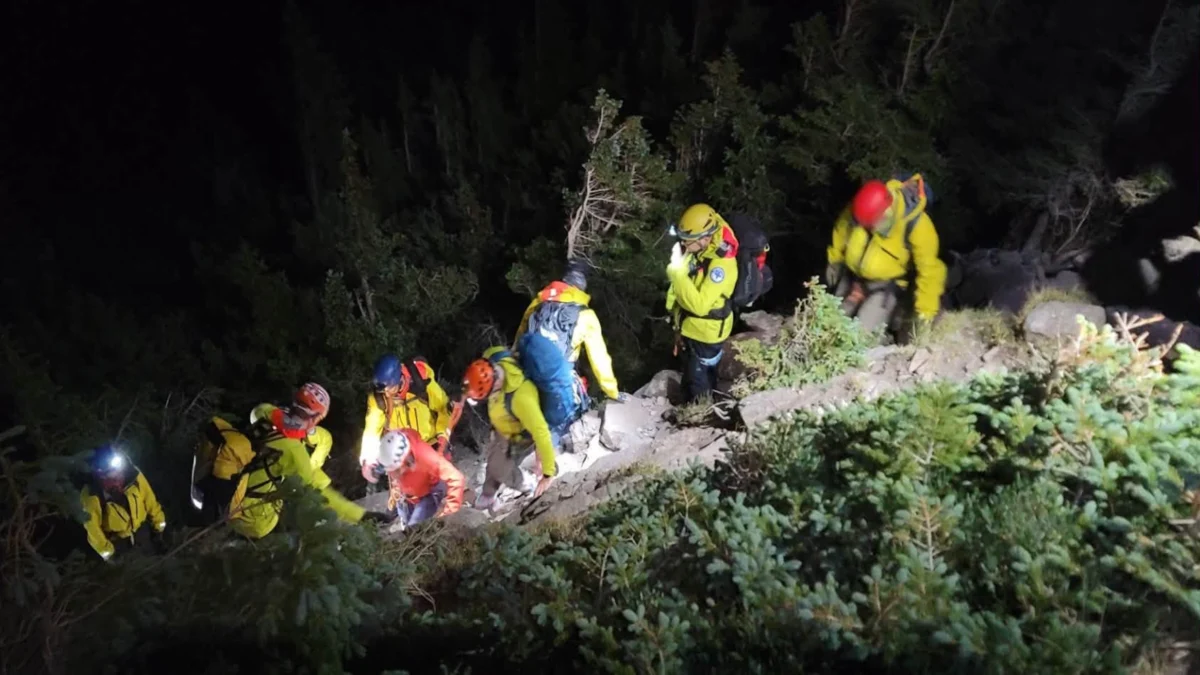
On July 12, 2026, an experienced mountaineer found herself at the center of a complex, 13-hour rescue operation in the Sangre de Cristo Mountains of Colorado after a routine high-alpine traverse turned into a life-threatening emergency. The hiker, who had successfully summited two peaks earlier in the day, suffered a debilitating knee injury approximately 400 feet below the 12,585-foot summit of Broken Hand Pass. The ensuing mission, involving 24 responders from multiple agencies and a Flight For Life helicopter, has become a primary case study for Colorado search and rescue (SAR) teams to illustrate that even the most seasoned backcountry users are susceptible to the inherent volatility of the high-alpine environment.
The incident occurred in a region of the Sangre de Cristo range notorious for its "chossy" terrain—a mountaineering term for loose, unstable, and crumbly rock. Despite the hiker’s extensive experience and successful navigation of a technical traverse earlier that day, a single unstable rock shifted beneath her weight, leading to a fall that rendered her non-ambulatory. What followed was a grueling overnight operation that tested the endurance of volunteer rescuers and highlighted the critical importance of specialized survival gear.
Chronology of the Rescue Operation
The emergency began late in the afternoon on July 12. At 4:45 P.M., the hiker managed to establish a cellular connection to contact Custer County Search and Rescue (CCSAR). While cellular service is notoriously unreliable in the Sangre de Cristo Mountains, the hiker’s position near the crest of the pass allowed for a stable enough signal to relay her coordinates and the nature of her injury.
By 5:00 P.M., CCSAR mobilized a coordinated response. Recognizing the severity of the terrain and the "non-ambulatory" status of the patient, the team requested aerial support from Flight For Life Colorado. The use of a helicopter was a strategic decision to bypass the logistical hurdles of the approach; while the flight from the base to the pass took approximately five minutes, the equivalent journey by road involves a punishing two-hour drive over a rugged four-wheel-drive track, followed by a steep, multi-mile hike.
At approximately 5:30 P.M., the helicopter inserted four technical rescue members and 125 pounds of specialized equipment—including ropes, a litter (rescue stretcher), and medical supplies—to a landing zone near the pass. Simultaneously, a ground crew of 19 members from Custer County and five additional responders from Chaffee County Search and Rescue-South began the two-mile ascent on foot from the trailhead.
The extraction phase began at dusk. Because the hiker was located on a steep, unstable slope, rescuers had to implement a technical rope system to safely lower her in a litter. This process is inherently slow and dangerous, particularly in the Sangre de Cristos where rockfall is a constant hazard. The operation continued through the night, with rescuers working in near-total darkness, guided only by headlamps. The mission was finally completed at 6:00 A.M. the following morning, more than 13 hours after the initial distress call.
The Geography of Risk: Broken Hand Pass
Broken Hand Pass serves as a primary access point for climbers targeting the "Crestone Group," which includes Crestone Peak and Crestone Needle—two of Colorado’s most challenging 14,000-foot peaks. The pass itself is characterized by steep scree fields and "conglomerate" rock, which consists of stones embedded in a sandy matrix. This geological composition makes the area prone to shifting, especially during the summer months when thermal expansion and heavy hiker traffic loosen the surface.
Rescuers noted that the hiker’s accident was not the result of negligence but rather the statistical reality of high-altitude travel. "We’re never in control of what happens out there," Melissa Harth of CCSAR stated during a post-mission briefing. "A rock can slip under our foot. Unexpected things happen."
The Sangre de Cristo range is one of the most rugged in the lower 48 states, featuring dramatic vertical relief. Rescues in this area are frequently "technical," meaning they require ropes and specialized anchors rather than simple "carry-outs." The environmental conditions during this specific rescue were further complicated by drifting wildfire smoke from regional burns, which reduced visibility for the aerial teams and complicated breathing for the ground crews working at high exertion.
The Survival Gear Factor: A Life-Saving Inventory
While the technical skill of the SAR teams was paramount, officials credited the hiker’s own preparation as the primary reason the incident did not result in a fatality. Despite planning only for a day trip, she carried a kit that exceeded the "Ten Essentials," allowing her to survive the plummeting temperatures of a high-altitude night.
- Satellite and Cellular Redundancy: The hiker carried both a cell phone and a Garmin inReach satellite communicator. While she was lucky to have cell service, the inReach provided a failsafe for GPS tracking and ensured that if the cell signal dropped, communication with rescuers would remain uninterrupted.
- High-Lumen Signaling: As darkness fell, the hiker used a high-output headlamp to signal her position. Rescuers noted that this made her visible from a distance, allowing ground teams to navigate directly to her rather than conducting a grid search.
- Thermal Protection: Although mid-July temperatures in the valleys can be sweltering, alpine temperatures on the pass dropped into the 40s Fahrenheit. The hiker’s emergency bivy sack and extra layers of brightly colored clothing prevented the onset of hypothermia during her ten-hour wait for extraction.
- Power Management: An external battery bank proved crucial. Constant communication with SAR dispatchers and the use of GPS apps can drain a smartphone battery within hours; the power bank ensured the hiker remained "online" throughout the night.
- Head Protection: The hiker was wearing a climbing helmet at the time of her fall. In the "chossy" environment of Broken Hand Pass, where rockfall is frequently triggered by wind or wildlife, a helmet is often the difference between a limb injury and a fatal head trauma.
Official Responses and Tactical Analysis
The mission involved a high degree of inter-agency cooperation. Custer County SAR worked alongside Chaffee County SAR-South, demonstrating the mutual-aid system that underpins Colorado’s emergency response network. Most of these responders are volunteers who leave their professional jobs and families to conduct rescues that often last through the night.
"Transporting a non-ambulatory patient through this terrain is challenging in the dark. It’s challenging in the light. It’s just challenging," Harth emphasized. The technical rope lower required 24 people not just for the technical setup, but for the "manpower" needed to rotate the litter-bearers. Carrying a person in a litter over uneven, loose rock requires six people at a time, with frequent rotations to prevent rescuer fatigue.
Medical personnel on the scene noted that the hiker’s ability to stay hydrated and nourished during the wait—thanks to the extra food and water she packed—kept her in a stable physiological state, which simplified the medical intervention required once rescuers reached her.
Broader Implications for Backcountry Safety
This incident serves as a rebuttal to the "it won’t happen to me" mindset often found among experienced outdoor enthusiasts. The Colorado Search and Rescue Association (CSRA) has observed a trend where "expert" hikers may trim their pack weight to move faster, often at the expense of emergency gear. This case reinforces the "Pack for the Night, Not the Day" philosophy.
In Colorado, search and rescue services are typically provided free of charge to the subject, funded largely by the sale of hunting and fishing licenses, hiking "COSRIC" cards, and donations. However, the "cost" is measured in the risk taken by volunteers. Officials hope this story encourages hikers to view preparation as a continuous discipline rather than a beginner’s hurdle.
The 13-hour ordeal on Broken Hand Pass concludes as a success story of modern SAR capabilities and individual responsibility. By carrying the necessary equipment to survive an unplanned night in the wilderness, the hiker transformed a potential tragedy into a manageable, albeit difficult, rescue operation. As high-alpine traffic continues to increase in the Sangre de Cristo Mountains, authorities remain focused on education, reminding the public that in the mountains, experience is no substitute for an emergency bivy and a headlamp.




 Chandra Hamzah
 Tatiana Tantri Indah Sari
 Budi Mulyono
 Lukman Taruna Persada Ramadan