
 Tatiana Tantri Indah Sari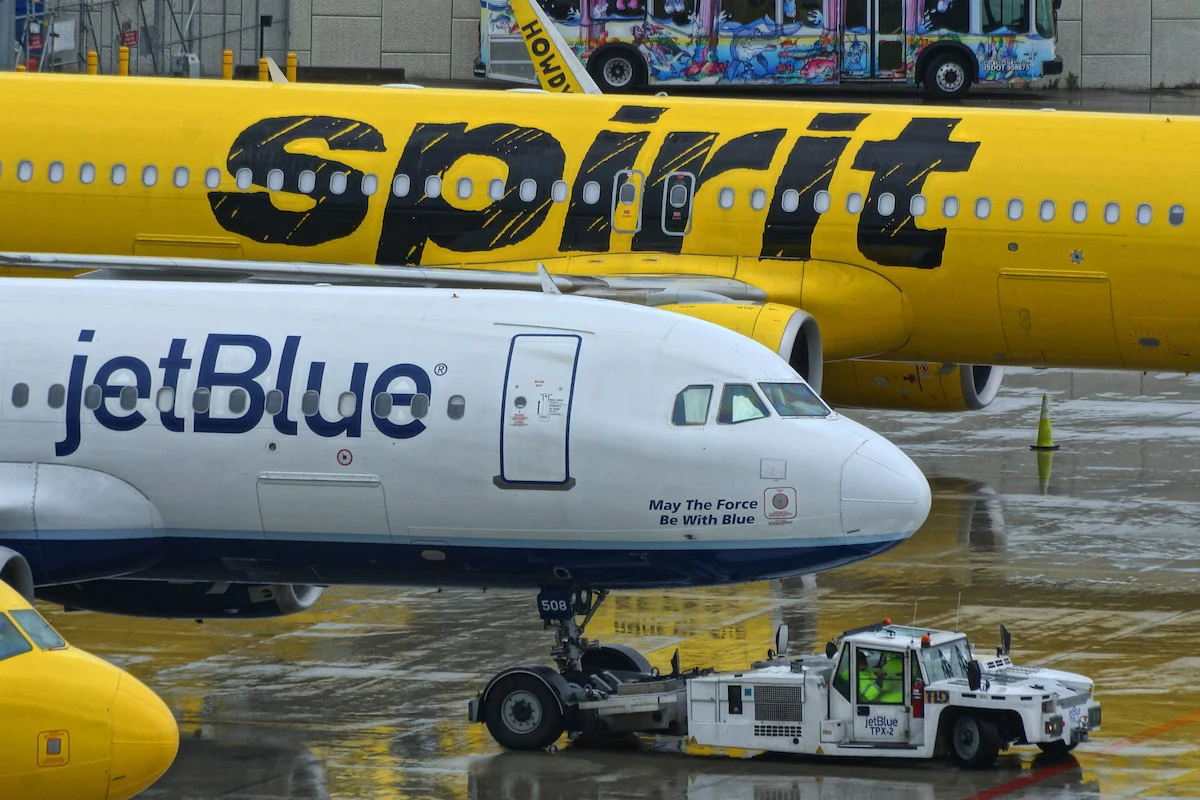
JetBlue Airways has emerged victorious in the bidding war for Spirit Airlines’ valuable operating slots at New York’s LaGuardia Airport (LGA), agreeing to a $58.5 million acquisition that will significantly bolster its capacity at one of the nation’s most constrained and economically vital airports. The agreement, contingent on approval from the U.S. Bankruptcy Court for the Southern District of New York, marks a pivotal moment for both carriers and could reshape the competitive dynamics of air travel in the bustling Northeast corridor.
The successful bid positions JetBlue to gain 22 coveted slots at LaGuardia’s historic Marine Air Terminal, a distinctive Art Deco facility where Spirit Airlines previously conducted its operations. These slots, representing specific takeoff and landing authorizations, are a rare commodity in slot-controlled airports like LGA, where expansion opportunities are severely limited by infrastructure and regulatory constraints. The transaction, once finalized, is expected to enhance JetBlue’s strategic position in its primary focus city, New York, allowing for increased frequencies, new route introductions, or improved scheduling flexibility to better serve its customer base.
The Bidding Process and Court Oversight
The acquisition process unfolded through a structured auction managed under the auspices of the U.S. Bankruptcy Court. Spirit Airlines, facing significant financial headwinds and a complex strategic repositioning following the collapse of its proposed merger with JetBlue, initiated the sale of these assets as part of a broader effort to shore up its balance sheet. Court documents reveal that Frontier Airlines, another ultra-low-cost carrier with ambitions to expand its presence in key metropolitan markets, was JetBlue’s primary competitor in the auction, submitting a robust bid of $57.5 million—just $1 million shy of JetBlue’s winning offer.
A hearing has been scheduled for Wednesday at the U.S. Bankruptcy Court of the Southern District of New York to formally approve JetBlue’s $58.5 million bid. This judicial oversight is standard practice for asset sales involving companies undergoing bankruptcy proceedings, ensuring transparency and fairness for all stakeholders, including creditors. The court’s approval is a critical final step, paving the way for the transfer of these valuable operating rights from Spirit to JetBlue.
The Strategic Imperative of LaGuardia Slots
LaGuardia Airport holds unique strategic importance within the highly competitive New York metropolitan area aviation market. Unlike its larger counterparts, John F. Kennedy International (JFK) and Newark Liberty International (EWR), LGA is subject to strict slot controls imposed by the Federal Aviation Administration (FAA) to manage air traffic congestion. These slots are not merely permits; they are finite, highly valuable assets that dictate an airline’s ability to operate flights at peak times.
The scarcity of slots at LGA means that any opportunity to acquire them is fiercely contested. For airlines, obtaining additional slots translates directly into increased market access, higher passenger volumes, and enhanced revenue potential in a lucrative business and leisure travel market. The estimated value of such slots varies widely depending on market conditions, but a single pair of takeoff and landing slots at a constrained airport like LGA can command tens of millions of dollars, underscoring the significant investment JetBlue is making. Spirit Airlines had previously estimated the value of its LGA slots to be substantial, an assessment now validated by the outcome of this competitive bidding process.
Background: Spirit’s Financial Landscape and Failed Merger
The decision by Spirit Airlines to divest its LaGuardia slots is deeply intertwined with its recent corporate history, particularly the tumultuous journey of its proposed acquisition by JetBlue. In July 2022, after a protracted bidding war that also involved Frontier Airlines, JetBlue successfully outbid Frontier to acquire Spirit Airlines for $3.8 billion. The stated goal was to create the fifth-largest airline in the United States, offering a compelling alternative to the legacy carriers.
However, this ambitious merger faced immediate and significant antitrust scrutiny from the U.S. Department of Justice (DOJ). The DOJ filed a lawsuit to block the merger, arguing that it would lead to higher fares, reduced choices, and less innovation for consumers, particularly by eliminating Spirit, a key ultra-low-cost competitor. A federal judge ultimately sided with the DOJ in January 2024, ruling against the merger. This judicial decision effectively dissolved the merger agreement, leaving Spirit Airlines in a precarious financial position.
Post-merger collapse, Spirit has grappled with significant financial challenges, including heavy losses, reduced cash flow, and concerns about its long-term viability as an independent entity. The airline reported a net loss of $183.6 million in the first quarter of 2024, and its stock has seen a dramatic decline. In this context, the sale of valuable assets like the LaGuardia slots represents a strategic move to raise capital, strengthen its liquidity, and potentially streamline its network as it navigates a challenging independent future. This divestiture helps Spirit unlock capital from non-core or less profitable assets to invest in its core network or manage debt obligations.
JetBlue’s Northeast Strategy and Market Dominance
For JetBlue, the acquisition of these 22 slots is a significant victory that aligns perfectly with its long-standing strategy of building out its presence in the Northeast, particularly within the New York market, which it considers its home base. JetBlue has consistently aimed to challenge the dominance of legacy carriers like Delta Air Lines and American Airlines in this region.
With existing operations at all three major New York airports—JFK, LGA, and EWR—JetBlue has sought to offer a compelling alternative with its focus on customer experience, amenities like free Wi-Fi, and its Mint premium service. The additional slots at LaGuardia will enable JetBlue to:
- Expand its network: Potentially introduce new routes from LGA to underserved markets or enhance connectivity to existing popular destinations.
- Increase frequencies: Offer more daily flights on key business and leisure routes, providing greater flexibility and choice for travelers.
- Optimize scheduling: Improve flight times to better suit passenger demand, especially for business travelers who value convenient departure and arrival slots.
- Consolidate presence at Marine Air Terminal: Potentially centralize more of its LGA operations, improving operational efficiency and passenger experience within a specific terminal.
This move comes after JetBlue’s previous "Northeast Alliance" (NEA) with American Airlines was also dissolved due to antitrust concerns. The NEA had allowed the two airlines to coordinate flights and share revenue in the Northeast, giving them significant market power. With the NEA dissolved, JetBlue is now pursuing an independent growth strategy, and acquiring these slots is a tangible step in that direction, demonstrating its commitment to organic growth and strengthening its competitive standing. Analysts suggest that increasing capacity at slot-constrained airports is a far more effective long-term growth strategy than attempting controversial mergers.
Frontier Airlines’ Unfulfilled Ambitions
Frontier Airlines’ aggressive bid of $57.5 million underscores its keen interest in expanding its ultra-low-cost model into high-demand, high-yield markets like New York. As a ULCC, Frontier aims to stimulate demand with low base fares and ancillary revenue. Gaining a foothold at LGA would have allowed Frontier to offer competitive pricing into the dense New York market, potentially attracting a new segment of travelers.
Missing out on these slots is undoubtedly a setback for Frontier’s immediate expansion plans in New York. While the airline has a presence at other airports in the region, including EWR and some smaller regional airports, LGA offers direct access to Manhattan and the surrounding boroughs, making it a highly desirable hub for any carrier looking to capture a significant share of the NYC market. Frontier will likely continue to explore other avenues for growth, potentially focusing on secondary markets or alternative airports to expand its network.
Broader Implications for the Northeast Air Travel Market
The transfer of these 22 slots from Spirit to JetBlue carries several broader implications for the competitive landscape and consumer experience in the Northeast:
- Increased Competition at LGA: While Spirit’s presence as an ultra-low-cost carrier offered a specific market segment, JetBlue’s expansion could intensify competition on specific routes, potentially leading to more competitive fares or improved service offerings as other airlines react to JetBlue’s bolstered capacity. JetBlue’s hybrid model, offering a mix of low fares and premium amenities, adds a different dimension to the market than Spirit’s pure ULCC approach.
- Consumer Choice and Connectivity: For travelers, the acquisition could mean more direct flight options, increased frequency, and potentially better scheduling out of LaGuardia, enhancing convenience and reducing travel times. The specific routes JetBlue chooses to deploy these slots on will determine the direct impact on consumer choice.
- Airport Utilization: The Marine Air Terminal, historically significant for its role in early aviation and as a seaplane base, will see continued robust activity under JetBlue’s expanded operations. LGA itself, having undergone a massive multi-billion-dollar redevelopment, continues to optimize its gates and concourses, and efficient slot utilization is crucial for its overall operational success.
- Regulatory Scrutiny and Future Precedent: While the sale is occurring through a bankruptcy process, regulatory bodies like the FAA and DOT will monitor the slot transfer to ensure it adheres to competitive guidelines and does not unduly harm the market. This transaction could also set a precedent for how valuable assets are managed and transferred in the event of airline distress or market shifts.
- Spirit Airlines’ Future: The sale provides Spirit with much-needed capital, but it also means a further reduction in its presence at a major slot-controlled airport. This divestiture raises ongoing questions about Spirit’s long-term network strategy, profitability, and overall ability to compete effectively as a standalone airline in an increasingly consolidated industry. Many analysts believe Spirit may need to seek another merger partner or undergo significant restructuring to remain viable.
As the U.S. Bankruptcy Court prepares to issue its final ruling, the aviation industry watches closely. JetBlue’s successful bid for Spirit’s LaGuardia slots is more than just a financial transaction; it is a strategic maneuver that will significantly influence the trajectory of air travel in the Northeast, promising a new chapter of competition and connectivity from one of America’s busiest airports.




 Anjar Salim
 Chandra Hamzah
 Budi Mulyono

