
 Tatiana Tantri Indah Sari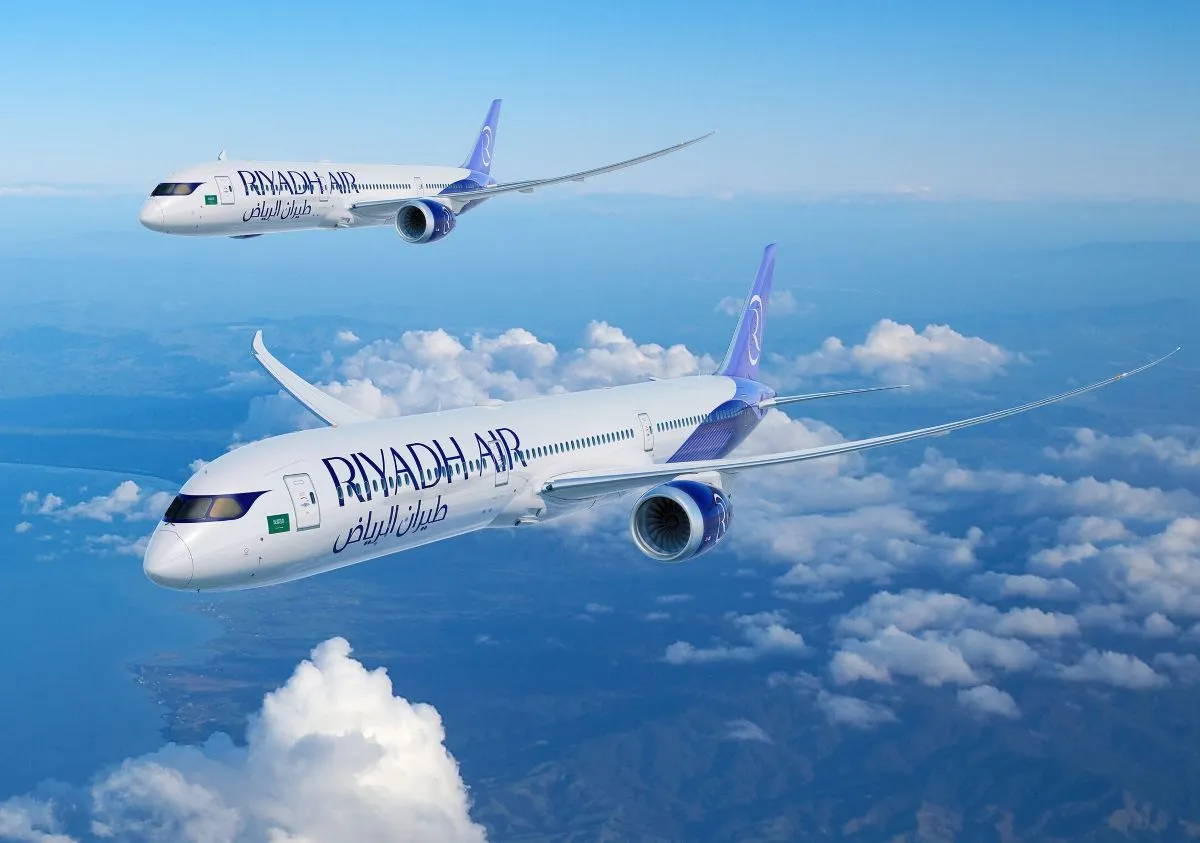
Riyadh Air, Saudi Arabia’s ambitious new national carrier, has made an extraordinary leap in its operational readiness, taking delivery of six widebody Boeing 787-9 Dreamliner aircraft within a remarkable 30-day period. This rapid absorption represents nearly a year’s worth of planned Boeing deliveries, compressed into a matter of weeks, signaling a decisive reversal of earlier supply chain and cabin certification delays that had impacted the airline’s launch timeline. Tony Douglas, CEO of Riyadh Air, speaking at the prestigious Airline Leaders Summit on the sidelines of the Farnborough Airshow on July 20, confirmed that all six Boeing 787s are now fully integrated and in service. He further revealed that the airline is poised to accept an additional pair of these advanced jets within the next two weeks, underscoring an aggressive fleet acquisition strategy. Douglas highlighted the unparalleled nature of this achievement, stating that historically, only a handful of established airlines had managed to take delivery of more than six widebody aircraft in a single month, and Riyadh Air stands as the very first startup carrier to accomplish such a feat. This accelerated intake marks a pivotal moment for the airline, transitioning from a period of anticipatory waiting to an intense phase of operational build-up, aptly described by industry observers as a "famine to feast" scenario.
Navigating the Global Supply Chain Labyrinth
The journey to this rapid delivery phase has been fraught with the complexities inherent in the global aviation manufacturing ecosystem. Riyadh Air’s initial order, comprising 39 firm commitments for Boeing 787-9 Dreamliners with options for an additional 33 aircraft, was announced in March 2023. At the time, the airline set an ambitious target to commence operations by mid-2025. However, like many carriers and manufacturers worldwide, Riyadh Air found its initial delivery schedule impacted by persistent challenges in the aerospace supply chain, exacerbated by lingering effects of the pandemic and geopolitical tensions. These issues, ranging from shortages of critical components like specialized avionics, wiring harnesses, and interior fittings to delays in cabin certification processes by regulatory bodies, led to a slowdown in aircraft production and delivery rates across the industry. Boeing, in particular, has been navigating its own set of production challenges and quality control enhancements, affecting various programs, including the 787.
The "famine" period for Riyadh Air involved meticulous planning and close collaboration with Boeing to mitigate these delays. Engineering teams, procurement specialists, and regulatory liaison officers from both entities worked in tandem to streamline processes, accelerate component sourcing, and expedite certification milestones. This collaborative effort has now culminated in the extraordinary "feast" of deliveries. The ability to absorb such a high volume of sophisticated aircraft in a short timeframe speaks volumes about Riyadh Air’s robust operational planning, extensive recruitment of experienced personnel, and the significant financial backing from Saudi Arabia’s Public Investment Fund (PIF). The airline’s operational headquarters and maintenance facilities must have been meticulously prepared to receive, inspect, and register these aircraft, along with having trained flight crews and ground staff ready for immediate deployment.
A Cornerstone of Saudi Vision 2030
Riyadh Air is not merely a commercial airline; it is a strategic pillar of Saudi Arabia’s ambitious Vision 2030, an economic diversification plan spearheaded by Crown Prince Mohammed bin Salman. The airline’s mandate extends beyond transporting passengers; it is designed to transform Saudi Arabia into a global aviation hub, a tourism magnet, and a logistical gateway between three continents. The Kingdom aims to increase annual passenger traffic to 330 million and significantly boost air cargo capacity to 4.5 million tons by 2030. Riyadh Air is expected to connect the capital city, Riyadh, to over 100 destinations worldwide by the end of the decade, contributing an estimated $20 billion to the non-oil GDP and creating over 200,000 direct and indirect jobs.
The rapid acquisition of aircraft is critical for maintaining momentum towards these audacious goals. Delays in fleet build-up could have significant ripple effects on the broader Vision 2030 objectives, including the development of the King Salman International Airport (KSIA), projected to become one of the world’s largest airports capable of handling 120 million passengers annually by 2030. Riyadh Air’s aggressive growth strategy is complementary to that of the existing national carrier, Saudia, which primarily operates from Jeddah, focusing on Hajj and Umrah pilgrims and connecting the western region of the Kingdom. Riyadh Air, based in the capital, will concentrate on leveraging Riyadh as a new global hub, catering to business, tourism, and transit traffic, thereby expanding Saudi Arabia’s overall connectivity and market share in the fiercely competitive global aviation landscape. The PIF’s backing provides Riyadh Air with substantial capital to invest not only in aircraft but also in talent acquisition, technology, and infrastructure, positioning it for rapid scaling and long-term sustainability.
The Boeing 787-9 Dreamliner: A Strategic Choice
The selection of the Boeing 787-9 Dreamliner as the backbone of Riyadh Air’s initial widebody fleet is a strategic decision reflecting the airline’s long-term aspirations for efficiency, range, and passenger experience. The 787-9 variant is renowned for its fuel efficiency, consuming up to 25% less fuel and emitting 25% fewer carbon dioxide emissions compared to older generation aircraft of similar size. This efficiency is crucial for a new airline establishing a sustainable operational model and aligning with global environmental objectives. Its extended range capabilities, typically around 7,635 nautical miles (14,140 km), enable direct connections to major global cities across Europe, Asia, Africa, and North America from Riyadh, fulfilling the mandate to establish the city as a major international hub.
Furthermore, the Dreamliner is celebrated for its passenger comfort features, including larger windows with electronic dimmers, higher cabin humidity, a lower cabin altitude equivalent, and advanced air filtration systems, all contributing to a more pleasant long-haul travel experience. For a premium startup airline like Riyadh Air, which aims to set new standards in service and luxury, these features are paramount in attracting and retaining discerning travelers. The rapid integration of these sophisticated aircraft requires not only robust technical and maintenance capabilities but also extensive pilot and cabin crew training. Riyadh Air has been actively recruiting experienced aviation professionals globally, offering attractive packages to build a highly skilled workforce capable of operating and maintaining its state-of-the-art fleet. The simultaneous activation of multiple widebody aircraft is a testament to the effectiveness of their recruitment and training programs, ensuring that flight and ground crews are certified and ready to operate the new additions immediately upon delivery.
Industry Reactions and Expert Analysis
Tony Douglas’s announcement at Farnborough resonated across the global aviation industry. His emphasis on Riyadh Air being the "first startup carrier" to achieve such a rapid widebody intake underscored the magnitude of the accomplishment. Industry analysts have largely concurred, noting that such a feat is typically associated with well-established flag carriers with extensive infrastructure and operational histories. For a new entrant, it presents both immense opportunity and significant operational challenges.
From Boeing’s perspective, these deliveries signify a successful push to clear backlog and support a crucial customer. While not issuing a direct statement at the time, Boeing’s commitment to delivering these aircraft on an accelerated schedule demonstrates its strong partnership with Riyadh Air and its role in supporting Saudi Arabia’s aviation ambitions. The ability to ramp up deliveries, even amidst ongoing industry-wide challenges, highlights the manufacturer’s efforts to stabilize production lines and meet customer demand, particularly for high-profile strategic partners.
Within Saudi Arabia, the rapid progress is undoubtedly viewed as a strong affirmation of the Kingdom’s unwavering commitment to Vision 2030. Officials from the Public Investment Fund and the Ministry of Transport and Logistic Services would likely laud this achievement as evidence of the nation’s capacity to execute large-scale, complex projects. It sends a clear message to international investors and partners about Saudi Arabia’s determination to become a dominant player in global aviation and tourism.
Aviation experts, while acknowledging the impressive logistics, also point to the inherent challenges. Integrating eight widebody aircraft in such a short span demands exceptional coordination across maintenance, ground handling, crew scheduling, and regulatory compliance departments. It requires a robust supply chain for spare parts, sophisticated MRO (Maintenance, Repair, and Overhaul) capabilities, and a continuous pipeline of highly trained pilots and cabin crew. The rapid expansion also puts pressure on route planning and network development teams to ensure that these aircraft are deployed efficiently and profitably as the airline prepares for its mid-2025 launch. The sheer volume of new assets necessitates a significant capital expenditure and ongoing operational investment, which the PIF’s backing readily provides, differentiating Riyadh Air from typical startup carriers that often face capital constraints.
Implications for Global Aviation and Regional Competition
The aggressive fleet build-up by Riyadh Air has profound implications for the global aviation landscape, particularly in the Middle East. The region is already home to some of the world’s largest and most successful airlines, including Emirates, Qatar Airways, and Etihad Airways. Riyadh Air’s entry, backed by substantial state funding and an ambitious national vision, signals a new era of intense competition. The airline is poised to attract a significant share of transit traffic, business travelers, and tourists, potentially reshaping traditional aviation hubs and flight paths.
The operational readiness demonstrated by the rapid deliveries instills confidence in Riyadh Air’s ability to meet its mid-2025 launch target. This initial fleet will allow the airline to commence operations with a significant footprint, offering a wide array of long-haul routes from day one. Future deliveries will further expand its network and capacity, enabling it to quickly establish itself as a major international player. The strategic importance of Riyadh as a connecting hub will grow exponentially, leveraging its geographical location at the crossroads of three continents.
Moreover, the achievement underscores Saudi Arabia’s broader strategy to diversify its economy away from oil. By investing heavily in aviation and tourism infrastructure, the Kingdom is creating new economic engines, fostering job creation, and attracting foreign investment. Riyadh Air’s success in overcoming delivery hurdles and rapidly scaling its fleet will serve as a powerful testament to the Kingdom’s commitment and capability in executing its Vision 2030 objectives. The swift acquisition of these state-of-the-art aircraft is not just a logistical triumph for a new airline; it is a clear declaration of intent from Saudi Arabia to assert its place as a dominant force in global air travel and a pivotal player in the 21st-century economy.



 Anjar Salim
 Chandra Hamzah
 Budi Mulyono
 Lukman Taruna Persada Ramadan
