
 Budi Mulyono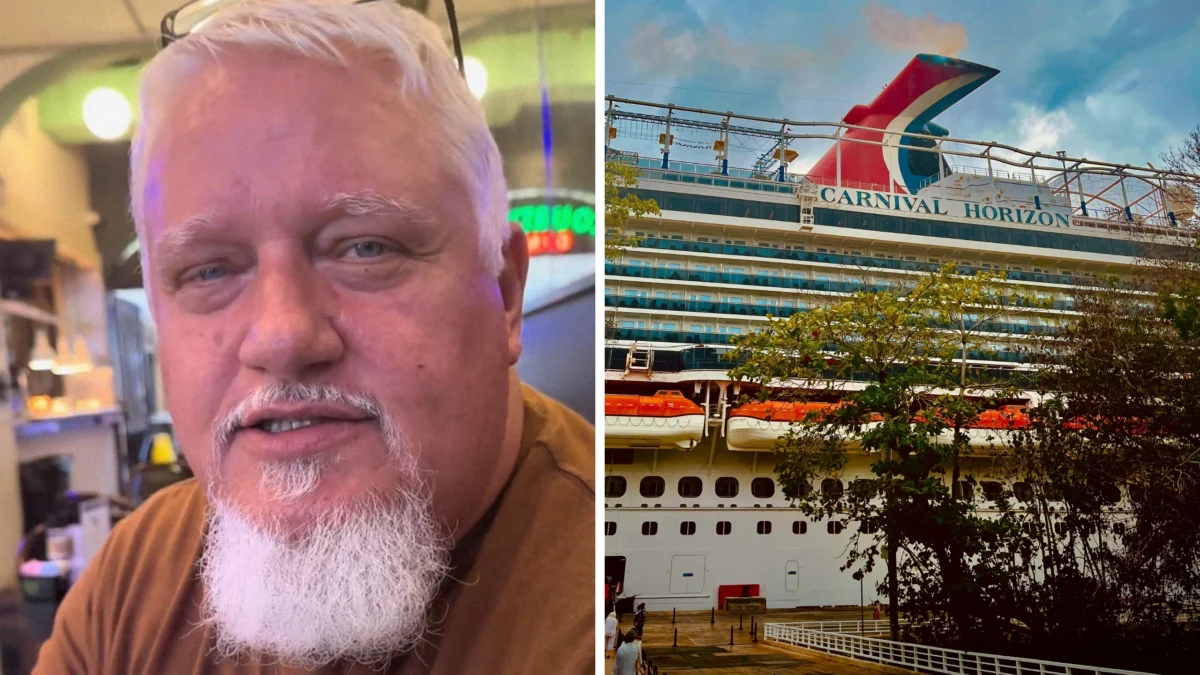
The intricacies of international maritime travel documentation recently took center stage at the Port of New Orleans when a veteran traveler was denied boarding for a Western Caribbean cruise, despite possessing a birth certificate he had successfully used for over a decade. The incident involving Louisiana resident Brian Keith has highlighted a significant gap between official cruise line policy, federal regulations, and the discretionary enforcement of those rules by port-side check-in agents. Beyond the immediate denial of boarding, the case has brought to light the logistical complexities of luggage retrieval from a departing vessel and the often-misunderstood limitations of cruise line-branded travel protection plans.
The confrontation occurred as Keith and his partner arrived for a scheduled departure on a Carnival cruise ship. Despite providing a government-issued driver’s license and a birth certificate that Keith claims has served as his primary identification for nearly 60 years—and was accepted by Carnival as recently as a year ago—the check-in staff deemed the document invalid. The primary point of contention, according to the traveler, was the presence or clarity of a raised state seal, a requirement that is frequently cited by port agents but is not explicitly mandated in the same manner by federal law or Carnival’s own written documentation guidelines.
Chronology of the Boarding Denial and Logistical Failure
The events began during what should have been a routine embarkation process at the Port of New Orleans. Keith presented his documentation to a Carnival representative, who flagged the birth certificate as unacceptable. According to Keith’s account, which he shared via social media, the agent stated that the document lacked the necessary features for a 2024 sailing, despite the traveler’s history of using the same document for multiple prior cruises without incident.
Once the denial was finalized, a secondary crisis emerged regarding the couple’s checked luggage. Standard cruise industry procedure involves "checking" bags with porters at the curb, after which they are moved onto the ship via a complex conveyor and sorting system. By the time Keith was denied boarding, his four suitcases had already been loaded onto the vessel. The traveler reported waiting nearly four hours at the terminal as staff attempted to locate and offload his belongings.
The recovery process proved only partially successful. Only one of the four suitcases was returned to Keith at the pier. This specific bag contained the couple’s shoes, leaving their clothing, toiletries, and other personal essentials on the ship as it departed for the Western Caribbean. The remaining three bags remained on the vessel, effectively "sailing" without their owners. Keith was informed that his luggage would likely not be returned for at least a week, or until the ship returned to its home port. The aftermath of the denial included an unceremonious escort from the terminal, a costly Uber ride back to his parked vehicle, and further complications at a local hotel that was reportedly in a state of disarray.
Federal Regulations and the "Closed-Loop" Exception
To understand the legal underpinnings of this dispute, one must look to the Western Hemisphere Travel Initiative (WHTI). Under 22 CFR § 53.2, United States citizens traveling on "closed-loop" cruises—voyages that begin and end at the same U.S. port and travel only within the Western Hemisphere—are not strictly required to present a passport. Instead, they may present a government-issued photo ID in combination with proof of citizenship, such as an original or a copy of a birth certificate.
The federal regulation states that a traveler "may present a government-issued photo identification document in combination with either an original or a copy of his or her birth certificate." Critically, the federal language does not explicitly specify that the birth certificate must have a raised or multi-colored seal, provided it is a government-issued document from a state, county, or municipal authority.
Carnival Cruise Line’s published policy aligns closely with this federal standard. The company’s official travel documentation page specifies that guests may use a "clear, legible printed copy (photocopy) of a birth certificate that was originally issued by a government agency." The policy further clarifies that the copy "does not need to be notarized or certified." Carnival does, however, explicitly exclude "hospital certificates" or "notifications of birth," which are issued by medical facilities rather than vital records offices.
The discrepancy in Keith’s case appears to lie in the interpretation of the document’s origin. Port agents are trained to look for security features to verify authenticity. If an agent suspects a document is a hospital record rather than a state-issued certificate, they have the authority to deny boarding to ensure the cruise line remains in compliance with Customs and Border Protection (CBP) mandates. This individual discretion often leads to the "inconsistency" cited by many frequent cruisers.
The Travel Protection Plan and Financial Recourse
Perhaps the most significant financial blow to the travelers was the realization that their "Carnival Vacation Protection" plan would not provide a cash refund for the denied boarding. This has sparked a broader discussion regarding the difference between cruise line-sponsored protection and independent third-party travel insurance.
Carnival’s policy regarding documentation is unequivocal: "Any guest without proper documents will not be allowed to board the vessel and no refund of the cruise fare will be issued." When a traveler purchases a protection plan through the cruise line, they are often purchasing a hybrid product. While it may cover medical emergencies or trip interruptions due to severe weather, the "Cancel for Any Reason" (CFAR) component typically offers only a future cruise credit (FCC) rather than a monetary refund. In Carnival’s case, this credit is usually worth 75% of the non-refundable cruise fare.
Industry analysts and travel agents often warn that cruise line plans are more restrictive than independent policies. Third-party insurers like Allianz, AIG, or Travelex often provide more robust coverage for a wider range of scenarios. However, even high-end third-party insurance rarely covers "lack of proper documentation." Most insurance providers view the possession of valid travel documents as the sole responsibility of the traveler. Unless the traveler can prove that a government agency made an error that prevented the issuance of a document, insurance claims for boarding denials are frequently rejected.
Port Operations and the Human Element
The Port of New Orleans is one of the busiest cruise hubs in the United States, handling over 1.2 million passenger moves annually. The volume of travelers necessitates a rapid-fire check-in process where agents must make split-second decisions on the validity of hundreds of different types of birth certificates issued across 50 states over several decades.
The inconsistency reported by Keith—where a document is accepted for ten years and then suddenly rejected—is a known issue within the industry. Travel agents often refer to this as "terminal-specific enforcement." While corporate headquarters may issue broad guidelines, the private contractors who staff the terminals are often given stricter internal directives to minimize the risk of the cruise line being fined by CBP. If a ship arrives at a foreign port or returns to the U.S. with a passenger who lacks valid documentation, the cruise line can face significant penalties, sometimes exceeding $3,000 per passenger.
Broader Implications for the Cruise Industry
This incident serves as a cautionary tale for the millions of Americans who rely on the "birth certificate and ID" loophole for Caribbean cruising. While the law allows it, the logistical and financial risks of a documentation dispute are substantial.
The consensus among travel experts is shifting toward a "Passport Only" recommendation. While a U.S. passport costs approximately $130 to $165, it eliminates the ambiguity of state-issued birth certificates and provides the traveler with the ability to fly home from a foreign port in the event of an emergency—something that is impossible with only a birth certificate.
Furthermore, the Keith case highlights a growing trend of consumer advocacy via social media. With over 120,000 views on his account of the incident, Keith has joined a growing number of "disappointed cruisers" who use platforms like TikTok to pressure cruise lines for resolutions. While Carnival has yet to publicly comment on this specific case, the reputational risk of such viral content often forces cruise lines to review their terminal training protocols.
Conclusion and Recommendations for Travelers
As of the latest reports, Brian Keith and his partner have attempted to move past the incident, though the loss of their luggage and the denial of a refund remains a significant grievance. The situation underscores several critical takeaways for the modern traveler:
- Document Verification: Travelers using birth certificates should ensure their documents are issued by a state or local Bureau of Vital Statistics, not a hospital. Even if a document has been accepted previously, it is subject to re-evaluation at every embarkation.
- Passport Security: Obtaining a passport remains the most effective way to mitigate the risk of boarding denials and ensure a seamless return to the U.S. in case of an emergency.
- Insurance Scrutiny: Travelers should carefully read the "Conditions of Coverage" in cruise line protection plans. Understanding the difference between a cash refund and a future cruise credit is vital before a crisis occurs.
- Luggage Strategy: Essential items, including medications, a change of clothes, and expensive footwear, should always remain in a carry-on bag until the passenger has successfully cleared the check-in desk.
While the legal requirements for closed-loop cruises may remain flexible, the practical reality at the pier is one of strict and sometimes inconsistent enforcement. For travelers like Brian Keith, the cost of that inconsistency is measured in thousands of dollars and a lost week of vacation, a price that many are now deciding is too high to risk.




 Anjar Salim
 Chandra Hamzah
 Tatiana Tantri Indah Sari

