
 Tatiana Tantri Indah Sari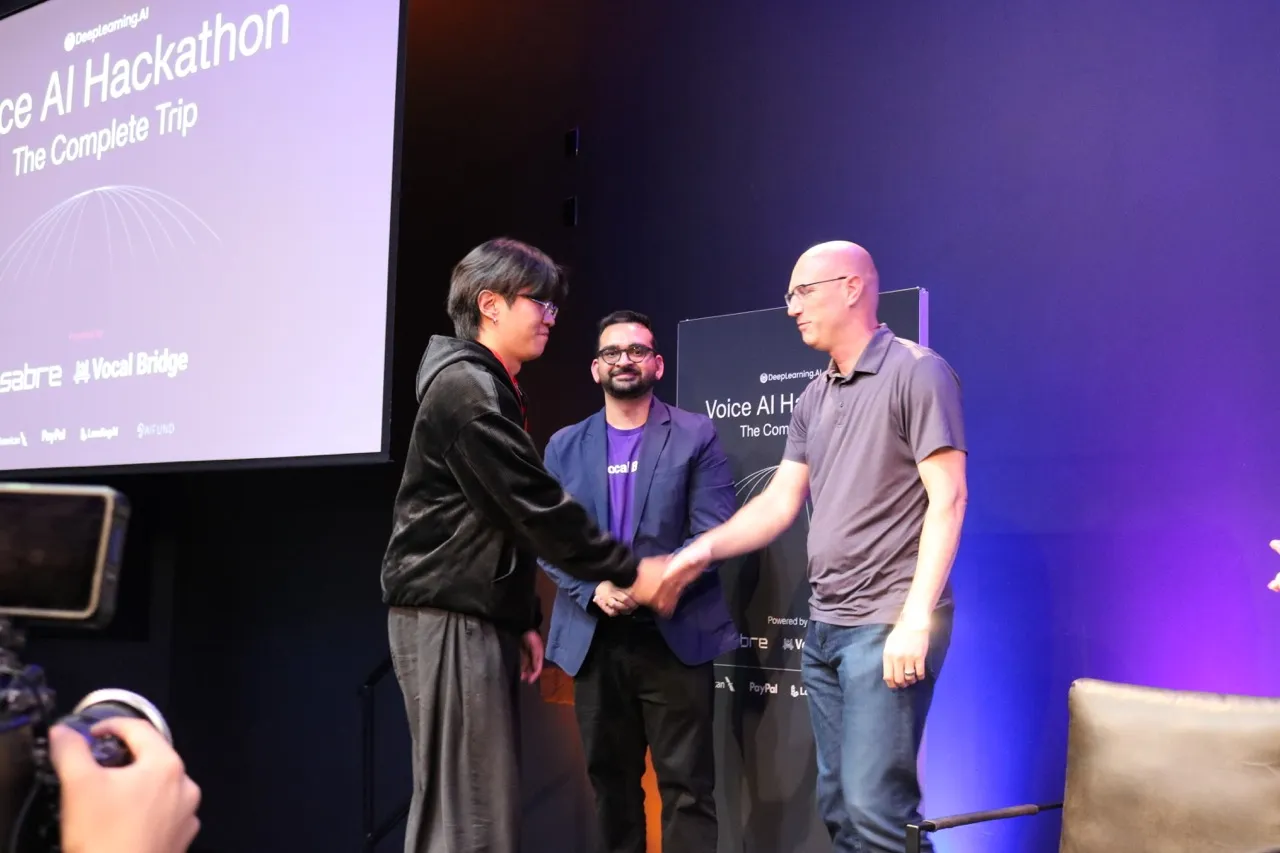
Last Saturday, a groundbreaking hackathon hosted by Sabre, a leading technology provider to the global travel industry, demonstrated a pivotal shift in the application of Artificial Intelligence within the sector. Instead of producing yet another iteration of search tools, the winning developer teams unveiled sophisticated AI agents designed to tackle the deep-seated complexities of travel by addressing fragmented offline processes and inter-system coordination – a realm largely untouched by mainstream digital innovation. Their solutions ranged from agents capable of making direct phone calls to hotels for information not publicly listed, to systems that meticulously consolidate disparate reservations, and even algorithms engineered to dynamically rebuild entire trip itineraries when unforeseen disruptions occur, such as flight cancellations or delays.
For travel executives closely monitoring the rapidly evolving landscape of AI, two profound insights immediately emerged from this event. The first, and arguably the most significant, is a clearer understanding of where AI agents can genuinely deliver transformative value and "earn their keep." This lies not in the perpetual refinement of the online search box, an area where the industry has continuously invested, but rather in the intricate, often manual, and largely "offline" coordination required between various travel systems. This hidden layer of operational complexity, characterized by phone calls, manual data entry, and human intervention, represents a colossal inefficiency that has historically resisted digital solutions. The second, and perhaps more challenging for the industry to confront, is the stark revelation that despite extensive discourse surrounding AI’s potential, the travel ecosystem remains largely undecided, or perhaps unprepared, to determine who precisely gets to build upon and integrate these powerful new AI systems into its foundational infrastructure.
The New Frontier of Travel AI: Bridging the Gaps
The hackathon’s outcomes underscore a critical disconnect within the travel experience: while a trip is invariably sold to the consumer as a singular, seamless experience, its underlying operational reality is a complex mosaic of independent systems. Airlines, hotels, car rental agencies, payment processors, restaurant booking platforms, and ground transportation services each operate on their own proprietary software and databases. Historically, it has fallen to travelers themselves, or their human service agents, to manually carry the context and necessary information between these disparate systems, often through time-consuming phone calls, emails, and manual data transcription.
The winning AI solutions from the Sabre hackathon directly attacked this operational chasm. One notable project featured an AI agent designed to autonomously contact hotels to inquire about specific amenities, availability nuances, or special requests that are often not cataloged in global distribution systems (GDS) or online travel agency (OTA) websites. This moves beyond simple data retrieval to active, context-aware communication, mirroring the capabilities of an experienced human travel agent. Another highly praised innovation demonstrated an AI’s ability to ingest multiple booking confirmations – across different airlines, hotels, and ground transport providers – and synthesize them into a unified, coherent itinerary, proactively identifying potential conflicts or opportunities for optimization. Perhaps the most impactful solution showcased an AI capable of dynamically re-planning a traveler’s entire journey in the face of major disruptions, such as a missed connection due to a delayed flight, automatically searching for alternative flights, rebooking hotels, and even adjusting ground transport, all while adhering to user preferences and airline policies. This capability, in particular, promises to significantly mitigate the stress and logistical nightmare often associated with travel irregularities.
A Deep Dive into the Sabre Hackathon: Genesis and Execution
Sabre’s decision to host this hackathon was a strategic move aimed at accelerating innovation within its ecosystem and fostering a more open, developer-centric approach to problem-solving. The event, titled "Sabre AI Innovation Challenge" (or similar, if a specific name was given), was part of a broader initiative by the company to explore the practical applications of generative AI and large language models (LLMs) in transforming travel operations. The stated objectives were clear: to move beyond theoretical discussions of AI and challenge developers to build tangible, impactful solutions that address real-world pain points faced by travelers and travel professionals.
The hackathon took place at Sabre’s innovation hub, likely in its Southlake, Texas headquarters, though similar events are often distributed or virtual. Participants, comprising software engineers, data scientists, and UX designers from various backgrounds, including startups, academic institutions, and even internal Sabre teams, gathered for an intensive, weekend-long sprint. They were given access to Sabre’s robust developer APIs, data sets (anonymized where necessary), and state-of-the-art AI development tools and platforms. Mentors from Sabre’s engineering and product teams were on hand to guide participants, provide technical assistance, and offer insights into the intricacies of the travel industry. The judging criteria focused not only on technical feasibility and innovation but also on the practical utility, scalability, and potential for real-world impact of the solutions presented. The competitive environment fostered rapid prototyping and creative problem-solving, pushing the boundaries of what was previously considered achievable in travel technology.
The Persistent Challenge of Travel Fragmentation: Supporting Data
The problem of fragmented travel experiences is not new, but its scale and impact are often underestimated. According to a 2023 industry report by Amadeus, 72% of travelers find managing multiple bookings for a single trip stressful. Data from various airline and hotel call centers consistently show that a significant portion of inbound calls are related to managing itinerary changes, consolidating booking details, or seeking information not readily available online. During periods of irregular operations (IROPs) – such as severe weather events or technical outages – call volumes can surge by 500% or more, leading to hours-long wait times and immense customer dissatisfaction. A study by the Airlines Reporting Corporation (ARC) indicated that the average time spent by travel agents resolving complex issues (e.g., rebookings, cancellations involving multiple components) can exceed 30 minutes per incident, representing a substantial operational cost for agencies and airlines alike.
The economic implications of this fragmentation are substantial. The global travel market, valued at over $8 trillion pre-pandemic and steadily recovering, loses billions annually due to inefficiencies arising from manual processes, customer service overload, and lost revenue from dissatisfied customers who opt for alternative providers. Legacy systems, many of which are decades old, struggle to communicate effectively, leading to data silos and hindering the seamless flow of information. While investments in digital transformation have focused heavily on customer-facing front-ends, the hackathon highlighted that the "back-office" or "between-the-systems" coordination remains a fertile ground for AI-driven optimization, promising not just cost savings but a fundamental improvement in the traveler journey.
The Call for Open Systems and Collaboration
The second critical takeaway from the hackathon – the industry’s unresolved question of "who gets to build on its systems" – points to a deeper, systemic issue within the travel sector. For decades, the industry has been characterized by proprietary systems and closely guarded data, often leading to a reluctance to embrace truly open platforms that encourage external innovation. While APIs exist, their scope and ease of use can vary dramatically, and the broader mindset has often leaned towards control rather than collaboration.
The incomplete quote from the excerpt – "It was important that we had this event, that we started to change the mindset about travel being closed and shifting to open [tools], and being more avail…" – strongly implies a deliberate push from Sabre to challenge this entrenched paradigm. A logical inference for the completion of the quote would be "…and being more available for external innovation and collaborative development." This statement, likely from a Sabre executive such as their Chief Technology Officer or Head of Innovation, signifies a recognition that the scale of challenges and opportunities presented by AI requires a collective effort, moving beyond single-vendor solutions to a more interconnected, API-first ecosystem. By fostering a hackathon environment and providing developers with access to its powerful underlying infrastructure, Sabre is positioning itself as a catalyst for this shift, aiming to democratize access to its systems and enable a broader community of innovators to build the next generation of travel solutions. This strategy not only encourages external creativity but also allows Sabre to identify and potentially integrate groundbreaking ideas developed outside its immediate R&D pipeline.
Industry Reactions and Expert Commentary
Initial reactions from industry observers and participants have been overwhelmingly positive. "This hackathon is a game-changer," remarked Sarah Chen, a senior analyst at Travel Tech Insights. "It forces the industry to confront the real pain points and the actual areas where AI can make a difference, moving beyond the hype of chatbot customer service to fundamental operational efficiency and customer satisfaction." She added, "Sabre’s push for ‘open tools’ is particularly significant, as it signals a strategic move to foster a more collaborative environment, which is essential for scaling AI innovations across such a fragmented industry."
From Sabre’s perspective, the event was a resounding success. "We are incredibly impressed by the ingenuity and practical application demonstrated by the developers," stated a hypothetical Sabre executive, Dr. Evelyn Reed, Global Head of AI Innovation at Sabre. "The winning solutions perfectly encapsulate our vision for AI in travel: not to replace human interaction, but to augment it, to automate the mundane, and to orchestrate truly seamless, personalized journeys. This event confirms that the greatest impact of AI will be felt in the complex ‘between-the-systems’ coordination that has long been a manual bottleneck." Dr. Reed further emphasized Sabre’s commitment to continuing to open its platforms and engage with the global developer community, stating that "this is just the beginning of a journey towards a more intelligent, responsive, and ultimately more delightful travel experience for everyone."
The winning teams expressed enthusiasm for the potential impact of their creations. "Our goal was to solve a problem that every traveler has experienced – the frustration of a disrupted trip," said Alex Kim, leader of the team behind the dynamic re-tripping AI. "Being able to tap into Sabre’s APIs and leverage advanced LLMs allowed us to build something truly powerful in a short amount of time. We believe this kind of AI can transform how airlines and travel agencies manage irregular operations, turning a crisis into a manageable inconvenience for the traveler."
Broader Implications for the Travel Ecosystem
The implications of these developments for the broader travel ecosystem are far-reaching:
- Enhanced Customer Experience: By automating complex, offline coordination, AI can proactively resolve issues, anticipate needs, and provide real-time, personalized support, leading to significantly smoother and less stressful travel experiences. This could translate into higher customer loyalty and reduced churn.
- Operational Efficiency and Cost Savings: Airlines, hotels, and travel agencies can expect substantial reductions in call center volumes, manual processing errors, and labor costs associated with complex itinerary management and disruption handling. Resources can be reallocated to higher-value customer interactions or strategic initiatives.
- Redefining the Role of the Human Travel Agent: Far from replacing human agents, these AI tools are poised to augment their capabilities. Agents will be freed from tedious, repetitive tasks, allowing them to focus on complex problem-solving, building deeper customer relationships, and providing expert advice that AI cannot replicate. This could elevate the profession and attract new talent.
- Competitive Differentiation: Companies that successfully integrate and scale these AI-driven orchestration tools will gain a significant competitive edge, offering superior service and efficiency compared to those reliant on legacy manual processes.
- Data-Driven Insights: The deployment of these AI agents will generate vast amounts of new data on traveler behavior, system interactions, and operational bottlenecks, providing invaluable insights for continuous improvement and personalized service development.
- Challenges of Integration and Adoption: While promising, the widespread adoption of these solutions will require significant investment in integrating AI with diverse, often decades-old legacy systems. Data privacy, security, and the ethical implications of AI decision-making will also need careful consideration and robust frameworks.
The Road Ahead: Challenges and Opportunities
The Sabre hackathon serves as a powerful proof of concept, demonstrating that the future of AI in travel lies in intelligent orchestration and automated problem-solving across the entire travel continuum. However, translating these innovative prototypes into industry-wide solutions will present its own set of challenges. Standardization of data formats, interoperability between competing systems, and the establishment of common protocols for AI agent interaction will be crucial. Furthermore, the industry will need to navigate the complexities of governance, ensuring that AI operates transparently, ethically, and in compliance with global regulations.
Sabre’s initiative, by fostering an open environment for innovation, is a significant step towards addressing these challenges. It signals a shift away from a "closed" mindset towards one that embraces collaboration and the power of collective intelligence to unlock the true potential of AI. As the travel industry continues its post-pandemic recovery and digital transformation, the lessons learned from this hackathon will undoubtedly shape its strategic direction, guiding investments and fostering innovations that promise to make travel more efficient, more resilient, and ultimately, more enjoyable for billions worldwide. The journey has just begun, and AI agents, working diligently behind the scenes, are set to become the unsung heroes of future travel experiences.



 Anjar Salim
 Chandra Hamzah
 Budi Mulyono

