
 Tatiana Tantri Indah Sari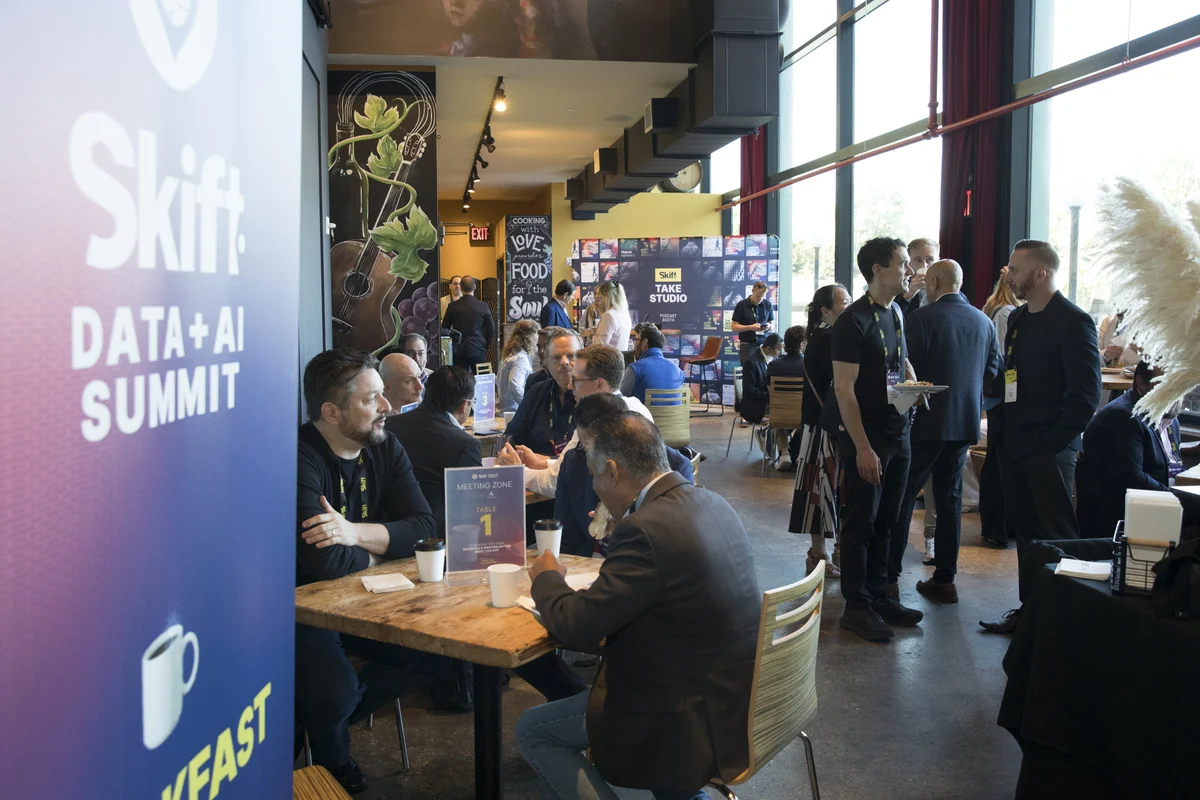
London is set to host a pivotal gathering for the European travel industry on October 6, 2026, as Skift, a leading global travel intelligence platform, convenes its inaugural Data + AI Summit Europe. This landmark event, the first European iteration of Skift’s highly successful flagship AI conference, aims to shift the industry’s focus from demonstrating AI’s capabilities to proving its tangible commercial returns and navigating the continent’s increasingly stringent regulatory environment. The summit arrives at a critical juncture, mere weeks after the European Union’s groundbreaking AI Act becomes enforceable, setting a new global standard for artificial intelligence governance and creating a unique operational landscape for travel companies across the region.
For the past two years, the global travel sector has been captivated by the potential of artificial intelligence. From enhanced personalization engines to predictive analytics for demand forecasting and AI-powered customer service chatbots, the industry has seen a rapid proliferation of pilot programs and experimental deployments. However, as the initial wave of excitement subsides, a more pragmatic question has emerged: how many of these innovative AI initiatives can truly deliver a measurable return on investment, particularly within the multifaceted and tightly regulated European market? Skift’s Data + AI Summit Europe is specifically designed to address this challenge, bringing together 250 senior travel executives to share insights, dissect real-world applications, and strategize for profitable and compliant AI integration.
The European AI Imperative: Regulation, Languages, and Profitability
The decision to launch a European edition of the Data + AI Summit stems from a clear recognition of the continent’s unique position at the forefront of AI governance and market complexity. While Skift’s US editions have consistently sold out, signaling robust demand for AI-centric discussions, Europe presents a distinct set of challenges that warrant a dedicated forum.
Central to this complexity is the impending enforcement of the European Union’s Artificial Intelligence Act in August 2026. Hailed as the world’s first comprehensive legal framework for AI, the Act introduces a risk-based approach, categorizing AI systems by their potential to cause harm. For travel companies operating within the EU, this means new obligations regarding transparency, accountability, and data governance. Specifically, the Act will require companies to inform customers when they are interacting with an AI system and to clearly label synthetic content generated by AI. This regulatory shift creates a profound difference in the operational landscape compared to the United States, where AI governance remains largely uncodified, often relying on voluntary industry standards and existing consumer protection laws.
Beyond regulation, Europe’s inherent linguistic and market fragmentation adds another layer of difficulty. The European Union comprises 27 member states, with over two dozen official languages. Deploying AI solutions that can effectively cater to this linguistic diversity, from natural language processing (NLP) models for customer support to hyper-localized marketing content generation, demands significant investment and sophisticated technological solutions. Training AI models across multiple languages is not merely a translation exercise; it requires understanding nuanced cultural contexts and regional specificities, making the development and deployment process considerably more complex and costly than in a more linguistically homogenous market.
Furthermore, Europe’s stringent data protection regime, primarily governed by the General Data Protection Regulation (GDPR), directly impacts how AI models can be trained and utilized. GDPR’s principles of data minimization, purpose limitation, and user consent necessitate careful consideration for any AI system that processes personal data. Travel companies must ensure their AI initiatives are not only effective but also fully compliant with these robust privacy standards, avoiding potential hefty fines and reputational damage. The intersection of the EU AI Act and GDPR creates a dense web of compliance requirements that is unparalleled globally.
Divergent Paths: EU vs. UK AI Strategies
The geopolitical landscape further complicates the European AI narrative. While the EU moves towards a prescriptive, risk-based regulatory framework, its neighbor, the United Kingdom, is betting on a "lighter touch" approach. The UK government has expressed a preference for sector-specific guidance rather than a broad, overarching AI law, aiming to foster innovation without stifling it with heavy regulation. This divergence creates a unique "live experiment" in AI governance, with London emerging as one of the few places where leaders from both regulatory philosophies can converge and discuss implications. Companies operating across both the EU and the UK must grapple with two distinct compliance regimes, adding to the operational overhead and strategic planning complexity. The Skift Data + AI Summit Europe, strategically located in London, provides an ideal neutral ground for these critical discussions.
Skift’s Legacy and the Evolution of AI in Travel
Skift has long been at the forefront of tracking and analyzing the technological shifts reshaping the travel industry. Its established Data + AI Summit in the US has become a benchmark event for understanding the strategic implications of artificial intelligence. The demand for a European counterpart underscores the global nature of AI’s impact and the specific regional nuances that require dedicated attention. This expansion reflects Skift’s commitment to providing actionable intelligence to travel leaders worldwide, helping them navigate an increasingly complex and technologically driven landscape.
The shift in industry focus, from "can AI do interesting things" to "can AI do profitable ones," signifies a maturation of AI adoption. Early adopters and innovators have demonstrated proof of concept; the current challenge is scaling these concepts into sustainable, value-generating operations. This requires a deeper understanding of return on investment (ROI) metrics, efficient data strategies, and robust governance frameworks that ensure ethical and compliant deployment. The European summit is meticulously designed to address these pragmatic concerns, moving beyond theoretical discussions to focus on practical implementation and commercial outcomes.
A Working Day for Operators: Agenda and Takeaways
The Skift Data + AI Summit Europe is conceived as a "working day" rather than a mere showcase of new technologies. The agenda is meticulously crafted to track the most pressing questions currently facing European travel leaders. Key themes include:
- Data Strategy for Commercial Return: Moving beyond the creation of numerous dashboards, the summit will explore how data strategy can directly translate into measurable commercial benefits. This involves discussions on effective data collection, analysis, and the creation of actionable insights that drive revenue and optimize operations.
- Personalization Without Compromising Trust: In an era of heightened data privacy concerns, achieving hyper-personalization for customers while upholding trust and adhering to regulations like GDPR is a delicate balance. Sessions will delve into ethical AI practices, transparent data usage, and innovative approaches to delivering tailored experiences responsibly.
- AI’s Impact on Distribution and Operations: From optimizing flight routes and hotel inventory management to streamlining customer service and automating booking processes, AI is reshaping core operational functions. The summit will explore best practices and future trends in AI-driven distribution and operational efficiency.
- Governance Questions Deciding Project Shipment: The EU AI Act places governance at the forefront. Discussions will focus on the practical implications of regulatory compliance, risk management frameworks, and the internal processes required to ensure AI projects are not only technically sound but also legally and ethically viable for deployment.
Attendees can expect to gain invaluable insights through original Skift Research, providing a data-driven overview of the industry’s actual standing in AI adoption and implementation. The format encourages candid exchanges among the teams actively doing the work, fostering an environment for sharing successes, failures, and lessons learned. Working sessions will provide opportunities to weigh current leading deployments against emerging technologies and future trends, offering a forward-looking perspective on AI’s evolution in travel.
Target Audience and Exclusive Access
Attendance at the Skift Data + AI Summit Europe is strictly capped at 250 individuals, ensuring an intimate and high-impact environment for meaningful discussions and networking. The room is specifically curated for "operators" – the individuals who are directly responsible for building, running, and implementing AI within their organizations. This includes data and AI leads, product and engineering teams, and analysts from major airlines, hotels, online travel agencies (OTAs), and travel management companies (TMCs).
By focusing on these key decision-makers and implementers, the summit aims to facilitate a direct exchange of knowledge and best practices among those who are turning AI pilots into proven, profitable solutions. These executives, being at the forefront of AI deployment, are poised to set the terms and define the operational standards that the rest of the European travel industry will eventually adopt. The intimate setting encourages deeper engagement, peer-to-peer learning, and the formation of strategic alliances crucial for navigating the complex AI landscape.
Ticket Information and Investment in Future Growth
Recognizing the distinct roles within the ecosystem, Skift has structured its ticketing to prioritize active implementers. Operator tickets are available for in-house travel teams directly involved in building or running AI – this includes data/AI leads, product, engineering, and analysts at airlines, hotels, OTAs, and TMCs. These tickets are priced at £345 at launch, increasing to £445 on September 1, and £545 on September 26.
For companies that sell AI solutions into the travel sector (vendors), a limited number of Vendor tickets are available at £1,500, capped at 30 places on a first-come, first-served basis. Skift maintains a clear distinction to ensure the summit remains focused on the operational challenges and solutions from the perspective of travel providers. A refund policy is in place for those who mistakenly apply for an Operator ticket while being on the vendor side, offering them the option to purchase a Vendor ticket instead. This deliberate approach ensures that the summit maintains its integrity as a forum for genuine operational discussion, fostering an environment where practical insights can flourish, unburdened by overt sales pitches.
The Skift Data + AI Summit Europe represents a critical investment for European travel companies. As the continent enters a new era of AI regulation and technological advancement, understanding how to harness AI profitably and compliantly will be paramount for competitive advantage and sustainable growth. The summit offers a unique opportunity for leaders to prepare for these transformations, ensuring their organizations are not just adopting AI, but mastering it within the intricate European context.




 Anjar Salim
 Chandra Hamzah
 Budi Mulyono

