
 Anjar Salim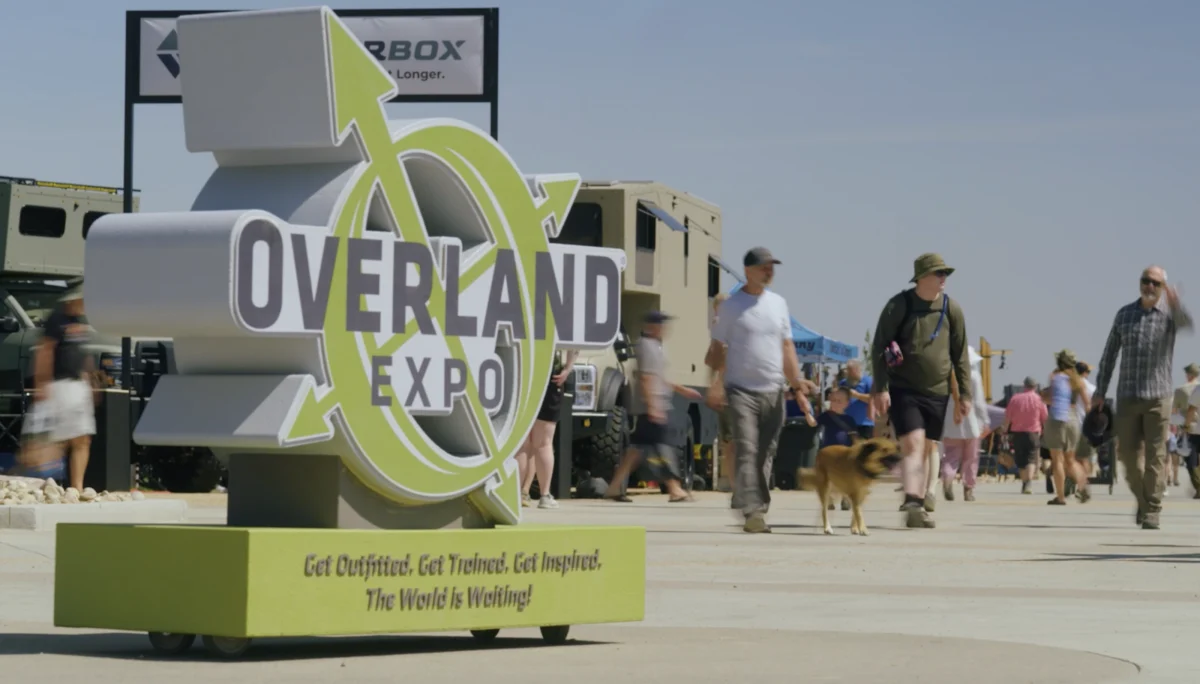
The global overlanding market has experienced exponential growth over the past decade, transforming from a niche hobby practiced by rugged purists into a multi-billion-dollar outdoor recreation sector. Driven by advancements in vehicle technology, lightweight modular camping equipment, and an escalating public demand for remote, self-reliant travel, overlanding merges off-road driving with self-contained backcountry exploration. Modern enthusiasts are no longer confined to traditional campgrounds or standard hiking trails; instead, highly optimized rigs allow travelers to traverse challenging landscapes, withstand severe weather events, and maintain a high degree of domestic comfort far beyond the reach of cellular service and paved roads.
However, the rapid expansion of the lifestyle has created a steep learning curve for novices. Entering the overlanding space requires a comprehensive understanding of vehicle mechanics, electrical power systems, water management, fuel conservation, emergency recovery, and specialized topography. To bridge the gap between amateur curiosity and expert execution, industry gatherings have become vital educational and commercial hubs. Among these, Overland Expo has emerged as the premier annual gathering series in North America, drawing nearly 100,000 total attendees across its five nationwide events to connect manufacturers, designers, and consumers.
The Chronology and Growth of Overland Expo Mtn West
Established to meet the rising demand for technical education and gear testing, Overland Expo has scaled significantly since its inception. The Mtn West iteration, held annually in Loveland, Colorado, serves as a critical checkpoint for the industry as summer transitions into the autumn shoulder season. The event brings together hundreds of exhibitors ranging from multinational automotive and tire manufacturers to bespoke, independent vehicle builders based out of regional hubs like Phoenix, Arizona, and Salt Lake City, Utah.
During the September 2026 installation of Overland Expo Mtn West, attendees were introduced to an array of technological advancements designed to maximize vehicle efficiency and payload capacity. Industry professionals emphasized that every single pound added to an overlanding rig impacts both technical capability on rough terrain and fuel economy on the highway. Consequently, lightweight, modular alternatives to traditional heavy-duty equipment dominated exhibition spaces.

Among the standout innovations showcased at the event was a suite of inflatable gear manufactured by FLATED, which included modular truck bed covers, collapsible storage containers, and inflatable furniture intended for basecamp setups. Phoenix-based vehicle designer and builder Nick Scherr noted that such innovations represent a fundamental shift in how overlanders approach gear management.
"The rooftop storage is especially nice because it’s lighter than a rooftop box, but it’s easier to take off the car, so you don’t really have to commit to putting a rooftop box on," Scherr observed during a panel discussion at the event. "And then you can just deflate it and stick it in your garage. That’s been something I’ve been really having fun using because it’s just extremely convenient."
Vehicle Architecture and the Sleeping Quarters Ecosystem
A foundational element of any overlanding build is the sleeping architecture, which varies significantly depending on the platform. Cargo vans frequently incorporate permanent, insulated interior layouts, whereas truck owners routinely choose between dedicated off-road trailers, chassis-mounted wedge campers, or pop-up systems. For automobiles and mid-sized SUVs, rooftop tents remain the dominant configuration due to their versatility and ease of deployment.
Scherr, renowned for his custom-built Nissan Xterra platforms, relies heavily on rooftop tents manufactured by Napier Outdoors. He points to modularity as the primary advantage of external tent systems over permanent vehicle modifications. "I love a rooftop tent—I like that I can transfer it from vehicle to vehicle and then still have the ability to take whatever vehicle I want to the trailhead," Scherr explained. This flexibility allows enthusiasts to maintain a daily driver while retaining the capability to rapidly transition into an expedition-ready configuration for weekend excursions.
Technical Tire Analysis: The Foundation of Off-Road Mobility

Despite the aesthetic appeal of auxiliary lighting, solar arrays, and high-end camp kitchens, industry experts universally agree that tires represent the single most critical safety and performance component of any overlanding vehicle. Because tires serve as the sole physical interface between a multi-thousand-pound vehicle and unpredictable terrain, selecting a tread pattern capable of handling mud, jagged rock, deep sand, ice, and highway asphalt is mission-critical.
"When you are going off-road, it all starts with your tires," Scherr emphasized. "That’s what’s really hitting the road, getting you to where you’re going—not the car."
At Overland Expo Mtn West, Hankook Tire maintained a prominent presence, showcasing its specialized Dynapro off-road lineup. Scherr runs Hankook Dynapro MT2 tires on his primary Nissan Xterra builds, noting that the tires provide essential puncture resistance and self-cleaning tread voids necessary for extreme environments.
To demonstrate the real-world capabilities of mud-terrain tires, Scherr recounted a rigorous expedition into Alabama’s Stony Lonesome OHV Park. Skeptics frequently categorize heavily modified exhibition vehicles as "trailer queens" built exclusively for static display. To dispel this notion, Scherr deliberately navigated his Xterra through deep, high-viscosity mud pits.
"I got a lot of comments saying, ‘All we do is see your Nissan at shows,’ ‘it’s never been off-road,’ ‘it was built to be shown,’” Scherr recalled. "So I was like, okay, well, we’ll fix that. We got so deep into the mud that it was above the doors—there was mud literally pouring into the car. If I didn’t have a high-performing mud terrain tire, I would have been either digging myself in or I’d have just been stuck."
Beyond extreme mud bogs, Scherr utilizes the same tire configuration for high-altitude snow tracking near Flagstaff, Arizona, technical rock crawling in Gold Canyon, and recurring descents down Diamond Creek into the Grand Canyon to the Colorado River. For drivers who do not require aggressive mud-terrain capabilities, Hankook’s broader Dynapro catalog includes hybrid and all-terrain options—such as the AT2 Xtreme and the XT—which are engineered to balance off-road durability with low-noise highway performance.

Official Educational Programming and Manufacturer Insights
In addition to commercial product displays, Hankook Tire hosted hands-on educational sessions titled "Terrain Mastery" during the expo. These seminars were designed to demystify tire construction, ply ratings, sidewall protection, and proper inflation pressures for varying geological substrates.
During the seminars, representatives passed around cross-sectional tire samples, allowing attendees to physically inspect the internal cord architecture, steel belts, and void-to-lug ratios. This technical transparency aims to empower consumers to make data-driven purchasing decisions based on their specific geographic locations and anticipated vehicle payloads rather than relying solely on cosmetic aesthetics.
Industry analysts note that manufacturer-led educational initiatives reflect a broader maturation of the overlanding market. As safety regulations tighten and consumer awareness increases, brands are placing greater emphasis on technical competence and risk mitigation.
The Broader Impact: Community Resilience and Mutual Aid
While commercial vendors market thousands of specialized products at events like Overland Expo, veteran overlanders emphasize that material possessions are secondary to foundational survival gear and social infrastructure. Scherr advises beginners to prioritize four core elements before investing in luxury accessories: high-quality tires, adequate water storage systems, extra fuel reserves, and robust emergency recovery equipment such as kinetic straps and traction boards.

Most importantly, industry veterans stress that solo exploration in remote environments carries compounding risks. "I never go alone—try to have a friend or a group of people that you’re with that you can trust, especially if you’re doing tough maneuvers, so you have a spotter and everything," Scherr said. "There’s definitely strength in numbers when accidents happen and you need to recover, and they do happen. A friend is a necessity for every journey."
Despite the rugged individualism often celebrated in promotional media for outdoor recreation, the overlanding community is defined largely by mutual aid and inclusivity. Vehicle brand rivalries—frequently dividing owners of Toyota, Ford, Jeep, and Nissan platforms—dissolve rapidly when motorists encounter mechanical failures or treacherous trail conditions in the backcountry.
Scherr recounted an incident during a commercial photo shoot involving a lifted Nissan truck that high-centered in a deep roadside ditch. A passing motorist operating a Ford Ranger Raptor voluntarily pulled over and spent 45 minutes executing a complex vehicle recovery.
"It wasn’t because we were two Ford guys hanging out," Scherr reflected. "It was because he was off-roading and saw another person in need. It’s not what you drive or where you’re from or who you are. We’re all there for each other to celebrate the climbs and to help when you’re stuck."
As the overlanding sector continues to expand, this culture of shared knowledge and mutual assistance remains its bedrock. Events like Overland Expo Mtn West serve not only as marketplaces for cutting-edge gear from brands like Hankook and FLATED, but also as vital social nodes that weave individual enthusiasts into a cohesive, resilient global community.




 Chandra Hamzah
 Tatiana Tantri Indah Sari
 Budi Mulyono
 Lukman Taruna Persada Ramadan