
 Budi Mulyono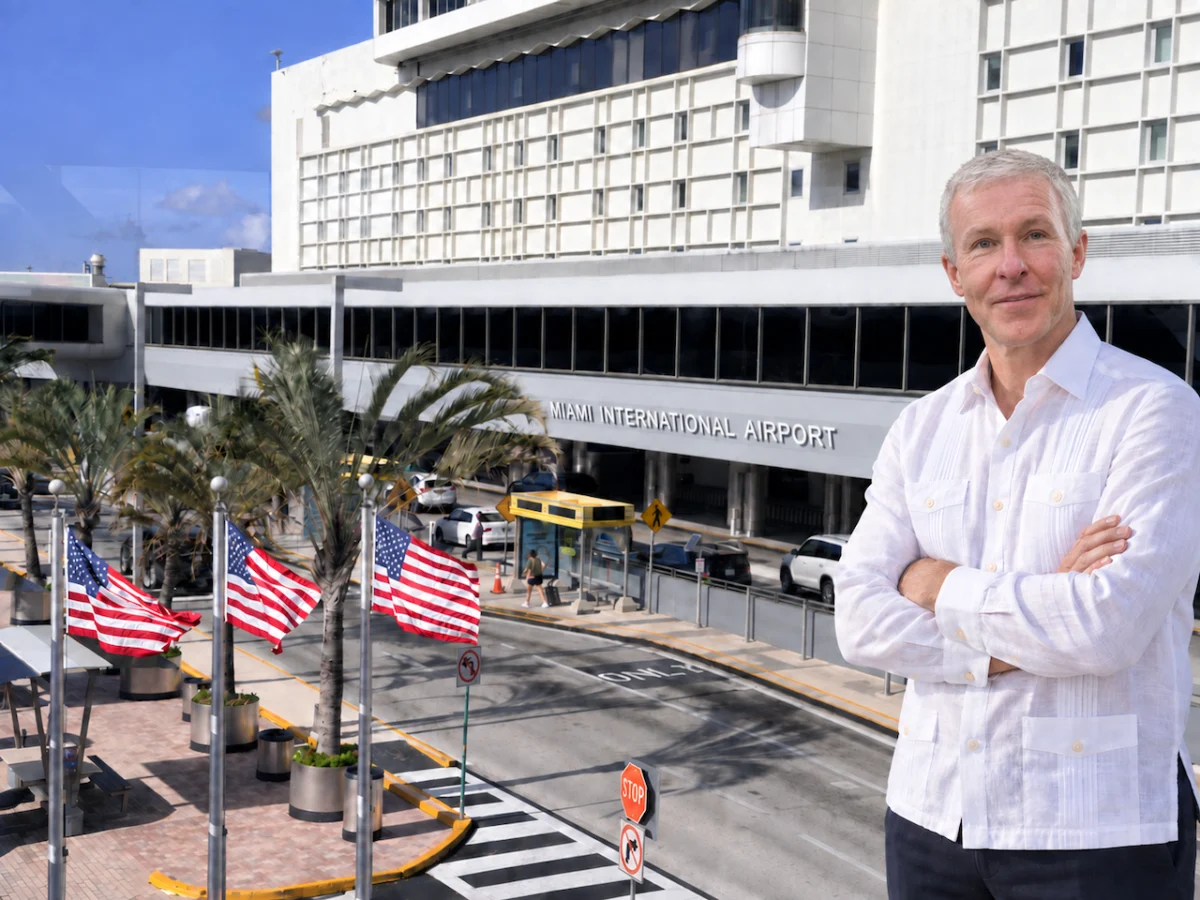
The aviation industry is closely watching a developing strategic chess match between United Airlines and American Airlines, as United Chief Executive Officer Scott Kirby shifts his sights toward a potential expansion into Miami International Airport. This move highlights a decades-long professional fascination Kirby has held with American Airlines—an organization he once helped shape from the inside. While United boasts robust financial health, robust operating margins, and manageable debt, American Airlines faces acute financial headwinds, characterized by razor-thin net income margins and substantial long-term debt obligations. As legacy carriers battle for market dominance in key geographic strongholds, industry analysts are evaluating whether United’s aggressive posture is merely a tactical network expansion or the opening salvo of a long-term campaign to systematically challenge, weaken, and eventually absorb its historical rival.
A Complex Chronology: Scott Kirby’s Entangled History With American Airlines
Scott Kirby’s relationship with American Airlines spans more than twenty years, weaving through some of the most transformative mergers in commercial aviation history. His involvement with the carrier began during the early stages of his career when he worked at American Airlines Decision Technologies, then operated as a specialized subsidiary of AMR Corporation. Following his tenure there, Kirby moved to America West Airlines, steadily climbing the executive ladder to become president of US Airways. In that capacity, he played a central role in orchestrating the complex 2013 merger that combined US Airways and American Airlines, creating what was then recognized as the largest commercial airline in the world.
Upon the successful closure of the merger, Kirby assumed the role of president of the newly combined American Airlines, working directly under then-CEO Doug Parker. During his three-year tenure, Kirby directed network planning, pricing strategies, marketing initiatives, and daily operations. However, this partnership ended unexpectedly in August 2016 when American Airlines leadership replaced him with Robert Isom. Within days of his departure, United Airlines capitalized on the leadership shakeup, hiring Kirby as president in late 2016 before elevating him to the position of Chief Executive Officer in 2020.
A decade after his departure from American, Kirby attempted to unite the two carriers once again, this time approaching the opportunity from United’s corporate headquarters. Initially floating the concept of a potential merger to political leadership and subsequently reaching out to American Airlines directly, Kirby positioned the idea as a pro-competitive measure that would enhance global connectivity, generate jobs, and increase flight options. American Airlines management firmly rejected the overture. Undeterred, Kirby has continued to pressure his former employer through public forecasts, including recent assertions that economic pressures will eventually force American Airlines to scale back its operations at Chicago O’Hare International Airport—a claim that American has firmly resisted.
Strategic Network Analysis: Why Miami International Airport Represents the Missing Piece
United Airlines currently maintains a formidable network across the United States, anchored by critical hub operations in Denver, Houston, Chicago, San Francisco, Newark, and Washington Dulles. However, filling geographic gaps remains a constant priority for network planners seeking to capture lucrative origin-and-destination traffic. While expanding into secondary hub locations such as Phoenix or Charlotte presents distinct strategic challenges—such as entrenched competition or lower yield profiles—Miami International Airport offers a unique economic proposition.
Miami serves as a premier gateway for travel between North America, Latin America, and the Caribbean. For United Airlines, securing a significant presence at Miami International Airport would seamlessly complement its existing Latin American operations anchored in Houston and Los Angeles. Furthermore, a major foothold in Miami would effectively complete a comprehensive "four-corner" domestic and international footprint, balancing United’s existing strength in the Northeast, Midwest, West Coast, and South.
Industry observers note that much of the required expansion could be achieved utilizing short-haul narrowbody aircraft, a fleet segment that United has been aggressively expanding through ongoing aircraft deliveries. While securing up to 50 gates at Miami International Airport would require navigating complex airport infrastructure constraints and displacing entrenched operations, alternative options such as nearby Fort Lauderdale-Hollywood International Airport provide secondary pathways for regional growth and partnership opportunities with carriers like JetBlue.
Comparative Financial Analysis: Examining the Balance Sheets of United and American

The underlying impetus for United’s aggressive network posture lies in the stark divergence in financial performance between the two legacy carriers. While the broader U.S. airline industry has experienced robust post-pandemic travel demand, individual carriers have varied widely in their ability to translate record revenues into sustainable bottom-line profitability.
According to SEC filings for the second quarter of 2026, American Airlines reported record operating revenues approaching $60 billion annualized, with Q2 revenue reaching an all-time high of $16.735 billion. Despite generating massive top-line figures, American retained a net income of just $71 million for the quarter, representing a net profit margin of less than 0.5%. Across the first six months of 2026, American recorded a net loss of $311 million on revenues exceeding $30.6 billion.
By contrast, competitor financial health remained notably stronger. Over the same comparative reporting periods, Delta Air Lines and United Airlines posted multi-billion and multi-hundred-million-dollar net profits, respectively, highlighting a widening profitability gap among the U.S. "Big Three" legacy carriers.
Debt Obligations and Interest Expense Burdens
The most pressing vulnerability for American Airlines centers on its significant long-term debt and associated interest expenses. American concluded the second quarter of 2026 with $28.6 billion in total long-term debt, including current maturities, alongside a stockholders’ deficit of nearly $4 billion.
The immediate financial impact of this debt load is reflected in the carrier’s income statements. During the second quarter of 2026, American generated $446 million in operating income but absorbed $409 million in net interest expense. For the first six months of the year, cumulative interest expenses of $807 million dwarfed total operating income of $405 million, meaning interest payments consumed more than double the operating earnings generated by the airline.
While American Airlines leadership has actively pursued debt reduction strategies—reporting $4.7 billion in long-term debt and finance lease repayments during the first half of 2026—the company simultaneously issued $4.5 billion in new debt instruments, leaving its overall liability profile largely unchanged. This heavy leverage leaves the carrier structurally vulnerable to macroeconomic downturns, spikes in jet fuel prices, or sustained fare wars instigated by financially healthier competitors.
Broader Industry Implications and Future Outlook
The prospect of an extended competitive conflict between United Airlines and American Airlines carries profound implications for the commercial aviation sector. With United generating robust annual net income—surpassing $3.5 billion in previous fiscal cycles—and maintaining significantly lower relative leverage, the carrier possesses the balance-sheet strength to sustain a protracted pricing battle in contested markets.
Industry analysts suggest that if United successfully executes a targeted expansion into Miami or adjacent South Florida markets, it could apply sustained financial pressure to American Airlines’ core revenue streams. By eroding yields on critical Latin American and Caribbean routes, United could further strain American’s liquidity and test the patience of institutional shareholders.
Whether Scott Kirby’s long-term strategy ultimately culminates in structural consolidation or simply results in a permanent realignment of market share remains to be seen. However, as financial pressures mount and network competition intensifies, the historic rivalry between United Airlines and American Airlines is entering a critical new phase that will test the financial resilience of the U.S. aviation landscape for years to come.




 Anjar Salim
 Chandra Hamzah
 Tatiana Tantri Indah Sari
 Lukman Taruna Persada Ramadan
