
 Budi Mulyono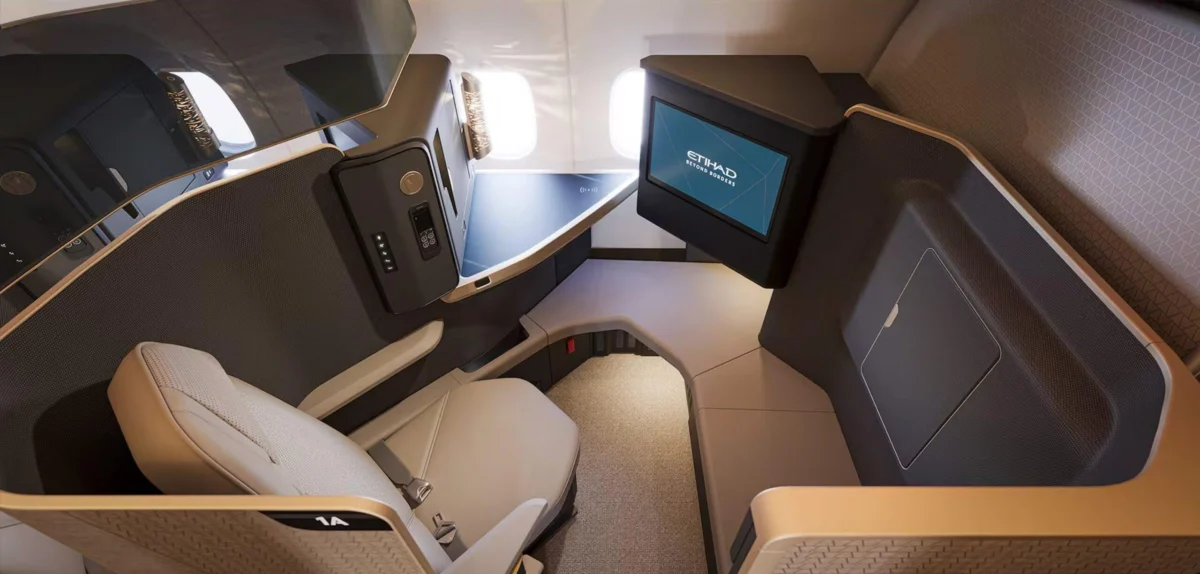
Etihad Airways has officially announced the interior cabin configurations for its upcoming fleet of Airbus A330neo aircraft, marking a significant evolution in the carrier’s regional and medium-haul network strategy. Scheduled to enter commercial service in September 2027, the newly designed aircraft will introduce an ultra-exclusive First Class experience, private Business Class suites, and enhanced Economy accommodations to routes connecting Abu Dhabi with destinations across Europe, Asia, and the Middle East.
This fleet update underscores a broader strategic pivot by the national airline of the United Arab Emirates. Following the introduction of its specialized Airbus A321LR single-aisle aircraft, Etihad is cementing its commitment to delivering top-tier luxury products across both narrowbody and widebody aircraft operating shorter flight durations. Over the next five years, the airline plans to integrate 15 Airbus A330neo airframes into its operating network, progressively replacing older equipment and optimizing capacity on key regional corridors.
Detailed Cabin Layout and Specifications
The newly configured Airbus A330neo will feature a total seating capacity of 280 passengers, distributed across three distinct classes designed to balance high-end luxury with operational efficiency.
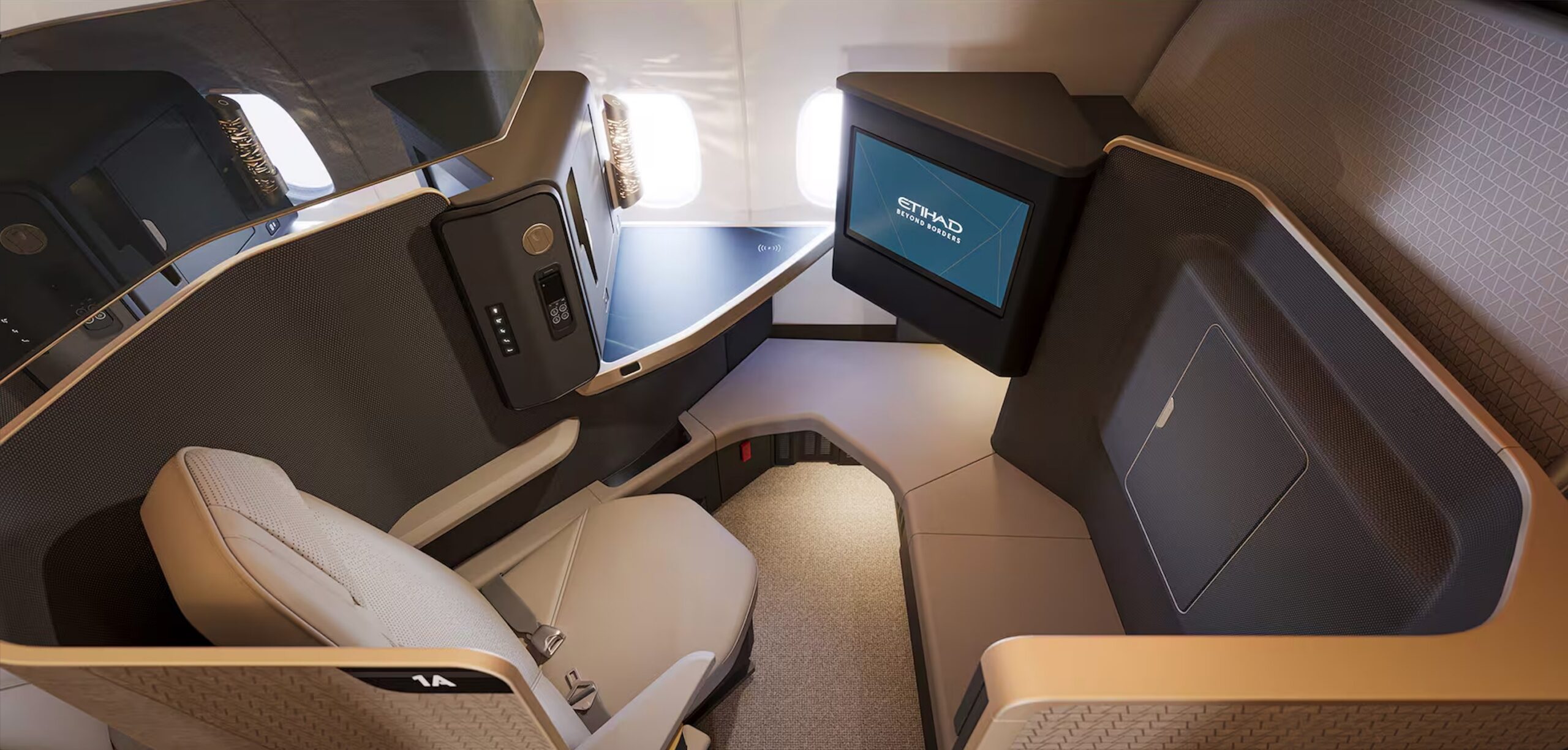
The most striking feature of the new layout is an intimate, four-seat First Class cabin located at the front of the aircraft. Each of the four private suites will be enclosed with sliding doors, offering complete privacy and sufficient interior space to accommodate an additional guest for dining or meetings in flight. Passengers seated in First Class will enjoy state-of-the-art amenities, including massive 32-inch 4K entertainment displays, integrated wireless charging pads, and dedicated personal storage compartments.
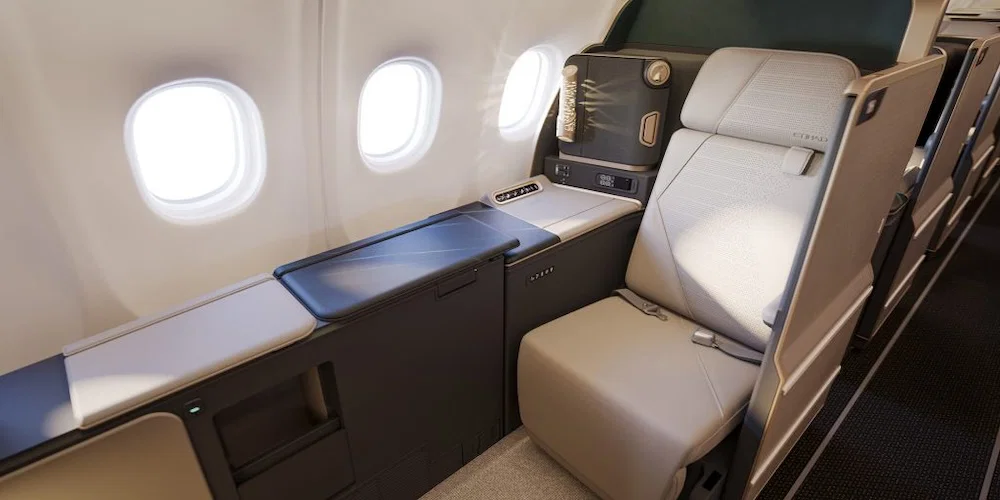
Immediately behind the First Class enclave lies a compact, forward-facing Business Class cabin comprising 24 private suites. Every seat in this section provides direct aisle access, converts into a fully flat bed, and features a privacy door. Technological integrations in Business Class include 17.3-inch entertainment touchscreens, combined wired and wireless device charging capabilities, expansive work tables, and dedicated personal storage.
The rear of the aircraft houses a 252-seat Economy Class cabin. This section features a dedicated sub-section of 32 Extra Legroom seats, offering an additional four inches of seat pitch compared to standard rows. Every Economy passenger will have access to 13.3-inch 4K personal touchscreens, individual USB charging ports, and Etihad’s signature fixed-wing ergonomic headrests.
Strategic Context and Fleet Evolution
The integration of the A330neo follows a series of calculated fleet modernization moves by Etihad Airways. In recent years, the airline has sought to balance its iconic ultra-long-haul offerings—such as the Airbus A380 First Apartments and The Residence—with more economically sustainable aircraft capable of delivering a consistent luxury product on shorter itineraries.
When Etihad revealed plans for the narrowbody Airbus A321LR, industry analysts recognized a clear shift toward embedding premium hard products into single-aisle regional operations. The subsequent addition of the widebody A330neo further bridges the gap between regional transport and flagship long-haul luxury.
Aviation market observers note that deploying a 280-seat widebody aircraft equipped with genuine First and Business class suites allows Etihad to service high-demand business and leisure markets without the excessive operating costs associated with the larger, four-engine Airbus A380. This flexibility enables the airline to match capacity more dynamically to fluctuating daily passenger demand on routes spanning the Middle East, South Asia, Southeast Asia, and select European capitals.
Operational Implications for Flagship Routes
The arrival of the A330neo in late 2027 introduces questions regarding the future deployment of Etihad’s iconic A380 fleet. Historically, aviation enthusiasts and premium-cabin travelers have utilized shorter regional and medium-haul A380 rotations—such as flights from Abu Dhabi to London Heathrow, Paris Charles de Gaulle, and Geneva—to experience the carrier’s premier First Class Apartments without committing to an ultra-long-haul journey.
With the advent of the A321LR and the newly detailed A330neo, Etihad gains the operational capability to offer enclosed First Class suites on these medium-haul routes with significantly lower seat counts. Consequently, industry analysts suggest that Etihad may gradually transition certain regional flagship routes away from the A380, utilizing the smaller widebody and narrowbody premium aircraft to optimize yields and route economics. This transition could potentially alter frequent flyer redemption patterns, shifting award availability for top-tier cabins toward the newer, smaller cabin configurations.
Frequent Flyer and Loyalty Program Considerations
For travelers utilizing airline loyalty currencies to book premium cabins, the expansion of Etihad’s modernized regional fleet impacts how availability is accessed and valued. Programs such as American Airlines AAdvantage remain primary vehicles for securing seats on Etihad flights due to favorable partnership terms and competitive mileage pricing. Members of reward programs like RBC Avion often leverage transfer partnerships to convert points into AAdvantage miles, exploiting transfer bonuses to secure high-value redemptions on Etihad First and Business Class routes.
As Etihad continues to refine its global network and take delivery of its first A330neo in September 2027, the airline is expected to release further details regarding specific route launch schedules, commercial ticketing timelines, and loyalty redemption availability closer to the operational rollout date.



 Anjar Salim
 Chandra Hamzah
 Tatiana Tantri Indah Sari
 Lukman Taruna Persada Ramadan
