
 Tatiana Tantri Indah Sari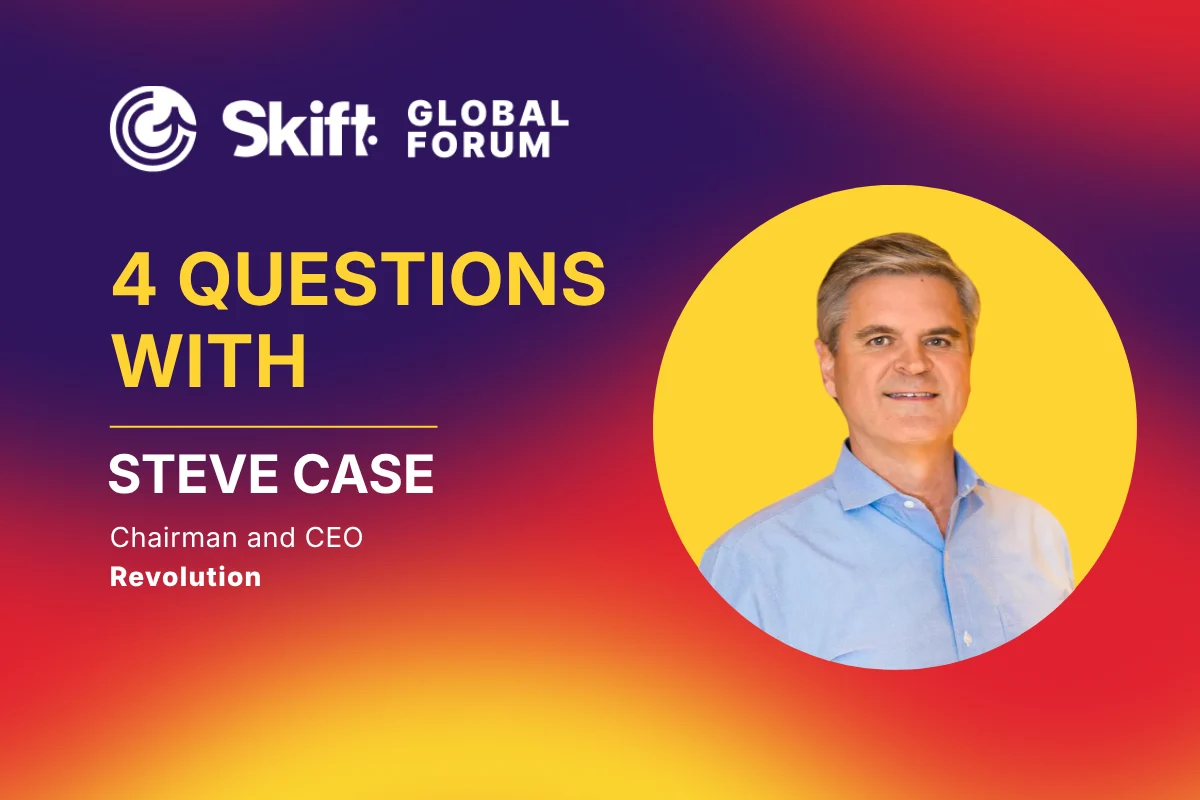
The rapid ascent of artificial intelligence across the global economy has forced executives in every sector to reassess their strategic priorities, but few have framed the technological revolution quite like Steve Case. The co-founder of AOL and current chairman and CEO of investment firm Revolution has introduced a guiding philosophy for the digital era known as the "Scarcity Shift." Rather than asking how AI can optimize every facet of business operations, Case argues that leaders must first determine whether a given asset will become infinitely abundant or remain inherently scarce due to technological advancement.
This framework yields a counterintuitive conclusion for the travel and hospitality sectors: as digital tools commodify information, planning, and logistics, the industry’s most critical task is not the total eradication of friction, but rather the deliberate preservation of the positive, human-driven friction that defines authentic travel. Case’s insights form a core component of the broader industry discourse ahead of the upcoming Skift Global Forum, where travel executives gather to evaluate the long-term implications of automation on consumer behavior and corporate strategy.
The Scarcity Shift: Defining the Framework for Modern Investment
To understand Case’s investment thesis, one must examine how technological waves have historically reshaped markets. Over the past three decades, the internet, mobile computing, and cloud infrastructure have systematically lowered the costs of communication, data retrieval, and routine administration. Artificial intelligence represents an exponential acceleration of this trend, driving down the marginal cost of content creation, personalized itinerary planning, and digital research to near zero.
According to Case’s paradigm, anything that AI can easily replicate, manufacture, or scale will rapidly enter a state of extreme abundance. In the travel sector, this includes standard booking engines, generic destination guides, basic customer service chatbots, and administrative logistics. When information is abundant, however, it paradoxically loses its distinct value, leading to consumer decision fatigue rather than empowerment.
Conversely, assets that technology cannot manufacture—such as irreplaceable geography, established community trust, and genuine human curation—become profoundly scarce and, by extension, vastly more valuable. This principle has directly influenced Revolution’s capital allocation strategy. For instance, the development of Punta Cacique, an exclusive oceanfront peninsula on Costa Rica’s Guanacaste coast, was predicated on the immutable reality that nature cannot produce another landmass with those exact geographical attributes. Similar logic governs the firm’s real estate holdings in Hawaii and its expanding portfolio of high-end hospitality membership clubs. The overarching rule is direct: deploy AI aggressively to manage the expanding universe of digital abundance, while concentrating heavy financial capital into scarce physical and social assets.
The Paradox of Choice and the Resurgence of Human Curation
The proliferation of online travel content over the past twenty years was widely predicted to disintermediate traditional travel intermediaries entirely. Yet, empirical data suggests a contrary trend that aligns with Case’s observations regarding decision fatigue. Consumers today face an overwhelming volume of options, reviews, and algorithmic recommendations, which frequently generates anxiety rather than clarity when planning significant investments of time and capital.
Recent travel industry surveys underscore this shift in consumer sentiment. Data compiled by major financial institutions indicates that a substantial majority of younger consumers—specifically Millennials and Generation Z—express a strong preference for utilizing professional travel advisors. Despite being the most digitally native generations in history, these travelers actively seek out human judgment to finalize high-stakes decisions. They may utilize social platforms for initial inspiration and leverage generative AI for early-stage discovery, but when the moment arrives to commit financial resources and personal vacation time, trust supersedes algorithms.
This consumer behavior elevates curation from a secondary product feature to the primary value proposition of modern hospitality. In Case’s portfolio—which includes luxury membership networks such as Exclusive Resorts, Inspirato, and onefinestay, operating collectively under The Exclusive Collective—the business model relies heavily on editorial judgment. Members do not pay merely for access to physical residences; they pay for the peace of mind that comes from knowing an expert team has rigorously vetted the experience, eliminating the cognitive load associated with modern travel planning.
From Transactional Bookings to Compounding Relationships
The evolution of consumer expectations has also altered how successful hospitality brands measure customer lifetime value. Historically, the travel industry operated on a transactional, episodic model: a consumer booked a trip, completed the stay, departed, and the relationship essentially reset to zero for the subsequent vacation.
Modern market leaders are pivoting away from this transient structure toward recurring membership and club ecosystems designed to foster compounding relationships. When Case initially invested in Exclusive Resorts over twenty years ago, the primary focus appeared to center on the luxury residential real estate assets. Over time, however, the fundamental draw shifted from the physical properties to the intangible value of community and long-term institutional knowledge.
When a hospitality brand serves a member across dozens of trips spanning decades, the nature of the service transforms entirely. The provider develops an intimate understanding of family milestones, personal preferences, and unstated needs, creating a baseline of personalized hospitality that no generic algorithm or competing enterprise can easily replicate from scratch. This relationship-driven framework transforms traditional loyalty metrics. In an environment saturated with transactional choices, trust becomes the ultimate differentiator, and trust inherently compounds over time through sustained human interaction.
Distinguishing Between Good and Bad Friction in Travel Design
Perhaps the most provocative element of Case’s strategic philosophy involves the deliberate categorization of friction within the traveler journey. As enterprise software developers and automation engineers race to streamline every step of the travel experience, industry leaders must confront a critical design question: which friction points should be eliminated, and which must be protected?
Bad friction is universally recognized as the operational inefficiencies that diminish the travel experience: protracted security lines at airports, hours spent on hold with customer support centers, confusing booking logistics, and the administrative hurdles associated with irregular operations. AI and automation excel at resolving these pain points, and travel companies are justified in deploying technology aggressively to remove these barriers.
Good friction, however, represents the unexpected, serendipitous moments that imbue travel with personal meaning. It encompasses the unintended detour down an unfamiliar cobblestone street, the linguistic challenge of ordering at a local market, an impromptu conversation with a resident, or the minor vulnerabilities that foster genuine human connection and cultural discovery.
As automated travel planning tools become increasingly sophisticated, there is a distinct institutional risk that over-optimization will inadvertently sanitize travel, stripping away the very elements of serendipity and discovery that consumers ultimately seek. The primary design challenge for the hospitality industry moving forward is not determining how to automate every operational workflow, but rather preserving the human-centric friction that transforms a standard vacation into a memorable, transformative experience.
Industry Context and the Skift Global Forum
These strategic considerations arrive at a pivotal juncture for the global travel economy. As the industry adapts to macroeconomic pressures, shifting generational demographics, and the rapid integration of machine learning systems, executives are reevaluating the foundational assumptions of hospitality and tourism management.
The upcoming Skift Global Forum in New York serves as a primary platform for these discussions, convening prominent industry leaders—including Airbnb co-founder and CEO Brian Chesky, Booking Holdings CEO Glenn Fogel, and Intrepid Travel Managing Director Darrell Wade alongside Steve Case—to debate the trajectory of travel technology and corporate leadership.
The convergence of massive technological capability and a renewed valuation of human curation highlights a maturing digital landscape. As artificial intelligence reshapes the mechanics of global travel, the firms positioned for long-term success will likely be those that successfully balance technological efficiency with the irreplaceable value of human judgment, community trust, and protected serendipity.




 Anjar Salim
 Chandra Hamzah
 Budi Mulyono
 Lukman Taruna Persada Ramadan
