
 Tatiana Tantri Indah Sari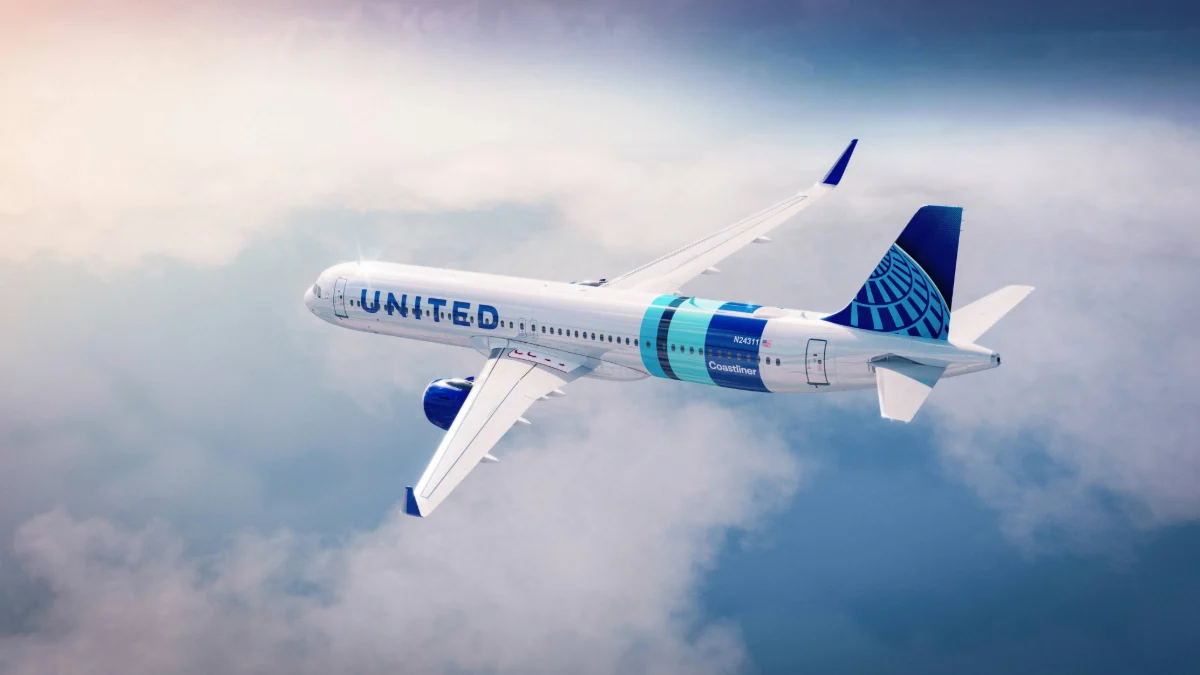
United Airlines remains steadfast in its financial strategy, maintaining its projection to recover 100 percent of escalating jet fuel expenses by the end of the fiscal year. Speaking at the annual Morgan Stanley Laguna investor conference, United Airlines Chief Financial Officer Michael Leskinen addressed Wall Street analysts and industry stakeholders, outlining the carrier’s approach to navigating volatile energy markets. Despite a sharp and sudden upward trajectory in global fuel prices during the current quarter, airline executives express confidence that macroeconomic demand, combined with strategic revenue management and high-yield product offerings, will absorb the financial shock without severely damaging bottom-line profitability.
The airline’s operational and financial calculus relies heavily on the premise that modern consumers—particularly corporate travelers and high-income leisure passengers—remain willing to absorb higher ticket prices, provided they are paired with enhanced onboard amenities and premium seating choices. This resilience in consumer behavior has become a defining characteristic of the post-pandemic aviation landscape, challenging historical assumptions regarding the price elasticity of air travel.
The Mechanics of Fuel Cost Recovery and Booking Lags
Addressing the financial community on Wednesday, Leskinen detailed the immediate mechanics of how airlines absorb sudden commodity shocks. Because commercial carriers sell tickets months in advance of the actual date of departure, rapid spikes in crude oil and refined jet fuel create an unavoidable temporal mismatch between rising operational expenses and realized ticket revenues.
Fuel prices have spiked pretty rapidly, Leskinen noted during his presentation. We have about 35 percent of our tickets booked already in the fourth quarter. So you cannot go back and reprice those tickets. There is a lag, and everyone should take that into consideration when building financial models. However, the CFO emphasized that this lag is merely a temporary accounting and operational hurdle rather than a structural impediment to the airline’s long-term profitability goals.
According to Leskinen, nothing in the current market environment suggests that United will be permanently forced to eat the cost of higher fuel. The carrier anticipates that as remaining inventory for late-fourth-quarter travel is released and sold closer to departure dates—when fares are typically at their highest—yield adjustments will fully offset the expenses incurred during the initial weeks of the commodity price surge.
Background Context on Jet Fuel Volatility and Airline Economics
Jet fuel represents one of the largest and most volatile variable expenses for any commercial airline, routinely accounting for between 20 percent and 30 percent of total operating expenditures depending on global market conditions. When crude oil prices surge due to geopolitical tensions, supply cuts by major producing nations, or unexpected disruptions in global refining capacity, airline profit margins are often squeezed instantaneously.
Historically, carriers utilized extensive hedging programs—purchasing complex financial derivatives to lock in future fuel prices at predetermined rates—to protect themselves against such volatility. However, in the wake of severe financial losses during past oil shocks and the unprecedented demand destruction of the COVID-19 pandemic, many major U.S. carriers, including United Airlines, largely moved away from aggressive fuel hedging. Instead, these airlines opted to rely on the elasticity of airfares, matching ticket prices directly to the spot market price of fuel.
This unhedged strategy means that United and its domestic peers must pass cost increases directly on to the consumer through higher base fares, ancillary fees, and dynamic pricing algorithms. While this strategy is highly effective during periods of robust consumer demand, it exposes airlines to immediate margin compression whenever fuel prices rise faster than the pace at which upcoming seat inventory can be sold at elevated prices.
Chronology of the Fourth-Quarter Pricing Cycle
The current financial challenge faced by United Airlines is best understood through the chronological timeline of booking windows and inventory management:
Early Third Quarter: Global energy markets begin experiencing upward pressure driven by tightened supplies and seasonal demand shifts. Airline financial planners begin adjusting baseline pricing models to account for a higher projected cost per gallon of jet fuel for the remainder of the calendar year.
Late Third Quarter: Commodity prices accelerate more rapidly than anticipated by consensus forecasts. Concurrently, United Airlines records strong forward-booking momentum for the autumn holiday season, reaching the milestone where approximately 35 percent of its fourth-quarter seats are already secured under previously established fare structures.
Mid-September (Morgan Stanley Laguna Conference): CFO Michael Leskinen publicly addresses the pricing lag. He reassures investors that while the tickets already sold cannot be retroactively adjusted, the remaining 65 percent of fourth-quarter inventory provides ample revenue headroom to recapture the lost margin.
October through December (Projected): As remaining seats are booked closer to departure dates—traditionally commanding higher yields from business travelers and last-minute holiday flyers—fare increases take full effect, bringing cumulative fuel cost recovery to the targeted 100 percent threshold by the end of the fiscal year.
Data-Driven Analysis of Yield Management and Premium Strategy
United’s confidence is not built on hope alone; it is underpinned by sophisticated yield management data and a deliberate structural pivot toward premium-cabin monetization. Over the past several years, United has systematically reconfigured its narrowbody and widebody aircraft fleets to feature a higher percentage of premium seats, including expanded domestic first-class cabins, United Polaris business class, and Economy Plus legroom options.
Market data consistently demonstrates that demand for premium cabins has outpaced economy-class recovery since travel restrictions were lifted globally. High-income consumers and corporate accounts with recovered travel budgets have demonstrated a high tolerance for premium pricing. By bundling these higher fares with investments in customer experience—such as the upcoming rollout of high-speed, low-latency inflight Wi-Fi powered by SpaceX’s Starlink service—United is effectively differentiating its product from ultra-low-cost carriers.
Financial analysts note that this differentiation allows United to raise ticket prices across the board without experiencing a corresponding drop in load factors (the percentage of filled seats). Passengers are implicitly signaling that they view air travel as an essential service and are willing to pay a premium for reliability, speed, and modern digital amenities.
Reactions and Industry-Wide Implications
The broader commercial aviation sector is closely monitoring United’s public stance. Competitors such as Delta Air Lines and American Airlines face identical fuel cost pressures and are executing similar strategies to protect their operating margins.
Industry analysts point out that the ability to successfully pass 100 percent of fuel costs onto consumers serves as a litmus test for overall macroeconomic health. If major network carriers can sustain higher ticket prices without triggering demand destruction, it indicates that consumer balance sheets—particularly within the demographic segments that frequent commercial airlines—remain robust despite broader inflationary pressures.
Conversely, consumer advocacy groups and corporate travel managers have expressed growing concern over the compounding cost of air travel. Corporate travel departments, in particular, are finding it increasingly difficult to manage travel budgets as airlines utilize dynamic pricing to offset rising operational expenses. However, corporate demand has thus far proven remarkably inelastic, with businesses viewing face-to-face meetings and client visits as critical revenue drivers that justify the elevated cost of transport.
Broader Impact and Future Outlook
Looking beyond the immediate fourth-quarter horizon, United Airlines’ strategy highlights a permanent evolution in how legacy carriers manage macroeconomic shocks. Rather than absorbing higher costs or relying on speculative financial hedges, the modern U.S. airline industry operates more akin to a consumer-goods retailer with highly dynamic, real-time pricing power.
The integration of advanced technology, such as SpaceX Starlink connectivity, further insulates the airline from commoditization. By offering a superior digital and physical product, United creates pricing insulation that allows it to maintain profitability even during periods of extreme commodity market turbulence.
As United moves toward the conclusion of the fiscal year, the financial markets will scrutinize upcoming quarterly earnings reports to verify whether Leskinen’s projections materialize. If United successfully achieves its goal of 100 percent fuel cost recovery, it will validate the carrier’s forward-booking model and reinforce investor confidence in the structural profitability of the modern U.S. airline sector. For passengers, however, the message is clear: the era of historically cheap jet fuel is gone, and the cost of global mobility will continue to be anchored directly to the realities of the energy markets.



 Budi Mulyono
 Anjar Salim
 Chandra Hamzah
