
 Budi Mulyono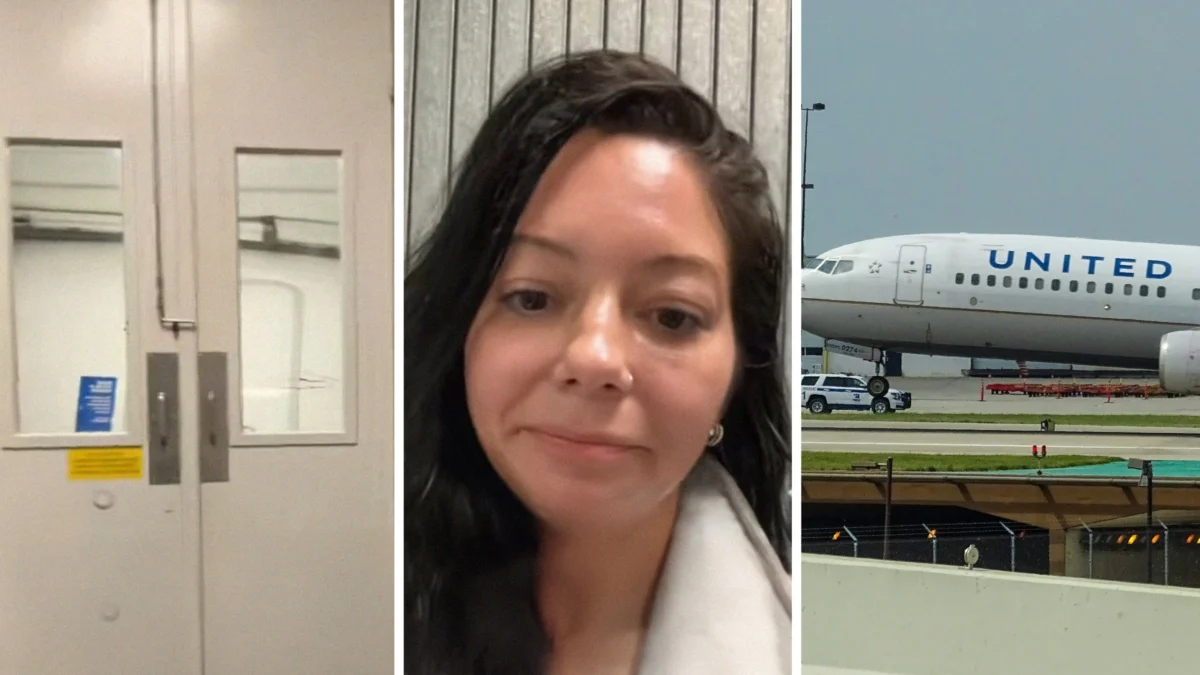
The aviation industry is facing renewed scrutiny regarding accessibility standards following a distressing incident involving a disabled passenger traveling on United Airlines. Birdie, a disability advocate who documents her experiences online under the handle @birdiecda, captured widespread public attention after publishing a series of TikTok videos detailing her harrowing experience upon arriving at Vancouver International Airport. According to her accounts, she was left stranded, alone, and locked inside a jet bridge around midnight following a flight from the United States.
The incident has sparked intense discussions across social media platforms regarding the treatment of passengers with disabilities, the responsibilities of airline gate agents, and the enforcement of international aviation regulations. With millions of views accumulating across her video uploads, the event has amplified long-standing concerns regarding the reliability and consistency of wheelchair assistance and passenger accommodations within commercial aviation.
The Incident: Chronology of Events
The sequence of events began as Birdie completed her solo journey from the United States to Vancouver, Canada. Having successfully utilized wheelchair assistance during an earlier connection in her itinerary, she operated under the reasonable assumption that comprehensive accessibility support had been seamlessly integrated across all segments of her journey.
Upon landing at her destination, flight attendants verified that a wheelchair had indeed been requested for her deplaning process. However, upon reaching the exit of the aircraft, Birdie was met with only her personal walking aid and carry-on luggage. When flight deck and cabin crew members informed the ground gate agent that the passenger required a wheelchair to navigate the jet bridge and terminal, the agent allegedly refused assistance, claiming that no wheelchair service was indicated on the passenger’s reservation profile.
With flight crew members reportedly instructed by protocol that they were prohibited from entering the secured terminal areas unaccompanied, and the gate agent declining to facilitate passage, a standoff ensued. According to Birdie, the gate agent informed her from the top of the ramp, "I’m gonna have to lock you in here," before securing the exit doors.
Left entirely by herself with the aircraft door sealed shut behind her, Birdie spent roughly twenty to thirty minutes stranded on the jet bridge. Forced to utilize her walker as an improvised seating arrangement—as no other seating or resting structures were available—she recorded video footage documenting her isolation and visible distress. The ordeal finally concluded when the gate agent returned, unlocking the upper access door accompanied by an airport attendant operating a wheelchair to escort her through customs and immigration processing.
Official Responses and Stakeholder Positions
In the wake of the viral dissemination of the footage, United Airlines issued a formal statement addressing the situation. Representatives for the carrier asserted that their operations team in Vancouver responded promptly upon learning of the passenger’s specific accessibility needs. According to the airline’s official statement, an agent frequently checked on the passenger from a distance while arrangements were being finalized for an escort to assist her through the terminal. Furthermore, United emphasized that the company takes the unique travel requirements of customers requiring mobility assistance with utmost seriousness and has initiated direct contact with the passenger to review the specifics of the incident.
Despite the carrier’s assurances, the handling of the situation drew sharp criticism from former aviation personnel, accessibility advocates, and the traveling public. Commenters with professional backgrounds in airport operations noted that standard protocols strictly prohibit leaving vulnerable passengers unattended in restricted or secure transit corridors. Industry insiders emphasized that once passengers deplane an aircraft, clear procedural handoffs must occur between flight crews, gate personnel, and contracted wheelchair service providers to prevent gaps in passenger care.
Regulatory Frameworks and Legal Obligations
The incident highlights complex legal and regulatory frameworks governing accessibility in international commercial aviation. Because United Airlines is a United States-based carrier, its operations are strictly bound by the Department of Transportation (DOT) disability regulations, specifically codified under Title 14 of the Code of Federal Regulations, Part 382. These federal rules apply universally to U.S. carriers regardless of geographical operating environments.
Under DOT regulations, airlines are mandated to provide deplaning assistance promptly upon request. Crucially, federal guidelines explicitly prohibit carriers from demanding advance notice for disability assistance, meaning that administrative discrepancies regarding a reservation profile do not legally justify a refusal or delay in service. Furthermore, specific safety provisions prohibit leaving a passenger who has requested mobility assistance unattended in a boarding wheelchair, ground wheelchair, or related transit device for more than thirty minutes.
International flights operating into Canadian territory are similarly governed by strict accessibility mandates. Canada’s accessible transportation regulations require air carriers to make every reasonable effort to provide requested accommodations, even when a passenger has failed to submit formal advance notice.
The regulatory scrutiny facing United Airlines is not without precedent. In 2016, the U.S. Department of Transportation issued a landmark $2.75 million enforcement action against the airline after discovering persistent systemic failures in providing prompt and adequate enplaning and deplaning assistance to passengers with disabilities across multiple hub locations. That regulatory settlement included mandated funding allocations specifically earmarked for auditing wheelchair vendor performance and monitoring passenger wait times.
Broader Implications for Airline Accessibility
The widespread attention garnered by this incident underscores persistent systemic vulnerabilities within the commercial airline industry concerning disability services. Despite decades of regulatory oversight and public advocacy, travelers with mobility impairments continue to encounter friction, administrative oversights, and communication breakdowns between airlines and third-party wheelchair service vendors.
Accessibility advocates emphasize that invisible and visible disabilities alike require robust, standardized operational protocols that prioritize human dignity and safety over rigid administrative procedures. When reservation systems fail or miscommunicate passenger needs, the burden must fall on the carrier to resolve the discrepancy internally rather than subjecting the passenger to isolation or distress.
As regulatory agencies and airline representatives review the circumstances surrounding the Vancouver incident, the case serves as a critical reminder of the legal and ethical obligations incumbent upon global carriers. For passengers navigating the skies with disabilities, incidents of this nature reinforce the ongoing necessity for strict enforcement of accessibility laws, transparent accountability mechanisms, and continuous staff training across all tiers of airport and airline operations.




 Anjar Salim
 Chandra Hamzah
 Tatiana Tantri Indah Sari
