
 Budi Mulyono
Chase Bank has officially announced significant updates to the Chase Sapphire Reserve for Business card, introducing a combination of enhanced travel perks and new restrictions on high-volume advertising expenditures. The adjustments, set to roll out across late 2025 and 2026, alter both the rewards structure for corporate digital marketing spend and the valuation model for the card’s premier hotel booking benefit. While the changes increase the theoretical maximum value of the card’s annual travel incentives without raising the baseline annual fee, they also introduce complex distribution rules that analysts suggest may limit practical utility for many business cardholders.
Main Facts of the Update
The upcoming changes to the Chase Sapphire Reserve for Business portfolio focus on two distinct areas: digital marketing rewards and luxury travel booking credits.
First, Chase is imposing a spending cap on the card’s lucrative 3X rewards category for social media and search engine advertising. Effective November 15, 2026, cardholders will be restricted to a $1 million annual cap on purchases within this specific category. Any eligible advertising expenditure exceeding $1 million within a calendar year will subsequently earn points at the baseline rate of 1X per dollar spent. For high-spending digital agencies, e-commerce brands, and tech startups utilizing the card to manage substantial multi-channel marketing campaigns, this alteration represents a notable contraction in potential rewards accumulation.
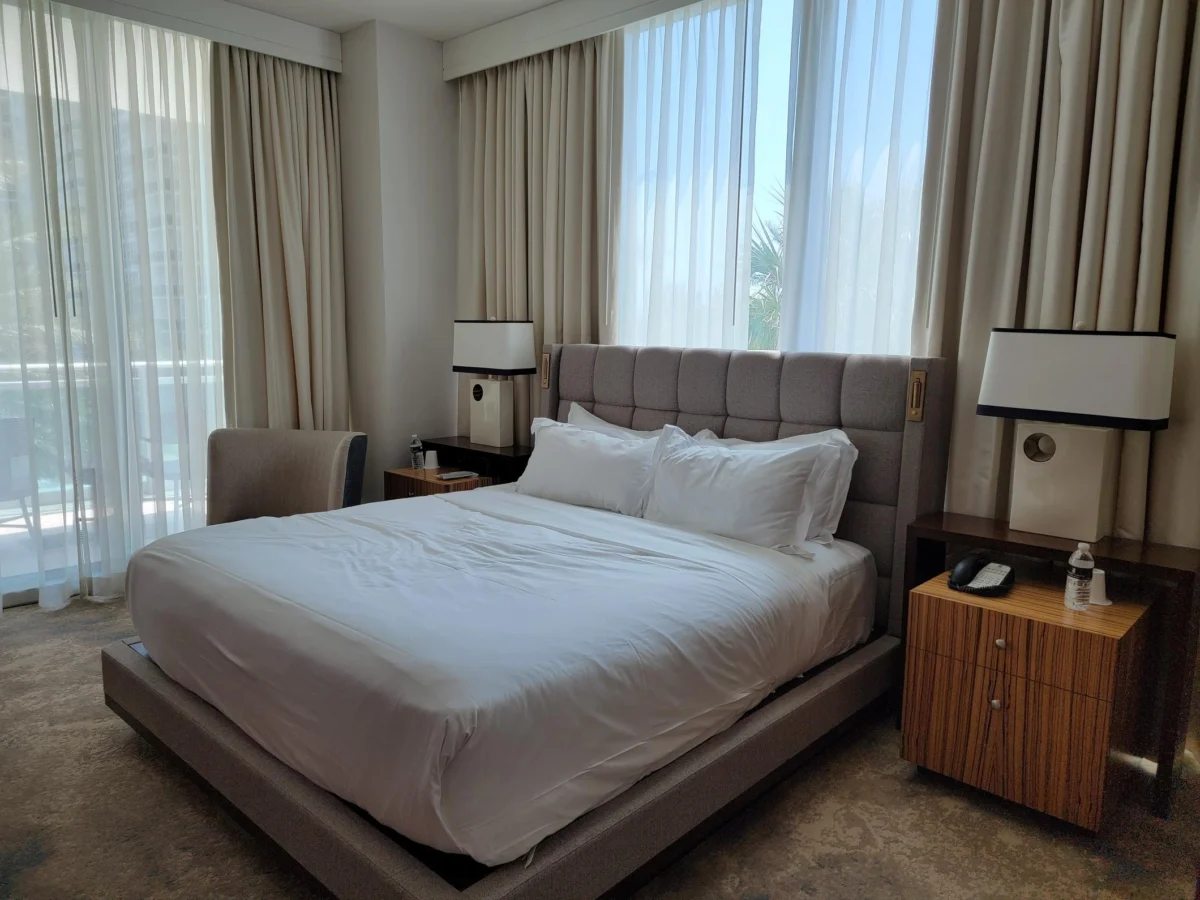
Second, the card’s annual statement credit for bookings made through The Edit by Chase Travel is undergoing a substantial quantitative expansion. Beginning January 1, 2026, the total annual credit allocated for luxury hotel bookings will double from $500 to $1,000. However, the structural mechanism of the credit is also shifting. Rather than being distributed in two semi-annual increments, the $1,000 total will now be divided into four distinct $250 installments. Furthermore, the mandatory policy requiring a minimum two-night consecutive stay to trigger the credit remains firmly in place.
Chronology and Implementation Timeline
The rollout of these policy shifts is structured across a phased timeline to give corporate cardholders adequate notice to adjust their financial and operational planning.
The initial phase begins on January 1, 2026, when the newly restructured, four-part $1,000 credit for The Edit by Chase Travel goes into effect for eligible cardholders. This change immediately alters how users must pace their luxury travel bookings throughout the year, requiring four separate qualifying stays of at least two nights each to capture the full financial benefit.
Later in the year, on November 15, 2026, the second major adjustment takes effect with the implementation of the $1 million spending cap on social media and search engine advertising. This delayed enforcement date provides enterprise-level businesses nearly two full years from the initial announcement to budget, restructure, or reallocate their digital marketing spend across alternative financial instruments if necessary.
Background Context: The Evolution of The Edit and Premium Business Cards
To understand the context of these updates, it is necessary to examine the competitive landscape of premium corporate and personal credit cards. The Edit by Chase Travel functions as a curated luxury hotel program designed to compete directly with established offerings such as American Express Fine Hotels + Resorts (FHR) and Capital One’s Premier Collection.

The Edit program, accessible to holders of select high-end cards including the J.P. Morgan Reserve, the consumer Chase Sapphire Reserve, and the Sapphire Reserve for Business, typically provides perks such as daily breakfast for two, property credits (often valued at $100 for dining or spa services), complimentary Wi-Fi, room upgrades upon arrival, and late check-out when available.
When Chase originally introduced The Edit alongside its associated statement credits, industry analysts viewed the move as a direct challenge to American Express’s dominance in the luxury travel sector. However, consumer feedback has historically highlighted friction points regarding the program. Unlike the flexible $300 annual travel credits featured on cards like the Amex Platinum, which can be applied broadly to a wide array of travel purchases or single-night stays, Chase’s credit model requires adherence to strict parameters: bookings must be made exclusively through the proprietary Chase Travel portal, properties are occasionally priced above direct-to-consumer market rates, and the mandatory two-night minimum stay has consistently presented a barrier for business travelers seeking quick, single-night accommodations.
Supporting Data and Industry Analysis
Industry observers and financial analysts tracking points, miles, and corporate credit cards have offered mixed assessments of the changes. On one hand, the decision by Chase to double the face value of the hotel credit without enacting an increase to the card’s annual fee is viewed objectively as a positive metric. In financial terms, the nominal value proposition of the card has expanded.
However, historical redemption data from similar structured credit programs suggests a significant gap between nominal value and realized value. Based on anecdotal polling within the frequent flyer and points community regarding multi-installment travel credits across various premium credit products, a substantial percentage of cardholders consistently fail to utilize all available credits within a given calendar year.
By transitioning the $500 annual credit—previously delivered in two separate allotments—into four quarterly $250 segments, cardholders face an increased logistical burden. Fully maximizing the $1,000 benefit now requires completing four separate two-night minimum stays at properties within The Edit portfolio annually. For time-constrained business owners, coordinating travel schedules to meet these strict stipulations can prove challenging, leading industry analysts to speculate that a large proportion of the newly expanded credits will ultimately go unclaimed.
Conversely, the implementation of the $1 million cap on 3X social media and search engine advertising targets a specific, highly exclusive segment of cardholders. The vast majority of small and medium-sized enterprises utilizing the Sapphire Reserve for Business do not approach seven-figure annual expenditures on digital marketing platforms. Consequently, the negative impact of the 1X reduction for spending beyond the cap will be concentrated entirely among high-growth e-commerce brands, large digital marketing agencies, and enterprises with massive venture-backed advertising budgets. For these specific entities, the cap represents a significant calculation in their return-on-investment models, prompting potential shifts toward alternative business cards that offer uncapped rewards on digital ad spend.
Broader Impact and Market Implications
The dual adjustments to the Chase Sapphire Reserve for Business reflect a broader trend within the premium credit card industry: the strategic enhancement of headline marketing figures coupled with restrictive structural conditions that manage issuer liability.
By advertising "up to $1,000 in annual hotel credits," financial institutions can market a significantly more lucrative rewards package in promotional materials and acquisition campaigns. This positioning helps issuers remain competitive in an increasingly crowded premium card market, where annual fees and benefit packages continue to escalate. At the same time, the inclusion of friction points—such as quarterly disbursement schedules, portal exclusivity, and minimum stay requirements—acts as a natural governor on actual utilization rates, effectively balancing the cost of the rewards program for the issuer.
For business owners and corporate finance departments, these updates underscore the necessity of conducting a thorough cost-benefit analysis tailored to individual spending and travel patterns. While the card retains its core value proposition for those who organically utilize luxury hotel portfolios and manage moderate digital advertising budgets, high-volume advertisers and travelers unable to commit to frequent multi-night luxury stays must carefully weigh whether the structural changes align with their operational realities. As the implementation dates approach in 2025 and 2026, corporate cardholders will have ample time to evaluate their portfolios and determine the optimal financial strategy for their enterprise expenditures.



 Anjar Salim
 Dwi Wanna
 Chandra Hamzah
 Tatiana Tantri Indah Sari
 Walid Sujud Trenggono
 Cholid Fahmi Thalib