
 Walid Sujud Trenggono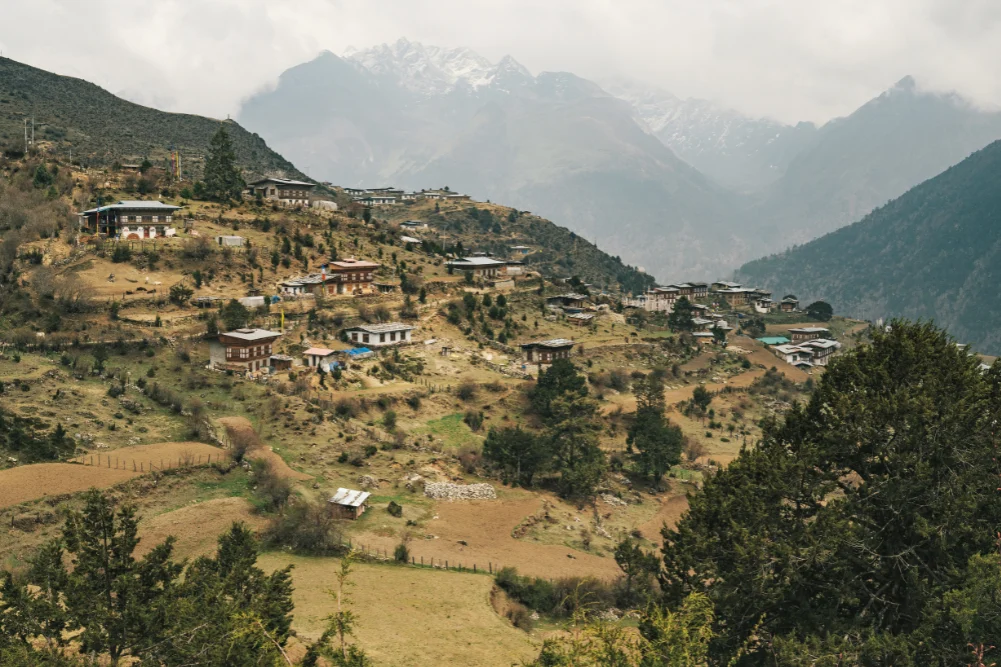
The Kingdom of Bhutan, a landlocked nation situated in the Eastern Himalayas, has increasingly become a focal point for international discourse regarding mental health, sustainable development, and the rejection of traditional economic metrics. For many individuals navigating the high-pressure environments of Western professional life, characterized by the "always-on" digital culture and the demands of "sandwich generation" caretaking, Bhutan offers more than a pastoral escape; it provides a rigorous alternative model for existence. This phenomenon is best illustrated by the growing trend of "transformative travel," where visitors seek out the kingdom not for leisure, but for a fundamental recalibration of their psychological and emotional frameworks.
The Catalyst: Modern Burnout and the Demand for Radical Change
In the contemporary professional landscape, the prevalence of burnout has reached what many health experts describe as epidemic proportions. For entrepreneurs and parents managing multiple responsibilities—ranging from business operations to the care of both children and aging parents—the "digital zombie state" has become a common neurological condition. This state is characterized by hyper-connectivity, chronic distraction, and a sense of being "stretched impossibly thin."
In this context, Bhutan’s unique appeal lies in its historical and intentional isolation. Nestled between the geopolitical giants of India and China, Bhutan remained largely closed to the outside world until the 1970s. Television and the internet were only introduced in 1999, making it one of the last nations on Earth to adopt these technologies. This late entry into the digital age has allowed the kingdom to maintain a distinct social fabric, one that prioritizes collective well-being over individualistic consumption.
Arrival and Geographical Constraints: The Paro Gateway
The transition into the Bhutanese tempo begins with the arrival at Paro International Airport. Known for having one of the world’s most challenging runways, the approach requires pilots to navigate between 18,000-foot Himalayan peaks, landing on a strip visible only moments before touchdown. This physical entry serves as a metaphorical threshold, demanding immediate presence and focus.
Upon landing, visitors frequently report a palpable shift in atmosphere. Unlike the frantic pace of international transit hubs, Paro is defined by its silence and the visual dominance of its natural surroundings. Bhutan’s commitment to environmental preservation is not merely cultural but constitutional; the nation’s charter mandates that at least 60% of its land remain under forest cover in perpetuity. Currently, that figure stands at approximately 70%, contributing to Bhutan’s status as the world’s first carbon-negative country—meaning it absorbs more carbon dioxide than it emits.
Monastic Integration: The Dodedrak Case Study
A primary component of the Bhutanese experience for those seeking a "midlife reset" involves immersion in the country’s Buddhist traditions. The Dodedrak Monastery, a 12th-century institution, serves as a significant site for such retreats. Reaching the monastery requires a rigorous ascent, often taking several hours for those unaccustomed to the high altitude and steep terrain. This physical exertion is considered an essential part of the "humbling" process, stripping away the comforts of modern life.
The monastic environment is designed to foster "interoception"—the sense of the internal state of the body. Evening prayers, featuring the rhythmic chanting of scriptures by monks adorned in burgundy robes, create a sensory environment that has been shown in various psychological studies to lower cortisol levels and induce a state of "flow." The use of butter lamps and incense further reinforces a connection to antiquity, contrasting sharply with the blue-light saturation of Western professional environments.
Remote Communities: The Socio-Economic Structure of Laya
To understand the core of Bhutanese resilience, one must look toward its most remote settlements. Laya, an indigenous village situated at an altitude of 3,800 meters, represents the pinnacle of this isolation. Reachable only by foot or pack animal, Laya is home to the Layap people, a community of approximately 1,600 individuals with distinct Tibetan roots.
The socio-economic structure of Laya is built on the principle of "collective care." In this matriarchal society, the village operates as a single unit; when a family constructs a home, the entire community participates in the labor. This hospitality extends to guests, who are often housed in traditional stone dwellings. The diet in these regions is subsistence-based, consisting of staples such as red rice, yaks’ milk, butter-sautéed mushrooms, and "ema datshi" (chili and cheese).
The psychological impact of this lifestyle is profound. During the biennial Bumkor Festival, where sacred texts are carried through the village in a grand procession, the communal identity is reinforced through song and dance. For visitors from fragmented Western societies, the "ache of belonging" observed in Laya highlights a significant deficit in modern urban living: the loss of high-trust, low-anxiety communal structures.
Data Analysis: Gross National Happiness (GNH)
The guiding philosophy of the kingdom is Gross National Happiness (GNH), a term coined by the Fourth King, Jigme Singye Wangchuck, in 1972. Unlike Gross Domestic Product (GDP), which measures only economic output, GNH is calculated through a sophisticated index based on four pillars:
- Sustainable and equitable socio-economic development.
- Environmental conservation.
- Preservation and promotion of culture.
- Good governance.
These pillars are further divided into nine domains, including psychological well-being, time use, and community vitality. In the 2022 GNH Index, data revealed that 9.5% of the population were "deeply happy," 38.6% were "extensively happy," and 45.2% were "narrowly happy." Crucially, the government uses this data to vet all new policies; if a proposed project—such as a new mine or road—threatens the environment or community cohesion, it is legally barred from proceeding.
Traditional Medicine and the Gasa Hot Springs
Well-being in Bhutan is also addressed through "Sowa Rigpa," the traditional Himalayan science of healing. A key site for this practice is the Gasa Tsachu (hot springs). Unlike the luxury spas of the West, these springs are public, communal, and deeply rooted in spiritual lore. Legend states that a 13th-century saint blessed these waters, imbuing them with the power to heal 128 different ailments.
The experience of the Gasa hot springs is one of radical vulnerability. Visitors and locals soak shoulder-to-shoulder in steaming mineral baths. Medical students and yak farmers alike frequent these sites, viewing the water not as a luxury, but as a "medicine of the earth." Scientific analysis of these geothermal springs confirms high concentrations of minerals that aid in muscle recovery and stress reduction, but the cultural context of the "sacred soak" adds a layer of psychological relief that clinical settings often lack.
The Role of "Memento Mori" in Productivity
One of the more startling aspects of Bhutanese culture for Western observers is the open discussion of death. Bhutanese citizens are encouraged to contemplate their own mortality five times a day. While Western psychology often views the preoccupation with death as morbid or a symptom of anxiety, the Bhutanese view it as a tool for productivity and presence.
By acknowledging the impermanence of life, individuals are theoretically less likely to become mired in trivial stressors or "greedy" pursuits. This cultural practice fosters a sense of "enoughness"—a psychological state where the individual feels satisfied with their current resources rather than constantly striving for more. This directly counters the "hedonic treadmill" prevalent in consumerist societies.
Post-Travel Integration and Long-Term Implications
The true test of the Bhutanese reset occurs upon the traveler’s return to their home environment. The transition from a speed limit of 20km/h and the silence of the Himalayas back to the "bullet-train tempo" of global commerce is often jarring. However, longitudinal observations of those who have undertaken such journeys suggest a lasting shift in "neurological resilience."
The "Bhutan effect" is characterized not by the absence of stress, but by an improved capacity to manage it. By internalizing the Bhutanese principles of slow movement, communal reliance, and the "GNH lens," individuals report being better equipped to handle periods of professional delirium or personal crisis. The memory of the "low chants" and "fluttering prayer flags" acts as a mental anchor, allowing for a "downshifting of gears" even in high-pressure environments.
Conclusion: A Blueprint for the Future?
As global rates of burnout continue to rise, the Bhutanese model offers a critical case study in the prioritization of human capital over financial capital. While the kingdom’s specific methods—such as the high "Sustainable Development Fee" (SDF) charged to tourists—are designed to prevent over-tourism and protect local culture, the underlying philosophy is increasingly being adapted by global mental health practitioners.
Bhutan serves as a living laboratory for the idea that a society can be modern without being frantic, and productive without being exhausted. For the "over-scheduled" and the "distracted," the kingdom remains a testament to the fact that the most effective way to move forward is, occasionally, to stop entirely.



 Anjar Salim
 Chandra Hamzah
 Tatiana Tantri Indah Sari
 Budi Mulyono
 Lukman Taruna Persada Ramadan
