
 Tatiana Tantri Indah Sari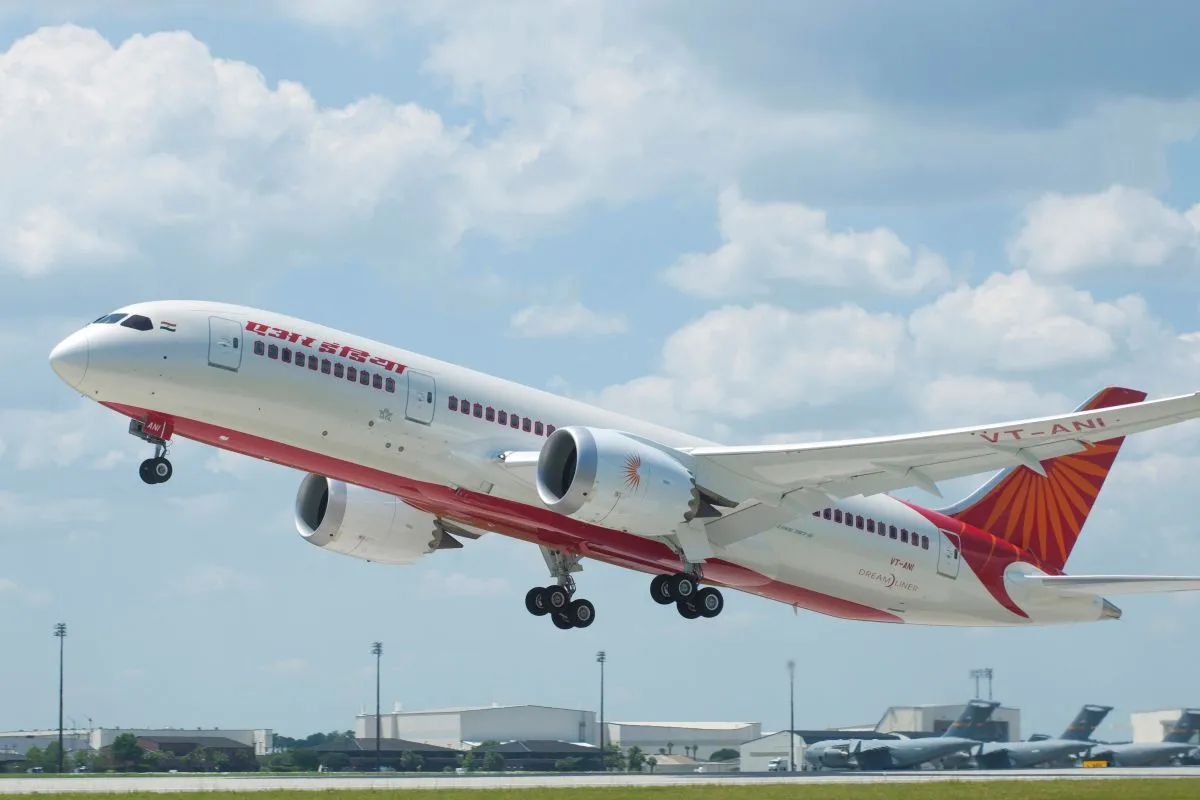
Air India, the flag carrier of India currently undergoing a significant transformation under the ownership of the Tata Group, has informed its employees that it does not foresee layoffs despite mounting financial pressures stemming from global geopolitical tensions and an uncertain economic environment. The assurance came during a town hall meeting held on Friday, where the airline’s top executives addressed concerns regarding the company’s financial health and strategic direction. While job security was affirmed, employees were also informed that annual salary increases would be deferred by at least one quarter, signaling a concerted effort to manage costs during these challenging times.
The decision to maintain the workforce comes amidst a period of heightened scrutiny for the aviation industry, particularly airlines operating long-haul international routes. Chief Human Resources Officer Ravindra Kumar explicitly stated, "We don’t anticipate layoffs," sources close to the development told Skift. This statement aims to quell anxieties among the airline’s vast employee base, which has witnessed significant changes since the carrier’s privatization. However, the deferral of salary hikes underscores the severe impact of external factors on the airline’s bottom line. Outgoing CEO Campbell Wilson, who participated in the town hall alongside Kumar and Chief Financial Officer Sanjay Sharma, urged employees to exercise fiscal prudence, advocating for the suspension of discretionary spending and the deferral of non-critical expenditures. Wilson emphasized the imperative need to cut down on costs, referring to the current period as "tough times" for the airline.
The Geopolitical and Economic Headwinds
The financial pressures cited by Air India executives are multifaceted, primarily linked to the ongoing ramifications of geopolitical instability and a volatile global economy. The "Iran war," a term likely referring to the broader escalation of tensions and conflicts in the Middle East, has had a profound impact on global crude oil prices. Jet fuel, which typically accounts for 30-40% of an airline’s operating costs, experiences direct and often dramatic price hikes in response to such instability. Airlines operating through or near conflict zones also face increased insurance premiums and operational complexities.
Compounding this challenge is the recurring issue of Pakistan airspace closure. Historically, disputes between India and Pakistan have led to the closure of Pakistani airspace to Indian-registered flights, forcing carriers like Air India to reroute flights to Europe, the Middle East, and North America. Such diversions significantly extend flight times, necessitating more fuel consumption, incurring higher navigation charges, and increasing crew operating hours. For instance, a flight from India to Europe might need to fly south over the Arabian Sea and then west, adding several hours to the journey and burning thousands of extra kilograms of fuel. These additional costs, while variable, can run into millions of dollars annually for an airline with an extensive international network.
Furthermore, the "uncertain economic environment" refers to a global landscape characterized by inflationary pressures, rising interest rates, and fears of an impending recession in key markets. This economic uncertainty can dampen travel demand, particularly for discretionary leisure travel and premium business travel, affecting an airline’s revenue streams. High inflation also pushes up the cost of various operational inputs, from maintenance spares to catering services.
Air India’s Transformation Journey Under Tata
To fully appreciate the significance of Air India’s current situation, it is crucial to understand its recent history. For decades, Air India operated as a state-owned enterprise, plagued by chronic losses, mounting debt, and a reputation for inconsistent service. Its acquisition by the Tata Group in January 2022 marked a pivotal moment, signaling a new chapter aimed at revitalizing the once-iconic airline. The Tata Group, which originally founded Air India in 1932 as Tata Air Services, inherited a colossal task: modernizing an aging fleet, streamlining a complex organizational structure, improving service standards, and returning the airline to profitability.
Since the takeover, Tata has embarked on an ambitious transformation plan. This includes significant investment in new aircraft, with Air India placing a historic order for 470 aircraft – 250 from Airbus and 220 from Boeing – in early 2023. This monumental order, valued at tens of billions of dollars, is the largest single aircraft purchase in commercial aviation history, underscoring Tata’s long-term vision for Air India to become a world-class global carrier. The plan also involves integrating Air India Express and AirAsia India under a unified low-cost brand and merging Vistara (a joint venture between Tata and Singapore Airlines) into Air India to create a single, full-service airline with a consolidated market presence. Campbell Wilson, a veteran aviation executive from Singapore Airlines’ low-cost subsidiary Scoot, was appointed CEO in July 2022 to spearhead this ambitious turnaround.
The Impact of External Pressures: Routes, Fuel, and Costs
The impact of the geopolitical and economic pressures on Air India’s operational costs is substantial. Let’s delve deeper into some supporting data and implications:
- Fuel Costs: According to the International Air Transport Association (IATA), jet fuel prices have seen significant volatility over the past two years. While they retreated from their 2022 peaks, geopolitical events can cause sharp spikes. For a major international carrier like Air India, even a 10% increase in average fuel prices can translate to hundreds of millions of dollars in additional annual expenditure. The airline operates a large number of wide-body aircraft for its international routes, which are inherently more fuel-intensive.
- Rerouting Expenses: The repeated closures or restrictions of Pakistani airspace have a tangible cost. Aviation analytics firms have estimated that such rerouting can add anywhere from 30 minutes to over 2 hours to flight times, depending on the destination. For a Boeing 787 or 777, this could mean an additional 5,000-15,000 kg of fuel per flight, not to mention increased costs for crew salaries, aircraft wear and tear, and extended ground times. Given Air India’s extensive network to Europe and North America, these costs accumulate rapidly.
- Currency Fluctuations: A significant portion of Air India’s operational expenses, including aircraft leases, maintenance, and fuel, are denominated in U.S. dollars. A weakening Indian Rupee against the dollar would further inflate these costs when converted from the airline’s primary revenue currency.
Employee Welfare and Operational Adjustments
The decision not to implement layoffs reflects a strategic choice by the Tata Group, indicating a commitment to its workforce and a long-term view of the airline’s potential. Layoffs, while offering immediate cost savings, can severely damage employee morale, lead to a loss of institutional knowledge, and complicate future growth plans when demand eventually recovers. This approach contrasts with some global airlines that resorted to significant workforce reductions during the peaks of the pandemic or other crises.
However, the deferral of annual salary increases, while less severe than layoffs, will likely be met with mixed reactions. Employees will appreciate job security, but the delay in compensation adjustments, especially in an inflationary environment, could impact morale and potentially affect talent retention in the long run if not managed carefully. The call for cost-cutting from outgoing CEO Campbell Wilson, encompassing discretionary spending and non-critical expenditures, signals a company-wide austerity drive. This could involve tighter controls on travel, training, office supplies, and even delaying non-essential IT upgrades or marketing campaigns. The focus is clearly on preserving cash and improving the efficiency of existing operations.
The Critical Juncture: Leadership Succession
The town hall meeting also highlighted a critical looming challenge for Air India: the question of leadership succession. With Campbell Wilson, who has been instrumental in charting the initial phase of Air India’s turnaround, preparing for his departure, the airline faces a leadership vacuum at a crucial juncture. Wilson’s experience in airline transformation and his strategic vision have been vital in guiding Air India through its initial restructuring, fleet expansion plans, and cultural overhaul.
The Skift Take, "Each Air India update only deepens the question: who gets to lead the airline? The wait, for now, continues," underscores this concern. The selection of Wilson’s successor will be paramount for ensuring continuity in the ambitious transformation strategy. An aviation analyst, speaking on background, noted, "The next CEO will need to be someone who can not only navigate these complex external pressures but also continue the internal integration and modernization efforts with the same, if not greater, intensity. Any delay or misstep in leadership transition could derail the momentum Air India has painstakingly built." The Tata Group’s ability to quickly identify and appoint a capable successor will be closely watched by employees, investors, and the broader aviation industry.
Industry Perspectives and Future Outlook
Aviation industry experts generally view Tata’s commitment to Air India as a long-term play, acknowledging that the turnaround will be a marathon, not a sprint. The current external challenges, while significant, are seen as temporary headwinds that test the resilience of the strategic plan. "Air India’s current challenges are a microcosm of the global aviation industry’s struggles with volatility," commented a Delhi-based aviation consultant. "The key for Air India, under Tata, is its access to capital and its long-term vision. Not laying off staff shows a commitment to human capital, which is crucial for a service industry."
The future outlook for Air India hinges on several factors: the stabilization of geopolitical tensions, particularly in the Middle East and between India and Pakistan; the moderation of global fuel prices; and a sustained recovery in global economic activity and travel demand. Internally, the successful integration of its various airline brands, the timely delivery and induction of its new aircraft fleet, and the continued improvement of its operational efficiency and customer service will be critical. The new leadership will also have to deftly balance cost-cutting measures with investments in service enhancements and network expansion to truly transform Air India into a competitive global player. The path ahead is challenging, but the assurance of job security, even with deferred raises, suggests a measured approach by the Tata Group to steer its flagship airline through turbulent skies towards a more stable future.



 Budi Mulyono
 Anjar Salim
 Chandra Hamzah

 Lukman Taruna Persada Ramadan