
 Anjar Salim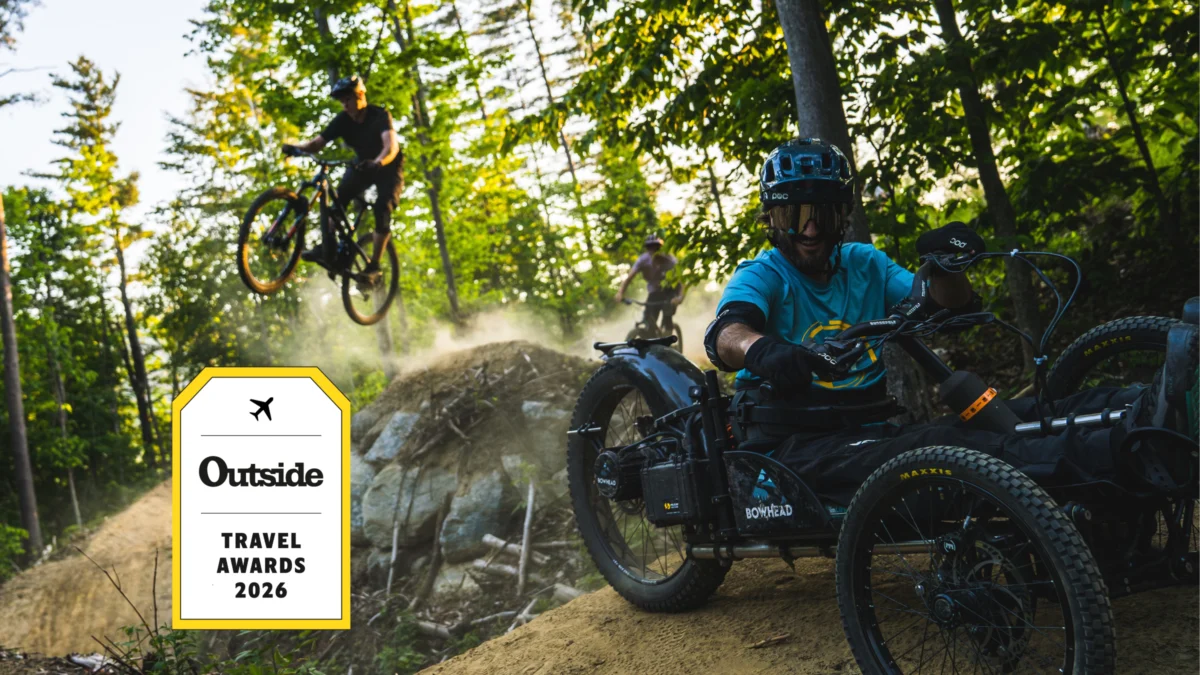
The transformation of mountain biking from a niche extreme sport into a more inclusive outdoor pursuit reached a significant milestone in the hills of Bolton, Vermont. What began as a frustrating realization during a group ride several years ago has culminated in the development of The Driving Range, the first trail network in the United States—and potentially the world—designed and built from the ground up specifically for adaptive mountain bikers. This project represents a fundamental shift in how outdoor recreation infrastructure is conceived, moving away from retrofitting existing trails toward a philosophy of universal design that benefits all riders regardless of physical ability.
The Catalyst for Change: From Frustration to Innovation
The genesis of The Driving Range can be traced back to a specific afternoon at the Hinesburg Town Forest near Burlington, Vermont. Berne Broudy, a veteran journalist and president of the non-profit Richmond Mountain Trails (RMT), was leading a group ride when she was joined by Greg Durso. Durso, an accomplished athlete who was paralyzed from the waist down following a 2009 sledding accident, was riding a sophisticated three-wheeled adaptive mountain bike.
While the trails in Hinesburg are celebrated for their classic New England "rake and ride" style—characterized by technical roots, rocky outcrops, and punchy climbs—they were not built with adaptive equipment in mind. The primary obstacle was not the terrain’s difficulty, but its dimensions. Adaptive bikes typically feature a footprint of approximately 36 inches in width to accommodate three wheels and provide stability. Throughout the ride, the group was forced to stop repeatedly to manually carry Durso and his equipment across narrow wooden bridges that were only 30 inches wide.
Broudy noted that the solution was mechanically simple but required a systemic change in perspective. The realization that a few inches of lumber and a shift in design priority could bridge the gap between exclusion and independence became the driving force behind a new initiative. Instead of merely widening a few bridges, the goal shifted to creating an entire ecosystem where adaptive riders could navigate technical terrain without assistance.
The Development of The Driving Range
Following the experience in Hinesburg, Richmond Mountain Trails partnered with local stakeholders to identify a location for a purpose-built network. The site selected was a parcel of land in Bolton, Vermont, roughly 30 miles east of Burlington. The land, which serves as an active maple syrup operation, was made available through the cooperation of the owner of the nearby Bolton Valley Resort.

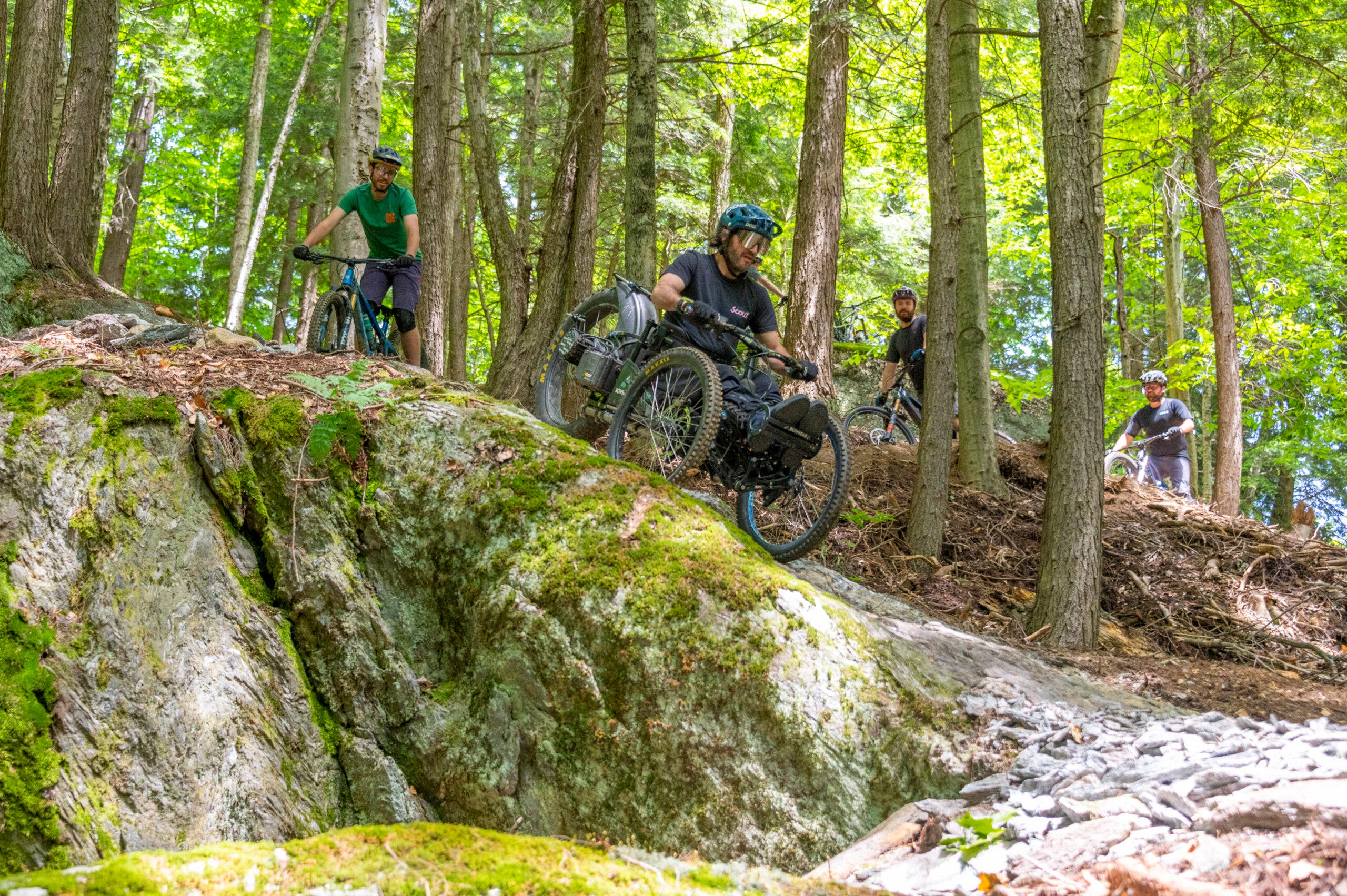
The Driving Range officially opened its first phase in 2023. Unlike traditional "adaptive-friendly" trails, which are often relegated to flat, gravel paths or fire roads, The Driving Range was designed to provide the same level of "flow," technical challenge, and progression found in standard mountain bike networks. The network currently spans approximately 4.5 miles, a distance that, due to the steep and rugged Vermont topography, offers a substantial physical challenge.
The design philosophy focused on three critical technical details:
- Corridor Width: All main lines maintain a minimum clearance of three to four feet, ensuring that the widest adaptive bikes can navigate the trails without bottoming out or becoming wedged between trees.
- Sightlines: Because adaptive riders sit lower to the ground than traditional cyclists, the trails were cleared to ensure visibility around corners and over crests, allowing for safer high-speed navigation.
- Camber and Grade: Designers avoided "off-camber" sections—slopes that tilt toward the downhill side—which can cause three-wheeled bikes to tip. Instead, the trails utilize berms and supported corners to keep the equipment stable.
A Chronology of Progress in Adaptive Cycling
The success of The Driving Range is the result of a decades-long evolution in both social advocacy and mechanical engineering. To understand the significance of the Vermont project, it is necessary to look at the timeline of the sport’s development:
- 2009: Greg Durso suffers a spinal cord injury, beginning his journey into adaptive sports. During this era, adaptive mountain bikes were heavy, cumbersome, and largely restricted to wide dirt roads.
- 2015–2020: A technological revolution occurs in the bike industry. Companies like Bowhead Corp introduce articulating front-end suspensions and powerful e-assist motors. These innovations allow adaptive bikes to lean into turns and climb steep, technical grades that were previously inaccessible.
- 2021: Richmond Mountain Trails begins formal planning for The Driving Range, securing land access and fundraising through community grants and private donations.
- 2023: The Driving Range officially opens to the public, featuring trails like "Double Bogey," which offer high-level technical features accessible to all riders.
- 2025: The project gains international recognition through the documentary film Best Day Ever. The film wins the "Best Film: Mountain Sports" category and the "Audience Choice Award" at the Banff Centre Mountain Film Festival, as well as the "Audience Choice Award for Overall Documentary" at the Heartland International Film Festival.
Statistical Context: The Scope of the Need
The demand for accessible outdoor recreation is supported by significant demographic data. According to the Centers for Disease Control and Prevention (CDC), approximately 61 to 65 million Americans—roughly one in four adults—live with some form of disability. Specifically, 13 percent of U.S. adults have a serious mobility disability that makes walking or climbing stairs difficult.
In the context of the outdoor economy, this represents a massive, underserved market. In Vermont alone, outdoor recreation contributes approximately $1.9 billion to the state’s GDP and supports over 20,000 jobs. By expanding trail access, Vermont is positioning itself as a leader in a growing sector of "inclusive tourism."
The Vermont Mountain Bike Association (VMBA), which oversees 28 chapters and more than 1,200 miles of trails, has recognized this potential. In collaboration with organizations like Vermont Adaptive and the Kelly Brush Foundation, the VMBA has implemented a statewide assessment program. To date, over 150 miles of Vermont’s existing trail network have been audited and designated as "adaptive-optimized" or "adaptive-friendly."
Technical Analysis: The Role of E-Assist and Universal Design
A critical component in the viability of adaptive trail networks is the integration of electric-assist (e-bike) technology. For many adaptive riders, the weight of a three-wheeled bike (which can exceed 75 pounds) makes manual pedaling on steep inclines impossible. The legalization and acceptance of Class 1 e-bikes on trails have been essential for the growth of the sport.
Joe Stone, co-founder of Dovetail Consulting and an expert in adaptive access, argues that the "Driving Range model" proves that accessibility does not require the "dumbing down" of trails. "If you open the door, people will go through it," Stone noted. The concept of "Universal Design"—creating environments that are usable by all people to the greatest extent possible without the need for adaptation or specialized design—is the core takeaway. At The Driving Range, a professional able-bodied rider and an adaptive rider can share the same "main line," enjoying the same jumps, berms, and technical challenges.
National Implications and Future Outlook
The success in Vermont is already serving as a blueprint for other mountain biking hubs across North America. In Bend, Oregon, the local trail association utilized lodging tax revenue in 2025 to develop a new downhill system at Wanoga Trails designed specifically for adaptive use. Similarly, the 1,800-acre Durango Mesa Park in Colorado is being developed with adaptive integration as a primary requirement rather than an afterthought.
Federal land management agencies, including the U.S. Forest Service and the National Park Service, are also taking note. As these agencies update their trail management objectives, the data provided by projects like The Driving Range offers a framework for how to balance conservation with inclusive access.
For the founders of The Driving Range, the ultimate goal is for "adaptive trails" to eventually lose their prefix. By normalizing wider corridors and consistent sightlines, the mountain biking community is discovering that what makes a trail accessible for a rider like Greg Durso also makes it more enjoyable and safer for children, beginners, and aging riders.
As Berne Broudy emphasizes, the project’s impact is measured not just in miles of dirt, but in the expansion of the community. When barriers to entry are removed, the sport becomes more robust, diverse, and sustainable. The Driving Range stands as a testament to the fact that inclusivity is not a compromise on the spirit of adventure, but an enhancement of it.




 Chandra Hamzah
 Tatiana Tantri Indah Sari
 Budi Mulyono
 Lukman Taruna Persada Ramadan