
 Diana Nuri Rohmawati
The landscape of international travel has undergone a radical shift over the last decade, transitioning from a reliance on physical maps and guidebooks to a digital-first ecosystem where constant connectivity is a logistical necessity. Central to this evolution is the emergence of the eSIM (embedded Subscriber Identity Module), a technology that has effectively disrupted the traditional telecommunications model for travelers. Among the primary catalysts in this sector is Holafly, a Dublin-headquartered company that has positioned itself as a leader in providing unlimited data solutions across more than 200 destinations globally. As the travel industry rebounds and the "digital nomad" demographic expands, the adoption of eSIM technology is no longer a niche preference but a fundamental component of modern global mobility.
The Technological Shift from Physical to Digital Connectivity
For decades, international travelers faced a binary choice regarding mobile connectivity: pay exorbitant roaming fees to their domestic carriers or navigate the logistical hurdle of purchasing a local physical SIM card. The latter often involved locating a kiosk in a foreign airport, navigating language barriers, and physically swapping out tiny plastic chips—a process that risked the loss of the original SIM and required the device to be carrier-unlocked.
The introduction of eSIM technology has eliminated these physical constraints. An eSIM is a small chip embedded directly into a smartphone’s motherboard during manufacturing. It allows users to download multiple "profiles" or data plans via software, eliminating the need for a physical slot. According to data from the GSMA, the global trade body for mobile network operators, the number of eSIM-capable devices is expected to reach 6.7 billion by 2030. This shift was accelerated significantly when major manufacturers, most notably Apple with its iPhone 14 and 15 series in the United States, began removing physical SIM trays entirely, forcing a market-wide pivot toward digital-only solutions.
Holafly Company Profile and Market Positioning
Founded in 2017 in Spain and currently operating out of Dublin, Ireland, Holafly has emerged as a dominant force in the travel tech space. The company was established with the objective of simplifying the "connected traveler" experience by leveraging the burgeoning eSIM infrastructure. Unlike many competitors that offer tiered data packages (e.g., 1GB, 3GB, or 10GB bundles), Holafly’s primary value proposition lies in its unlimited data offerings.

The company provides coverage in over 200 destinations, encompassing major markets in Europe, Asia, North America, and Latin America. By partnering with Tier-1 local telecommunications providers in each region—such as Movistar in Spain or AT&T in the United States—Holafly ensures that users receive high-speed LTE or 5G connectivity that mimics the experience of a local subscriber. This infrastructure allows the company to offer flexible plan durations ranging from a single day to a 90-day window, catering to both short-term tourists and long-term remote workers.
Operational Framework and Technical Implementation
The deployment of a Holafly eSIM is designed to be a frictionless process, reflecting the broader industry trend toward "on-demand" services. The technical workflow generally follows a four-step chronology:
- Compatibility Verification: Before purchase, the consumer must ensure their hardware is eSIM-compatible. Most flagship devices released after 2018, including the iPhone XS and later, the Google Pixel 3 and later, and the Samsung Galaxy S20 series, support the technology.
- Acquisition and Distribution: Upon purchasing a plan through the Holafly web portal or mobile application, the user receives a digital package via email. This package contains a unique QR code and manual activation details.
- Installation: Users scan the QR code using their device’s camera, which triggers the phone’s operating system to download the network profile. On iOS, this is managed through the "Cellular" menu, while Android users navigate through "Network & Internet" settings.
- Activation: Once the traveler arrives at their destination, they simply toggle the eSIM line to "On" and enable "Data Roaming."
A critical technical advantage of the eSIM is the ability to maintain "Dual SIM" functionality. This allows travelers to keep their primary domestic phone number active for essential services like SMS-based two-factor authentication (2FA) or emergency calls, while routing all high-bandwidth data usage through the Holafly eSIM. This hybrid approach prevents the "bill shock" traditionally associated with international roaming.
Economic Implications and Comparative Analysis
From an economic perspective, the rise of providers like Holafly represents a democratization of data. Traditional roaming charges can often exceed $10 per megabyte or a flat daily fee of $10 from major U.S. carriers, which may still be subject to data caps or speed throttling. In contrast, Holafly’s pricing model starts at approximately $4 USD per day for unlimited data, with the price-per-day decreasing as the duration of the plan increases.
This pricing structure is particularly impactful in regions where digital connectivity is integrated into the local economy. In mainland China, for instance, the society has moved toward a "cashless" model where almost all transactions—from street food to public transit—are processed through apps like Alipay and WeChat Pay. Without a reliable, high-speed data connection, a traveler in such an environment is effectively locked out of the local economy. Holafly’s ability to provide immediate connectivity upon landing addresses this critical logistical barrier.

Furthermore, Holafly has introduced regional plans (e.g., eSIM Europe, eSIM Asia, eSIM Latin America) which allow travelers to cross borders within a specific continent without needing to purchase new plans or change settings. This is a significant boon for the European market, where the "Roam Like at Home" regulations apply to EU citizens but do not always extend to international visitors using non-EU SIM cards.
Addressing the Digital Nomad and Remote Work Sector
The post-pandemic era has seen a surge in "digital nomadism"—professionals who work remotely while traveling globally. For this demographic, internet reliability is not merely a convenience but a professional requirement. Holafly’s inclusion of hotspot capabilities on many of its plans allows users to share their eSIM data with laptops or tablets, creating a mobile office environment in locations where public Wi-Fi may be insecure or non-existent.
Industry analysts note that the 24/7 multilingual support and a flexible six-month refund policy are strategic moves by Holafly to build trust in a market that was previously characterized by opaque terms and conditions. By offering a "money-back guarantee" if the technology fails to activate, the company is mitigating the perceived risk associated with moving away from physical SIM cards.
Challenges and Future Outlook
Despite the rapid adoption, the eSIM industry faces ongoing challenges. Device compatibility remains a hurdle for travelers using older or budget-tier hardware. Additionally, while Holafly focuses on data, most of its eSIMs do not come with a local phone number for traditional voice calls. While this is largely mitigated by the prevalence of VoIP services like WhatsApp, Telegram, and iMessage, certain local services (such as booking a restaurant in a country that requires a local number for SMS confirmation) still present a friction point.
Looking forward, the integration of 5G technology into eSIM profiles is expected to become the standard. As 5G networks expand globally, the demand for high-bandwidth activities—such as 4K video conferencing and augmented reality navigation—will necessitate the "unlimited" model that Holafly has pioneered.
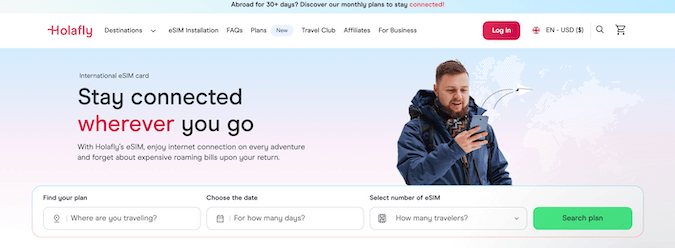
The broader impact on the telecommunications industry is profound. Traditional mobile network operators (MNOs) are being forced to re-evaluate their international roaming portfolios to compete with the agility and transparency of eSIM-first providers. As physical SIM cards head toward obsolescence, companies like Holafly are not just providing a product; they are defining the infrastructure of 21st-century global travel.
Conclusion
The transition from physical SIM cards to digital eSIMs marks a significant milestone in the history of telecommunications. By streamlining the activation process and focusing on unlimited data, Holafly has addressed the primary pain points of the international traveler. As the global economy becomes increasingly interconnected and the workforce more mobile, the demand for seamless, borderless connectivity will only intensify. Holafly’s growth from a Spanish startup to a global provider serves as a case study in how targeted technological innovation can disrupt a long-standing industrial monopoly, ultimately benefiting the consumer through lower costs and greater convenience. For the modern traveler, the "hassle of the SIM swap" is rapidly becoming a relic of the past, replaced by the simplicity of a scanned QR code and the promise of an always-on digital world.




 Chandra Hamzah
 Tatiana Tantri Indah Sari
 Budi Mulyono
 Anjar Salim

