
 Dwi Wanna
In the contemporary landscape of global travel, staying connected is no longer a luxury but a fundamental necessity. From navigating unfamiliar city streets and discovering local culinary gems to deciphering public transportation schedules and managing essential transactions, reliable mobile data has become an indispensable tool for the modern traveler. This reality starkly contrasts with the early days of independent travel, where reliance on physical guidebooks and the arduous process of acquiring local SIM cards often led to significant delays and frustrations. The advent and widespread adoption of eSIM technology have revolutionized this experience, offering a streamlined and efficient solution for maintaining connectivity abroad. Among the leading providers in this rapidly evolving sector, Holafly has emerged as a significant player, offering a compelling suite of services that prioritize ease of use, extensive coverage, and unlimited data.
The Evolution of Traveler Connectivity: From Paper Maps to Digital Solutions
The journey towards effortless global connectivity for travelers has been a dynamic one. Decades ago, navigating foreign lands often meant relying on bulky paper maps and meticulously researched guidebooks. Locating accommodation involved a degree of serendipity and often involved asking for directions in a language one might not speak. The introduction of smartphones marked a significant leap forward, but the process of obtaining international mobile data remained cumbersome. Travelers would frequently find themselves searching for physical SIM card kiosks upon arrival, engaging in challenging communication with local vendors, and spending valuable time physically swapping out small plastic SIM cards in their devices. This often involved navigating complex activation processes and potential compatibility issues.
The introduction of eSIM (embedded Subscriber Identity Module) technology has fundamentally altered this paradigm. Unlike its physical predecessor, an eSIM is a small chip embedded directly into a device’s hardware, allowing users to download and activate carrier profiles digitally. This eliminates the need for physical SIM cards and the associated logistical hurdles. For travelers, this translates to the ability to purchase and install data plans remotely, often before even departing their home country, or immediately upon arrival without the need to visit a physical store. The significance of this cannot be overstated, particularly in regions where digital transactions and essential services are heavily reliant on constant internet access, as is the case in China, where mobile payments dominate daily life.

Holafly: A Pioneer in the eSIM Revolution
In the competitive and rapidly expanding eSIM market, Holafly has distinguished itself through its commitment to providing travelers with unlimited data, rapid setup, and comprehensive global coverage. Founded in Spain in 2017 and now headquartered in Dublin, Holafly has rapidly ascended to prominence by offering a user-centric approach to international mobile data. The company’s core offering revolves around eSIMs that are easily installed on compatible smartphones via a simple QR code scan. Once activated, these eSIMs enable users to connect to the internet abroad by leveraging the networks of local mobile carriers.
What truly sets Holafly apart is its focus on offering unlimited data for a significant portion of its plans. This approach directly addresses a common pain point for travelers: the anxiety of data overages and the need to constantly monitor data consumption. Instead of purchasing data in fixed gigabyte packages that can be quickly depleted by navigation apps, social media usage, or video calls, Holafly’s model allows users to select a plan based on the duration of their stay, typically ranging from 1 to 90 days. This predictable pricing structure, combined with unlimited data, provides a sense of freedom and eliminates the financial uncertainty often associated with international data usage.
Holafly’s global reach is also a significant advantage. The company boasts coverage in over 200 destinations worldwide, encompassing major travel regions such as Europe, Asia, North America, and Latin America. This extensive network ensures that travelers can remain connected regardless of their destination, making it a versatile choice for those who frequently traverse different continents or engage in multi-country itineraries. The company’s commitment to simplifying the traveler’s experience is further evidenced by its provision of 24/7 multilingual customer support, the ability to use eSIMs as mobile hotspots, and a flexible six-month refund policy, all of which contribute to a robust and reassuring service offering.
The Seamless eSIM Activation Process

The process of acquiring and activating a Holafly eSIM is designed for maximum efficiency and minimal friction. The initial step involves ensuring that the traveler’s device is unlocked and supports eSIM technology. Most modern smartphones, including recent iPhone models and a wide array of newer Android devices, are compatible. A stable Wi-Fi connection is recommended for the initial setup and installation.
Upon purchasing an eSIM from Holafly, users receive an email containing a QR code and essential order information. This QR code is the key to activating the eSIM. The installation process is then guided by the device’s operating system:
- On iPhones: Users navigate to Settings > Cellular (or Mobile Data) > Add Cellular Plan and then scan the provided QR code using their phone’s camera.
- On Android devices: The path typically involves Settings > Network & internet (or Connections) > SIMs or Mobile network > Add eSIM / Add mobile plan, followed by scanning the QR code. (Note that exact labels may vary slightly depending on the specific Android model and version.)
Once the eSIM is installed, it functions as a separate line on the device. Crucially, Holafly eSIMs are data-only. This means that travelers can retain their primary physical SIM card for calls and text messages, thereby avoiding the need to purchase a separate local SIM for these basic communication functions. Apps that utilize the user’s primary phone number, such as WhatsApp, iMessage, and Telegram, will continue to function seamlessly, allowing for familiar communication with friends and family.
Upon arrival at their destination, travelers need to enable data roaming for the newly installed Holafly eSIM. This is done within the device’s Cellular/Mobile Data settings, where the Holafly line is selected, and both Data Roaming and Mobile Data are activated for that specific line. To prevent unintended roaming charges on their home SIM, it is advisable to disable Mobile Data for the primary SIM card.
The underlying technology of Holafly’s service relies on partnerships with local mobile network operators in each destination. This ensures that users connect to the strongest and most reliable network available in their specific location, optimizing the user experience. The "unlimited data" promise is a significant draw, especially for travelers who rely heavily on data-intensive applications. Unlike traditional data plans that often come with restrictive allowances, Holafly’s model allows for uninhibited usage of maps, social media, streaming services, and video calls, all without the concern of exceeding a data cap.
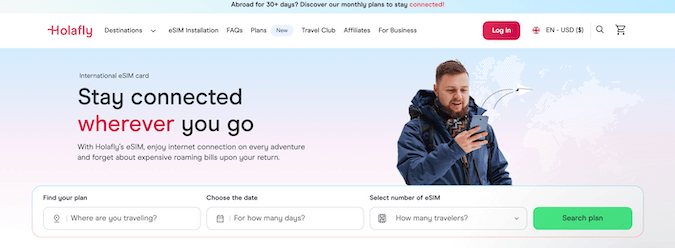
Pricing for Holafly plans is competitive, with daily rates typically starting around $4 USD. These costs can be further reduced by opting for longer-duration plans or by exploring Holafly’s newer subscription options, known as Holafly Plans, which are designed for extended or recurring travel needs.
Broader Implications and Future Trends in Traveler Connectivity
The widespread adoption of eSIM technology and the rise of providers like Holafly signal a significant shift in how travelers approach connectivity. This trend has several broader implications for the travel industry and the digital nomad community:
- Enhanced Travel Planning and Spontaneity: With reliable data readily available, travelers can plan their trips more effectively, research destinations on the go, and adapt their itineraries spontaneously without the fear of losing connectivity. This fosters a more immersive and responsive travel experience.
- Economic Benefits for Travelers: By eliminating the need for expensive international roaming plans from home carriers or the constant need to purchase local SIMs, eSIMs offer a cost-effective solution for managing data expenses. The unlimited data offerings from providers like Holafly further amplify these savings, especially for heavy data users.
- Facilitation of Digital Nomadism: For remote workers and digital nomads who depend on constant internet access for their livelihoods, eSIMs provide a crucial element of their operational infrastructure. The ease of setup and reliable connectivity offered by Holafly directly supports this growing segment of the global workforce.
- Increased Digital Inclusion in Developing Regions: As eSIM technology becomes more prevalent, it can contribute to greater digital inclusion in regions where access to traditional SIM cards or reliable internet infrastructure might be challenging. Travelers can contribute to local economies through mobile payments and digital services more seamlessly.
- Competitive Landscape and Innovation: The growing demand for eSIM solutions is driving innovation and competition among providers. This is leading to improved service offerings, more diverse pricing models, and enhanced features, ultimately benefiting consumers. Companies are increasingly focusing on user experience, global coverage, and specialized plans to cater to different traveler needs.
The trend towards digital solutions in travel is undeniable. The transition from physical guidebooks to apps, from hotel bookings to online platforms, and now from physical SIM cards to eSIMs reflects a broader societal move towards convenience, efficiency, and digital integration. Holafly’s success in this space is a testament to its ability to understand and cater to these evolving traveler needs. By simplifying the process of staying connected, Holafly not only enhances the travel experience but also empowers travelers to engage more deeply with their destinations and manage their digital lives seamlessly, regardless of their geographical location. The future of travel connectivity appears to be firmly rooted in the digital realm, with eSIMs poised to become the standard for global mobile data access.



 Anjar Salim
 Chandra Hamzah
 Tatiana Tantri Indah Sari
 Budi Mulyono
 Lukman Taruna Persada Ramadan
