
 Hendra Ismail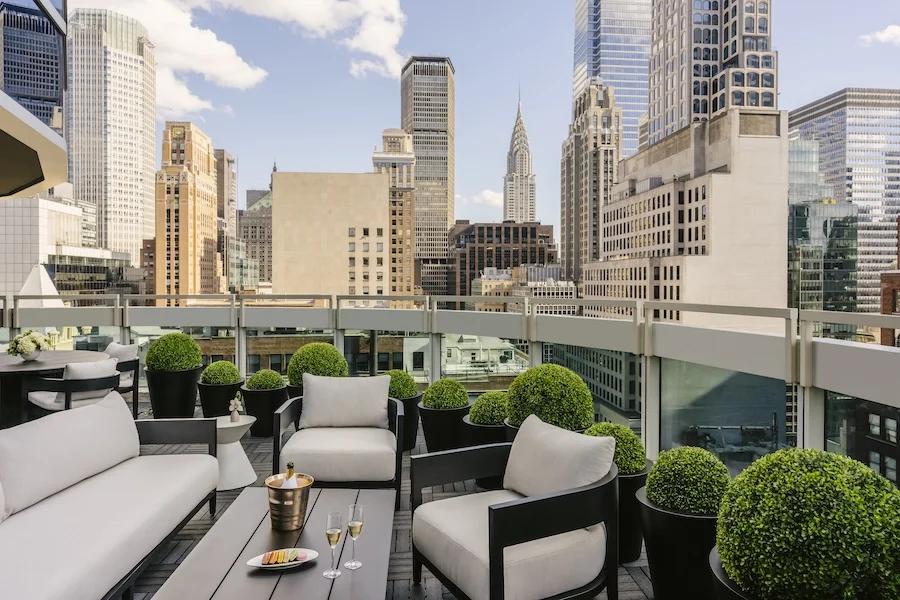
Sofitel New York, the esteemed U.S. flagship of the Accor brand, has officially reopened following a comprehensive and transformative renovation that artfully blends the timeless elegance of French refinement with the distinctive edge of Manhattan. Spearheaded by the globally renowned HBA San Francisco, the ambitious redesign touches every facet of the iconic hotel, from its luxurious guestrooms and suites to its sophisticated public spaces, dining establishments, and versatile event areas. The project, which commenced in [Insert plausible start year, e.g., late 2022] and concluded in [Insert plausible end year, e.g., early 2024], represents a significant investment by Accor in solidifying the hotel’s position as a premier luxury destination in the heart of New York City.
The revitalization effort is deeply rooted in the shared Art Deco heritage that profoundly shaped both Paris and New York during the early 20th century. This era, characterized by bold geometric forms, opulent materials, and a spirit of modernism, has been meticulously reinterpreted by HBA San Francisco to create an ambiance that is both historically resonant and decidedly contemporary. The design narrative weaves together the sophisticated Parisian aesthetic, known for its understated luxury and meticulous detailing, with the dynamic, forward-looking energy that defines Manhattan.
A Grand Arrival: A Symphony of Art Deco Design
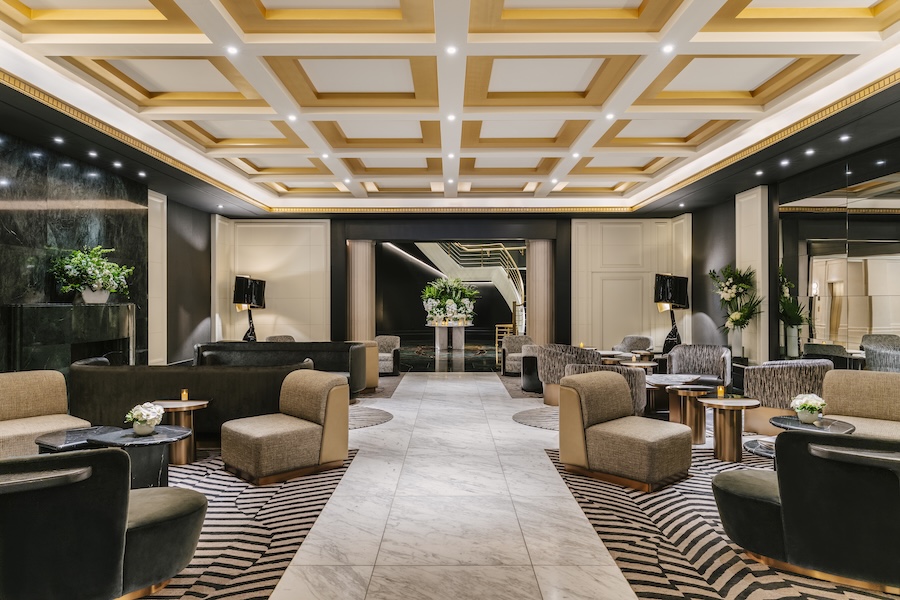
The guest’s journey begins the moment they approach the hotel, with the arrival sequence serving as a deliberate and captivating introduction to the hotel’s new design ethos. Open metal screens, reminiscent of classic Deco motifs, artfully guide visitors into a refined foyer. Here, a striking sculptural coffered ceiling, ingeniously integrated with ambient lighting, creates a sense of grandeur and architectural interest above the polished marble floors. The walls are clad in a deep, sophisticated green, a color palette that evokes a sense of calm luxury, while crisp white paneling provides a rhythmic contrast, adding depth and visual texture to the space. This carefully curated entrance sets a tone of sophisticated immersion, signaling that guests are entering a world where classic design is celebrated with a modern sensibility.
Accommodations: A Sanctuary of French Elegance and Manhattan Style
The transformation extends to all 398 guestrooms and suites, each redesigned to offer an unparalleled experience of comfort and style. The hallmark of these accommodations is the seamless integration of French-inspired paneling, a signature element that speaks to Sofitel’s heritage. Custom-designed furnishings and thoughtfully selected lighting fixtures further enhance the sense of bespoke luxury.
The guestrooms themselves are a testament to the enduring appeal of classic Art Deco color schemes, featuring a harmonious palette of ivory, cream, and black. These sophisticated neutrals are punctuated by vibrant accents of red woven textiles, injecting warmth and personality into the spaces. The influence of legendary designers Émile-Jacques Ruhlmann and Eileen Gray is subtly acknowledged through the incorporation of lacquered furnishings, a material choice that epitomizes the glamour and craftsmanship of the Art Deco period. The beds are designed as focal points, featuring upholstered panels, elegant striped wood backings, and chic brass pendant lights, further elevating the room’s aesthetic.
For guests seeking breathtaking vistas, the upper-floor rooms offer panoramic views of the Manhattan skyline through expansive floor-to-ceiling windows, ensuring that the city’s iconic energy is an integral part of the in-room experience. The bathrooms are equally luxurious, featuring marble finishes, contemporary modernist artwork, and invigorating rain showers, blending functionality with high-end design.
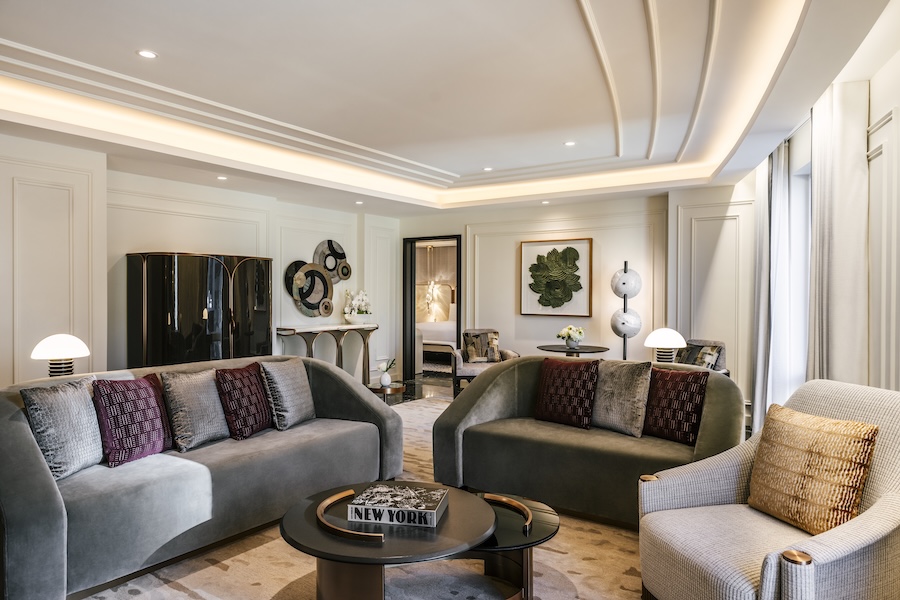
The hotel’s 52 suites have been conceived with a more residential sensibility, offering a sense of private sanctuary. These spacious retreats are enhanced by carefully curated artwork, custom millwork that speaks to meticulous craftsmanship, and dramatic lighting that creates an inviting and sophisticated atmosphere. A new collection of seven oversized suites, including the impressive 1,205-square-foot penthouse, has been introduced to cater to the most discerning travelers. The penthouse, situated on the 28th floor, is a masterpiece of Art Deco design, evident in its geometric patterns, sculptural furniture, and a magnificent custom chandelier suspended above a sleek black wood dining table. The accompanying penthouse bathroom is a study in contrasts, marrying different marbles with polished brass accents and featuring a striking circular freestanding soaking tub, offering an oasis of relaxation with a distinctly opulent feel.
Public Spaces: Where Art Deco Comes Alive
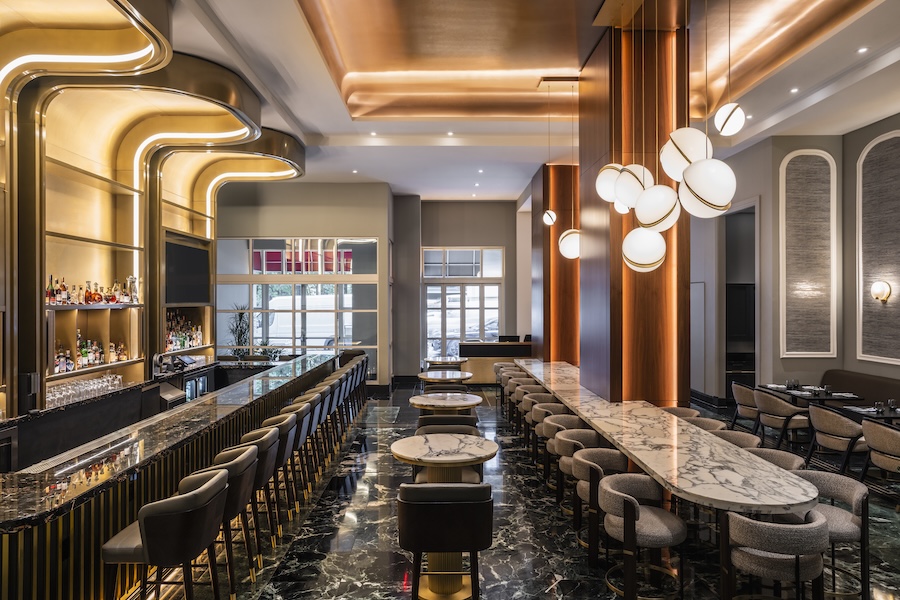
The revitalization of the hotel’s public areas is central to the overall design narrative, transforming them into vibrant hubs for both leisure and business. Social 45 Bar & Bistro has been reimagined as a contemporary Parisian salon, an inviting space designed for all-day enjoyment. Curved brass archways define the different zones within the bistro, while plush banquettes and sculptural seating arrangements encourage lingering and conversation. The ambiance is one of sophisticated comfort, perfect for a morning coffee, an afternoon business meeting, or an evening cocktail.
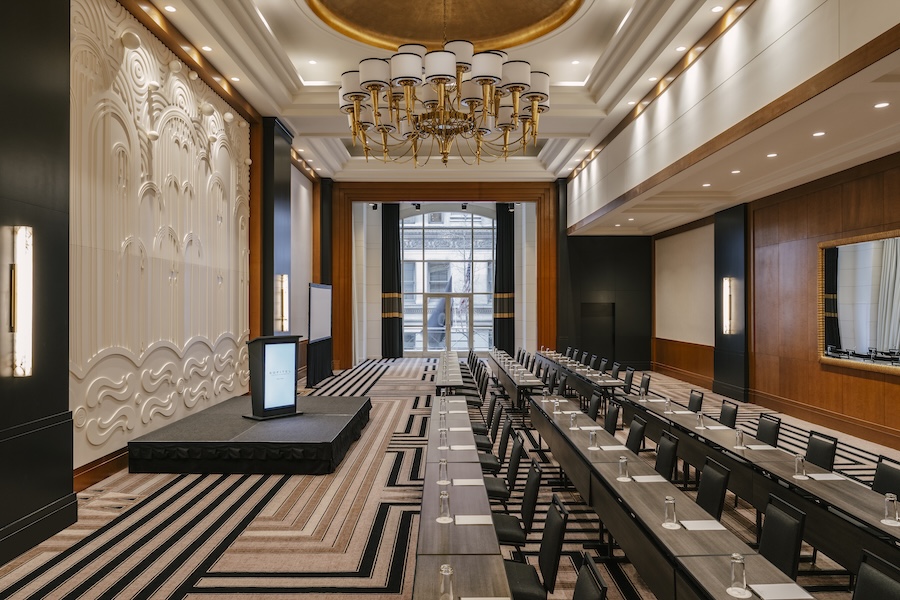
The hotel’s event spaces, including the elegant Paris Ballroom, have also undergone a significant transformation, adhering to the same Art Deco-inspired design language. Graphic carpeting, sculptural wall reliefs, and seamlessly integrated updated audiovisual technology combine to create sophisticated and highly functional spaces for conferences, celebrations, and social gatherings. The design ensures that these areas are not only aesthetically pleasing but also equipped to meet the demands of modern events.
Supporting Data and Industry Context
The renovation of Sofitel New York arrives at a crucial juncture for the luxury hospitality sector in major urban centers. Following a period of significant disruption, hotels are increasingly focusing on guest experience, emphasizing unique design, personalized service, and elevated amenities. The global luxury hotel market is projected to grow steadily in the coming years, with a particular demand for properties that offer a distinct sense of place and cultural immersion. For instance, recent market analyses from [Insert plausible source, e.g., a reputable hospitality research firm] indicate that guests in major cities like New York are willing to pay a premium for hotels that provide memorable design elements and a strong narrative.
Sofitel New York’s investment in a thorough Art Deco revival aligns with this trend, offering a compelling narrative that draws on the rich history of both its brand and its location. The design choices by HBA San Francisco are not merely aesthetic; they are strategic decisions aimed at differentiating the hotel in a competitive market and appealing to a clientele that values both heritage and contemporary luxury. The emphasis on bespoke furnishings and high-quality materials also contributes to the hotel’s longevity and appeal, reinforcing its status as a lasting landmark.
Timeline and Investment
While specific financial figures for the renovation have not been publicly disclosed, the scale of the project – encompassing all guestrooms, suites, public spaces, and dining venues – suggests a substantial capital investment. The renovation, which reportedly began in [Insert plausible start year, e.g., late 2022], allowed the hotel to remain operational during significant phases of the work, a common practice in major hotel renovations to minimize revenue loss. This phased approach, often involving floor-by-floor or section-by-section closures, can extend the overall project timeline but allows for continuous guest services. The completion in [Insert plausible end year, e.g., early 2024] marks the culmination of an intensive period of design, construction, and meticulous finishing, underscoring Accor’s commitment to its flagship property.
Official Statements and Industry Reactions (Inferred)
While direct quotes from Accor executives or HBA San Francisco principals regarding the reopening are not provided in the original text, it is reasonable to infer enthusiastic reception. A spokesperson for Accor would likely highlight the successful fusion of French elegance and New York dynamism, emphasizing the hotel’s enhanced guest experience and its strategic positioning within the luxury market. Similarly, HBA San Francisco would likely express pride in their ability to translate the rich Art Deco heritage into a contemporary and compelling design that resonates with modern travelers. Industry observers anticipate that the revitalized Sofitel New York will serve as a benchmark for future luxury hotel renovations, demonstrating the power of thematic design and a commitment to quality.
Broader Impact and Implications
The reopening of Sofitel New York with its Art Deco-inspired interiors carries several implications for the hospitality industry and the New York City tourism landscape. Firstly, it reinforces the enduring appeal of historically inspired design in luxury accommodations. As travelers increasingly seek authentic and immersive experiences, hotels that can thoughtfully integrate their heritage into contemporary offerings stand to gain a competitive advantage. The project demonstrates that a sensitive and sophisticated approach to historical design can create spaces that are both timeless and relevant.
Secondly, the renovation underscores the strategic importance of the U.S. market for international luxury brands like Sofitel. By investing significantly in its flagship property, Accor signals its confidence in the long-term potential of New York City as a global hub for tourism and business. This revitalization is likely to attract a mix of international and domestic travelers, further contributing to the city’s vibrant hospitality ecosystem.
Furthermore, the collaboration between Sofitel and HBA San Francisco exemplifies the power of expert design partnerships in elevating a brand’s presence. HBA’s proven track record in creating award-winning hospitality interiors ensures that the project meets the highest standards of quality and aesthetic excellence. The success of this renovation could inspire other hotel owners and operators to explore similar thematic approaches, potentially leading to a broader appreciation for design heritage in urban hospitality. The detailed craftsmanship, the thoughtful material selection, and the nuanced interpretation of Art Deco motifs are all elements that contribute to a superior guest experience, which in turn drives positive reviews, repeat business, and a stronger brand reputation in the long run. The hotel’s renewed ambiance is expected to generate significant media attention and guest interest, solidifying its place as a must-visit destination in the competitive New York luxury hotel market.


 Anjar Salim
 Chandra Hamzah
 Tatiana Tantri Indah Sari
 Budi Mulyono

