
 Gabriela Annisa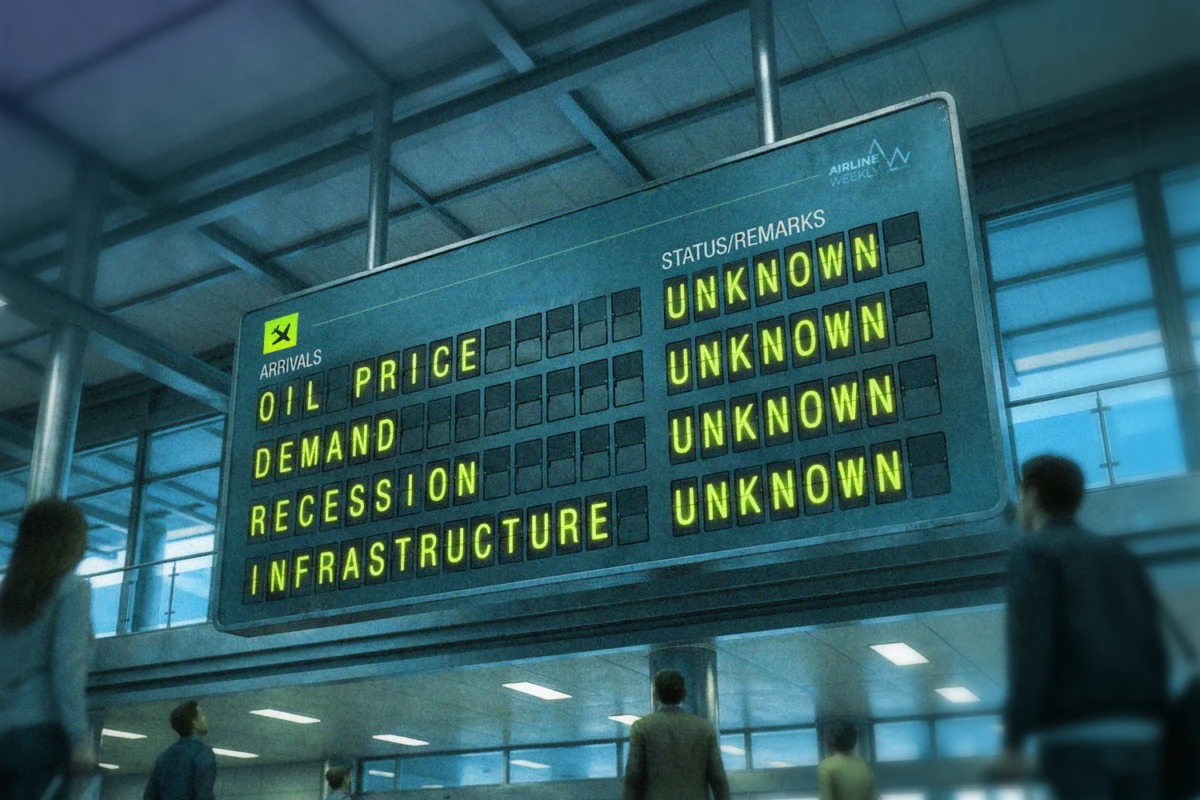
At the dawn of 2026, a pervasive sense of optimism permeated the global airline industry. Demand charts pointed skyward, fuel prices had settled into a manageable range, and the specter of escalating trade tariffs that had haunted boardrooms a year prior seemed to recede. However, this promising horizon was abruptly obscured by an unforeseen geopolitical tempest. A burgeoning conflict involving Iran has fundamentally reshaped the global operational landscape for carriers, shuttering vital Gulf hubs, propelling oil prices to alarming highs, and reigniting profound questions about the stability of the global economy. The confluence of these disruptive forces has coalesced into what industry analysts are now terming a "quadruple shock," presenting an unprecedented array of challenges that threaten to unravel the fragile recovery momentum built since the global pandemic. In an in-depth analysis, we delve into these four critical risks now confronting the aviation sector, dissecting their origins, immediate impacts, and long-term implications.
The Shifting Sands of Geopolitics: A Pre-2026 Overview and the Onset of Crisis
The airline industry entered 2026 on a trajectory of robust recovery. Passenger traffic had rebounded significantly, with the International Air Transport Association (IATA) projecting a return to profitability for the third consecutive year, forecasting global net profits to reach approximately $25.7 billion. This optimism was underpinned by sustained post-pandemic leisure travel demand, a gradual resurgence in business travel, and a relatively stable macroeconomic environment. Crude oil prices, a perennial concern for airlines, had largely hovered between $70-$85 per barrel throughout 2025, allowing for predictable operational budgeting and effective hedging strategies. Furthermore, diplomatic efforts had seemingly defused several simmering trade disputes, easing fears of protectionist policies that could stifle air cargo and international business travel. Major carriers had begun to expand their networks, reactivate parked aircraft, and even accelerate deliveries of new, more fuel-efficient models, signaling confidence in sustained growth.
However, this sanguine outlook began to fray in late January 2026. Tensions in the Strait of Hormuz, a critical chokepoint for global oil shipments, had been escalating for months, primarily stemming from a dispute over maritime boundaries and international sanctions. What began as isolated naval skirmishes and warnings escalated dramatically. By mid-February, reports emerged of targeted drone attacks on oil infrastructure within the region, followed by retaliatory measures that quickly spiraled into a broader regional conflict involving Iran and its proxies against a coalition of regional powers, with broader international implications. The conflict rapidly intensified, leading to a declaration of "no-fly zones" and severe airspace restrictions over vast swathes of the Persian Gulf and surrounding territories.
The immediate fallout was catastrophic for regional aviation and sent tremors globally. Key aviation hubs, including Dubai International Airport (DXB), Hamad International Airport (DOH) in Doha, and Abu Dhabi International Airport (AUH), which collectively handle millions of passengers and vast cargo volumes annually, found their operations severely curtailed, if not entirely suspended. Commercial flights were either grounded, rerouted through significantly longer and more costly paths, or canceled outright due to safety concerns, prohibitive insurance premiums, and governmental travel advisories. The Strait of Hormuz, through which approximately 20% of the world’s total petroleum consumption passes, became a high-risk transit zone, leading to immediate spikes in oil prices.
The Quadruple Threat: A Detailed Examination of the Four Shocks
The convergence of these events has created a perfect storm for the airline industry, manifesting in four distinct yet interconnected shocks:
1. Unprecedented Spike in Jet Fuel Prices:
The most immediate and financially impactful shock has been the dramatic escalation in crude oil and, consequently, jet fuel prices. As the conflict intensified and concerns mounted over disruptions to Middle Eastern oil supplies, Brent crude futures surged past $100 per barrel in late February, briefly touching $125 per barrel by early March – levels not seen in over a decade. Jet fuel, which typically accounts for 25-35% of an airline’s operating costs, mirrored this ascent, with some carriers reporting a 40-50% increase in their average fuel purchase price within weeks. For an industry that consumes billions of gallons of fuel annually, such an increase translates into billions of dollars in added operational expenses. While many airlines employ hedging strategies to mitigate price volatility, these are often designed for gradual shifts, not sudden, severe spikes. Many hedges would have provided only partial protection against such an extreme, rapid surge, leaving carriers exposed to significant unhedged fuel costs. This sudden financial burden directly erodes profit margins, forcing airlines to reconsider pricing strategies and capacity deployment.
2. Shuttering of Gulf Hubs and Extensive Airspace Restrictions:
The declaration of no-fly zones and the general insecurity in the Persian Gulf region have effectively neutralized major Gulf hubs as critical transit points for intercontinental travel. Airlines like Emirates, Qatar Airways, and Etihad Airways, whose business models are heavily reliant on connecting traffic between Europe, Asia, Africa, and Oceania via their state-of-the-art hubs, have seen their operations severely hampered. Flights that traditionally traversed Iranian or Iraqi airspace, or landed in the UAE/Qatar, now require extensive rerouting.
For instance, a typical flight from London to Singapore might now have to fly south over Saudi Arabia and Yemen, or even further west over parts of Africa, before heading east, adding potentially 2-4 hours to flight times. This not only burns significantly more fuel – exacerbating the first shock – but also requires additional crew, extends aircraft utilization cycles, and incurs higher overflight fees from alternative countries. The logistical complexity of redesigning hundreds of daily flight paths, securing new overflight permissions, and managing crew duty times for longer sectors has created an operational nightmare. Furthermore, the diminished role of Gulf hubs disrupts global connectivity, impacting tourism and trade flows that rely on these efficient transfer points. Cargo operations, equally vital to global supply chains, face similar challenges, leading to delays and increased freight costs.
3. Erosion of Global Economic Confidence and Demand Contraction:
The geopolitical instability and the sharp rise in energy prices have sent shockwaves through the global economy, directly impacting consumer and business confidence. Elevated inflation, driven by higher energy and transportation costs, is eroding household purchasing power. Fears of a looming global recession, particularly in key markets like Europe, North America, and parts of Asia, are leading consumers to cut back on discretionary spending, with travel often being one of the first luxuries to be curtailed.
Business travel, which had shown signs of recovery, is now facing renewed pressure. Companies, facing increased operational costs and uncertain revenue forecasts, are likely to tighten travel budgets, opting for virtual meetings where possible. This demand erosion is a critical blow, as airlines rely on robust passenger volumes and healthy load factors to cover their high fixed costs. The combination of higher costs and softening demand creates a perilous operating environment, forcing airlines to contemplate capacity reductions and potentially even fleet rationalization, reversing the expansion plans made earlier in the year.
4. Heightened Geopolitical Risk and Skyrocketing Insurance Premiums:
The "Iran war" has fundamentally recalibrated the risk assessment for aviation operations globally, not just within the immediate conflict zone. Insurers have reacted swiftly, significantly increasing premiums for war risk insurance, which covers damage to aircraft from acts of war, terrorism, and political violence. Flights operating anywhere near conflict-prone regions, or even those traversing what are now considered higher-risk corridors, face exorbitant surcharges. Some airlines might find certain routes financially unviable due to these increased insurance costs alone.
Beyond direct insurance, the general perception of heightened global instability can lead to increased security measures at airports worldwide, adding to operational costs and potentially leading to longer processing times for passengers. There are also significant concerns regarding crew and passenger safety, prompting airlines to adopt more stringent safety protocols and, in some cases, leading to crew unwillingness to operate certain routes. Investor confidence in the airline sector has also taken a hit, potentially affecting stock valuations and the industry’s ability to raise capital for future investments or refinancing existing debt, especially for carriers with significant exposure to the affected regions.
Industry Reactions and Forecast Adjustments
The immediate reaction from aviation stakeholders has been one of grave concern and rapid reassessment. IATA, which had earlier painted an optimistic picture for 2026, issued a preliminary statement indicating a significant downward revision of its profit forecasts. Willie Walsh, IATA’s Director General, stated, "The situation in the Middle East presents an unprecedented confluence of headwinds. Our initial projections for 2026 are now obsolete. We anticipate a substantial erosion of profitability, potentially pushing the industry back towards break-even or even losses if the conflict is protracted."
Airline CEOs have echoed these sentiments. The CEO of a major European network carrier, speaking anonymously due to ongoing market sensitivities, remarked, "We were preparing for a year of growth and recovery. Now, we are in crisis management mode. Rerouting flights adds millions to our weekly fuel bill, and demand is softening across all segments. This isn’t just a regional issue; it’s a global economic shock." A prominent Gulf carrier executive confirmed the severe impact on their hub operations: "Our primary mission is ensuring the safety of our passengers and crew. While we are diligently working to adapt our network, the disruption to global connectivity through our region is immense, and the financial implications are profound." Even budget carriers, though less exposed to long-haul, Gulf-centric routes, are feeling the pinch of higher fuel prices and a general downturn in consumer confidence, with one low-cost carrier CEO noting, "Every cent increase in fuel affects our bottom line directly. We are evaluating capacity adjustments across our entire network."
Industry analysts are unanimous in their assessment that the initial 2026 outlook is fundamentally altered. "The airline sector, inherently sensitive to fuel prices and geopolitical stability, is facing a perfect storm," commented John Smith, a senior aviation analyst at Global Insights Group. "We anticipate significant capacity cuts across the industry, particularly on long-haul routes, and a renewed focus on cost control. Consolidation may accelerate as weaker carriers struggle to absorb these shocks." Some analysts are even predicting a wave of insolvencies for airlines that entered 2026 with already strained balance sheets, especially if the conflict persists for several months.
Broader Impact and Long-Term Implications
The "quadruple shock" is expected to have far-reaching implications that extend beyond the immediate financial and operational challenges:
- Financial Strain and Profitability Crisis: Airlines face a direct assault on their profitability. The combination of soaring costs and declining revenues will inevitably lead to revised financial outlooks, potential losses, and increased pressure on cash flow. Access to capital markets may become more challenging or expensive, hindering investment in fleet modernization and sustainability initiatives.
- Operational Restructuring and Network Adjustments: Expect widespread capacity reductions, with airlines parking less fuel-efficient aircraft or deferring new deliveries. Route networks will be optimized, potentially leading to the suspension of unprofitable routes or a shift towards domestic and regional operations where feasible. The era of cheap, ubiquitous global connectivity via Gulf hubs might temporarily recede, forcing travelers and cargo forwarders to adapt to longer, more expensive journeys.
- Accelerated Industry Consolidation: Financially weaker airlines will be particularly vulnerable. The immense pressures from increased costs and reduced demand could trigger a new wave of mergers, acquisitions, or even bankruptcies, leading to further consolidation in an already consolidating industry.
- Impact on Global Trade and Tourism: The disruption to air cargo, coupled with increased shipping costs and geopolitical uncertainty, will undoubtedly impact global supply chains, potentially leading to higher prices for goods and delays. The tourism sector, particularly destinations reliant on air travel, will also suffer from reduced passenger volumes and higher travel costs.
- Renewed Focus on Fuel Efficiency and Alternative Fuels: While a long-term solution, the current crisis will undoubtedly intensify the industry’s drive towards greater fuel efficiency through new aircraft technology and operational improvements. It might also accelerate research and development into sustainable aviation fuels (SAF), although their widespread adoption is still years away.
- Geopolitical Vulnerability and Resilience Planning: The crisis underscores the inherent vulnerability of a globally interconnected industry to regional geopolitical instability. It will force airlines and international aviation bodies to rethink contingency planning for major airspace closures and regional conflicts, potentially leading to new protocols for global air traffic management and risk assessment.
In conclusion, the optimism that marked the beginning of 2026 for the airline industry has evaporated, replaced by an urgent need for resilience and strategic adaptation. The "Iran war" has unleashed a "quadruple shock" that challenges every aspect of airline operations, from financial viability to global connectivity. The road ahead is fraught with uncertainty, demanding agile leadership, innovative solutions, and potentially unprecedented collaboration across the industry to navigate what is shaping up to be one of the most challenging periods in modern aviation history. The ability of airlines to weather this storm will not only determine their individual fates but also significantly influence the future landscape of global travel and commerce.


 Anjar Salim
 Dwi Wanna
 Budi Mulyono
 Lukman Taruna Persada Ramadan
 Chandra Hamzah