
 Walid Sujud Trenggono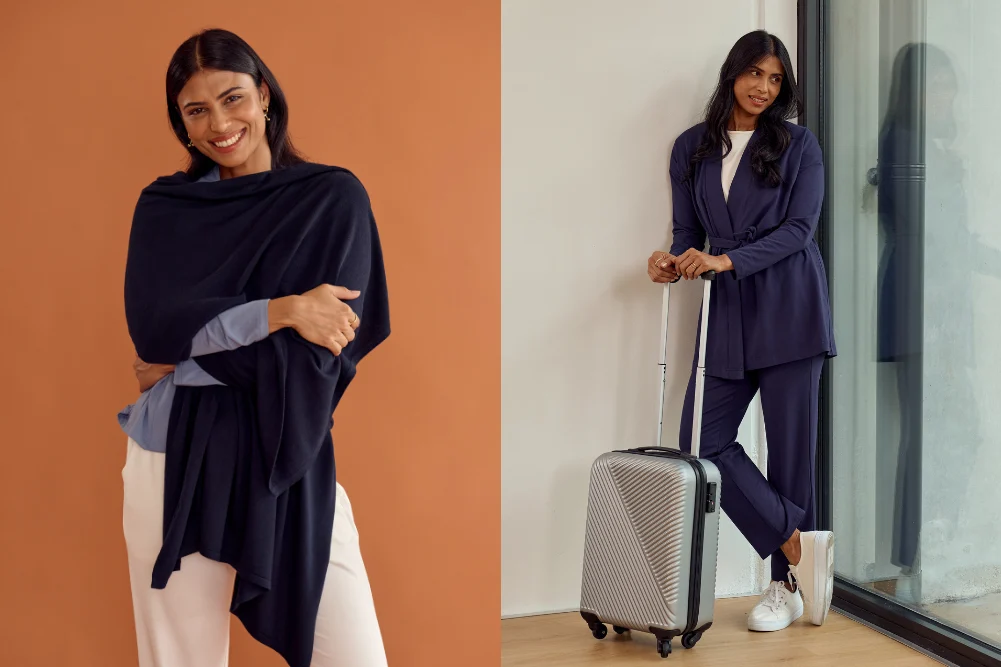
The modern long-haul flight represents one of the most significant physiological challenges the average consumer faces, characterized by pressurized cabins, fluctuating temperatures, and prolonged periods of physical inactivity. As global travel volumes return to and exceed pre-pandemic levels, a shift in consumer behavior has emerged, prioritizing "transit wellness"—a concept where the journey is managed with the same health-conscious rigor as the destination. Central to this movement is the evolution of travel attire, transitioning from the formal wear of the mid-20th century to the technical, sustainable fabrics of today. Industry experts and textile innovators are increasingly highlighting that the secret to arriving at a destination feeling refreshed is not merely a matter of hydration or sleep, but begins with the strategic selection of a travel wardrobe. The physical toll of stepping off a 14-hour international flight feeling stiff, cold, and disheveled is a well-documented phenomenon, yet the solution lies in the intersection of material science and ergonomic design.
The Evolution of the Travel Wardrobe
The history of travel fashion has undergone a radical transformation over the last seventy years. During the "Golden Age of Flight" in the 1950s and 60s, air travel was an elite experience that demanded formal attire, with passengers often donning suits, hats, and dresses. However, as aviation became more accessible and flight durations increased, the limitations of rigid, non-breathable fabrics became apparent. The 1990s and early 2000s saw a pivot toward "athleisure," but early iterations often relied heavily on synthetic polyesters that, while stretchy, lacked the thermoregulation required for the unique microclimate of an airplane cabin.
In the current market, Australian brands like Bamboo Body have spent nearly two decades refining a middle ground: clothing that offers the comfort of loungewear with the aesthetic polish of professional attire. This "third-way" dressing responds to a growing demand for multi-functional pieces that can transition seamlessly from an airport lounge to a business meeting or a cruise departure. The rise of "bleisure" travel—combining business and leisure—has further accelerated the need for outfits that do not wrinkle after ten hours in a cramped seat but remain breathable enough to handle the humidity of a tropical arrival.
The Science of Bamboo Textiles in Aviation
The selection of bamboo as a primary textile for travel is not merely an aesthetic choice but one rooted in performance metrics. Bamboo-derived fabrics, specifically viscose or lyocell, possess unique molecular structures that provide several advantages over traditional cotton or synthetic blends.
First, the thermal regulation properties of bamboo are critical for the "cabin temperature cycle." During boarding, aircraft cabins are often uncomfortably warm as the auxiliary power unit struggles to cool the plane on the tarmac. Once at cruising altitude, the temperature often drops significantly to counteract the heat generated by electronics and to help keep passengers drowsy. Bamboo fibers are naturally porous, allowing for superior breathability and moisture-wicking. This ensures that the wearer remains cool during the boarding rush and warm during the high-altitude chill.
Second, the antimicrobial properties of bamboo are a significant factor for travelers. Long-haul journeys involve close proximity to others and extended wear of the same garments. Bamboo contains a natural bio-agent known as "bamboo kun," which helps the fabric resist odors and remain fresh for longer periods compared to polyester, which tends to trap bacteria. For the frequent flyer, this means the ability to land and head straight to an engagement without the immediate need for a wardrobe change.
Strategic Layering and the Modular Travel Set
The consensus among travel experts is that the "Travel Set"—a coordinated ensemble of matching tops and bottoms—is the most effective way to manage the logistics of getting dressed for transit. By utilizing a modular approach, travelers can eliminate the "decision fatigue" often associated with packing.
A standard travel set typically features elasticized waistbands and relaxed silhouettes, which are essential for maintaining healthy circulation. During long periods of sitting, the body’s peripheral circulation can slow, leading to edema (swelling) in the lower extremities. Tight, restrictive clothing, such as denim or structured trousers, can exacerbate this issue. In contrast, soft, stretchy bamboo sets allow for unrestricted movement, which is vital for preventing the discomfort of deep vein thrombosis (DVT) and general muscle stiffness.
Supporting this modular approach is the "three-layer system," a strategy borrowed from outdoor expedition planning.
- The Base Layer: A fitted singlet or lightweight tee that sits close to the skin to manage moisture.
- The Mid-Layer: A long-sleeve top or travel set that provides the primary aesthetic and warmth.
- The Outer Wrap: A versatile, oversized piece that acts as a portable environment.
The Role of Accessories in Physiological Homeostasis
While the primary outfit handles the body’s core temperature, peripheral comfort is often where travel experiences fail. Data from airline cabin studies indicate that the floor temperature of an aircraft can be significantly lower than the air at eye level, leading to "cold feet syndrome," which prevents many passengers from reaching a state of deep sleep.
The inclusion of specialized bamboo socks has become a recommended staple for long-haul itineraries. Beyond mere warmth, bamboo socks are noted for their softness and lack of abrasive seams, which is crucial when feet naturally swell during flight. Furthermore, the use of a "Travel Wrap"—specifically those blending bamboo with recycled cashmere—serves a dual purpose. It functions as a professional-looking scarf in the terminal and a hypoallergenic blanket on the plane, replacing the often-thin and potentially unhygienic blankets provided by airlines.
Market Data and Consumer Trends
The global travel apparel market is currently experiencing a period of robust growth. According to recent market analysis, the demand for sustainable travel clothing is projected to grow at a CAGR (Compound Annual Growth Rate) of approximately 7.4% over the next five years. This growth is driven by a more environmentally conscious consumer base that is moving away from "fast fashion" in favor of durable, high-quality pieces that offer a lower cost-per-wear.
The Australian market, in particular, has become a hub for this innovation due to the country’s geographic isolation. With "ultra-long-haul" flights (those over 16 hours) becoming more common from hubs like Perth and Sydney, the Australian consumer has become a primary demographic for high-performance travel wear. Brands that prioritize ethical manufacturing and natural fibers are seeing increased loyalty from this segment.
Implications for the Future of Travel
The shift toward specialized travel attire reflects a broader trend in the travel industry: the move toward "frictionless" experiences. Just as biometrics and digital passports are streamlining the security process, material innovation is streamlining the physical experience of transit.
The psychological impact of clothing—often referred to as "enclothed cognition"—suggests that what we wear influences our psychological states. In the context of travel, wearing an outfit that is both comfortable and "put together" can reduce the cortisol spikes associated with airport navigation and delays. When a traveler feels they look professional and remain physically comfortable, their resilience to the stressors of travel increases.
As we look toward the future of aviation, where flight times may continue to extend with the advent of new aircraft technologies, the importance of the "perfect travel outfit" will only grow. It is no longer an afterthought or a matter of vanity; it is a fundamental component of travel health and efficiency. By prioritizing breathable, temperature-regulating fabrics like those found in the Bamboo Body collections, travelers are equipped to handle the rigors of the journey, ensuring that they arrive at their destination not just as passengers, but as their best selves.
The conclusion is clear: the journey begins in the wardrobe. For those embarking on international flights, cruises, or long-distance road trips, the investment in high-quality, sustainable, and ergonomically designed travel wear is an investment in the success of the trip itself. As the travel landscape continues to evolve, the integration of comfort and style through material science remains the gold standard for the modern explorer.



 Anjar Salim
 Chandra Hamzah
 Tatiana Tantri Indah Sari
 Budi Mulyono

