
 Walid Sujud Trenggono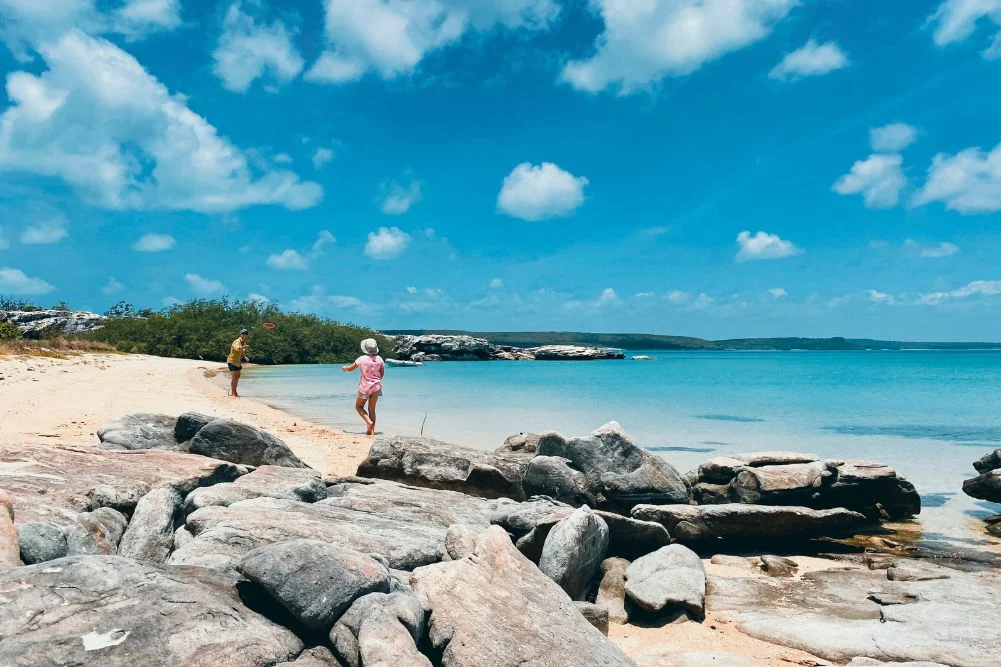
The Gove Peninsula, situated on the northeastern tip of the Northern Territory’s Arnhem Land, serves as a primary site for understanding Australia’s pre-colonial history and the enduring resilience of the Yolngu people. At the heart of this region lies Nhulunbuy, a township that acts as a gateway to the Wurrwurrwuy stone arrangements at Garanhan. These archaeological and cultural markers provide physical evidence of a sophisticated international trade network that predates European settlement by more than a century. As contemporary interest in Indigenous tourism and historical preservation grows, the Gove Peninsula stands as a critical case study in the intersection of cultural heritage, environmental stewardship, and sustainable economic development.
The Makassan Exchange: A Century of Pre-Colonial Trade
The Wurrwurrwuy stone arrangements, located approximately 38 kilometers southeast of Nhulunbuy, offer a pictorial record of the maritime history between the local Lamamirri (a clan of the Yolngu people) and Makassan seafarers from the Celebes (now Sulawesi, Indonesia). Historical records and oral traditions suggest this relationship began as early as 1640, though it was most prolific throughout the 18th and 19th centuries.
Each year, following the arrival of the northwesterly monsoon winds in December, Makassan fleets consisting of up to 60 "perahu" (wooden sailing vessels) would traverse the Arafura Sea. Their primary objective was the harvest of "trepang," or sea cucumber, a marine invertebrate highly prized in Chinese markets for its culinary and medicinal properties. The stone arrangements at Garanhan depict these very vessels, alongside stone-lined fireplaces used for boiling the trepang and intricate fish traps, effectively serving as a permanent historical archive of the industry.
This period of contact was characterized by mutual benefit and cultural exchange rather than conquest. In exchange for access to local waters and Yolngu labor, the Makassans introduced technology and materials that fundamentally altered local life, including dugout canoes, iron axes, knives, and glass. This technological shift expanded the Yolngu’s ability to hunt large marine animals such as dugong and sea turtles, evidenced by the composition of shell middens found along the coast. The linguistic impact remains visible today, with several Yolngu words for tobacco, money, and boats derived from Makassan dialects.
The extent of this integration was confirmed in 1803 by English explorer Matthew Flinders during his circumnavigation of Australia. Near Cape Wilberforce, Flinders encountered a fleet of six perahus commanded by a captain named Pobassoo. Through communication with the fleet, Flinders learned that the Makassans had been visiting the coast for generations and that Yolngu men frequently traveled back to Makassar with the fleet, sometimes staying for years and establishing familial ties that persist in genetic and oral histories today.
Artistic Sovereignty and the Buku-Larrnggay Mulka Centre
The preservation of this history is not limited to stone and archaeology; it is actively maintained through the Buku-Larrnggay Mulka Yirrkala Art Centre. Located 19 kilometers from Nhulunbuy, this institution is recognized globally as one of Australia’s premier Indigenous art hubs. It functions as a gallery, museum, and digital archive, managed by the Yolngu people to ensure their narrative remains under their own custodianship.
A central component of the center’s historical significance is the "Church Panels." Created in 1962, these two large-scale ochre-on-masonite works represent the Yirritja and Dhuwa moieties—the two fundamental halves of the Yolngu kinship system. Originally placed in the Yirrkala Methodist Church, these panels were a public assertion of Yolngu land ownership at a time when the Australian government began granting mining leases in the region without traditional owner consent.
The panels served as a precursor to the 1963 Yirrkala Bark Petitions, the first traditional Indigenous documents recognized by the Australian Parliament. This set the stage for the eventual passage of the Aboriginal Land Rights (Northern Territory) Act 1976. Today, the Mulka Museum within the center continues to safeguard these treasures, providing visitors with an education on Yolngu Law (Rom) and the complex social structures that govern the land.
The center also supports a thriving contemporary economy based on traditional crafts. Artisans specialize in weaving "gunga" (pandanus spiralis), using natural pigments to create mats and baskets. This practice has evolved from purely utilitarian origins—such as the "nganiyal," a conical baby shelter—into a sophisticated art form that provides sustainable income for local families.
Environmental Management and Sustainable Tourism
The management of the Gove Peninsula’s natural assets falls largely under the Dhimurru Aboriginal Corporation, an Indigenous-led organization that oversees the Dhimurru Indigenous Protected Area (IPA). The corporation utilizes a "two-way" management philosophy, combining traditional ecological knowledge with modern conservation science.
Tourism in the region is strictly regulated through a permit system, which serves both to protect sensitive cultural sites and to fund environmental rehabilitation. This model is exemplified by the Banubanu Beach Retreat on Bremer Island (Dhambaliya). Operated in partnership with the Yolngu people, the retreat emphasizes minimal-impact tourism. The facility is entirely solar-powered and off-the-grid, catering to a limited number of guests to ensure the preservation of the island’s delicate ecosystem.
Bremer Island is a critical site for biodiversity, particularly for marine turtles. Four species—the green, flatback, hawksbill, and olive ridley—utilize the island’s beaches for nesting. Furthermore, the East Bremer Islets are designated as the Higginson Important Bird Area. This site supports globally significant populations of Bridled Terns and Roseate Terns and serves as the only known breeding colony for Common Noddies in the Northern Territory.
Economic Transition and Infrastructure
Historically, the economy of Nhulunbuy was dominated by the bauxite mine and alumina refinery. However, with the 2014 curtailment of refinery operations by Rio Tinto, the region has pivoted toward a more diversified economic base centered on government services, Indigenous art, and specialized tourism.
The logistics of visiting the region reflect its remote nature. Access is primarily through Gove Airport, with regular flights from Darwin operated by Air North and Qantas. The cost of access and the requirement for permits (approximately $39 for a three-day visitor pass) act as a natural regulator for tourism volume, ensuring that the infrastructure—ranging from the Gove Boat Club to the local markets—remains focused on community needs rather than mass-market appeal.
Local community events, such as the monthly Nhulunbuy markets, facilitate social cohesion between the Indigenous and non-Indigenous populations. These gatherings, often featuring Indigenous musicians and local artisans, represent the modern face of the Gove Peninsula: a community that remains deeply rooted in ancient traditions while navigating the complexities of the 21st-century economy.
Implications for Australian Heritage
The story of Nhulunbuy and the Yolngu people challenges the traditional "discovery" narrative of Australian history. The existence of the Wurrwurrwuy stone arrangements and the legacy of the Makassan trade demonstrate that Australia was part of a globalized economy long before the arrival of the First Fleet.
Furthermore, the success of the Buku-Larrnggay Mulka Art Centre and the Dhimurru Aboriginal Corporation provides a blueprint for how Indigenous communities can exercise self-determination through the control of their cultural and natural capital. By integrating historical preservation with modern tourism and art, the Yolngu have created a resilient model that protects their heritage while inviting the world to understand a deeper, more complex version of the Australian identity.
As the Northern Territory continues to develop its tourism strategy, the Gove Peninsula serves as a reminder that the value of a destination lies not just in its physical beauty—its "gin-clear" waters and "turquoise" seas—but in the layers of human history embedded in its landscape. The ongoing stewardship by the Yolngu ensures that this history is not merely remembered but lived, providing a vital link between the ancestral past and the sustainable future of northern Australia.



 Anjar Salim
 Chandra Hamzah
 Tatiana Tantri Indah Sari
 Budi Mulyono
 Lukman Taruna Persada Ramadan
