Walid Sujud Trenggono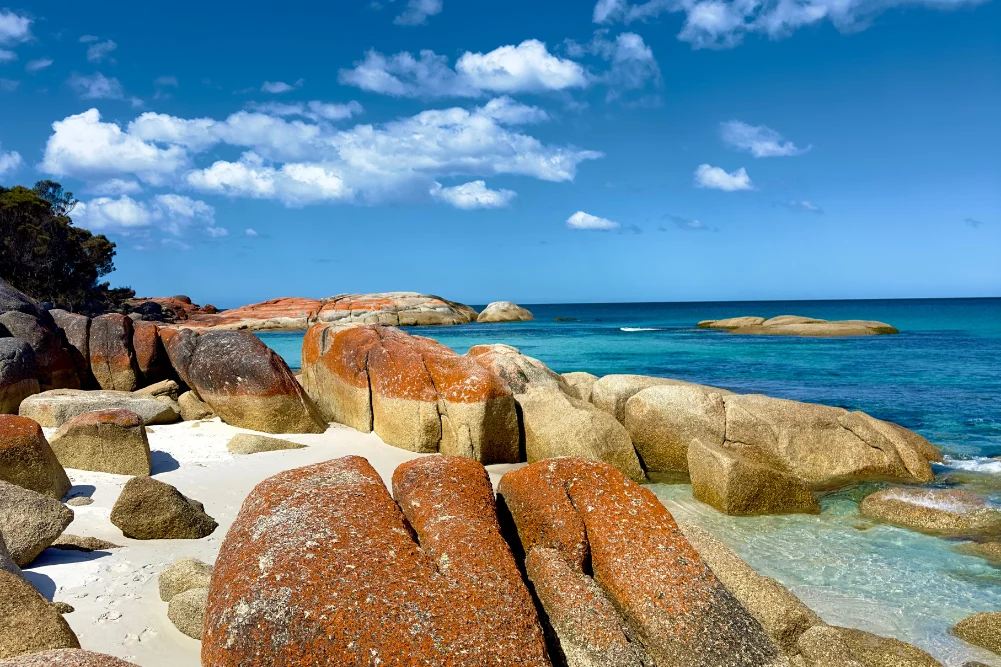
The Bay of Fires, situated on the northeastern coast of Tasmania, represents a significant intersection of Australia’s natural beauty, Indigenous history, and modern tourism industry. Recently named Australia’s most beautiful beach for 2025, this coastal stretch, known traditionally as Larapuna, has become a focal point for the burgeoning "soft adventure" tourism sector. This segment of the travel market caters to enthusiasts who seek immersive experiences in the wilderness without sacrificing the amenities of high-end hospitality. Through guided expeditions, such as those curated by Intrepid Travel, the region is witnessing a revitalized interest that balances ecological appreciation with the economic revitalization of local townships like St Helens and Derby.
Historical and Geographical Context
The Bay of Fires encompasses a 50-kilometer stretch of coastline from Binalong Bay in the south to Eddystone Point in the north. Its European name was bestowed in 1773 by Captain Tobias Furneaux of the HMS Adventure, who observed numerous fires lit by the Palawa people along the shore. These fires were not merely for warmth but were part of a sophisticated land management system involving traditional burning practices. Today, the "fire" of the bay is visually maintained by a unique geological phenomenon: massive granite boulders covered in bright orange lichen (Xanthoria parietina). This lichen thrives in the nutrient-rich coastal air, creating a stark contrast against the region’s characteristic white quartz sands and turquoise waters.
Geologically, the area is part of the broader East Coast Granite Belt. The pink and grey granite formations date back approximately 380 million years to the Devonian period. The region’s ecology is equally diverse, featuring coastal heathlands that transition into dense forests of ferns, paperbarks, banksia, and tea trees. This habitat supports a wide array of endemic Tasmanian fauna, including the common wombat (Vombatus ursinus), the short-beaked echidna (Tachyglossus aculeatus), and several rare avian species.
Chronology of the Coastal Expedition
The standard guided exploration of the Bay of Fires typically spans three days, utilizing the town of St Helens as a strategic base camp. This itinerary is designed to gradually increase in physical intensity, allowing participants to acclimatize to the variable Tasmanian climate.
Day One: Humbug Point and the Skeleton Bay Track
The expedition commences in Launceston, the northern gateway to Tasmania, followed by a two-hour transit to the northeast coast. The initial phase of the trek involves the Skeleton Bay Track leading to Dora Point within the Humbug Point Conservation Area. This section serves as an introduction to the "wet air" or "sneaky rain" characteristic of the Tasmanian maritime climate. Despite the high probability of precipitation, the trail offers immediate exposure to the region’s biodiversity, including the splendid fairy wren and various honeyeaters.
Day Two: Eddystone Point to Eddystone Beach
The second day represents the most rigorous segment of the journey, covering approximately 12 kilometers and an average of 25,000 steps. The trek begins at Eddystone Point, home to a 35-meter-high lighthouse constructed in 1889 from local pink granite. This structure was a critical maritime safeguard following numerous shipwrecks caused by the treacherous currents of the Tasman Sea.
The route proceeds south along Eddystone Beach, where hikers encounter a landscape defined by high-velocity winds—often reaching gusts of 68 kilometers per hour—and a shoreline littered with shell coves. These coves are characterized by deep deposits of cockle and clam shells, illustrating the long-term biological productivity of the bay. The day concludes with a transition into inland fire trails, where the maritime wind subsides, revealing a more arid, wildflower-dense environment.
Day Three: Mount William National Park and Stumpy’s Bay
The final day focuses on the northern reaches of the Bay of Fires within Mount William National Park. This area is noted for having one of the highest densities of wombats in Australia; Tasmania’s wombat population is estimated at nearly one million, roughly double the human population of the state. The trek concludes at Stumpy’s Bay, named for the distinctive chunky rock formations along the shoreline. This segment emphasizes the "look up, behind, and around" mantra of professional hiking, prioritizing panoramic views over technical footwork.
Socio-Economic Impact and Local Industry
The rise of guided trekking has provided a significant economic stimulus to the northeast coast of Tasmania. St Helens, historically recognized as the state’s game fishing capital, has successfully diversified its economy through tourism. The local hospitality sector has integrated the region’s primary industries into the tourism experience, particularly the seafood industry.
Lease 65, located just minutes from the St Helens town center, is a premier source of Pacific oysters, which are a staple of the local culinary offering. The integration of high-quality, chef-prepared meals into the hiking itinerary—featuring local southern rock lobster and artisanal produce—is a hallmark of the "soft adventure" model. This approach ensures that tourism revenue is distributed across multiple local sectors, from agriculture and fisheries to boutique accommodation providers like the Panorama Hotel.
Furthermore, the nearby town of Derby serves as a case study in successful economic transition. Once the site of one of the world’s richest tin mines, Derby faced decline following the cessation of mining operations. However, the town has reinvented itself as a premier destination for mountain biking and adventure sports. The inclusion of Derby as a final stop on coastal tours highlights the interconnectedness of regional tourism hubs.
Ecological Observations and Wildlife Data
The Bay of Fires serves as a critical corridor for Tasmanian wildlife. The Tasmanian subspecies of the short-beaked echidna, observed frequently by trekking groups, is notably larger and possesses thicker fur than its counterparts on the Australian mainland, an evolutionary adaptation to the cooler Tasmanian climate.
Avian life in the region is a significant draw for ecological tourists. Observations recorded during recent expeditions include:
- Pacific Gulls: Large, predatory gulls often seen gliding over the shore break.
- Oystercatchers: Recognizable by their bright orange beaks and "squeaky toy" vocalizations, they are vital indicators of beach health.
- Sandpipers: Small waders that play a key role in the coastal ecosystem by consuming invertebrates in the intertidal zone.
The presence of "Little Blue Lake" on the return route to Launceston provides a stark visual reminder of the region’s industrial past. The lake’s vivid blue color is not a natural phenomenon but the result of mineral leaching and suspended white clay particles from the historic Endurance tin mine. While aesthetically striking, the water is highly acidic, serving as a point of discussion regarding the long-term environmental legacies of mining.
Broader Implications for Sustainable Tourism
The Bay of Fires walking tour, priced at approximately $1,680 per person, reflects a shift toward lower-volume, higher-value tourism. This model is often cited by conservationists as a more sustainable alternative to mass tourism, as it minimizes the physical footprint on sensitive coastal tracks while maximizing local economic benefit.
The involvement of professional guides like those from Intrepid Travel ensures that visitors are educated on "Leave No Trace" principles and the cultural history of the Palawa people. By framing the trek as both a physical challenge and an educational journey, operators foster a sense of stewardship among participants.
The logistical composition of these groups—often including a diverse demographic ranging from seasoned "trampers" in their 70s to professionals training for more grueling international treks like the Kokoda Track—suggests that the Bay of Fires has a broad appeal. The 40-kilometer total distance covered over three days provides a manageable yet rewarding benchmark for fitness and mental well-being.
Future Outlook
As Tasmania continues to position itself as a global leader in nature-based tourism, the Bay of Fires will likely remain its crown jewel. The challenge for the coming decade will be managing the increased demand following the 2025 "most beautiful beach" designation. Maintaining the integrity of the lichen-covered boulders, protecting the nesting sites of shorebirds, and ensuring the continued health of the oyster leases will require ongoing collaboration between the Tasmanian Parks and Wildlife Service, local councils, and private tour operators.
In conclusion, the Bay of Fires is more than a scenic trail; it is a living museum of geological history and a testament to the resilience of the Tasmanian wilderness. The success of guided treks in the region demonstrates that with careful curation, tourism can serve as a powerful tool for both conservation and community prosperity.




 Budi Mulyono
 Lukman Taruna Persada Ramadan
 Chandra Hamzah
 Gabriela Annisa
 Tatiana Tantri Indah Sari