
 Budi Mulyono
The central coastal regions of Vietnam are currently grappling with the aftermath of one of the most devastating meteorological events in the nation’s modern history, following a series of catastrophic floods in late October 2025 that have left an indelible mark on both the landscape and the cultural heritage of the region. Triggered primarily by the landfall of Typhoon Ragasa, the deluge resulted in the second-highest water levels recorded in nearly three centuries, specifically within the historic town of Hoi An. As the nation begins the arduous process of recovery, the event has prompted a rigorous re-evaluation of disaster preparedness and the vulnerabilities of UNESCO World Heritage sites in the face of increasingly volatile weather patterns.
The scale of the disaster is underscored by grim statistics released by Vietnam’s General Statistics Office and the National Center for Hydro-Meteorological Forecasting. Reports indicate that at least 85 individuals are confirmed dead or missing as a direct result of the flooding and subsequent landslides. Beyond the human toll, the economic impact is estimated at approximately $1.73 billion, a figure that encompasses the destruction of critical infrastructure, the loss of agricultural yields in the central provinces, and the significant disruption of the nation’s vital tourism sector.
A Convergence of Climatic Factors
The disaster of October 2025 was not the result of a single isolated event but rather a "perfect storm" of climatic conditions. While the rainy season in Vietnam traditionally spans from May to November, the 2025 season was characterized by an intensified monsoon trough that saturated the ground long before Typhoon Ragasa made landfall. When the typhoon eventually struck the central coast, the land had no remaining capacity to absorb the additional precipitation.
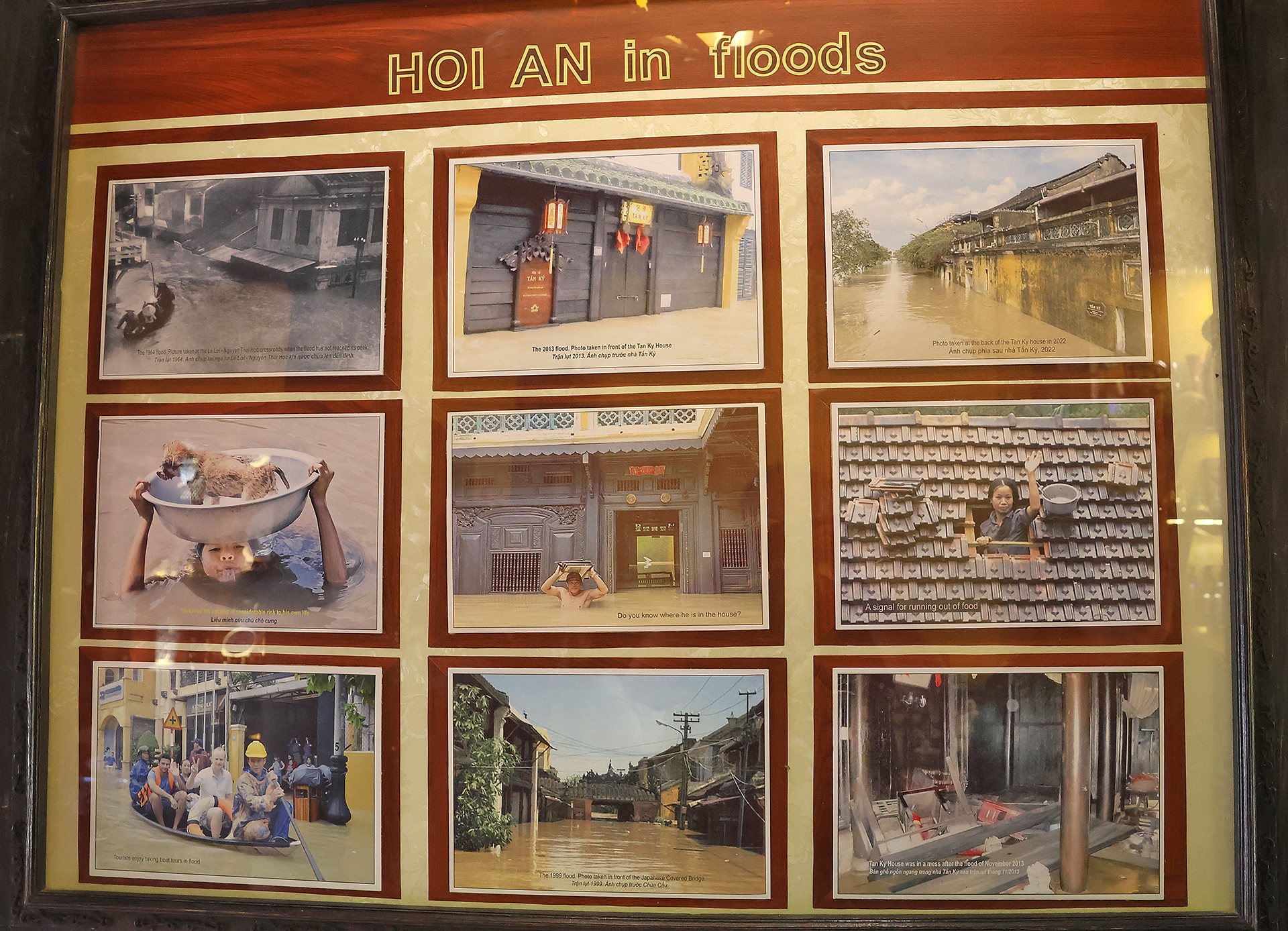
Typhoon Ragasa, which intensified rapidly in the South China Sea, brought sustained winds and unprecedented rainfall totals to provinces such as Quang Nam and Thua Thien-Hue. In some districts, meteorological stations recorded over 800mm of rain within a 48-hour window. This massive influx of water caused the Thu Bon River to breach its banks with a velocity and volume that overwhelmed existing levee systems, inundating the ancient streets of Hoi An and the surrounding rural communities.

Historical Context: The Tan Ky Old House as a Barometer
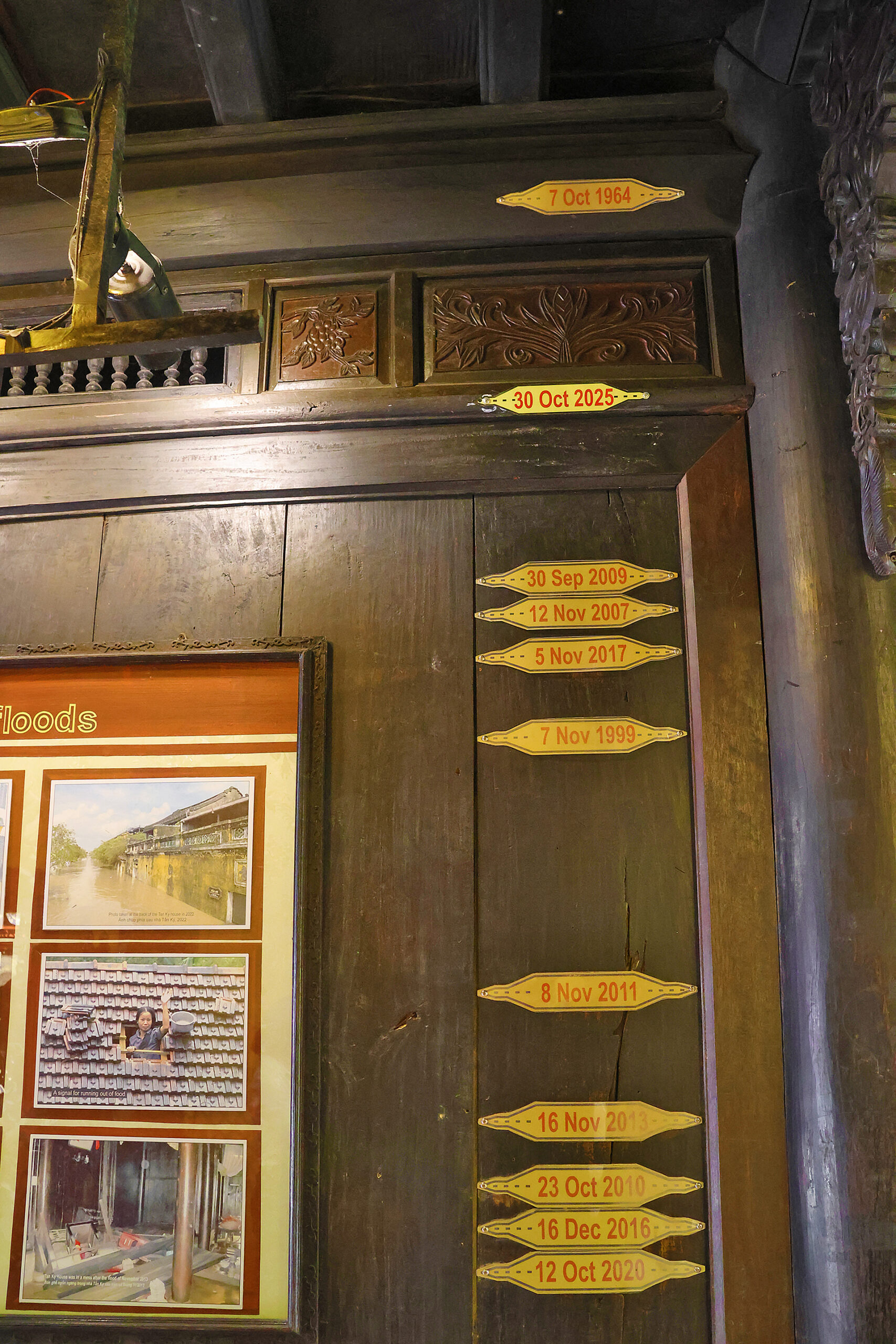
For historians and residents of Hoi An, the severity of the 2025 flood is best understood through the physical record kept within the Tan Ky Old Heritage House. Built in 1741, the structure is recognized as the oldest merchant house in the city and has survived nearly three centuries of environmental challenges. The interior walls of the house serve as a vertical timeline, with horizontal markers indicating the peak water levels of major floods since the 18th century.
Prior to the 2025 event, the flood of November 8, 2011, was considered the most significant in recent memory, with water levels reaching approximately five feet and three inches (1.6 meters) above the floorboards. However, the marker placed on October 30, 2025, sits substantially higher, confirming it as the second-deepest flood in the 285-year history of the building. The only event to surpass the 2025 levels remains the historic flood of Wednesday, October 7, 1964, a benchmark that remains near the ceiling of the ground floor and serves as a reminder of the absolute maximum flood potential of the Thu Bon River basin.
The fact that a 285-year-old structure witnessed its second-worst flooding event in 2025 has sounded alarms among climatologists. It suggests that the "once-in-a-century" flood intervals are compressing, leaving less time for heritage sites to recover and for traditional timber-frame architectures to dry and stabilize before the next inundation.
The Economic and Infrastructural Toll
The $1.73 billion damage estimate reflects a comprehensive breakdown of losses across multiple sectors. In the agricultural heartlands of Central Vietnam, thousands of hectares of rice paddies and fruit orchards were submerged, destroying the harvest for the final quarter of the year and threatening food security for local populations. Livestock losses were also reported to be in the tens of thousands, as rapid-onset flash floods in the highlands prevented farmers from moving animals to higher ground.
Infrastructure damage was equally severe. Several key bridges along the North-South transport corridor were either washed away or rendered structurally unsound. In Da Nang and Hue, urban drainage systems were overwhelmed, leading to prolonged standing water that damaged electrical grids and telecommunications hardware.
The tourism industry, which serves as the economic backbone for Central Vietnam, faced a near-total standstill during the latter half of October. Major international airlines were forced to cancel flights into Da Nang International Airport, and thousands of travelers were evacuated from coastal resorts. The timing of the flood was particularly damaging, as it coincided with the start of the peak autumn travel season, leading to a cascade of cancellations that extended into the following months.
Official Responses and Humanitarian Efforts
In the immediate wake of Typhoon Ragasa, the Vietnamese government mobilized the People’s Army of Vietnam and local civil defense units to conduct search and rescue operations. Prime Ministerial directives emphasized the priority of food and clean water distribution to isolated communities in the mountainous interior, where landslides had cut off road access.
The Ministry of Culture, Sports, and Tourism has since launched an emergency assessment of Hoi An’s structural integrity. "The preservation of our heritage is a race against the elements," stated a spokesperson for the Hoi An Center for Cultural Heritage Management and Preservation. "While the Tan Ky house and other ancient structures are built with traditional techniques designed to withstand water, the frequency and height of these floods are testing the limits of 18th-century engineering."
International organizations, including UNESCO, have pledged technical support to assist in the restoration of water-damaged artifacts and the reinforcement of historical foundations. There is also a growing call for an integrated flood management system for the Thu Bon River, involving upstream dam regulation and the restoration of natural wetlands to serve as "sponges" during extreme weather events.
Broader Implications for Global Travel and Climate Adaptation
The events of October 2025 serve as a cautionary tale for the global travel industry and the millions of tourists who visit Southeast Asia annually. The traditional "safe" windows for travel are becoming less predictable. For instance, while many travelers avoid the Lunar New Year (Tet) due to closures and crowding, or the height of the monsoon for comfort, the 2025 floods demonstrated that even the tail end of the rainy season can harbor catastrophic risks.
By early 2026, tourism began to return to the region, with travelers arriving in February to find a landscape largely restored but still bearing the scars of the previous autumn. Even during the "dry" season of February 2026, significant precipitation events continued to occur, suggesting a broader shift in regional precipitation patterns that may require a permanent adjustment in how travel itineraries are planned and insured.
Analysis of Future Resilience
The 2025 floods have catalyzed a national conversation in Vietnam regarding "living with floods"—a traditional concept that is being modernized through technology. Future urban planning in Central Vietnam is expected to prioritize "sponge city" concepts, which include permeable pavements, increased green space, and the relocation of critical power infrastructure to higher elevations.
For the residents of Hoi An, the flood markers in the Tan Ky house are more than just historical curiosities; they are essential data points for survival. As the community cleans the silt from the yellow-washed walls and replaces water-damaged timber, there is a profound sense of resilience. The house has stood since 1741, surviving wars, colonial transitions, and centuries of storms. However, the $1.73 billion price tag of the 2025 season serves as a stark reminder that while heritage can be resilient, the economic and human costs of a changing climate are becoming increasingly difficult to bear.
As the global community looks toward the remainder of the decade, the lessons from Vietnam’s historic October 2025 floods will likely inform disaster mitigation strategies across the world’s most vulnerable coastal heritage sites. The focus must now shift from reactive recovery to proactive adaptation, ensuring that the markers on the walls of the Tan Ky house do not continue to climb toward the ceiling.



 Chandra Hamzah
 Gabriela Annisa
 Tatiana Tantri Indah Sari
 Anjar Salim