
 Budi Mulyono
The Lufthansa Group has officially announced a significant restructuring of its fare portfolio for short- and medium-haul flights, introducing a new entry-level "Economy Basic" tier. This strategic move, set to be implemented on April 28 for travel commencing May 19, represents a fundamental shift in how Europe’s largest airline conglomerate approaches market segmentation and ancillary revenue. By introducing a fare that excludes overhead carry-on baggage, the group is aligning its business model more closely with the unbundled pricing strategies pioneered by low-cost carriers (LCCs) like Ryanair, easyJet, and Wizz Air.
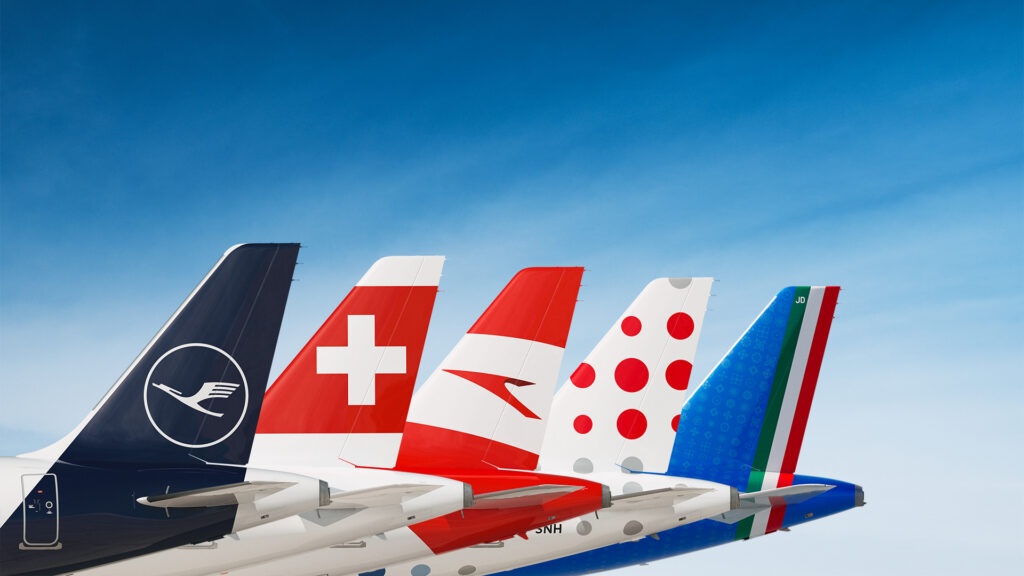
This new fare structure will be rolled out across the majority of the group’s carrier brands, including the flagship Lufthansa, SWISS, Austrian Airlines, Brussels Airlines, Discover Airlines, Lufthansa City Airlines, and Air Dolomiti. The initiative signals a broader industry trend where legacy carriers seek to compete directly with budget airlines on price while simultaneously incentivizing passengers to pay more for traditional amenities.
Implementation Timeline and Availability
The transition to the new fare hierarchy is scheduled to begin in late April. Passengers booking flights starting April 28 will encounter the "Economy Basic" option for travel dates on or after May 19. According to official statements from the Lufthansa Group, the rollout will be gradual, appearing first on select routes before expanding across the entire short- and medium-haul network.
While the group has not specified which routes will lead the rollout, industry analysts suggest that highly competitive corridors—particularly those where Lufthansa faces heavy pressure from budget competitors—will be prioritized. This phased approach allows the airline to monitor consumer behavior and technical integration across its various booking platforms and Global Distribution Systems (GDS).
The inclusion of Air Dolomiti and Lufthansa City Airlines in this rollout is particularly noteworthy. It ensures a consistent product offering across the group’s regional and feeder networks. Furthermore, industry observers anticipate that this fare structure will eventually extend to ITA Airways, should the Lufthansa Group’s acquisition and integration of the Italian carrier proceed as planned.
Defining the Economy Basic Fare
The Economy Basic fare is designed specifically for "light" travelers, such as day-trippers or business passengers on short itineraries who do not require overhead bin space. The core limitation of this tier is the baggage allowance: passengers are permitted only one small personal item, such as a laptop bag or a small backpack, which must fit under the seat in front of them.
Unlike the previously lowest tier, "Economy Light," the new "Basic" fare does not include a standard carry-on suitcase for the overhead bin. If a passenger arrives at the gate with a standard carry-on bag under a Basic fare, they will be required to pay a fee to have the bag checked into the hold. This "unbundling" of the overhead bin is a strategy that has proven highly lucrative for low-cost carriers, as it not only generates direct revenue but also speeds up the boarding process by reducing congestion in the cabin.
Updates to the Economy Light Fare
Coinciding with the introduction of Economy Basic, the Lufthansa Group is also enhancing its existing "Economy Light" fare. To differentiate it from the new entry-level option, Economy Light will now include a layer of flexibility that was previously restricted to higher-priced tiers.
Travelers who book Economy Light fares will now have the option to rebook their flights for a fee. Previously, Light fares were generally non-changeable, meaning any alteration to the itinerary required the purchase of an entirely new ticket. By adding a rebooking option—albeit for a fee plus any difference in fare—Lufthansa is attempting to add value to its mid-tier economy products, encouraging price-sensitive travelers to move up from the Basic tier for a small premium.
The New Fare Hierarchy: A Structured Ladder
With these changes, the Lufthansa Group’s economy class offering for short-haul travel now consists of five distinct tiers, creating a clear "ladder" of benefits and pricing:
- Economy Basic: Includes one personal item only. No carry-on, no checked bag, no rebooking.
- Economy Light: Includes one personal item and one carry-on bag. Rebooking is available for a fee.
- Economy Comfort: Includes one personal item, one carry-on, and one checked bag. Standard seat selection is often included.
- Economy Comfort Green: Includes the benefits of the Comfort tier but incorporates a sustainability component, such as the purchase of Sustainable Aviation Fuel (SAF) or carbon offsets to mitigate the flight’s environmental impact.
- Economy Flex: The most inclusive economy option, offering full rebooking flexibility (often without a change fee) and refundability options.
In Business Class, the group maintains a simplified structure consisting of "Comfort" and "Comfort Green" tiers, both of which offer premium seating, lounge access, and enhanced baggage allowances, with the "Green" option focusing on environmental compensation.
Strategic Rationale: Ancillary Revenue and LCC Competition
The primary driver behind this shift is the pursuit of ancillary revenue. In the post-pandemic aviation landscape, legacy carriers have faced rising operational costs, including labor, fuel, and airport fees. To maintain profitability without alienably high base fares, airlines are increasingly turning to "a la carte" pricing.
According to data from IdeaWorksCompany and CarTrawler, ancillary revenue—which includes baggage fees, seat selection, and onboard sales—accounted for over $117 billion globally in 2023. By introducing a "no-carry-on" fare, Lufthansa can advertise lower "headline" prices in search engines and meta-search sites like Google Flights or Skyscanner, allowing them to appear competitive alongside Ryanair or easyJet. Once the consumer enters the booking funnel, the airline can then upsell them to a higher fare tier or charge individual fees for bags.
Furthermore, the move addresses operational efficiency. Overhead bin space is a finite resource on narrow-body aircraft. By limiting the number of passengers entitled to use these bins, the airline can reduce the number of bags that need to be "gate-checked" at the last minute, which is a frequent cause of departure delays.
The Legacy Carrier Shift: A Global Context
Lufthansa is not the first legacy carrier to move toward this model. In North America, United Airlines has long offered a "Basic Economy" fare that excludes overhead bin usage on domestic flights. In Europe, Finnair introduced a "Superlight" fare in 2023 that follows a near-identical logic to Lufthansa’s new Economy Basic.
British Airways and the Air France-KLM Group have also experimented with various levels of unbundling, though they have largely maintained at least one carry-on bag in their lowest tiers for short-haul flights—until now. Lufthansa’s decision may prompt a "domino effect" among other European flag carriers, as the industry standard shifts toward a more restrictive base product.
Environmental and Sustainability Implications
The inclusion of "Green" fares in the new structure highlights the Lufthansa Group’s commitment to its "Destination Sustainability" goals. These fares are part of a broader strategy to reach carbon neutrality by 2050. By integrating SAF and climate protection projects directly into the fare selection process, the airline is attempting to normalize sustainable travel choices.
However, critics of the "Basic" fare model argue that unbundling can sometimes lead to more plastic waste (as passengers buy smaller travel-sized items) or more complex logistics. From a corporate perspective, the group maintains that giving passengers the choice to pay only for what they use is a more efficient use of resources.
Impact on Passengers and Corporate Travel
For the average leisure traveler, the new fare structure requires a more diligent booking process. Passengers must now be hyper-aware of baggage dimensions and weight limits to avoid significant fees at the airport. For day-trippers, the Basic fare represents a genuine opportunity to save money on short hops between European cities.
For the corporate travel sector, the implications are more complex. Many corporate travel policies are built around "Economy Light" or "Economy Flex" fares. Travel management companies (TMCs) will need to update their systems to ensure employees do not inadvertently book Basic fares that exclude the baggage required for multi-day business trips. Conversely, for companies looking to slash travel budgets, the Basic fare provides a new "lowest logical fare" for one-day meetings.
Official Responses and Market Outlook
While the Lufthansa Group has framed the move as an "expansion of options" and a way to provide "more flexibility," industry analysts view it as a necessary defensive maneuver. "The gap between legacy carriers and low-cost carriers is narrowing," says one aviation consultant. "Lufthansa needs to compete on the screen (search results), but they also need to protect their yields. This fare structure does both."
The group’s financial performance in the coming quarters will be closely watched. If the Economy Basic fare successfully drives up ancillary revenue without damaging brand loyalty, it is likely to become a permanent fixture of the European aviation landscape.
As the April 28 rollout approaches, the Lufthansa Group is expected to launch a communication campaign to educate passengers on the differences between the new tiers. For a group that has historically positioned itself as a premium full-service provider, the challenge will be maintaining that brand image while adopting the lean, fee-heavy tactics of the budget sector.



 Anjar Salim
 Chandra Hamzah
 Tatiana Tantri Indah Sari
 Lukman Taruna Persada Ramadan
