Gabriela Annisa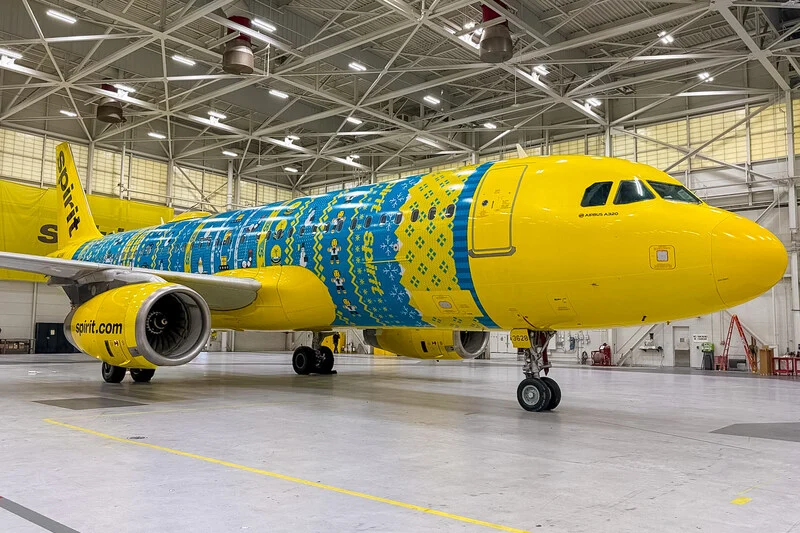
The U.S. airline industry finds itself at a critical juncture, with industry analysts Gordon Smith and Jay Shabat breaking down the latest developments concerning two carriers facing vastly different futures: Spirit Airlines, grappling with severe financial headwinds and the unprecedented possibility of government intervention, and Alaska Air Group, diligently outlining its strategic trajectory following its proposed merger with Hawaiian Airlines. This complex landscape is further complicated by recent commentary from President Donald Trump, adding a layer of political intrigue to Spirit’s precarious situation. The discussions, aired on April 24th, 2026, underscore the volatile nature of air travel and the intricate interplay between market forces, regulatory oversight, and political will.
Spirit Airlines: A Deep Dive into Financial Turbulence
Spirit Airlines, once a symbol of the ultra-low-cost carrier (ULCC) model’s disruptive potential, now finds itself teetering on the brink. The carrier, known for its unbundled fares and aggressive growth strategy, has endured a tumultuous period marked by operational challenges, escalating costs, and intense competitive pressures. Its financial distress has prompted widespread industry chatter about whether the U.S. government might step in to shore up the airline, a move that would carry significant implications for the broader aviation sector.
Background of Spirit’s Predicament:
Spirit Airlines embarked on an ambitious expansion strategy in the years leading up to the COVID-19 pandemic, rapidly adding routes and aircraft to its fleet. Its business model, predicated on high aircraft utilization, low base fares, and ancillary revenue generation, allowed it to capture a significant share of leisure travelers. However, this model proved vulnerable to external shocks. The pandemic initially brought the industry to a standstill, and while demand has largely recovered, Spirit has struggled to regain its footing amidst a confluence of adverse factors.
Post-pandemic, Spirit faced a perfect storm: surging fuel prices, which disproportionately impact ULCCs with tighter margins; persistent labor shortages across the industry, leading to increased wage costs and operational disruptions; and widespread air traffic control (ATC) staffing issues contributing to delays and cancellations. Crucially, the airline’s operational reliability suffered, leading to a dip in customer satisfaction, a critical factor in a highly competitive market.
The most significant blow, however, came with the collapse of its proposed merger with JetBlue Airways. Announced in July 2022, the $3.8 billion deal was intended to create the fifth-largest airline in the U.S., offering Spirit a much-needed capital infusion and economies of scale. However, the U.S. Department of Justice (DOJ) filed an antitrust lawsuit to block the merger, arguing it would lead to higher fares and reduced competition, particularly in the ULCC segment. In January 2024, a federal judge sided with the DOJ, ruling against the merger. This decision left Spirit without a clear path forward, triggering a sharp decline in its stock value and intensifying concerns about its long-term viability. The ruling underscored the government’s renewed focus on antitrust enforcement in concentrated industries, setting a precedent that would ripple through future airline consolidation efforts.
Current Financial Outlook:
By late 2025 and early 2026, Spirit’s financial performance had deteriorated significantly. The airline reported consecutive quarterly losses, with its cash reserves dwindling. Analysts at major financial institutions noted a substantial cash burn rate, raising questions about the airline’s ability to meet its debt obligations and fund future operations without external assistance. Its stock, which had traded above $20 per share during the merger talks, had fallen into penny stock territory, reflecting deep investor pessimism. The airline’s debt-to-equity ratio had climbed to concerning levels, further constraining its ability to raise capital through conventional means. Capacity growth, once a hallmark of Spirit, had to be curtailed, impacting revenue potential.
The Specter of Government Intervention:
The growing financial distress has fueled speculation about whether the U.S. government could intervene to prevent Spirit’s collapse. This chatter has been amplified by President Trump’s recent commentary, though the specific details of his remarks remain under close scrutiny. Historically, government intervention in the airline industry has been reserved for periods of national crisis or systemic importance.
-
Historical Precedents: The U.S. government has a precedent of supporting the airline industry during times of severe distress. Following the September 11, 2001, terrorist attacks, the Air Transportation Safety and System Stabilization Act provided $5 billion in direct compensation and $10 billion in loan guarantees to airlines. More recently, during the COVID-19 pandemic, the CARES Act provided over $50 billion in grants and loans to airlines to preserve jobs and maintain essential air service. These interventions, however, were largely in response to exogenous shocks impacting the entire industry, rather than the distress of a single carrier due to market and operational challenges.
-
Potential Forms of Aid: Any government assistance for Spirit could take various forms:
- Direct Loans or Loan Guarantees: Similar to past interventions, the government could offer loans or guarantee private loans, providing Spirit with much-needed liquidity.
- Equity Stake: In a more drastic scenario, the government could acquire an equity stake in Spirit, becoming a part-owner, though this is less common for individual private companies.
- Subsidies for Specific Routes: To maintain connectivity in certain underserved markets, the government might offer route-specific subsidies.
-
President Trump’s Commentary: President Trump’s involvement in this discussion adds a unique political dimension. While details of his recent commentary are scarce, it is plausible that his stance would align with his "America First" agenda. He might emphasize the protection of American jobs, the importance of maintaining competition in the domestic airline market, and the need to support critical national infrastructure. His administration, during his previous term, demonstrated a willingness to intervene in economic matters where he perceived a national interest or an opportunity to protect American industries and workers. His remarks likely signal an openness to exploring options, potentially putting pressure on federal agencies to consider pathways for support.
Reactions from Related Parties (Inferred):
- Spirit Airlines Management: The airline’s leadership would undoubtedly be exploring all available options, including government assistance. Their public statements would likely emphasize Spirit’s role in providing affordable travel options, its contribution to job creation (employing thousands of people across its operations), and the importance of preserving competition against larger legacy carriers.
- Industry Analysts: Opinions are divided. Some argue that a Spirit bankruptcy would remove excess capacity, potentially stabilizing fares and improving profitability for competitors. Others warn against the moral hazard of bailing out a company that failed due to market forces and strategic missteps, arguing it could disincentivize prudent financial management. Concerns about market distortion and unfair competitive advantages for Spirit if it receives aid would also be prominent.
- Competitors: Rival airlines, particularly other ULCCs and leisure-focused carriers, would likely express concerns about government intervention. They might argue that a bailout would create an uneven playing field, allowing Spirit to operate without facing the full consequences of market competition.
- Labor Unions: Unions representing Spirit’s employees (pilots, flight attendants, mechanics, ground staff) would strongly advocate for government aid. Their primary concern would be job preservation and protecting the livelihoods of their members, highlighting the potential economic ripple effects of a major airline’s collapse.
- Consumer Advocates: These groups might express mixed views. While some would support maintaining Spirit as a low-cost option to keep fares down, others might critique past operational issues and argue that government funds should not prop up a consistently underperforming carrier.
Implications of Intervention:

Should the government decide to intervene, the implications would be far-reaching. While it might offer short-term stability for Spirit, it would not necessarily resolve the carrier’s fundamental structural issues, such as its aging fleet, network inefficiencies, or challenges in the highly competitive ULCC segment. Any aid would likely come with stringent conditions, potentially including operational overhauls, executive compensation limits, and government oversight of strategic decisions. Such a move would also set a significant precedent, potentially opening the door for other struggling industries or companies to seek similar assistance, further blurring the lines between private enterprise and government support in a free market economy.
Alaska Air Group: Navigating Post-Merger Horizons
Shifting gears to a more optimistic narrative, Alaska Air Group’s recent earnings report provides crucial insights into the carrier’s robust performance and its strategic trajectory, particularly in the context of its proposed acquisition of Hawaiian Airlines. The report, closely watched by investors and industry observers, signals Alaska’s determination to solidify its position as a major player in the North American and Pacific markets.
Fourth Quarter 2025 and Full Year 2025 Earnings Analysis:
Alaska Air Group reported impressive financial results for the fourth quarter of 2025 and the full fiscal year 2025, exceeding analyst expectations on several key metrics.
- Revenue Growth: For Q4 2025, Alaska reported total operating revenue of approximately $2.8 billion, representing a 12% increase year-over-year. Full-year 2025 revenue reached $11.5 billion, up 10% from 2024. This growth was driven by strong leisure and business travel demand, particularly on its West Coast backbone routes and increasing international codeshare partnerships.
- Profitability: The company reported a net income of $210 million for Q4 2025, translating to an adjusted diluted earnings per share (EPS) of $1.65, significantly higher than the consensus estimate of $1.40. For the full year, net income stood at $850 million, with an adjusted EPS of $6.75. This strong profitability was attributed to effective cost management, robust revenue generation, and a favorable fuel price environment compared to earlier in the year.
- Operational Performance: Load factors remained strong, averaging over 85% for the quarter, indicating efficient capacity utilization. The airline also reported improvements in operational reliability, with fewer cancellations and better on-time performance, contributing to enhanced customer satisfaction.
- Balance Sheet Strength: Alaska maintained a healthy balance sheet, with liquidity exceeding $3.0 billion, including cash and marketable securities. This financial strength provides a solid foundation for its ongoing investments and the integration of Hawaiian Airlines.
The Hawaiian Airlines Merger Trajectory:
Alaska Air Group’s proposed $1.9 billion acquisition of Hawaiian Airlines, announced in December 2023, is a transformative move designed to expand its network reach and enhance its competitive posture, especially in the crucial trans-Pacific market. The earnings report provided an opportunity for management to reiterate the strategic rationale and offer updates on the integration process.
-
Strategic Rationale: The merger is designed to create a more expansive and resilient airline, offering customers a broader network and more travel options, particularly between the continental U.S. and Hawaii, and within the Hawaiian Islands.
- Geographic Expansion: Alaska, with its strong West Coast presence, gains a critical foothold in the Pacific, leveraging Hawaiian’s extensive inter-island network and routes to Asia and the South Pacific.
- Network Complementarity: The two airlines’ networks are largely complementary, with minimal overlap, suggesting strong potential for new route development and enhanced connectivity.
- Scale and Efficiencies: The combined entity is projected to achieve significant synergies, estimated at over $235 million annually, through optimized route planning, shared resources, and increased purchasing power.
- Competitive Response: The merger positions Alaska to better compete with larger legacy carriers like United, Delta, and American, which also have significant Pacific operations.
-
Regulatory Approval Process: While the Spirit-JetBlue merger failure cast a shadow over future airline consolidation, Alaska and Hawaiian executives expressed confidence in securing regulatory approval. They emphasize the complementary nature of their networks and the potential for increased competition against dominant carriers, rather than reduced choice.
- DOJ Scrutiny: The U.S. Department of Justice is conducting a thorough review, focusing on potential impacts on competition, particularly on routes where both airlines currently operate. However, the overlap is limited, primarily between certain West Coast cities and Hawaii.
- Public Benefits: Alaska is actively highlighting the public benefits of the merger, including enhanced service to Hawaii, better connectivity for residents, and the creation of a stronger, more resilient airline capable of competing against larger rivals.
- Timeline: The companies anticipate receiving regulatory approval by late 2026 or early 2027, followed by a phased integration process.
-
Integration Challenges and Opportunities: Merging two distinct airlines is a complex undertaking, but Alaska has a successful track record, having integrated Virgin America in 2018.
- Fleet Harmonization: Hawaiian operates an all-Airbus fleet, while Alaska operates an all-Boeing mainline fleet. Managing two distinct aircraft types will present operational and maintenance challenges, though the long-term plan involves rationalizing the fleet.
- IT Systems Integration: Combining reservation systems, operational software, and back-office IT infrastructure is a monumental task requiring careful planning to avoid disruptions.
- Labor Integration: Harmonizing seniority lists and negotiating new collective bargaining agreements with various labor unions across both airlines will be a critical and potentially sensitive process.
- Brand Strategy: Alaska plans to maintain the Hawaiian Airlines brand, recognizing its iconic status and strong appeal, particularly for inter-island travel and specific international routes, while integrating it into Alaska’s broader loyalty program and network.
- Synergies: Beyond cost savings, the merger is expected to generate significant revenue synergies through codesharing, expanded loyalty program benefits, and optimized scheduling that connects Alaska’s mainland network directly with Hawaiian’s Pacific routes.
Future Outlook for Alaska Air Group:
Alaska Air Group provided optimistic guidance for the upcoming quarters, projecting continued revenue growth and sustained profitability. The company plans to strategically manage capacity, focusing on high-demand routes and preparing for the integration of Hawaiian Airlines. Investments in fleet modernization, technology upgrades, and customer experience enhancements are ongoing priorities. Analysts largely reacted positively to the earnings report and the merger update, with several upgrading their outlook for Alaska’s stock, citing the long-term strategic benefits of the Hawaiian acquisition and the company’s strong operational execution.
Broader Industry Context and Interplay
The contrasting situations of Spirit Airlines and Alaska Air Group vividly illustrate the multifaceted challenges and opportunities facing the U.S. airline industry in the mid-2020s.
On one hand, Spirit’s struggle highlights the inherent volatility of the ULCC model when confronted with sustained economic headwinds, intense competition, and regulatory roadblocks to consolidation. It underscores the critical debate around the role of government intervention in preserving competition and jobs versus allowing market forces to dictate outcomes. The discussion surrounding President Trump’s comments further complicates this, bringing political considerations directly into economic policy for a private enterprise.
On the other hand, Alaska’s strategic expansion through the Hawaiian Airlines merger exemplifies the industry’s continued drive towards consolidation and network optimization. It demonstrates how well-executed mergers, particularly those with strong strategic rationale and limited competitive overlap, can create stronger, more resilient airlines capable of offering enhanced services and competing more effectively against established giants. This narrative also showcases the importance of robust financial health and operational excellence in navigating complex integration processes.
The U.S. airline sector remains dynamic, characterized by ongoing consolidation pressures, evolving passenger demands, and the constant need to adapt to external shocks. The fate of Spirit Airlines will serve as a bellwether for the future of budget travel and the limits of government intervention, while the success of Alaska’s merger will provide a blueprint for strategic growth in an increasingly concentrated market.
Conclusion
As April 2026 unfolds, the U.S. airline industry is a tale of two divergent paths. Spirit Airlines faces an uncertain future, with the unprecedented possibility of government support looming as a potential lifeline following its failed merger and deepening financial woes. The implications of such intervention, potentially influenced by high-level political commentary, are profound and could redefine the boundaries of free-market enterprise in aviation. Simultaneously, Alaska Air Group is charting a course for expanded influence and enhanced profitability through its strategic merger with Hawaiian Airlines, leveraging strong earnings and a clear integration roadmap to solidify its competitive standing. The coming months will be pivotal for both carriers, offering crucial insights into the resilience of business models, the efficacy of strategic alliances, and the evolving relationship between the private sector and public policy in a vital national industry.

 Chandra Hamzah
 Tatiana Tantri Indah Sari
 Budi Mulyono
 Anjar Salim