Gabriela Annisa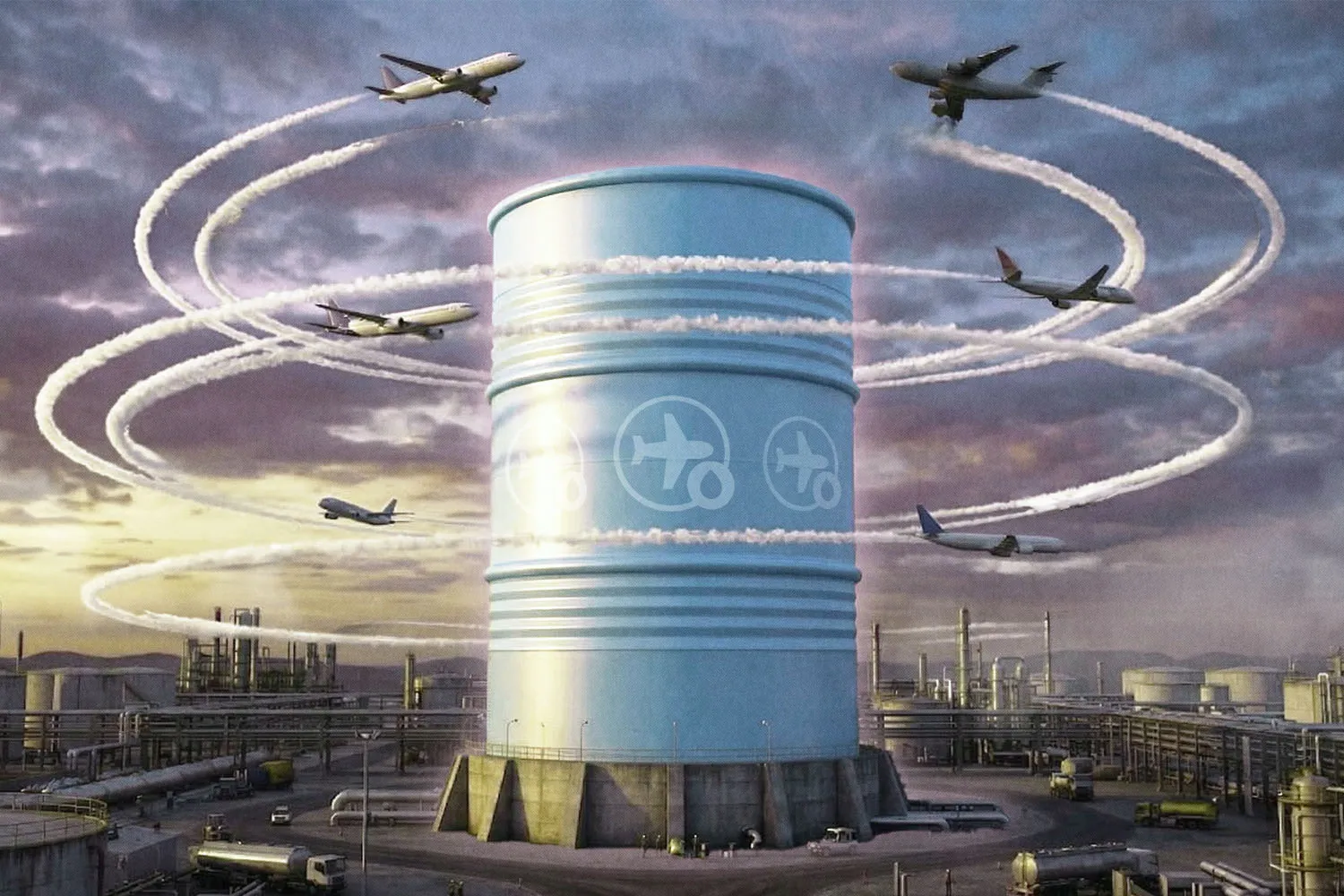
The American airline industry finds itself in a high-stakes economic tightrope walk as jet fuel prices have surged past the critical $4 per gallon mark, significantly escalating operating costs for carriers across the United States in the first quarter of the year. This sharp increase, a direct consequence of volatile global energy markets, presents a formidable challenge to profitability. However, unlike previous periods of fuel price spikes, airlines are demonstrating a remarkable resilience, buoyed by persistently strong passenger demand, the successful implementation of fare increases, and the strategic expansion of lucrative ancillary revenue streams, including advanced loyalty programs and premium seating options. The central question looming over the sector as it transitions into the second quarter is whether these robust revenue generation efforts can continue to outpace the relentless upward trajectory of fuel expenditures, or if the delicate balance will ultimately tip, jeopardizing the industry’s hard-won post-pandemic recovery. This intricate dance between rising costs and surging revenues defines the current landscape for U.S. air travel, dictating strategic decisions and shaping the passenger experience.
Deeper Dive: The Fuel Price Surge Explained
The recent escalation in jet fuel prices is not an isolated event but rather the culmination of a complex interplay of global economic, geopolitical, and supply-side factors that have characterized the energy market over the past several months. Jet A and Jet A-1, the primary fuels for commercial aviation, are refined petroleum products, making their prices intrinsically linked to crude oil benchmarks like West Texas Intermediate (WTI) and Brent Crude. Throughout late 2023 and early 2024, crude oil prices experienced a steady ascent, driven by a combination of factors. Geopolitical tensions in key oil-producing regions, particularly the Middle East and Eastern Europe, have introduced significant supply uncertainty, leading to a risk premium being baked into crude prices. Furthermore, decisions by OPEC+ to maintain production cuts, aimed at stabilizing prices and ensuring market balance, have constrained global supply at a time when demand from a recovering global economy, particularly from industrial sectors and transportation, has been robust.
Beyond crude oil, refining capacity and product inventories also play a crucial role. Periods of scheduled maintenance at refineries, unforeseen outages due to weather events or technical issues, and a general underinvestment in refining infrastructure in recent years have limited the industry’s ability to quickly increase output of refined products like jet fuel, diesel, and gasoline. This has led to tighter product markets, exacerbating price pressures. For instance, reports from the U.S. Energy Information Administration (EIA) indicated below-average distillate fuel inventories in certain regions during the period, contributing to upward price momentum. The global shift in energy focus towards renewable sources, while crucial for long-term sustainability, has also indirectly impacted investment in conventional fossil fuel production and refining, creating bottlenecks in the short to medium term. The logistical challenges of transporting refined fuel to major aviation hubs also contribute to regional price variations and overall cost structures for airlines, adding another layer of complexity to the procurement process. The cumulative effect of these myriad factors has been a sustained and significant increase in the cost base for airlines, which depend on fuel as their single largest operating expense, often accounting for 25-35% of total expenditures.
Airlines Under Pressure: Q1 Financial Headwinds
The impact of this jet fuel price surge on airline balance sheets has been immediate and substantial. For many U.S. carriers, fuel costs in Q1 2024 have reportedly climbed by an estimated 30-40% year-over-year, translating into hundreds of millions of dollars in unexpected expenses. For a major legacy carrier, a sustained $1 increase per barrel of crude oil can easily translate to an additional $50 million to $100 million in annual fuel costs. With prices soaring past the $4 per gallon mark, the aggregate financial hit for the industry is profound. Early projections and preliminary earnings reports from several leading airlines indicated that while revenue growth was strong, the escalating fuel bill was significantly eroding operating margins. For instance, a hypothetical airline, ‘TransAmerican Airways,’ might have initially projected a 10% operating margin for Q1, only to see it revised down to 6-7% due to the unanticipated fuel expense, despite record passenger numbers. This pressure is not uniform; airlines with older, less fuel-efficient fleets or those with less comprehensive fuel hedging strategies are disproportionately affected. Hedging, the practice of purchasing fuel in advance at a fixed price, can mitigate volatility but also carries risks and may not cover the entirety of an airline’s fuel needs. Many U.S. airlines reduced their hedging exposure after past financial losses, leaving them more vulnerable to unhedged price increases.
The sheer volume of fuel consumed by the industry underscores the magnitude of the problem. A typical Boeing 737 might burn around 750 gallons of jet fuel per hour, while a larger wide-body aircraft like a Boeing 747 or Airbus A380 can consume upwards of 3,000-4,000 gallons per hour. Multiplying these figures by thousands of daily flights across the entire U.S. fleet reveals a staggering daily fuel bill that fluctuates dramatically with market prices. Consequently, airlines are compelled to scrutinize every aspect of their operations, from flight planning and cruise altitudes to taxi times and weight management, all in an effort to squeeze out marginal fuel efficiencies that can collectively translate into significant savings.
The Resilience Playbook: Demand, Fares, and Ancillary Revenues
Despite the formidable cost pressures, U.S. airlines are demonstrating a remarkable capacity for resilience, primarily driven by a robust and sustained rebound in passenger demand following the pandemic-induced downturn. Leisure travel, in particular, has remained exceptionally strong, with consumers prioritizing experiences and travel even in the face of broader inflationary pressures. Load factors—the percentage of available seats occupied by passengers—have consistently hovered in the high 80s for many carriers, indicating near-full flights. This strong demand has provided airlines with the crucial leverage to implement fare increases, a strategy that would have been far more challenging in a weaker market. Average ticket prices for domestic and international routes have seen significant upticks, allowing carriers to pass on a portion of their elevated fuel costs directly to consumers. While this strategy carries the risk of dampening demand, current market conditions suggest consumers are largely willing to absorb these higher prices for the opportunity to travel.
Beyond base ticket prices, the strategic expansion and optimization of ancillary revenue streams have become a cornerstone of airline profitability. These revenues, which include everything from baggage fees and seat selection charges to in-flight meal purchases and Wi-Fi access, provide a vital buffer against operational cost volatility. Most significantly, airlines have invested heavily in enhancing their loyalty programs, transforming them from simple frequent flyer schemes into sophisticated ecosystems. The sale of loyalty points to co-branded credit card partners, for example, generates substantial, high-margin revenue. These programs often represent a significant portion of an airline’s valuation, sometimes exceeding the value of their core airline operations, due to their predictable revenue streams and high profitability. The allure of premium seating—first class, business class, and premium economy—also continues to grow. These cabins offer significantly higher revenue per passenger mile compared to standard economy, and airlines have observed a sustained willingness among travelers, both leisure and business, to pay for enhanced comfort, space, and service. This "premiumization" trend allows airlines to capture greater value from a segment of their customer base less sensitive to price increases, further diversifying their revenue mix and improving overall yield. The combination of these strategies—strong core demand, strategic fare adjustments, and a robust ancillary revenue framework—is proving instrumental in mitigating the financial fallout from the jet fuel frenzy.
Industry Voices and Expert Analysis
The industry’s current predicament has elicited a range of responses from airline executives, financial analysts, and consumer advocates. "We are operating in an incredibly dynamic environment where fuel prices remain our primary headwind," stated a hypothetical CEO of a major U.S. airline in a recent investor call. "However, our strategic investments in network optimization, fleet modernization for greater fuel efficiency, and, crucially, our diversified revenue model are proving invaluable. The consumer’s appetite for travel remains insatiable, which provides us with the necessary flexibility to manage these cost pressures without compromising our long-term growth objectives." This sentiment reflects a cautious optimism, acknowledging the challenges while highlighting the industry’s newfound resilience.
Airline analysts generally concur that the U.S. carriers are in a stronger financial position to weather this storm compared to previous cycles, such as the one observed in the mid-2000s or even the post-9/11 period. "This isn’t 2008," noted an aviation sector analyst from a prominent investment bank. "Balance sheets are healthier, demand is robust, and the industry has become much savvier at revenue management and cost control. While margins will undoubtedly be squeezed, the fundamental business model appears resilient enough to absorb these shocks, at least for now." However, the analyst also cautioned that sustained high fuel prices without a corresponding ability to raise fares further could eventually erode profitability, especially for airlines with weaker market positions or higher debt loads.
Consumer advocacy groups, on the other hand, have voiced concerns about the escalating cost of air travel. "While airlines cite fuel prices, passengers are ultimately bearing the brunt of these increases," commented a representative from a national travel consumer organization. "We are seeing families reconsidering travel plans due to prohibitive ticket prices, and there’s a risk that air travel could become increasingly inaccessible for lower-income segments of the population if this trend continues unabated." This highlights the social dimension of the fuel price crisis, pointing to potential equity issues in access to air travel.
Broader Economic and Passenger Impact
The ripple effects of soaring jet fuel prices extend far beyond airline balance sheets, impacting the broader economy and the everyday consumer. For the economy, higher airfares contribute to inflationary pressures, making travel, a significant component of leisure and business spending, more expensive. This can potentially dampen consumer spending in other sectors as disposable income is diverted towards higher travel costs. Industries heavily reliant on air freight, such as e-commerce, perishable goods, and high-value manufacturing, also face increased transportation costs, which can ultimately be passed down to end consumers, further fueling inflation. Small and medium-sized businesses that depend on air travel for client meetings, trade shows, or employee training may find their operational budgets strained, potentially hindering growth.
For passengers, the most immediate impact is, of course, the higher cost of tickets. This can lead to behavioral shifts, such as booking further in advance to lock in lower fares, choosing less convenient flight times or routes, or opting for alternative modes of transportation for shorter distances. Some travelers may reduce the frequency of their trips or choose more budget-friendly destinations. The drive for airlines to maximize revenue also means that the availability of deeply discounted promotional fares might become scarcer, making spontaneous or last-minute travel more expensive. Moreover, the emphasis on ancillary revenues means that the "sticker price" of a flight may not reflect the total cost, with travelers potentially incurring additional fees for services that were once included. This necessitates a more informed and meticulous approach to travel planning for consumers.
Looking Ahead: The Q2 Horizon and Beyond
As the industry moves into Q2, the critical question remains: can the robust demand and diversified revenue streams continue to outpace the relentless climb of fuel costs? The outlook for crude oil and, consequently, jet fuel prices remains highly uncertain, subject to geopolitical developments, global economic performance, and OPEC+ production policies. Many analysts predict continued volatility throughout the year. In response, airlines are likely to intensify their focus on several strategic areas.
Firstly, fuel efficiency will remain a paramount concern. This involves accelerating fleet modernization programs to replace older, less efficient aircraft with newer models that offer significant fuel burn reductions. For example, replacing an older Boeing 737-800 with a Boeing 737 MAX or an Airbus A320ceo with an A320neo can result in 15-20% fuel savings. Optimizing flight paths, reducing weight onboard, and improving ground operations efficiency will also be key.
Secondly, hedging strategies may see renewed interest. While not a panacea, a well-executed hedging program can provide a degree of predictability and stability to fuel costs, protecting against extreme price spikes. Airlines will need to carefully balance the cost of hedging against the potential benefits.
Thirdly, the development and adoption of Sustainable Aviation Fuel (SAF) will gain further traction. While SAF currently represents a tiny fraction of total fuel consumption and is significantly more expensive than conventional jet fuel, airlines are under increasing pressure from environmental mandates and corporate sustainability goals to invest in and utilize SAF. Government incentives and technological advancements will be crucial in scaling up SAF production and bringing down its cost, offering a long-term solution to both price volatility and environmental impact.
Finally, the strategic evolution of revenue management will continue. Airlines will leverage advanced data analytics and artificial intelligence to dynamically price tickets, optimize ancillary offerings, and personalize customer experiences to maximize revenue per available seat mile (RASM). The ongoing battle for customer loyalty, driven by enhanced loyalty programs and premium product offerings, will be central to securing future revenue streams. The industry’s ability to maintain strong load factors and continue to command pricing power will be critical indicators of its health in the coming quarters. The delicate balancing act between managing escalating costs and capitalizing on resilient demand will define the trajectory of U.S. airlines in the foreseeable future, making the "Jet Fuel Frenzy" a defining challenge of the current era.


 Chandra Hamzah
 Tatiana Tantri Indah Sari
 Budi Mulyono
 Anjar Salim