
 Lukman Taruna Persada Ramadan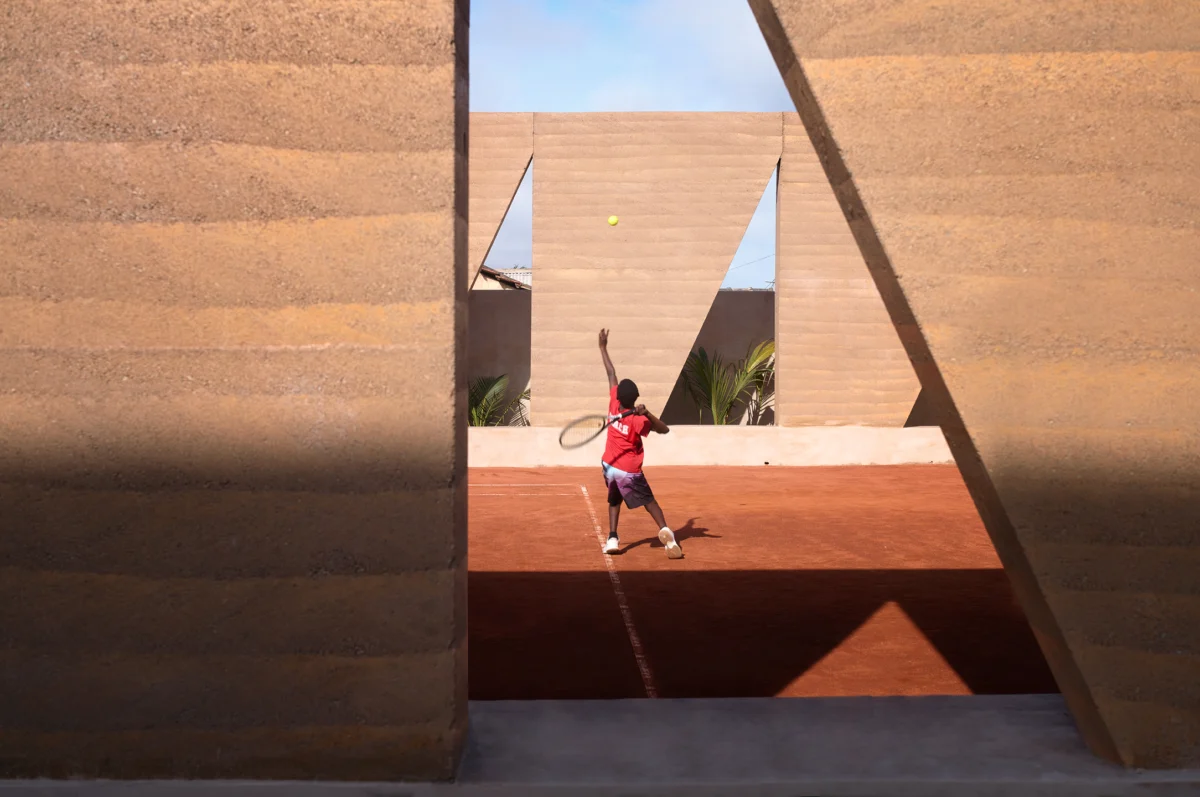
In the bustling metropolis of Accra, Ghana, a transformative project has taken root, challenging conventional notions of urban development and community engagement. Amidst a landscape often characterized by limited public investment in recreational infrastructure and a scarcity of green spaces, a local design firm, DeRoche Projects, has conceptualized and brought to life a clay tennis court and its surrounding environment. This innovative initiative, known as the Backyard Community Club, located in the vibrant Osu neighborhood, transcends the traditional definition of a sports facility, emerging as a vibrant hub for youth empowerment, environmental stewardship, and social cohesion. It serves as a living demonstration of how thoughtful, locally-rooted design can deliver an inclusive, sustainable, and profoundly socially transformative environment, actively changing lives within the community.
Accra’s Urban Landscape and the Imperative for Public Spaces
Accra, the capital of Ghana, is a city experiencing rapid urbanization, with its population expanding significantly over the past decades. This growth, while indicative of economic dynamism, often strains existing infrastructure and public services. A critical consequence of this rapid development is the diminishing availability of accessible public recreational spaces and green areas. Many neighborhoods lack dedicated parks, sports facilities, or communal gardens, leading to a paucity of safe and engaging environments for youth. This deficit contributes to various social challenges, including limited opportunities for physical activity, skill development, and positive social interaction.
For the youth of Accra, particularly those in underserved communities, access to organized sports like tennis has historically been rare. Football (soccer) dominates the sporting landscape, while sports requiring specialized facilities and equipment, such as tennis, remain largely out of reach for the majority. This disparity underscores a broader need for equitable access to diverse recreational opportunities that can foster holistic development. The absence of green spaces also exacerbates environmental concerns, contributing to urban heat island effects, poor air quality, and a disconnection between residents and nature. In this context, projects like the Backyard Community Club are not merely amenities but vital pieces of social and environmental infrastructure. They address fundamental gaps in urban planning, offering tangible solutions to improve the quality of life and future prospects for the city’s youngest generations.
The Genesis of an Idea: DeRoche Projects and the Backyard Community Club
DeRoche Projects, driven by a philosophy that prioritizes social impact and sustainable innovation, identified this critical need in Accra. Their vision extended beyond simply building a tennis court; it encompassed creating a multifunctional space that could act as a catalyst for broader community upliftment. The firm’s founder and owner, Glen DeRoche, envisioned a platform where sport would serve as an entry point to a richer, more integrated experience of learning, mentorship, and environmental consciousness. The project was conceived as a response to questions of civic quality, environmental stewardship, and the affirmation of cultural identity.
The realization of this vision culminated in the opening of the Backyard Community Club last year. From its inception, the project sought to differentiate itself by integrating groundbreaking architectural and environmental practices with a deep understanding of local needs and resources. This community-centric approach guided every aspect of the club’s development, from its innovative construction methods to its diverse program offerings.

The Precast Rammed Earth System: A Game Changer in Sustainable Construction
At the heart of the Backyard Community Club’s innovative design is DeRoche Projects’ pioneering use of a precast rammed earth system. Traditional rammed earth construction, an ancient building technique that uses compressed natural raw materials such as earth, chalk, lime, or gravel, is lauded for its sustainability, thermal mass properties, and aesthetic appeal. However, its widespread adoption, especially in commercial or community-scale projects, has been hampered by inherent limitations: it is typically slow, labor-intensive, and highly dependent on favorable weather conditions. These factors can lead to unpredictable timelines and costs, making it less attractive for modern construction.
DeRoche Projects ingeniously bypassed these traditional constraints by developing an off-site fabrication process for their rammed earth components. This method allows for the creation of modular rammed earth panels in a controlled environment, significantly improving quality control and achieving tighter structural tolerances. By decoupling production from on-site weather conditions, the precast system enabled parallel workstreams between site preparation and panel manufacturing, drastically accelerating the overall construction timeline. This innovation not only makes rammed earth a more viable and competitive building material for contemporary projects but also addresses the practical realities of construction in regions like Ghana, where skilled labor for traditional techniques might be limited or weather patterns can be challenging.
The result is a construction method that is modular, climate-responsive, and eminently replicable. It is tailored specifically to the logistical realities of Ghanaian transport, local labor availability, and the prevailing climate. This approach represents more than just a new way of building; it offers a new framework for constructing from the ground up, quite literally using the earth itself. By applying precast rammed earth modules at this scale, the Backyard Community Club project has established a tangible model for future development, demonstrating how material-driven design innovation can effectively advance sustainable urban life while simultaneously safeguarding cultural identity and upholding environmental values. The tactile, earthy aesthetic of the club’s structures further connects the space to its natural surroundings and local heritage, creating a sense of belonging and authenticity.
A Hub for Holistic Development: Beyond the Baseline
The Backyard Community Club is meticulously designed to be far more than just a place to play tennis. It functions as a dynamic youth community within its own space, fostering a vibrant ecosystem of learning, growth, and interaction. The "open-ended architecture," as described by Glen DeRoche, deliberately blurs the lines between sport, gathering, learning, and rest, creating an environment where every interaction contributes to a holistic developmental experience.
Cultivating Minds and Green Thumbs: Education and Environment
One of the club’s most distinctive features is its integration of ecological practice with sports. Local children and young adults are not only introduced to tennis but also receive training in cultivation, learning to plant seeds for food sources in gardens adjacent to the courts. This hands-on experience teaches them about their physical environment, sustainable agriculture, and the importance of environmental responsibility. The lure of learning tennis, receiving their first tennis racket, and the tangible reward of growing their own food acts as a powerful magnet, drawing them into the club’s orbit. Once engaged, they absorb invaluable educational activities, transforming the club into an "outdoor school" where practical skills and environmental literacy are imparted alongside athletic training. This initiative directly contributes to food security awareness and encourages a deeper connection to nature in an urban setting where such connections are often scarce.

Fostering Community and Mentorship
Beyond environmental education, the club is a powerful engine for social development. It provides a safe and structured environment for youth, offering mentorship opportunities that are crucial for personal growth. Glen DeRoche emphasizes this aspect, stating, "The Backyard Community Club is about more than tennis, it’s about creating a platform for youth, for mentorship, and for community." This sentiment is reflected in the daily operations, where older, more experienced players from other communities are invited for adult tournaments, creating cross-generational interaction and providing role models for the younger members. Sports education events for youth groups further extend the club’s reach, ensuring a wide array of young people benefit from its programs. This constant exchange fosters social skills, teamwork, discipline, and a strong sense of belonging, countering potential negative influences prevalent in urban areas lacking such positive outlets.
Designed for Excellence: International Standards and Inclusive Amenities
The clay tennis court itself is constructed to international standards, specifically designed for professional-level doubles play. This commitment to quality ensures that local athletes, particularly those under 18 years old, have access to a high-quality training environment, potentially nurturing future Ghanaian tennis stars. Such facilities are rare in Accra and provide an unparalleled opportunity for aspiring players.
The supporting infrastructure is equally thoughtful and inclusive. A shaded, built-in bench allows players and spectators to observe matches, rest between drills, or review their performance in comfort. Other essential spaces, including changing rooms, additional shaded seating areas, outdoor preparation spaces, and a barbecue area, are seamlessly integrated into the site. Notably, the showers are naturally lit and simply built, providing amenities that, as the original article points out, are often lacking even in tennis environments in very wealthy neighborhoods. This deliberate design choice underscores the club’s commitment to dignity, practicality, and sustainable luxury for all its users. The surrounding greenery, when not in use for tennis, transforms into a versatile community space for exercise, gardening, vegetable exchanges, and evening events, maximizing its utility and ensuring constant community engagement.
Sustainability at its Core: An Ecological Blueprint
The Backyard Community Club stands as a beacon of ecological design, demonstrating practical, context-specific solutions for environmental challenges. Its sustainability features are deeply integrated into its very fabric, from resource management to material choices.
Resource Management: Water and Energy Efficiency

Clay courts, renowned for their demanding play and aesthetic appeal, require a significant amount of water to maintain optimal playing conditions. To address this substantial water demand in a region prone to water stress, the club incorporates a sophisticated and sustainable water management system. A borehole system, tapping into underground water sources, is combined with redirected stormwater runoff. This dual approach provides efficient irrigation for both the clay court and the extensive landscaped areas, drastically reducing reliance on the local city water supply. This self-sufficient water system not only ensures the club’s operational viability but also serves as a critical model for resilient water use in urban environments, especially in a climate increasingly impacted by drought conditions. The selection of resilient, drought-tolerant planting for the green spaces further minimizes water requirements, contributing to the overall ecological efficiency of the site.
In terms of energy consumption, the ancillary structures of the club are ingeniously designed to function entirely without air conditioning or mechanical extraction systems. Instead, they harness the principles of passive ventilation, primarily utilizing the "stack effect." This architectural strategy allows hot air to rise and escape through natural openings, drawing cooler air in from below, thus creating a comfortable indoor climate without the need for energy-intensive cooling. Abundant natural light permeates the spaces, minimizing the demand for artificial lighting during daylight hours. These design choices collectively reduce the club’s energy demand significantly and lessen its dependence on the main electricity grid, showcasing a truly sustainable and climate-appropriate approach to building in tropical regions.
Material Innovation: Local Resources, Global Impact
The decision to use the precast rammed earth system is not just about overcoming construction challenges; it’s a profound statement about material innovation and the value of local resources. Rammed earth, by its very nature, uses readily available local soil, reducing the need for imported, energy-intensive materials like cement and steel. This significantly lowers the embodied carbon footprint of the construction. Furthermore, by engaging with local builders and incorporating their knowledge, the project strengthens local economies and builds capacity within the community. The collaboration with technical advisors, including experts from prestigious events like the Rome Masters for the clay court and specialized rammed earth advisors, highlights a blend of global expertise with local wisdom. This approach ensures that the project is not only structurally sound and functionally excellent but also culturally resonant and environmentally responsible. It exemplifies a commitment to building in harmony with the local context, using the earth itself as a primary building block.
Impact and Implications: A Model for Urban Transformation
The Backyard Community Club, in its short operational history, has already demonstrated profound impacts and holds significant implications as a model for future urban development, not just in Accra but potentially across West Africa and other rapidly urbanizing regions.
Social Cohesion and Youth Empowerment
The club has rapidly evolved into a vital social anchor for the Osu neighborhood. By offering a safe, engaging, and educational environment, it directly addresses issues of youth disengagement and provides constructive alternatives. The structured tennis training instills discipline, teamwork, and healthy competition, while the environmental education fosters a sense of responsibility and connection to the natural world. The mentorship opportunities and inter-community interactions promote social cohesion, bridging gaps between different age groups and backgrounds. This holistic approach to youth development has the potential to significantly improve the life trajectories of its participants, equipping them with both athletic skills and essential life competencies, and fostering a stronger, more resilient community fabric. The positive reception from local residents and the consistent participation levels underscore the critical need and profound impact of such community-driven initiatives.

Environmental Stewardship and Climate Resilience
From an environmental perspective, the Backyard Community Club is a powerful exemplar of sustainable urban living. Its innovative water management system, combining borehole use with stormwater harvesting, provides a tangible solution to urban water scarcity and demonstrates how responsible resource use can be integrated into daily operations. The passive climate control in its structures reduces energy consumption and carbon emissions, contributing to the fight against climate change and offering a replicable blueprint for low-energy buildings. The emphasis on green spaces and cultivation promotes biodiversity, improves local air quality, and educates the community on the importance of ecological balance. In a region particularly vulnerable to the impacts of climate change, the club showcases practical steps towards building climate-resilient infrastructure and fostering environmental consciousness at the grassroots level.
Economic Revitalization and Replicable Solutions
The project’s commitment to local materials and labor has positive economic implications, stimulating local economies and creating employment opportunities within the community. The precast rammed earth system, by making sustainable construction more efficient and scalable, opens up new avenues for local builders and material suppliers. Furthermore, the club’s success as a multifunctional community hub could potentially attract eco-tourism or cultural tourism, adding economic value to the Osu neighborhood. Crucially, the modular, climate-responsive, and replicable nature of the design and construction system means that this model can be adapted and implemented in other communities facing similar challenges. It offers a tangible, proven framework for sustainable urban development that can be scaled, creating a ripple effect of positive change across cities in Ghana and beyond.
Looking Ahead: The Future of Community-Driven Design in Ghana
The Backyard Community Club in Accra stands as a testament to the power of thoughtful, integrated design to create spaces that are not only functional but also deeply meaningful and transformative. It challenges the conventional, demonstrating that public spaces, even in resource-constrained environments, can be vibrant centers for sport, education, environmental action, and community building.
The project represents an alternative to conventional approaches to designing sports facilities, proposing a model rooted in local materials, local knowledge, and explicitly geared towards social purposes. By engaging with a diverse array of stakeholders from inception, DeRoche Projects has ensured that the club is truly a product of its community, designed by and for its users.
The success of the Backyard Community Club offers a compelling vision for the future of urban development in Ghana. It suggests that with innovative design, a commitment to sustainability, and genuine community engagement, it is possible to create spaces that enrich lives, empower youth, and build more resilient and equitable cities. For visitors to Accra, the lively and colorful destinations of Osu offer many attractions, but a stop at the Backyard Community Club provides a unique opportunity to witness firsthand this friendly and dynamic group of youth and adults, and to experience a living example of how design can truly change the world, one clay court at a time. The legacy of this project will likely extend far beyond the boundaries of its compact plot in Osu, inspiring a new generation of architects, urban planners, and community leaders to build from the ground up, using the ground itself, for a brighter, more sustainable future.



 Anjar Salim
 Chandra Hamzah
 Tatiana Tantri Indah Sari
 Budi Mulyono

