
 Walid Sujud Trenggono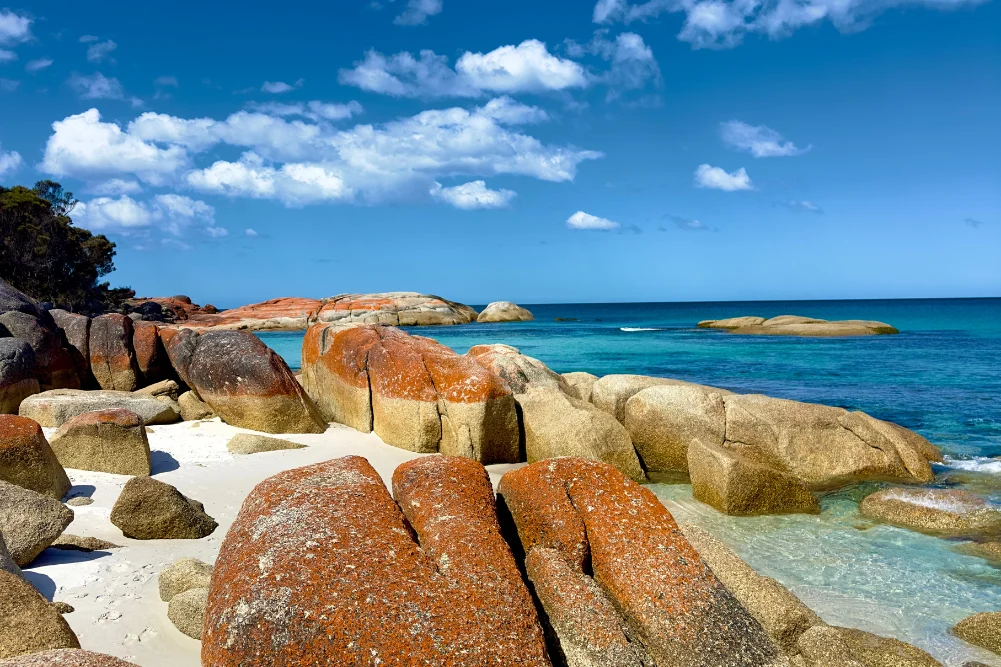
The Bay of Fires, located on the northeastern coast of Tasmania, has long been regarded as one of the world’s most pristine natural environments, a reputation recently solidified by its designation as Australia’s most beautiful beach for 2025. Known to the Aboriginal Palawa people as Larapuna, this coastal stretch is defined by its dramatic contrast of blindingly white sands, turquoise waters, and massive granite boulders encrusted with vibrant orange lichen. As nature-based tourism continues to grow as a pillar of the Tasmanian economy, guided experiences such as those offered by Intrepid Travel have become essential conduits for visitors seeking to balance rugged exploration with professional hospitality.
Recent data from Tourism Tasmania indicates that bushwalking and coastal trekking are among the primary drivers for interstate and international visitation. In the year ending September 2023, Tasmania saw a significant uptick in "soft adventure" seekers—travelers who prioritize immersive outdoor experiences but require high-quality amenities, such as chef-prepared meals and comfortable accommodation. The Bay of Fires walking tour exemplifies this trend, offering a three-day curated itinerary that traverses the Humbug Point Conservation Area and Mount William National Park.
Historical and Cultural Context: From Palawa Fires to Modern Beacons
The nomenclature of the region carries deep historical significance. In 1773, Captain Tobias Furneaux, navigating the HMS Adventure, observed numerous fires along the coastline. These were the traditional land-management and campfires of the Palawa people, who have inhabited the region for over 40 years. While Furneaux’s naming was a literal observation of human activity, the modern "fires" of the bay refer to the biological and geological features of the landscape.
The signature orange hue found on the granite boulders is not a mineral deposit but a living organism: Xanthoria parietina, a type of crustose lichen. This lichen thrives in the nutrient-rich sea spray and clean air of the Tasman Sea. Geologically, the rocks themselves are Devonian-era granite, part of a massive batholith that extends across northeastern Tasmania. The intersection of this ancient geology with the cultural history of the Palawa people creates a layered narrative for modern trekkers, who are increasingly encouraged to view the landscape through both an ecological and Indigenous lens.
Chronology of the Expedition: A Three-Day Strategic Itinerary
The logistical framework of the Bay of Fires trek is designed to escalate in physical demand while providing consistent recovery periods. The journey typically commences in Launceston, Tasmania’s northern hub, before transitioning to the coastal base camp of St Helens.
Day One: Acclimatization and Coastal Heath
The first day serves as an introduction to the region’s microclimates. Participants engage in a trek along the Skeleton Bay Track toward Dora Point within the Humbug Point Conservation Area. This segment highlights the unpredictability of Tasmanian weather, often characterized by rapid shifts between sunshine and "sneaky rain." The trail wind through coastal heath and forests comprising paperbarks, banksia, and tea trees. This phase is critical for group cohesion, allowing guides to assess the pace and physical readiness of the hikers, which on recent tours have included a diverse demographic ranging from 75-year-old seasoned trampers to emergency service professionals training for high-altitude tracks like Kokoda.
Day Two: The Endurance Phase
The second day represents the core of the physical challenge, involving a 12-kilometer trek (approximately 25,000 steps). The day begins at Eddystone Point, known as Larapuna to the traditional owners. The Eddystone Point Lighthouse, a 35-meter pink granite tower constructed in 1889, stands as a sentinel over a graveyard of shipwrecks.
The hike proceeds along Eddystone Beach, where the environmental conditions are dominated by high-velocity winds and shifting sands. This section is an exercise in coastal ecology, featuring sightings of Pacific gulls, sandpipers, and oystercatchers. The terrain includes shell coves where cockle and clam shells accumulate meters deep, offering a rare look at the sheer biomass of the local marine ecosystem.
Day Three: Conservation and Reflection
The final day focuses on the Mount William National Park, a sanctuary for Tasmanian wildlife. The 6-kilometer loop near Stumpy’s Bay is a prime location for observing the "bulldozer of the bush"—the common wombat (Vombatus ursinus). With a population of approximately one million, wombats in Tasmania outnumber humans nearly two to one. The day concludes with a transition from the wilderness back to industrial history, stopping at Little Blue Lake and the town of Derby.
Ecological Observations: The Biodiversity of the Northeast
The Bay of Fires is a critical habitat for several endemic species. The Tasmanian echidna (Tachyglossus aculeatus setosus), a subspecies of the short-beaked echidna, is frequently sighted along the fire trails. These monotremes are notably larger and hairier than their mainland counterparts, an evolutionary adaptation to the cooler Tasmanian climate.
Avian biodiversity is equally robust. The "seaside symphony" noted by trekkers is composed of calls from the splendid fairy wren, green rosellas, and various honeyeaters. These species rely on the intact coastal heathland, which is increasingly under threat from invasive species and climate-driven shifts in fire frequency. Guided tours play a role in conservation by adhering to "Leave No Trace" principles and educating hikers on the fragility of the lichen-covered granite, which can take decades to recover if damaged by heavy foot traffic.
Economic Impact and the Gastronomy of St Helens
The transition of St Helens from a primary industry hub to a tourism capital is a case study in regional economic evolution. While it remains Tasmania’s game fishing capital, the town has successfully integrated high-end gastronomy into the trekking experience. The local aquaculture industry, particularly "Lease 65," provides a direct supply of Pacific oysters to the tourism sector.
Industry analysts note that the "foodie" aspect of these treks—incorporating local sourdough, dukkha-sprinkled eggs, and halloumi wraps—is not merely a luxury but a strategic economic driver. By sourcing meals from local chefs and cafes, such as the Lifebuoy Café, tour operators ensure that the economic benefits of tourism are distributed throughout the local community. This model of "high-value, low-impact" tourism is the cornerstone of Tasmania’s long-term sustainable development plan.
The Industrial Legacy: From Tin Mining to Gelato
The return journey to Launceston provides a stark contrast to the pristine beaches, focusing on the region’s extractive history. Little Blue Lake, while aesthetically striking due to its vivid aquamarine color, is a remnant of the Endurance tin mine. The color is a result of suspended clay particles and minerals left behind by mining operations that spanned from the 1870s to the 1980s.
Similarly, the town of Derby has undergone a radical transformation. Once the site of one of the world’s richest tin mines, it faced economic collapse following the mine’s closure. However, in recent years, Derby has reinvented itself as a premier global destination for mountain biking and eco-tourism. This "sweet finish" to the trek, often marked by local gelato, symbolizes the broader Tasmanian narrative: the successful pivoting from resource extraction to the preservation and celebration of natural beauty.
Participant Profiles and Social Implications
The demographic of the Bay of Fires trekker is evolving. Professional guides Lauren and Scott report a surge in solo travelers and retirees seeking "responsible adventure." The presence of participants like 75-year-old Betsy from New Zealand highlights a growing market for senior tourism, where the logistical burdens of navigation and meal preparation are removed, allowing for a focus on mental and physical well-being.
Furthermore, the inclusion of individuals training for more strenuous international treks, such as the Kokoda Track, suggests that Tasmania’s coastal trails are being utilized as professional-grade training grounds. This multi-functional use of the trail system underscores the need for continued investment in track maintenance and environmental protection.
Conclusion: The Future of the Bay of Fires
The Bay of Fires guided trek is more than a recreational activity; it is a microcosm of the challenges and successes facing Tasmania’s tourism sector. As the region prepares for its status as the 2025 "Most Beautiful Beach," the balance between accessibility and preservation remains paramount.
The integration of Indigenous history, geological education, and local gastronomy provides a holistic experience that justifies the premium price point of $1,680 for a three-day tour. For the traveler, the experience offers a rare opportunity to disconnect from the digital world and reconnect with a landscape that remains, in many ways, as wild as it was when Furneaux first sighted the fires of the Palawa. The success of this model suggests that the future of Tasmanian tourism lies in its ability to bottle the "sneaky rain" and the "perfume of blossoms," offering a sensory-rich journey that benefits both the visitor and the local ecosystem.




 Budi Mulyono
 Anjar Salim
 Chandra Hamzah
 Tatiana Tantri Indah Sari

 Lukman Taruna Persada Ramadan