
 Budi Mulyono
Marriott International’s recent announcement regarding the launch of its first dedicated luxury wellness brand in partnership with the Italian firm Lefay Resorts marks a significant maturation of a sector that was once considered a niche secondary amenity. For decades, "wellness" in the hospitality industry was largely synonymous with a basement-level fitness center or a standard spa menu featuring basic massages and facials. However, as the global travel market undergoes a paradigm shift toward longevity, biohacking, and holistic mental health, the world’s largest hotel operators are racing to redefine their portfolios. This movement reflects a broader societal transition where health is no longer viewed as a periodic luxury but as a continuous lifestyle requirement, even while in transit.
The Fragmented Definition of Wellness Hospitality
The primary challenge facing the industry is the lack of a standardized definition for what constitutes a "wellness hotel." Currently, the market is bifurcated into several distinct categories, ranging from lifestyle-integrated brands to clinical medical-wellness retreats. At one end of the spectrum are legacy brands like Westin, which Marriott has long positioned around "well-being" pillars such as sleep quality and nutritious dining. At the other end are "wellness-first" destinations where the stay is secondary to a prescribed health protocol.

Industry analysts suggest that the entry of Marriott into a partnership with Lefay—a brand known for its "Scientific Method" and carbon-neutral properties—signals a move toward the "transformative travel" segment. In this tier, guests are not merely looking for a place to stay; they are seeking measurable improvements in their physical or mental state. This trend is mirrored by Hyatt’s significant investment in Miraval, a brand that prioritizes mindfulness and digital detoxing, and IHG’s acquisition of Six Senses, which integrates high-tech sleep programs and regenerative agriculture into the guest experience.
The Rise of High-Performance and Recovery Brands
A new breed of hospitality is emerging that caters specifically to "urban athletes" and high-performance professionals. Leading this charge is SIRO, a brand launched by Kerzner International, the operator behind the ultra-luxury One&Only and Atlantis resorts. SIRO, which recently debuted its first property in Dubai, focuses on five key pillars: fitness, nutrition, sleep, recovery, and mindfulness. Unlike traditional luxury hotels where the gym is an afterthought, SIRO properties are built around a world-class "Recovery Lab," offering specialized treatments like cryotherapy, infrared saunas, and percussion therapy.
Similarly, Equinox Hotels—an extension of the high-end fitness club chain—has successfully bridged the gap between a membership-based gym and a 5-star lifestyle hotel. By treating the guest room as a "sleep chamber" designed for optimal circadian rhythm regulation, Equinox has set a benchmark for the "high-performance" traveler. These brands move beyond the "zen" aesthetic of traditional spas, leaning instead into a data-driven, science-backed approach to health.

Chronology of the Wellness Hospitality Shift
The evolution of this sector can be traced through several key milestones over the last half-century:
- 1988: The Genesis of Modern Wellness. The opening of BodyHoliday in St. Lucia established the concept of an all-inclusive wellness resort where activity and treatment were part of the daily rate, moving away from the "fat farm" stereotypes of the 1970s.
- 1995: Six Senses Foundation. The brand launched with a focus on "barefoot luxury" and sustainability, eventually becoming the gold standard for integrating wellness into the core architecture of a resort.
- 2012: The Mainstream Pivot. Marriott began an aggressive global refresh of the Westin brand, introducing the "Six Pillars of Well-Being," which proved that wellness could be a viable differentiator for business hotels, not just leisure resorts.
- 2017: Hyatt Acquires Miraval. In a $375 million deal, Hyatt signaled that major corporations were ready to pay a premium for established wellness intellectual property.
- 2024–2026: The Partnership Era. The announcement of Marriott’s partnership with Lefay and the expansion of Aman’s sister brand, Janu, represent the current phase: the integration of medical-grade wellness into the luxury urban and resort environment.
Supporting Data and Market Economics
The financial incentives driving these developments are substantial. According to the Global Wellness Institute (GWI), wellness tourism was valued at approximately $814 billion in 2022 and is projected to grow at an annual rate of 16.6%, reaching an estimated $1.3 trillion by 2025. This growth rate significantly outpaces that of general global tourism.
Data indicates that wellness travelers are "high-yield" guests. On average, international wellness tourists spend 53% more than the typical international tourist, while domestic wellness tourists spend 178% more than their non-wellness counterparts. Furthermore, hotels with strong wellness components report higher Average Daily Rates (ADR) and increased loyalty, as guests are more likely to return to a property that they perceive as having a tangible impact on their health.

Clinical and Medical Integration: The New Frontier
While brands like SIRO and Equinox focus on performance, another segment is leaning into the medicalization of hospitality. TheLifeCo, with locations in Turkey and Thailand, represents a category of resorts that focus on intensive detox, chronic disease management, and longevity treatments. These properties often feature on-site doctors, blood analysis labs, and intravenous (IV) therapy clinics.
This "medical-wellness" hybrid is becoming increasingly attractive to an aging but affluent demographic in the West and a growing middle class in Asia. As life expectancy increases, the demand for "preventative vacations" has surged. Marriott’s tie-up with Lefay likely aims to capture this market, as Lefay’s properties are renowned for combining Classical Chinese Medicine with modern Western scientific research.
Official Reactions and Industry Sentiment
Industry leaders have voiced a mix of optimism and caution regarding the proliferation of wellness brands. In recent earnings calls, hospitality executives have emphasized that "wellness" can no longer be a marketing buzzword; it must be authenticated by results.

"Guests are increasingly savvy," noted a senior consultant at a leading global hospitality firm. "They can distinguish between ‘wellness washing’—where a hotel just adds a green juice to the breakfast buffet—and a truly integrated health platform. The brands that will win are those that invest in the hard infrastructure of wellness: advanced HVAC systems for air purity, medical-grade recovery equipment, and staff trained in nutrition and kinesiology."
Investors are also watching the scalability of these brands. While a boutique wellness retreat in the Alps is easy to manage, scaling a wellness-first brand to 50 or 100 global locations—as Marriott or Hilton might intend—presents significant operational challenges, particularly in maintaining the quality of specialized practitioners.
Broader Impact and Future Implications
The rise of wellness-first hospitality is expected to have a ripple effect across the entire travel ecosystem. We are likely to see:
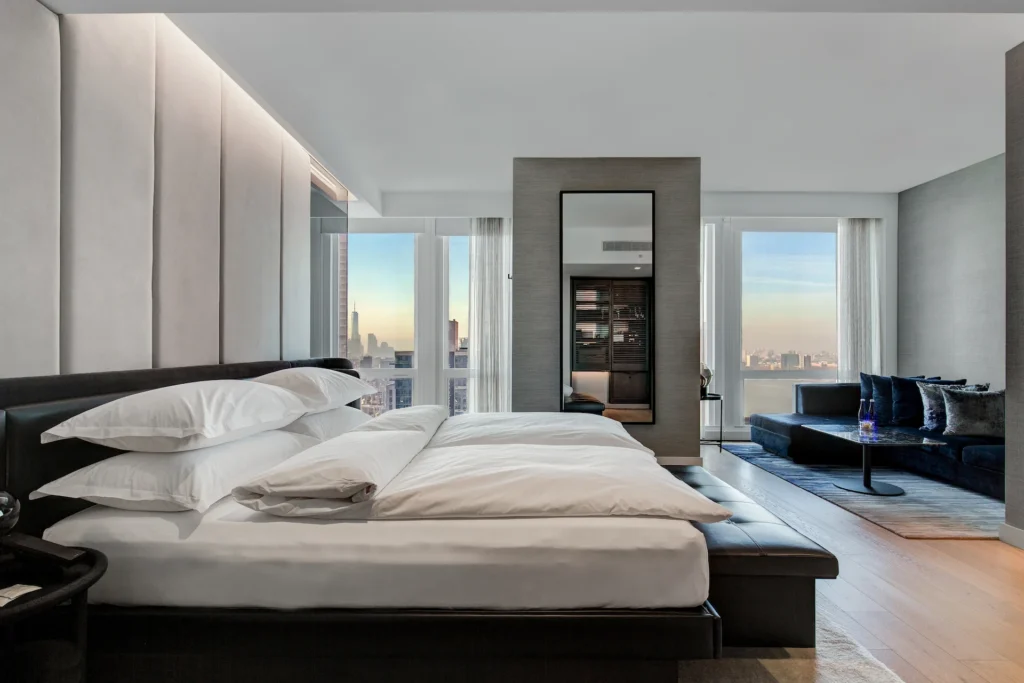
- Architectural Shifts: Future hotel designs will prioritize natural light, biophilic elements, and advanced soundproofing as standard requirements rather than luxury add-ons.
- Labor Market Changes: There will be an increased demand for "wellness concierges" and "longevity coaches" within hotels, requiring a new set of credentials for hospitality staff.
- Technology Integration: Wearable tech and guest data will likely be integrated into the hotel stay. Imagine a room that automatically adjusts its temperature and lighting based on data from a guest’s Oura ring or Apple Watch to ensure optimal sleep.
- Sustainability Synergy: Because personal health is intrinsically linked to environmental health, wellness brands are increasingly leading the way in sustainable operations, plastic reduction, and farm-to-table sourcing.
As the industry moves toward 2030, the distinction between a "hotel" and a "wellness center" may continue to blur. For the global traveler, this evolution promises a future where travel is no longer a disruption to one’s health regimen, but rather the most effective way to enhance it. The success of Marriott’s new venture with Lefay will be a bellwether for whether the world’s largest hotel companies can successfully operationalize the complex, deeply personal, and highly regulated world of luxury wellness on a global scale.




 Anjar Salim
 Chandra Hamzah
 Tatiana Tantri Indah Sari

