
 Tatiana Tantri Indah Sari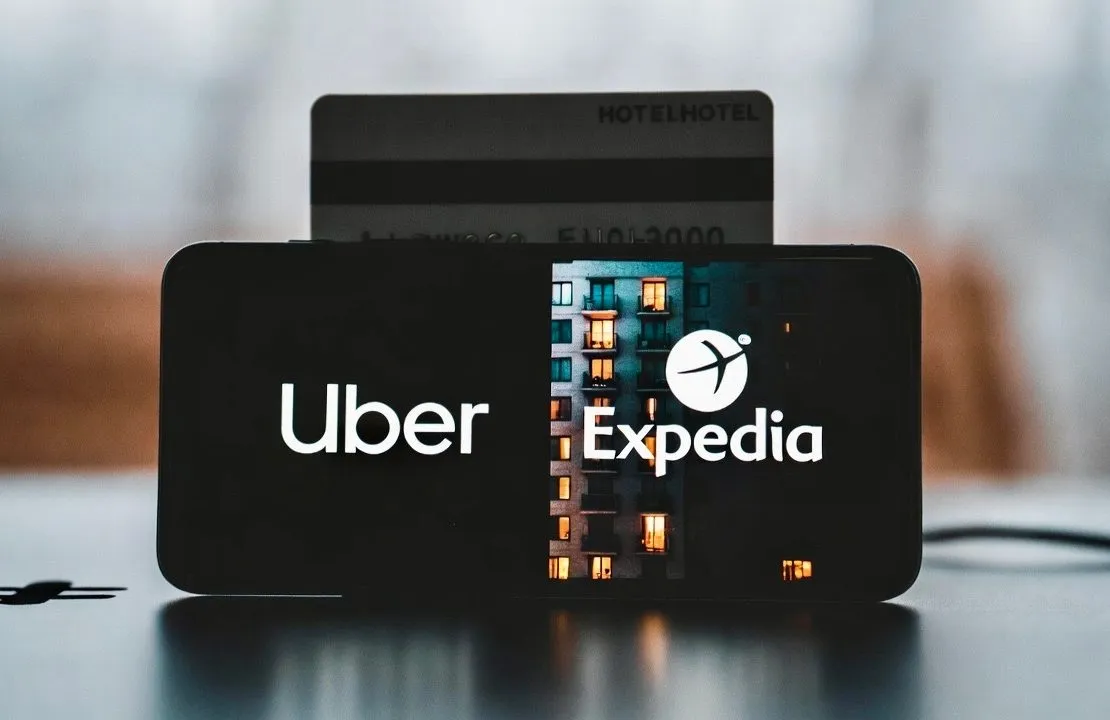
San Francisco, CA – In a significant strategic move, Uber Technologies Inc. has officially launched hotel booking capabilities within its primary application for users across the United States. This expansion, powered by Expedia Group’s robust Rapid API, grants Uber customers immediate access to a vast inventory of over 700,000 properties worldwide. The announcement marks a notable progression in Uber’s long-articulated vision of becoming a comprehensive "super app," moving beyond its core ride-hailing and food delivery services. While industry speculation has often centered on a full acquisition of Expedia by Uber, this carefully calibrated partnership leverages the core strengths of both technology giants, representing a pragmatic approach to market expansion.
The initiative is designed to offer a more seamless travel experience, allowing users to arrange accommodation directly alongside their transportation needs. For members of Uber One, the company’s subscription program, the benefits are particularly compelling: a guaranteed 10% back in Uber credits on every hotel booking, coupled with an exclusive 20% discount on a frequently updated selection of properties. This incentive structure underscores Uber’s commitment to enhancing the value proposition of its loyalty program, driving deeper engagement, and increasing customer lifetime value across its expanding suite of services. The integration officially went live this week, following an earlier pilot phase and extensive development efforts aimed at ensuring a smooth user experience.
A Strategic Alliance Forged in Familiarity: The Khosrowshahi Connection
At the heart of this collaborative venture lies a deeply intertwined professional history, primarily embodied by Uber CEO Dara Khosrowshahi. Before taking the helm at Uber in 2017, Khosrowshahi served as the Chief Executive Officer of Expedia Group for over a decade, from 2005 to 2017. His tenure at Expedia was marked by significant growth, strategic acquisitions, and the establishment of the company as a global leader in online travel. Following his transition to Uber, Khosrowshahi maintained a crucial link to his former company, retaining a seat on Expedia Group’s board of directors. This unique vantage point provides an unparalleled understanding of both companies’ operational intricacies, strategic objectives, and technological capabilities, undoubtedly facilitating the current partnership and fostering an environment of mutual trust.
Industry observers and financial analysts have long speculated about the potential for a more profound merger or acquisition between Uber and Expedia, given Khosrowshahi’s background and the logical synergy between transportation and accommodation services. However, a full acquisition of Expedia by Uber has not materialized—a complex undertaking fraught with regulatory hurdles, multi-billion-dollar valuation challenges, and the immense complexities of integrating two massive global enterprises. This API-driven partnership, instead, offers a more agile and mutually beneficial path forward. It allows Uber to rapidly expand its service offerings without the immense capital expenditure and integration risks associated with a direct takeover, while simultaneously providing Expedia with a significant new distribution channel through one of the world’s most widely used consumer applications. This approach mitigates many of the challenges of a full merger while still achieving substantial strategic alignment.
The Business Rationale: Unpacking Uber’s Expansion Strategy
Uber’s foray into hotel booking is a logical and calculated extension of its broader "super app" strategy, a vision championed by Khosrowshahi since his arrival. The concept aims to transform Uber from a single-service platform into a comprehensive digital marketplace where users can access a multitude of services – from ride-hailing and food delivery (Uber Eats) to grocery shopping, package delivery, and now, travel accommodation – all within a single, integrated application. This diversification strategy is crucial for several compelling business reasons:
Firstly, it addresses the imperative for continued growth beyond its mature ride-hailing and food delivery segments. While these core businesses remain vital and profitable, market saturation, intense competition, and evolving consumer preferences necessitate exploring new, high-potential revenue streams. Travel, a multi-trillion-dollar global industry, presents a significant untapped opportunity for Uber to capture a larger share of consumer spending, particularly as global travel rebounds post-pandemic.
Secondly, the "super app" model significantly enhances customer retention and engagement. By offering a wider array of interconnected services, Uber aims to increase the frequency and duration of user interaction with its app, thereby boosting customer loyalty and reducing churn. The integration of hotel booking means users are less likely to leave the Uber ecosystem to plan and execute their trips, creating a stickier platform that caters to a broader spectrum of daily needs. This strategy aligns with data showing that customers who use multiple services on a single platform tend to have higher lifetime values.
Thirdly, the subscription model, exemplified by Uber One, plays a pivotal role in this strategy. By offering exclusive discounts and cashback incentives on hotel bookings, Uber strengthens the value proposition of its membership program. Subscription services provide recurring revenue, foster deeper loyalty, and encourage members to utilize more of Uber’s services to maximize their membership benefits. While analysis, such as that provided by Skift, suggests Uber might initially subsidize hotel bookings at a net loss for its subscription members, this short-term investment is often seen as a strategic move to secure long-term customer loyalty and increase overall customer lifetime value. The expectation is that increased usage across various services will eventually offset initial subsidies, leading to a net positive contribution to profitability over time.
Finally, diversification helps mitigate inherent business risks. Relying too heavily on one or two core services exposes a company to market fluctuations, regulatory changes, and competitive pressures specific to those sectors. By strategically expanding into new verticals like travel accommodation, Uber builds a more resilient and diversified business model, spreading its risk across multiple, less correlated industries. This approach contributes to greater financial stability and long-term viability.
Expedia Group’s Shifting Focus: The Power of B2B
For Expedia Group, this partnership with Uber is not merely another distribution deal; it represents a significant validation and acceleration of its increasingly vital B2B strategy. The insight that Expedia’s B2B business is growing "five times faster than its consumer business" is a critical piece of information, revealing where the company sees its most significant growth potential and strategic advantage in the current market landscape. This rapid growth underscores a deliberate shift in focus for the online travel giant.
Expedia Partner Solutions (EPS), the B2B division of Expedia Group, has been a quiet but powerful engine for the company. EPS provides comprehensive travel technology and a vast supply of accommodations, flights, activities, and car rentals to thousands of businesses worldwide. Its clientele includes major airlines, loyalty programs, corporate travel agencies, and other online travel agencies (OTAs) that wish to offer travel services without building their own inventory and booking infrastructure from scratch. The Rapid API, which powers Uber’s new hotel booking feature, is a cornerstone of EPS’s offering, allowing partners to integrate Expedia’s extensive travel inventory and robust booking capabilities seamlessly into their own platforms.
The appeal of the B2B model for Expedia is multifaceted. Firstly, it provides a stable and predictable revenue stream through API fees and commissions, often with significantly lower associated marketing costs compared to direct-to-consumer advertising. The direct-to-consumer OTA space is notoriously expensive due to intense competition for search engine visibility and brand recognition. Secondly, partnering with large, established platforms like Uber allows Expedia to expand its reach exponentially, tapping into new customer segments that might not typically frequent Expedia’s direct consumer brands (Expedia.com, Hotels.com, Vrbo, etc.). This "ambient travel" strategy effectively embeds travel booking into the daily lives of consumers through non-traditional channels, making travel planning more integrated and less of a standalone task. Thirdly, by becoming the foundational technology provider for other platforms, Expedia solidifies its position as a critical infrastructure player in the global travel ecosystem, insulating it somewhat from the direct competitive pressures faced by its consumer-facing brands. This partnership essentially positions Uber as a new, massive distribution arm for Expedia, allowing Expedia to benefit from Uber’s extensive user base and marketing efforts without having to bear the full cost of acquiring those users directly for hotel bookings. This strategic positioning maximizes Expedia’s asset utilization and broadens its market footprint.
Market Context and Competitive Landscape
The convergence of transportation and accommodation services within a single app is not a novel concept globally, particularly in Asian markets, but its successful implementation in Western markets by a major player like Uber could significantly reshape the competitive landscape. Traditional online travel agencies (OTAs) like Booking Holdings (which owns Booking.com, Priceline, Agoda, Kayak, and OpenTable) and Expedia Group have long dominated the online travel booking space. Meanwhile, ride-hailing giants like Lyft in the U.S., Didi in China, and Grab in Southeast Asia have primarily focused on local transportation and, in some cases, food delivery.
The move by Uber places it in direct, albeit indirect, competition with established OTAs. While Uber isn’t building its own hotel inventory, it’s channeling bookings through its platform, potentially diverting traffic from traditional booking channels. This trend aligns with the broader push towards "super apps" seen prominently in Asia, where platforms like WeChat and Grab offer a vast array of services, from messaging and payments to e-commerce and travel booking. Grab, for instance, has successfully offered hotel booking and flight booking services through partnerships for several years, demonstrating the viability of this integrated model.
The challenge for Uber will be to convince its users, who primarily associate the app with transportation, to trust it for significant travel purchases like hotel stays. The attractive Uber One incentives are specifically designed to overcome this initial hurdle by providing tangible value and encouraging trial. Moreover, the partnership will need to navigate the intense competition not only from traditional OTAs but also from increasingly sophisticated search engines like Google Travel, which aggregates travel options directly, and specialized accommodation providers like Airbnb. The success will hinge on user experience, pricing competitiveness, and the seamless integration of customer support.
Historical Speculation and the Path to Partnership
The notion of Uber acquiring Expedia has been a recurring storyline in tech and travel circles for nearly a decade, fueled by the logical synergy between their services and Khosrowshahi’s unique position. The argument was often straightforward: both companies are global digital platforms focused on moving people, albeit in different capacities. An acquisition would create an unparalleled travel and transportation behemoth with immense market power. However, the sheer scale and complexity of such a deal—involving multi-billion-dollar valuations, potential antitrust scrutiny from regulators worldwide, and the monumental task of merging disparate corporate cultures and technological infrastructures—always made it a formidable and potentially prohibitive prospect.
Instead, both companies have pursued parallel paths of diversification and strategic alliances. Uber, under Khosrowshahi, has aggressively expanded into new verticals to build out its super app vision:
- 2018: Launched Uber Freight, connecting truckers with shippers.
- 2019: Acquired Cornershop for grocery delivery, later integrated into Uber Eats.
- 2020: Acquired Postmates to strengthen its food delivery arm, expanding its footprint in on-demand delivery.
- 2021: Launched Uber Explore, a feature offering curated local experiences and restaurant recommendations.
- 2222: Expanded into package delivery and prescription delivery services, further leveraging its logistics network.
- 2023: Initiated pilot programs for intercity bus and train bookings in some markets, foreshadowing the broader travel integration, culminating in the hotel partnership.
Expedia Group, meanwhile, has been refining its portfolio, divesting non-core assets, and doubling down on its platform strategy, particularly through its Expedia Partner Solutions (EPS) division. This evolution from direct acquisition talks to a pragmatic strategic partnership reflects a mature understanding of each other’s core competencies and a more agile approach to market expansion. Rather than a costly and risky merger, a collaborative API integration allows both companies to achieve strategic objectives with greater efficiency and lower overhead, maximizing mutual benefit.
Financial Implications and Investor Reactions
The financial implications of this partnership are multifaceted for both Uber and Expedia. For Uber, the immediate impact may involve increased operational costs associated with marketing the new service and potentially subsidizing bookings through Uber One credits to drive initial adoption. However, the long-term goal is to drive higher engagement, increase average transaction values per user, and ultimately boost customer lifetime value. If the hotel booking feature significantly increases Uber One subscriptions, reduces churn among existing members, or encourages greater cross-utilization of Uber’s services, the initial investment will be justified by a stronger, more resilient revenue base. Analysts will closely monitor metrics such as new Uber One sign-ups, retention rates, and the incremental revenue generated from hotel bookings.
For Expedia Group, the partnership represents a significant win for its B2B division. It secures a high-volume distribution channel with minimal additional marketing spend on its part, as Uber takes on the user acquisition and promotional burden. Revenue for Expedia will be generated through commission splits on bookings made via the Rapid API, contributing directly to the growth of its EPS segment. This deal reinforces Expedia’s position as a preferred technology provider for large-scale partners and contributes to the faster growth trajectory of its B2B segment compared to its more mature consumer-facing brands. Investors are likely to view this as a positive development for Expedia, signaling its ability to monetize its vast inventory and technology infrastructure in diverse and efficient ways.
While direct stock market reactions to this specific announcement are often part of broader market trends rather than isolated events, the strategic alignment is generally perceived positively by the financial community. For Uber, it signals continued execution on its diversification strategy and a deeper, credible push into the lucrative travel sector. For Expedia, it validates its platform-as-a-service model and its ability to attract major partners, enhancing its overall enterprise value and demonstrating a clear path for future growth beyond direct consumer channels.
The "Super App" Vision: Challenges and Future Outlook
The realization of a true "super app" in Western markets faces distinct challenges compared to its Asian counterparts. User behavior, regulatory environments, and market fragmentation differ significantly. Western consumers are often accustomed to specialized apps for specific functions, making the transition to a single, all-encompassing app potentially more difficult than in regions where mobile-first payment and service integration developed differently. However, companies like Uber, with their massive user bases, established digital payment infrastructure, and a strong brand presence, are uniquely positioned to attempt this transformation.
Looking ahead, the partnership could certainly evolve and deepen. Future integrations might include flight bookings, car rentals, or even experiential tourism packages, further blurring the lines between transportation, food delivery, and comprehensive travel planning. International expansion of the hotel booking feature is also a highly probable next step, leveraging Uber’s extensive global presence beyond the U.S. market. The success of this initial integration will likely dictate the pace and scope of subsequent expansions, both geographically and in terms of service offerings.
Ultimately, this collaboration between Uber and Expedia Group is more than just a new feature; it’s a strategic declaration. It underscores Uber’s unwavering commitment to its "super app" vision and highlights Expedia Group’s increasingly powerful and platform-centric B2B model. As digital ecosystems continue to converge and consumer expectations for convenience grow, such partnerships are likely to become increasingly common, reshaping how consumers interact with essential services and fundamentally altering the competitive dynamics of the tech and travel industries. The "baby step" taken today could very well be a foundational stride towards a much larger, more integrated travel and lifestyle future, demonstrating the power of strategic alliances in an era of digital convergence.




 Anjar Salim
 Chandra Hamzah
 Budi Mulyono

