
 Anjar Salim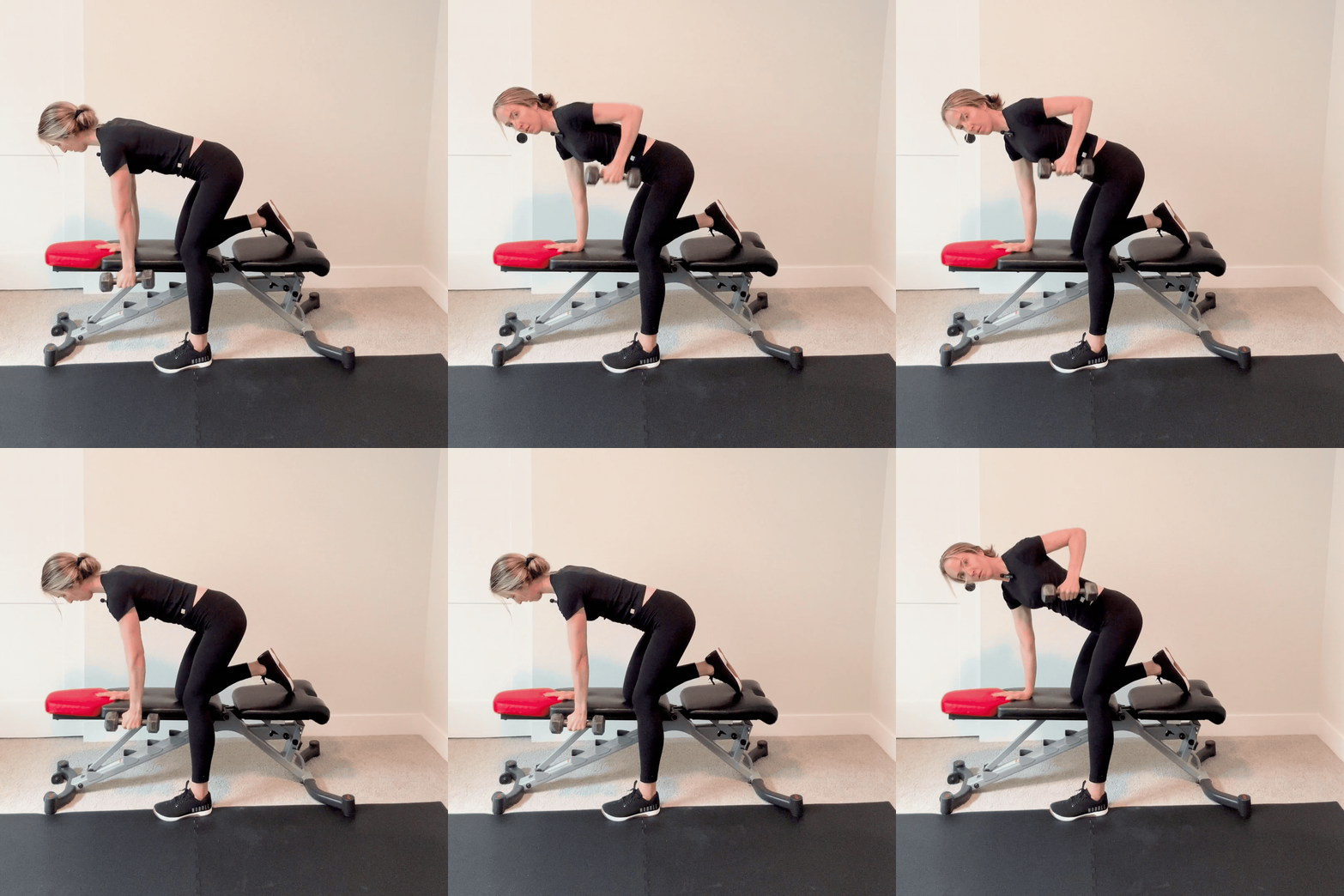
The rapid rise of glucagon-like peptide-1 (GLP-1) receptor agonists, including blockbuster medications such as Ozempic, Wegovy, and Zepbound, has transformed the landscape of metabolic health and obesity treatment. While these pharmaceutical interventions have demonstrated unprecedented efficacy in reducing body weight and improving glycemic control, medical professionals are increasingly focusing on a significant clinical side effect: the disproportionate loss of skeletal muscle mass, a condition medically categorized as sarcopenia. As the global adoption of these therapies accelerates, clinical experts and exercise physiologists are emphasizing a multi-pronged approach involving resistance training and precise nutritional protocols to ensure that weight loss is derived from adipose tissue rather than functional muscle.
The physiological challenge of preserving lean mass during calorie-restricted periods is well-documented in sports science, but the "GLP-1 effect" introduces unique variables. According to a 2024 meta-analysis and research review published in The Lancet Diabetes and Endocrinology, patients utilizing GLP-1 medications lose, on average, between 25 percent and 39 percent of their total weight from lean muscle mass. This ratio is notably higher than that typically observed in gradual, diet-induced weight loss, where muscle loss is generally expected to remain below 20 to 25 percent. The clinical implications of this trend are profound, as muscle tissue is the primary driver of basal metabolic rate (BMR), glucose disposal, and physical mobility.
The Biological Mechanism of GLP-1 Induced Muscle Loss
The mechanism behind this accelerated muscle loss is twofold. First, GLP-1 receptor agonists function by delaying gastric emptying and signaling the brain’s satiety centers, leading to a significant and often sudden reduction in caloric intake. When the body enters a deep caloric deficit, it seeks internal energy sources. While adipose tissue (fat) is the preferred reservoir, the body will also catabolize muscle protein for gluconeogenesis if the deficit is too sharp or if the stimulus to maintain muscle is absent.
Dr. Yuval Pinto, an obesity medicine specialist at Johns Hopkins Medicine, notes that building or even preserving muscle during any weight loss phase is inherently difficult. However, the sheer speed at which GLP-1 therapies induce weight loss can outpace the body’s ability to adapt. "What is unique about GLP-1 use is that these drugs can potentially simulate rapid weight loss, which could worsen muscle loss compared to more gradual weight loss," Dr. Pinto explains. This rapid transition can lead to "sarcopenic obesity," a state where an individual’s body mass index (BMI) may drop into a healthy range, but their body composition remains metabolically unhealthy due to a high fat-to-muscle ratio.

A Chronology of the GLP-1 Revolution and Emerging Concerns
The timeline of GLP-1 development highlights how the focus has shifted from glucose regulation to body composition. In 2005, the first GLP-1 agonist, Exenatide, was approved for Type 2 diabetes. However, it wasn’t until the 2017 approval of Ozempic (semaglutide) and the subsequent 2021 approval of Wegovy for chronic weight management that the scale of weight loss became a global phenomenon. By 2023, with the approval of Zepbound (tirzepatide), which targets both GLP-1 and GIP receptors, weight loss percentages reached 20 percent or more of total body weight in clinical trials.
As these drugs moved from clinical trials to the general population, real-world data began to surface regarding the "quality" of weight loss. In early 2024, the medical community began sounding alarms regarding the long-term impact of muscle wasting on aging populations. If an individual in their 50s or 60s loses 30 pounds, 10 of which are muscle, they significantly increase their risk of frailty, falls, and metabolic rebound—a situation where weight is regained as fat because the metabolic engine (muscle) has been diminished.
The Signaling Solution: The Role of Resistance Training
To counter the catabolic effects of rapid weight loss, exercise physiologists advocate for "mechanical signaling." Jamie Pasquin, an exercise physiologist and certified strength and conditioning specialist at the Hospital for Special Surgery in New York, explains that strength training provides the necessary stimulus to tell the body that muscle tissue is "essential" for survival. Without this stimulus, the body views muscle as metabolically expensive tissue that can be discarded during a perceived famine.
The consensus among fitness professionals is that people on GLP-1 therapies should engage in at least two full-body strength training sessions per week. These sessions should utilize a combination of resistance machines and free weights to ensure all major muscle groups are taxed. The goal is to reach a level of "near-failure," where the last few repetitions of a set are difficult to complete with proper form. This intensity is what triggers muscle protein synthesis, the biological process of repairing and maintaining muscle fibers.
Three Essential Exercises for Muscle Preservation
For those navigating the complexities of GLP-1 therapy, Pasquin recommends a foundation of multi-joint, compound movements. These exercises provide the most "bang for the buck" by engaging multiple muscle groups simultaneously and stimulating a greater hormonal response for muscle maintenance.

1. The Goblet Squat
The goblet squat is considered a premier entry point for lower-body development. By holding a weight (a dumbbell or kettlebell) against the chest, the lifter creates a counterbalance that allows for a deeper squat and a more upright torso.
- Muscles Targeted: Quadriceps, glutes, hamstrings, and the erector spinae of the back.
- Physiological Benefit: This move strengthens the "posterior chain," which is critical for mobility and balance. For individuals experiencing rapid weight loss, maintaining leg strength is vital to preventing the fatigue often associated with GLP-1 medications.
- Technique Tip: If ankle mobility is a limiting factor, placing small weight plates under the heels can help the lifter achieve a full range of motion.
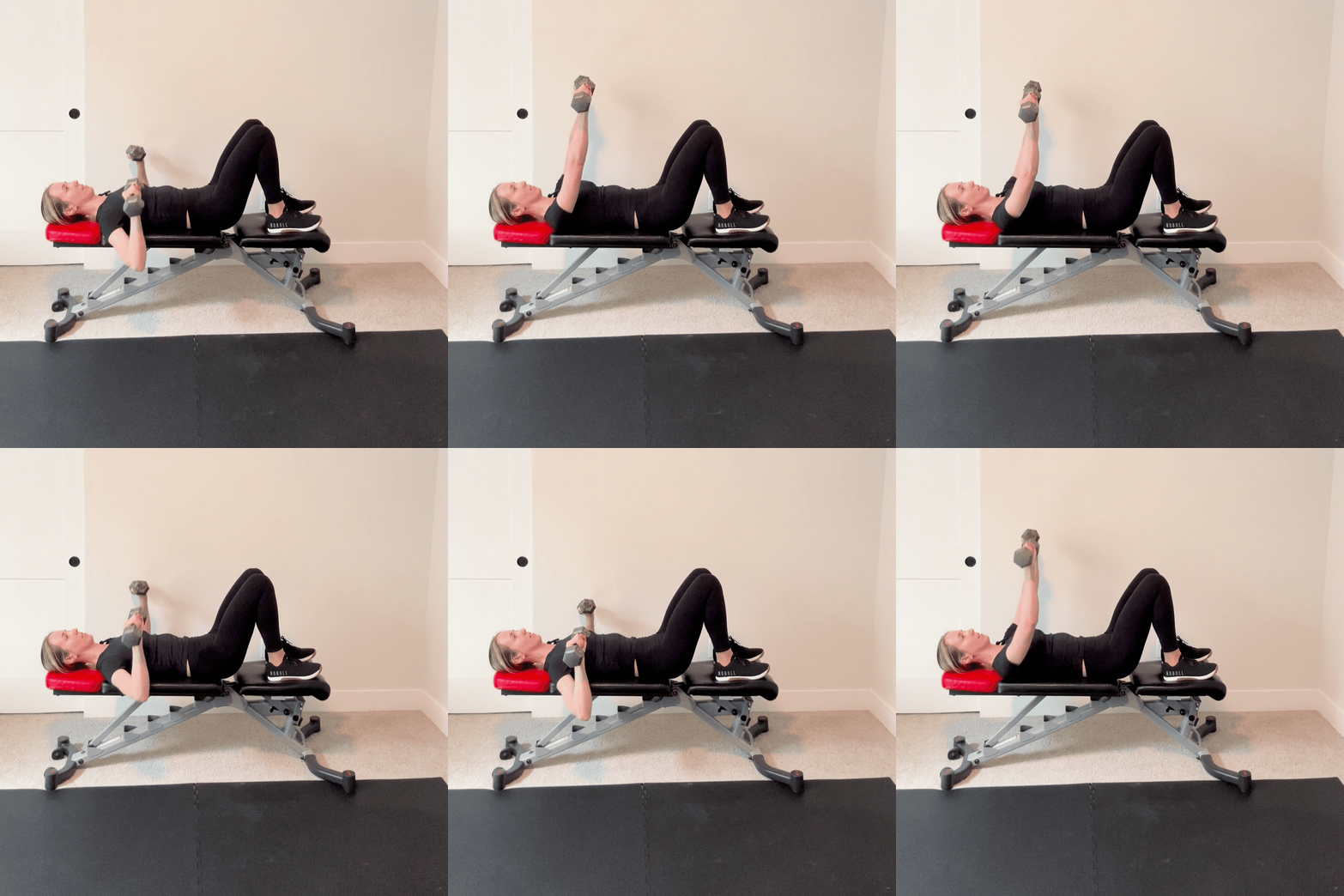
2. The Dumbbell Chest Press
While the barbell bench press is a standard in gyms, the dumbbell variation is often superior for those focusing on muscle preservation. Dumbbells allow for a greater range of motion and require more stabilization from the smaller muscles of the shoulder and core.
- Muscles Targeted: Pectoralis major, anterior deltoids, and triceps.
- Physiological Benefit: Pushing movements are essential for upper body bone density and functional strength. Using dumbbells ensures that the dominant side of the body does not overcompensate for the weaker side, promoting muscular symmetry.
3. Single-Arm Bent-Over Row
Pulling movements are the necessary counterpart to pushing movements, ensuring postural integrity. The single-arm row allows the lifter to focus on one side of the back at a time, facilitating a stronger mind-muscle connection.
- Muscles Targeted: Latissimus dorsi, rhomboids, rear deltoids, and biceps.
- Physiological Benefit: This exercise incorporates a significant core stability component. As the lifter pulls the weight, the core must engage to prevent the torso from rotating, thereby strengthening the obliques and transverse abdominis.
Nutritional and Lifestyle Integration
Exercise alone is insufficient if the body lacks the building blocks for muscle repair. Dr. Pinto emphasizes that nutrition is a non-negotiable component of the GLP-1 protocol. Because GLP-1 drugs suppress appetite, many users inadvertently under-consume protein, which is the most critical macronutrient for muscle retention.
The current recommendation for those on GLP-1s is a protein intake of 1.3 to 1.5 grams per kilogram of desired body weight. For a person aiming for a target weight of 70 kilograms (154 lbs), this equates to approximately 91 to 105 grams of protein daily. High-quality sources such as lean poultry, fish, Greek yogurt, and whey or plant-based isolates are recommended to ensure a complete amino acid profile, specifically the amino acid leucine, which acts as a primary trigger for muscle protein synthesis.
Furthermore, the rate of weight loss should be monitored closely. Dr. Pinto suggests that losing between 0.5 and 1 pound per week is the "sweet spot" for maximizing fat loss while minimizing muscle wasting. If weight loss exceeds 2 to 3 pounds per week consistently, it may be necessary to adjust the medication dosage or increase caloric intake.
Broader Public Health Implications and Future Outlook
The "muscle loss" conversation is shifting the narrative around GLP-1 drugs from "miracle weight loss" to "comprehensive metabolic management." Pharmaceutical companies are already responding to these findings. Clinical trials are currently underway for "adjunct therapies"—medications designed to be taken alongside GLP-1s to specifically protect muscle mass or stimulate muscle growth.
However, until such medications are widely available and proven safe, the burden of muscle preservation lies in lifestyle intervention. The medical community is moving toward a model where a prescription for Wegovy or Zepbound is automatically accompanied by a referral to a registered dietitian and a structured resistance training program.
The long-term success of the GLP-1 revolution will not be measured solely by the number of pounds lost, but by the quality of the life regained. By prioritizing strength training and protein-dense nutrition, patients can ensure that their weight loss journey results in a stronger, more resilient body, rather than simply a smaller one. As the data from studies like those in The Lancet continues to evolve, the integration of "old-school" iron-pumping with "new-age" pharmacology appears to be the most viable path toward sustainable health.




 Chandra Hamzah
 Tatiana Tantri Indah Sari
 Budi Mulyono
