
 Budi Mulyono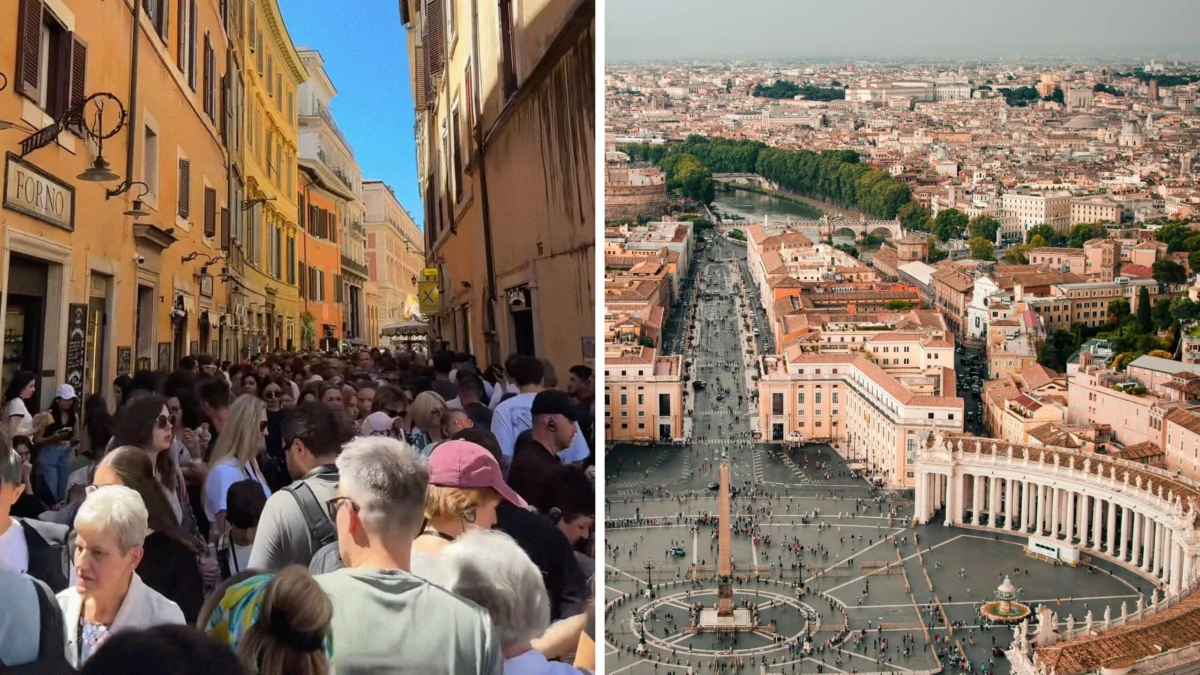
The historic streets of Rome, long celebrated as the cradle of Western civilization, are currently the site of a modern logistical struggle as record-breaking tourist numbers transform the "Eternal City" into a scene of extreme congestion. Recent visual evidence shared via social media has reignited a global conversation regarding the sustainability of mass tourism in Italy’s capital. A series of videos posted by a traveler identified as Ame (@amebames) has garnered more than 1.4 million views, offering a stark contrast to the romanticized images often found in travel brochures. The footage depicts ancient thoroughfares so densely packed with visitors that they resemble the pedestrian gridlock of New York’s Times Square during peak holiday periods.

This viral documentation of Rome’s current state comes at a time when city officials are grappling with how to manage the influx of international visitors without compromising the integrity of historical sites or the quality of life for local residents. The visual evidence particularly highlights the "Euro-summer" phenomenon, where a post-pandemic surge in "revenge travel" has led to unprecedented crowds at landmarks such as the Trevi Fountain and the Colosseum. The situation has become so acute that many travelers are now questioning whether a visit to Rome during the high season remains a viable or enjoyable undertaking.

The Trevi Fountain Controversy and the Midnight Stampede
Central to the current debate is the management of the Trevi Fountain, arguably the most famous Baroque fountain in the world. In an effort to control the sheer volume of people occupying the small piazza, the city has experimented with ticketing systems and entry requirements. However, these measures have led to unintended consequences. Reports indicate that while tickets are required during peak daylight and evening hours, access becomes free after 10:00 PM.

Footage captured by Ame shows the resulting "stampede" of visitors who wait until the clock strikes ten to rush the monument. The scene, described by some observers as reminiscent of historical invasions, underscores the desperation of tourists to secure a view of the fountain without paying the proposed €2 entry fee. Public reaction to the fee has been polarized; while some see it as a necessary tool for crowd control and site maintenance, others, such as a social media commentator named Chia, have labeled the request for even a small fee as "insane."

This conflict highlights a broader issue facing European heritage sites: the tension between public access and the financial and physical costs of preserving ancient infrastructure under the weight of millions of annual visitors. The Trevi Fountain, completed in 1762 by Nicola Salvi, was never designed to accommodate the estimated 10 to 12 million people who now visit the site each year.

Chronology of Rome’s Tourism Evolution
The current crisis is the culmination of several decades of shifting travel patterns. To understand the present situation, one must look at the timeline of Rome’s tourism development:

- The Post-War Era (1950s–1960s): Films like Roman Holiday and La Dolce Vita popularized the city as a glamorous destination for the elite and the burgeoning middle class of the West.
- The Rise of Low-Cost Carriers (1990s–2000s): The deregulation of the European aviation market allowed millions of budget-conscious travelers to reach Rome for a fraction of previous costs, leading to the first major spikes in "weekend tourism."
- The Social Media Revolution (2010–2019): Platforms like Instagram and TikTok shifted the focus of travel toward "bucket-list" photography. Iconic spots became more crowded as visitors sought to replicate specific viral images.
- The Pandemic Hiatus (2020–2021): Tourism plummeted, giving the city a brief, albeit economically painful, respite.
- The 2024–2026 Surge: A massive rebound in international travel, particularly from North America and Asia, has pushed the city’s infrastructure to its breaking point.
The most recent data suggests that the "Liberation Day" holiday in Italy, mentioned in Ame’s TikTok caption, served as a catalyst for the recent peak in crowds. National holidays combined with the onset of warmer weather have created a "perfect storm" for overcrowding.

Supporting Data: The Cost and Scale of Roman Travel
The financial reality of visiting Rome has shifted significantly alongside the increase in crowds. For American travelers, the cost of entry is higher than ever. Current market analysis shows that round-trip flights from New York City to Rome’s Fiumicino Airport (FCO) typically start at approximately $640 for basic economy, often excluding baggage fees.

Accommodation costs have also seen a sharp rise. The average price for a hotel room in Rome now hovers around $250 per night, though prices in the Centro Storico (Historic Center) frequently exceed $400 during peak months. When factoring in meals, local transportation, and entry fees for major museums—which can range from €15 to €30 per person—a five-day trip for a couple can easily exceed $3,500.

Despite these costs, the demand remains inelastic. The Capitoline Museums and the Vatican Museums report record-breaking attendance, with tickets for the latter often selling out weeks in advance. This has given rise to a thriving secondary market for "skip-the-line" tours, which can cost three to four times the face value of a standard ticket.

Expert Analysis: The Alternatives to "Heaving" Tourist Sites
Travel writers and historians are increasingly advocating for a shift in how visitors approach the city. Owen Matthews, writing for the Spectator, argues that the current "checklist" approach to Roman tourism—where visitors rush from the Colosseum to the Trevi Fountain to the Spanish Steps—is counterproductive. He suggests that the city is so densely layered with history that "un-crowded alternatives" exist for nearly every major site.

For those looking to avoid the crushing crowds of St. Peter’s Basilica, Matthews recommends Donato Bramante’s Tempietto, located in the cloister of San Pietro in Montorio. While smaller in scale, it is considered a masterpiece of High Renaissance architecture. Similarly, rather than fighting the masses at the Vatican Museums, travelers are encouraged to visit the Capitoline Museums. As the oldest public museum in the world, the Capitoline houses some of the most significant classical sculptures in existence, often with a fraction of the wait time found at the Vatican.

The consensus among travel experts is that the Pantheon remains one of the few "crowds-be-damned" sites that is worth the struggle, though even here, new entry fees and reservation systems have been implemented to manage the flow of people.

Local Perspectives and Seasonal Strategy
Local residents, who must navigate the city’s congestion daily, offer a different perspective on the timing of visits. A Roman local identified as Ste noted that the "best moment" to explore the city is actually during the shoulder seasons of September and October or during the winter months. While the weather may be "freezing cold" by Italian standards, the energy of the city changes, and the streets become navigable once more.

Another local sentiment expressed in recent forums is a concern over the "Disneyfication" of the city center. As more apartments are converted into short-term rentals to accommodate tourists, the local population is being pushed to the outskirts, leading to a loss of the authentic Roman culture that many tourists claim to be seeking.

Broader Impact and Policy Implications
The situation in Rome is not unique; it mirrors the challenges faced by Venice, Florence, and Barcelona. Venice recently introduced a "day-tripper fee" to discourage short-term visitors who contribute to congestion without significantly boosting the local economy. Rome appears to be heading in a similar direction, with the proposed Trevi Fountain fee serving as a potential bellwether for future city-wide policies.
The broader implications of this overcrowding extend beyond mere tourist discomfort. There are significant concerns regarding:

- Infrastructure Strain: The city’s Metro and bus systems are frequently overwhelmed, leading to delays and safety concerns.
- Heritage Preservation: The physical wear and tear on ancient stones and monuments caused by millions of footsteps and human contact is accelerating the need for expensive restoration projects.
- Safety and Security: Large, dense crowds are difficult to monitor and present challenges for emergency services.
Conclusion: The Future of the Roman Experience
As Rome moves deeper into the 2026 travel season, the viral footage serves as a cautionary tale for the modern traveler. The "City of Seven Hills" remains a pinnacle of human achievement and a "must-see" for any student of history or art. However, the era of the spontaneous, leisurely Roman stroll appears to be a thing of the past, at least during the summer months.

For the travel industry, the challenge lies in balancing the economic benefits of mass tourism with the preservation of the visitor experience. For the traveler, the solution may lie in a strategic retreat from the "main stage" of the city, seeking out the "surprising treasures and exquisite moments" that can still be found in Rome’s quieter corners, far from the flashbulbs and the midnight stampedes of the Trevi Fountain. Ultimately, the question remains: is the view of the ancient world worth the battle of the modern one? For millions, the answer continues to be a resounding yes, provided they are willing to pay the price—both in Euros and in patience.




 Anjar Salim
 Chandra Hamzah
 Tatiana Tantri Indah Sari

