
 Anjar Salim
As millions of Americans prepare for the peak summer travel season, the National Park Service (NPS) is issuing reminders that the boundary between a legal outdoor adventure and a federal misdemeanor is often as thin as a park’s property line. While the standard packing list for a backcountry excursion typically includes items like hydration bladders, trekking poles, and moisture-wicking layers, a growing list of common items has been reclassified as federal contraband depending on the specific jurisdiction of the park unit. The NPS, which manages more than 400 sites across the United States, operates under a complex regulatory framework that balances public recreation with the strict preservation of natural and cultural resources. Consequently, items that are perfectly legal in a state park or on National Forest land may carry significant penalties—including fines of up to $5,000 and six months in federal prison—once they cross into National Park territory.
The Legal Framework of National Park Regulations
The authority of the National Park Service to prohibit specific items stems from the Organic Act of 1916, which mandated that the agency "conserve the scenery and the natural and historic objects and the wild life therein." This mission often creates a "dual mandate" conflict, where the desire for public access must be weighed against the potential for environmental degradation. Most park-specific regulations are codified in Title 36 of the Code of Federal Regulations (CFR), but individual park superintendents are granted "Superintendent’s Compendium" authority to impose additional restrictions based on local conditions.
Violations of these rules are generally classified as Class B misdemeanors. While most first-time offenders receive a citation and a fine ranging from $100 to $500, the legal implications can escalate quickly if the violation results in damage to resources or endangers wildlife. As visitor numbers continue to surge—exceeding 325 million recreation visits system-wide in recent years—the NPS has intensified its enforcement of these "hidden" prohibitions to mitigate the cumulative impact of human activity on fragile ecosystems.
A Chronology of Policy Evolution
The list of prohibited items has not remained static; it has evolved alongside technology and shifts in federal law.
- 1916–2010: For nearly a century, firearms were strictly prohibited in most national parks.
- 2010: The Credit Card Accountability Responsibility and Disclosure Act included a provision that allowed visitors to carry firearms in national parks if they complied with the laws of the state in which the park is located.
- 2014: The NPS issued a system-wide memorandum (Policy Memorandum 14-05) creating a blanket ban on the use of "unmanned aircraft" (drones) following a series of incidents involving wildlife harassment and noise complaints.
- 2019–2020: The Department of the Interior issued Secretarial Order 3376, which directed the NPS to allow e-bikes on trails where traditional bicycles were already permitted, sparking a multi-year legal and regulatory debate that continues to influence park-specific rules today.
Ten Prohibited or Restricted Items in the Backcountry
1. Bear Spray: A Regional Safety Paradox
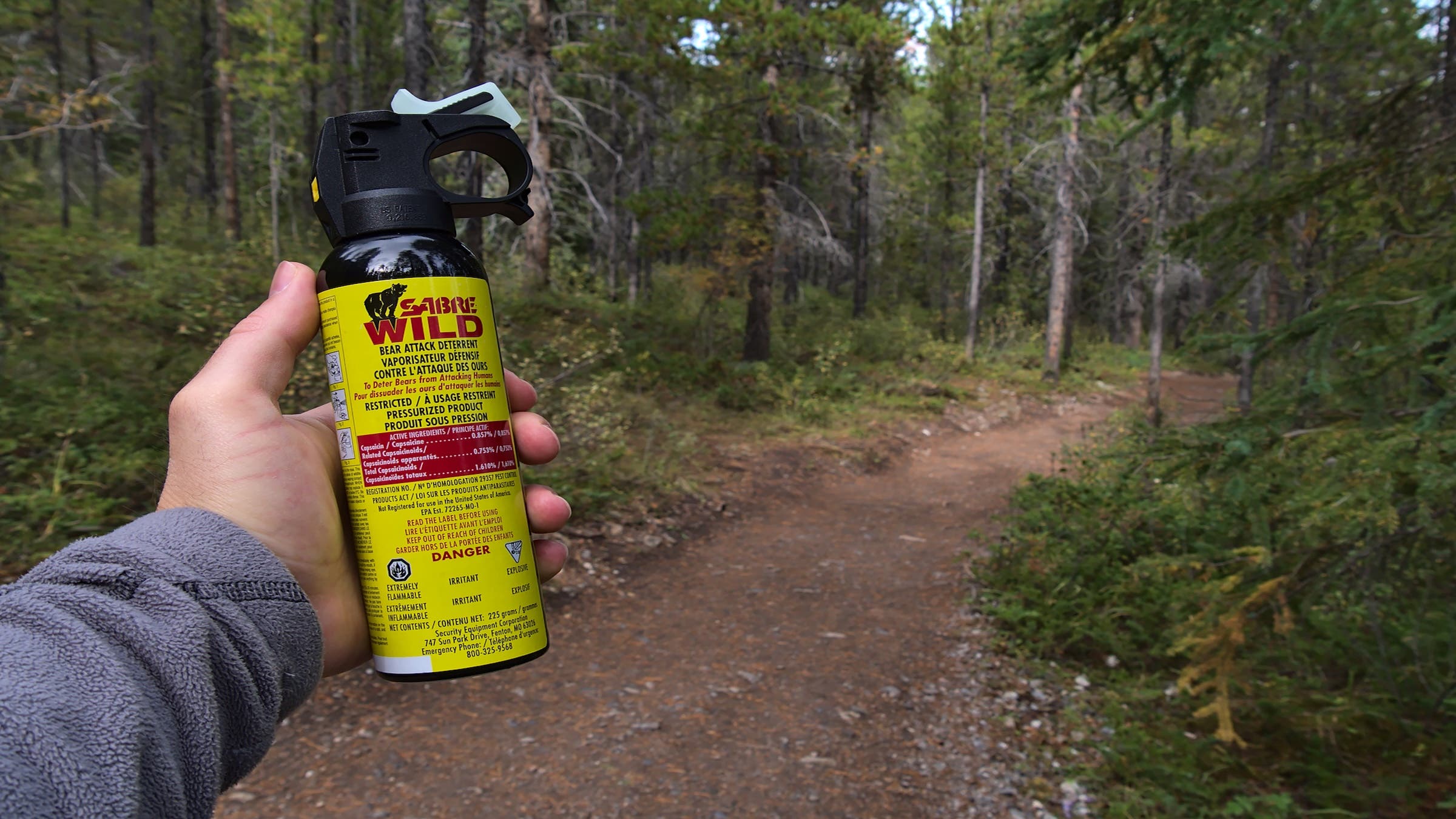
In the grizzly-dense corridors of Yellowstone, Glacier, and Grand Teton National Parks, bear spray is not only legal but is strongly recommended by rangers for anyone entering the backcountry. However, in the California Sierra Nevada—home to Yosemite, Sequoia, and Kings Canyon—the same canister is classified as a prohibited weapon.
The distinction is biological. The Sierra Nevada is populated exclusively by black bears (Ursus americanus), which are generally non-aggressive toward humans and can be deterred through "hazing" techniques like shouting. In contrast, the grizzly bears (Ursus arctos horribilis) of the Northern Rockies are significantly more territorial. Because bear spray is a highly concentrated aerosol of capsaicinoids, some parks classify it as a weapon similar to mace, fearing its misuse in high-traffic areas or its potential to unnecessarily injure less-aggressive wildlife.
2. Non-Firearm Weaponry
While the 2010 federal law legalized the possession of firearms in accordance with state laws, it did not extend the same protections to other forms of weaponry. Items such as crossbows, bows and arrows, swords, slingshots, and martial arts equipment (including nunchucks and throwing stars) are generally prohibited from being carried "ready for use" in national parks. These items are often seen as incompatible with the "natural quiet" and preservation goals of the NPS, and their use is restricted to very specific hunting-authorized units like National Preserves.
3. Transported Firewood
The "buy it where you burn it" policy is one of the most strictly enforced ecological protections in the park system. Most parks prohibit wood brought from more than 10 to 50 miles away. The threat is not the wood itself, but the invasive pests it may harbor, such as the Emerald Ash Borer or the Asian Longhorned Beetle. According to U.S. Forest Service data, invasive insects cost the U.S. economy billions of dollars annually in forest loss and management. Transporting firewood is the primary vector for these infestations, which can decimate local tree populations that have no natural immunity.
4. Unmanned Aircraft (Drones)
The 2014 ban on drones remains one of the most controversial NPS regulations. The agency cites several critical factors for the ban: the "buzzing" sound disrupts the "natural soundscape," drones have been documented harassing nesting birds and bighorn sheep, and they pose a safety risk to visitors. High-profile incidents, such as a drone crashing into the delicate bacterial mats of Yellowstone’s Grand Prismatic Spring, have solidified the agency’s stance. While special use permits are available for scientific research or commercial filming, they are rarely granted to recreational users.
5. Hammocks and Suspension Systems
The rise of "hammocking" as a leisure activity has led to a crackdown in parks like Zion and Bryce Canyon. When suspended from trees, the tension of the straps can cause "girdling"—the stripping of bark that disrupts the tree’s vascular system (cambium layer). This leaves the tree vulnerable to disease and pests. Furthermore, the weight of a human can easily snap the branches of younger trees or desert flora that grow slowly in arid environments.
6. Marijuana: The Federal-State Conflict
One of the most common sources of legal trouble for visitors is the possession of marijuana. While many national parks are located in states where cannabis is legal for recreational or medicinal use (e.g., Colorado, California, Washington), national parks are federal enclaves. Under the Controlled Substances Act, marijuana remains a Schedule I substance. Park rangers are federal law enforcement officers who are mandated to uphold federal law, meaning state-issued medical cards provide no legal protection on park grounds.
7. E-Bikes on Singletrack Trails
The integration of electric bicycles (e-bikes) has been a significant management challenge. While a 2019 policy shift allowed e-bikes on paved and some unpaved roads, they remain almost universally banned from "singletrack" hiking and mountain biking trails. The ban is based on concerns regarding trail erosion, the increased speed differential between e-bikers and hikers, and the potential for accidents on narrow, remote paths.
8. Domestic Dogs in the Backcountry
While most parks allow leashed dogs in developed areas like parking lots and campgrounds, they are banned from the vast majority of backcountry trails. The NPS justifies this through "the scent of the predator" theory; even a well-behaved dog leaves behind scent markers that can cause local prey species to abandon their habitat. Additionally, dogs can attract larger predators like mountain lions or bears, often retreating to their owners when threatened and bringing the danger directly to the human.
9. Physical Geocaches
The global game of geocaching is restricted to "EarthCaching" in national parks. Physical containers (caches) are prohibited because they violate the "Leave No Trace" principle of leaving nothing behind. The placement of caches often encourages off-trail travel, which leads to soil compaction and the destruction of cryptobiotic soil crusts in desert regions.

10. Balloons and Festive Decor
Balloons, particularly those filled with helium, are strictly prohibited in many coastal and desert parks. When released, these items eventually fall as litter. Marine animals, such as sea turtles in the Everglades or Channel Islands, often mistake deflated latex for jellyfish, leading to fatal intestinal blockages. Similarly, the "micro-litter" created by water balloons is considered a significant environmental hazard that is nearly impossible for maintenance crews to remediate.
Broader Impact and Implications for Public Lands
The enforcement of these regulations reflects a broader shift in land management toward "impact mitigation." As the NPS faces a multi-billion-dollar maintenance backlog and record-breaking crowds, the focus has shifted from mere "access" to "sustainable use."
Environmental analysts suggest that without these prohibitions, the "tragedy of the commons" would likely degrade the very features that make national parks attractive. For instance, the drone ban has been credited with preserving the quietude of the Grand Canyon, while firewood restrictions have slowed the spread of forest pathogens in the Great Smoky Mountains.
For the modern traveler, the "Superintendent’s Compendium" for each park has become as essential a resource as a topographical map. The NPS encourages all visitors to utilize the "Plan Your Visit" tool on the official agency website to verify current restrictions, as rules are subject to change based on seasonal fire risks, wildlife nesting patterns, or emergency management needs. Failure to do so not only risks a significant fine but contributes to the gradual erosion of the country’s most protected natural landscapes.



 Chandra Hamzah
 Tatiana Tantri Indah Sari
 Budi Mulyono
