
 Budi Mulyono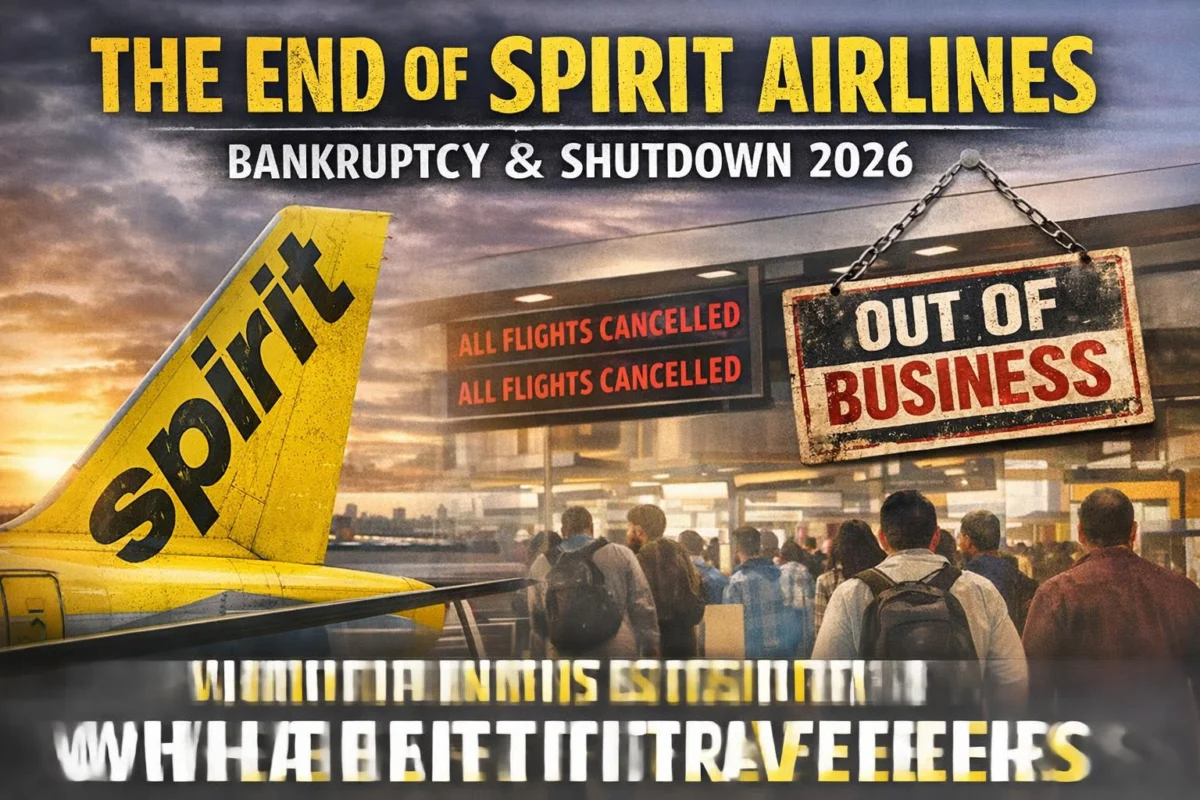
The landscape of North American aviation underwent a seismic shift on May 2, 2026, as Spirit Airlines, the pioneer of the ultra-low-cost carrier (ULCC) model in the United States, officially ceased all operations. The collapse, which followed years of financial volatility and two separate bankruptcy filings, has left thousands of passengers stranded across the Western Hemisphere and signaled the end of an era for budget travel. Effective immediately, the Florida-based carrier canceled all remaining flights, shuttered its digital check-in systems, and began an orderly wind-down of its corporate assets.
The cessation of service marks the conclusion of a 34-year run that fundamentally altered how Americans perceive air travel. By unbundling fares and charging for every amenity from carry-on bags to water, Spirit forced the entire industry to adapt, leading to the rise of "Basic Economy" tiers among legacy carriers. However, the very model that disrupted the industry eventually became unsustainable under the weight of mounting debt, technical setbacks, and a volatile global economy.
The Final Hours: A Chaotic Departure
The end for Spirit Airlines came not with a gradual reduction in routes, but with a sudden, total operational halt. On the evening of May 1, 2026, the airline’s board of directors concluded that a $500 million emergency government bailout would not be forthcoming. By the morning of May 2, flight crews were notified mid-rotation that the company had entered its final liquidation phase.
In major hubs such as Fort Lauderdale-Hollywood International Airport (FLL), McCarran International in Las Vegas (LAS), and Dallas/Fort Worth International (DFW), the scene was one of confusion and frustration. Passengers who arrived for early morning departures found empty kiosks and darkened monitors. Unlike traditional airline failures, where interline agreements might allow passengers to be rebooked on competing carriers, Spirit’s lack of such partnerships meant travelers were left to purchase new, last-minute tickets at significantly higher prices.
Company representatives confirmed that no rebooking assistance would be provided. "The airline is currently in a liquidating posture," a brief statement on the company’s now-static website read. "Customers are advised not to travel to the airport. Information regarding the refund process for unfulfilled tickets will be distributed via email as the bankruptcy court oversees the distribution of remaining assets."
A Timeline of Decline: 2024–2026
The collapse of Spirit Airlines was the culmination of a multi-year financial struggle that began in earnest following the COVID-19 pandemic. While other carriers leveraged international routes and premium cabins to return to profitability, Spirit’s reliance on domestic leisure travel and thin margins left it vulnerable.
The Failed JetBlue Merger (January 2024)
The first major blow occurred in early 2024, when a federal judge blocked JetBlue Airways’ $3.8 billion acquisition of Spirit. The Department of Justice argued successfully that the merger would eliminate a key low-cost competitor, ultimately harming budget-conscious consumers. Deprived of this "Plan B," Spirit was forced to confront its $1.1 billion debt load alone.
The First Bankruptcy (November 2024)
In November 2024, Spirit filed for Chapter 11 bankruptcy protection for the first time. The restructuring aimed to reduce the company’s debt by converting several hundred million dollars of loyalty-backed bonds into equity. While the airline emerged from this process in early 2025, the underlying operational issues remained unaddressed.
The Second Bankruptcy and Final Struggles (August 2025 – May 2026)
By August 2025, Spirit returned to bankruptcy court. The airline’s "unbundled" model was no longer providing the competitive edge it once did. Legacy carriers like Delta, United, and American had successfully integrated "Saver" or "Basic Economy" fares, capturing the price-sensitive demographic while offering a more robust network. In early 2026, Spirit executives made a final plea to the federal government for a $500 million stabilization grant, citing the airline’s importance to national infrastructure. The request was denied, leading directly to the May 2 shutdown.
The Economic Tipping Point: Fuel and Geopolitics
While internal mismanagement and debt were significant factors, external economic pressures provided the final impetus for Spirit’s demise. The airline industry is notoriously sensitive to fuel costs, which typically account for 20% to 30% of operating expenses.
In late 2025 and early 2026, geopolitical tensions escalated significantly following a series of diplomatic breakdowns between the United States and Iran. Under the administration of President Trump, a renewed focus on "maximum pressure" led to direct military skirmishes in the Strait of Hormuz, a vital artery for global oil transit. The resulting uncertainty sent Brent crude prices soaring above $120 per barrel.
For a carrier like Spirit, which operated on razor-thin margins and lacked the sophisticated fuel-hedging strategies of larger competitors, the surge in jet fuel prices was insurmountable. The airline reported that for every $10 increase in the price of oil, its quarterly operating costs rose by nearly $45 million. By the time of the shutdown, Spirit was reportedly losing money on nearly every seat sold, despite record-high load factors.
Technical and Operational Hurdles
Beyond the balance sheet, Spirit’s operational reliability was plagued by technical issues with its fleet. The airline was one of the largest operators of the Airbus A320neo family, powered by Pratt & Whitney Geared Turbofan (GTF) engines.
In 2024 and 2025, a significant portion of Spirit’s fleet was grounded due to a manufacturing defect in the high-pressure turbine disks of the engines. At the peak of the crisis, more than 40 aircraft—nearly 20% of Spirit’s total fleet—were out of service simultaneously. The grounding led to thousands of flight cancellations, a decrease in capacity, and a significant loss of consumer trust. Although Pratt & Whitney eventually provided some compensation, the delays in engine overhauls meant Spirit could not fly the volume of passengers required to service its debt.
Furthermore, the "maturation" of the airline’s workforce led to rising labor costs. Long-term pilots and flight attendants reached higher pay scales, and new labor contracts negotiated in late 2024 increased the airline’s fixed costs. The "juniority" advantage—where a new airline benefits from a lower-paid, younger workforce—had evaporated.
The "Spirit Effect" in Reverse: Market Implications
Economists have long documented the "Spirit Effect," a phenomenon where the entry of a ULCC into a specific market leads to an immediate 15% to 20% drop in average fares across all competing airlines. With Spirit’s exit, the reverse is expected to occur.
Data from the Bureau of Transportation Statistics suggests that in markets where Spirit held more than a 10% market share, such as Orlando, Fort Lauderdale, and Las Vegas, airfares could rise by as much as 25% by the summer of 2026. "Spirit served as a price ceiling for the entire industry," noted aviation analyst Mark Vance. "Without that downward pressure, legacy carriers have little incentive to maintain ultra-low basic economy prices. We are entering an era of significantly more expensive air travel."
The impact will be felt most acutely in the Caribbean and Latin American markets. Spirit was a dominant player in routes to destinations like Cartagena, San Jose, and Port-au-Prince. For many of these regions, Spirit provided a vital economic link for both tourism and the diaspora. The loss of these routes may lead to a temporary contraction in regional tourism as travelers wait for other low-cost carriers, like Frontier or Allegiant, to fill the vacuum.
Official Responses and Passenger Rights
The Department of Transportation (DOT) issued a statement shortly after the shutdown, emphasizing that the airline is legally obligated to provide refunds for canceled flights. "The DOT is monitoring the situation closely to ensure that Spirit Airlines fulfills its legal obligations to its customers," the statement read. "Under federal law, if an airline cancels a flight, the passenger is entitled to a full refund to the original form of payment, regardless of the reason for the cancellation."
However, consumer advocacy groups warn that the refund process may be protracted. Because Spirit is in liquidation, the distribution of funds is subject to the priorities of the bankruptcy court. Secured creditors and employee wages often take precedence over consumer refunds. Travelers who purchased tickets using credit cards are being urged to initiate chargebacks immediately through their financial institutions.
Conclusion: The End of an Era
The disappearance of Spirit Airlines represents more than just the failure of a single company; it is a turning point for the American aviation industry. Spirit proved that there was a massive, untapped market for "no-frills" travel, but it also demonstrated the extreme fragility of that model in a world of high fuel costs and intense competition from larger, more resilient players.
As the final Spirit aircraft are ferried to desert storage facilities in Arizona, the industry looks toward a consolidated future. For the millions of travelers who relied on the "yellow planes" to visit family or explore new cities on a budget, the sky has suddenly become a much more expensive place. The "Spirit" of low-cost travel may survive in other forms, but the era of the $19 cross-country flight appears to have reached its final destination.




 Anjar Salim
 Chandra Hamzah
 Tatiana Tantri Indah Sari

