
 Budi Mulyono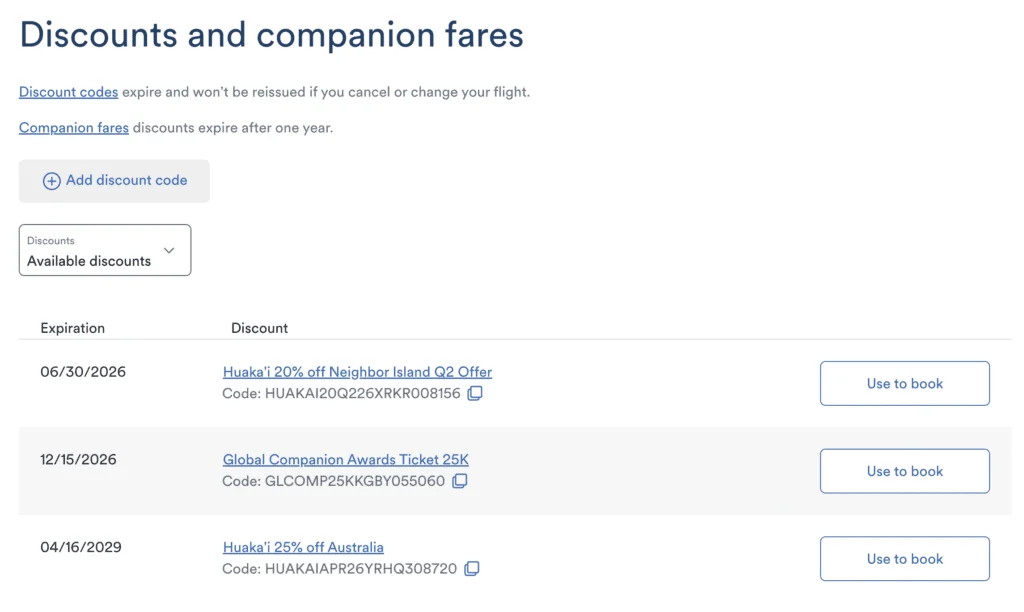
The landscape of interisland aviation in the Hawaiian Islands has undergone a significant transformation with the introduction of Huaka‘i by Hawaiian, a program specifically engineered to address the unique logistical and financial needs of the state’s permanent residents. Unlike traditional airline loyalty structures that prioritize the accumulation of miles for long-haul travel or the attainment of elite status through high-expenditure tiers, Huaka‘i represents a pivot toward high-frequency, short-haul utility. Developed by Hawaiian Airlines, the program aims to provide a reliable framework of savings for those who view interisland travel not as a luxury, but as a fundamental necessity for commerce, healthcare, and familial connectivity.
The initiative arrives at a critical juncture for the carrier, coinciding with broader shifts in the Pacific aviation market and the integration of new technological platforms. By focusing on practical, repeat-use benefits—such as quarterly discount codes and baggage fee waivers—Hawaiian Airlines is positioning itself to solidify its relationship with its most consistent customer base: the people of Hawaii.
The Strategic Context of Interisland Travel
To understand the significance of Huaka‘i, one must examine the historical and economic context of the Hawaii aviation market. For residents of the archipelago, the "interisland corridor" serves as the equivalent of a highway system. With no bridge or ferry infrastructure connecting the major islands, air travel is the sole viable method for moving between Oahu, Maui, Kauai, and the Big Island. This dependency creates a unique consumer profile where travelers may fly several times a month for routine business meetings or medical appointments.
The entry of Southwest Airlines into the interisland market in 2019 introduced unprecedented competition, leading to a period of aggressive pricing and expanded consumer choice. In response, Hawaiian Airlines has sought to differentiate its service not just through flight frequency—which remains the highest in the region—but through localized value propositions. Huaka‘i is the latest iteration of this strategy, designed to reward residency and frequency rather than total spend.
The Shift to Atmos Rewards and Program Integration
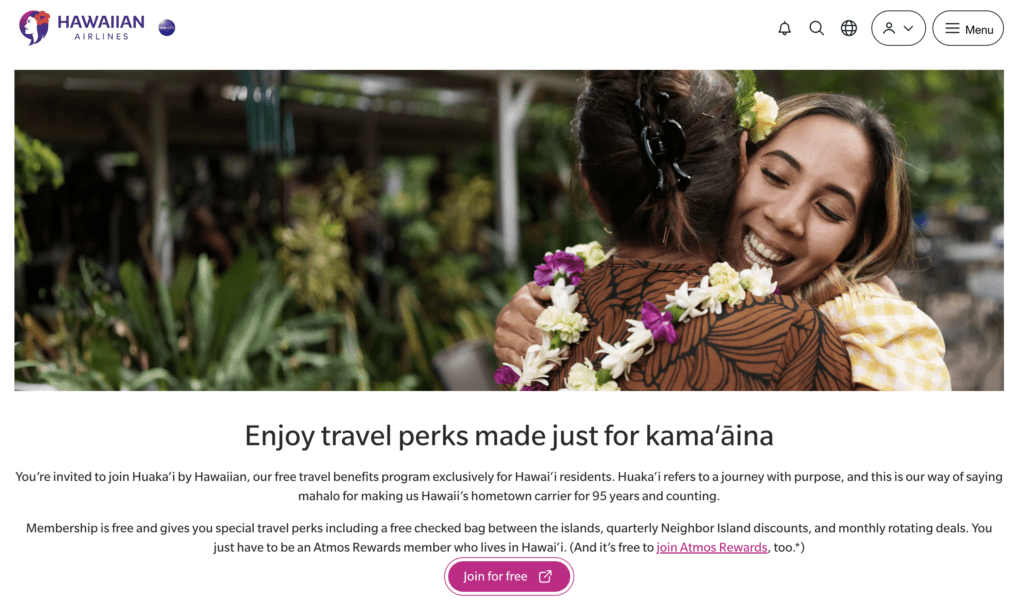
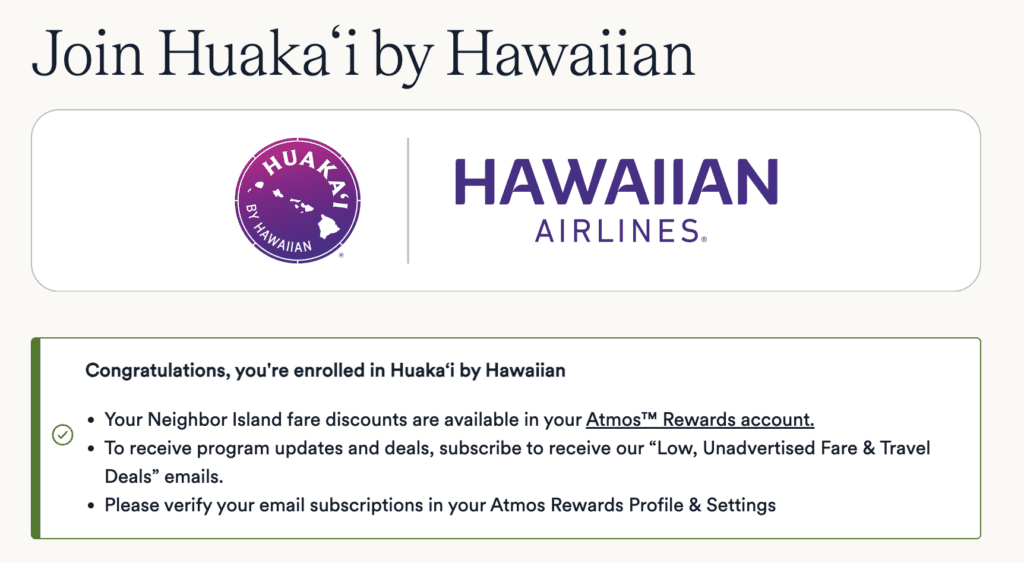
A primary technical component of the Huaka‘i program is its integration with Atmos Rewards. As Hawaiian Airlines moves through its merger process with Alaska Airlines, the loyalty infrastructure is transitioning to a more unified system. Huaka‘i is not a standalone club but a specialized layer of benefits accessible through an Atmos Rewards account.
For residents, this transition means that previous iterations of loyalty accounts, including traditional HawaiianMiles or Mileage Plan structures, are being streamlined. To access Huaka‘i benefits, a traveler must maintain an active Atmos Rewards profile with a verified Hawaii residential mailing address. This verification process is not a one-time event; the airline has indicated that residency status is revalidated on an ongoing basis, typically aligned with the member’s enrollment anniversary, to ensure the program’s benefits remain exclusive to the local community.
Detailed Breakdown of Program Benefits
The Huaka‘i program is structured around a predictable cycle of discounts and logistical perks. The core benefits are designed to alleviate the primary pain points of frequent interisland travel: fluctuating fare costs and ancillary fees.

Quarterly Discount Allocations
Members of Huaka‘i receive four distinct discount codes per calendar year. These codes are distributed on a quarterly schedule—specifically on the first day of March, June, September, and December. These codes are automatically deposited into the member’s digital wallet within their Atmos Rewards account.
Unlike many promotional codes that are restricted to the individual account holder, a single Huaka‘i code can be applied to an entire reservation. This means one code can discount the fares for every passenger on a single booking, provided the flight is an interisland route operated by Hawaiian Airlines. This "group-wide" application significantly increases the value for families or business teams traveling together. Furthermore, the discounts are not limited to the "Main Cabin" but are also applicable to First Class bookings, offering flexibility across different service tiers.
The Baggage Allowance Framework
One of the most immediate cost-saving features of the program is the provision of one free checked bag on interisland flights. In a market where baggage fees can often represent a significant percentage of the total ticket price, this benefit provides a tangible reduction in the "all-in" cost of travel.
However, the program’s baggage policy includes specific stipulations regarding "stacking" benefits. The Huaka‘i free bag does not add to existing allowances provided by other programs. For instance, if a traveler already receives two free bags through a Hawaiian Airlines World Elite Mastercard or via Pualani Elite status, the Huaka‘i benefit does not grant a third bag. It serves as a baseline benefit for those who do not otherwise have baggage waivers, ensuring that every resident has access to at least one free checked item.
The Complexity of Family and Child Enrollment
A notable aspect of the Huaka‘i program is its individual-centric structure. Benefits are tied to the specific traveler rather than the person who pays for the ticket. This distinction is particularly relevant for families. To receive a free checked bag, every traveler in a group must be an enrolled Huaka‘i member.
For families with children, the enrollment process requires additional steps. While adults can register online through the Atmos Rewards portal, federal regulations and internal privacy policies dictate that children under the age of 13 cannot be enrolled via the digital interface. Instead, parents or guardians must contact the Atmos Rewards Service Center via telephone to manually add minors to the program.
Failure to enroll children individually can lead to unexpected costs at the airport. For a family of four, having only the parents enrolled would result in baggage fees for both children’s suitcases, potentially negating the savings gained from the quarterly discount codes. This requirement underscores the airline’s focus on individual data verification and residency tracking.
Competitive Analysis and Market Implications
The launch and refinement of Huaka‘i by Hawaiian can be seen as a direct response to the "Bags Fly Free" marketing of Southwest Airlines, which has historically been a major draw for local travelers. By offering a resident-specific baggage waiver and scheduled discounts, Hawaiian Airlines is attempting to neutralize its competitor’s primary advantages while leveraging its own superior flight frequency and local brand heritage.

Industry analysts suggest that this move is also a preemptive measure to maintain market share during the Alaska Airlines merger. By "locking in" residents with a program that offers predictable, year-round value, Hawaiian Airlines reduces the likelihood of local customers switching to competitors during the operational integration of the two major carriers.
Chronology of Program Development
- 2019: Southwest Airlines enters the Hawaii interisland market, sparking a price war and a shift in consumer expectations regarding baggage fees and flexibility.
- Late 2023: Hawaiian Airlines and Alaska Airlines announce a definitive merger agreement, signaling a massive shift in the Pacific aviation landscape.
- Early 2024: The Huaka‘i by Hawaiian program is officially launched as a centerpiece of the carrier’s commitment to Hawaii residents during the merger transition.
- Mid-2024: The transition to Atmos Rewards begins, requiring Huaka‘i members to migrate their accounts to the new unified platform to maintain benefits.
- Late 2024: Ongoing revalidation of residency becomes a standard operational procedure to protect the integrity of the resident-only discount pool.
Broader Impact on the Hawaii Economy
The implications of Huaka‘i extend beyond simple airfare discounts. In an economy where the cost of living is a perennial concern, the stabilization of interisland travel costs has a secondary effect on small businesses and professional services. Many residents of the "Neighbor Islands" (Maui, Kauai, and Hawaii Island) rely on Oahu for specialized professional services, legal consultations, and government interactions.
By lowering the barrier to these interisland trips, Huaka‘i facilitates a more fluid exchange of services across the state. Furthermore, the program’s structure encourages residents to plan their travel around the quarterly issuance of codes, which could potentially help the airline manage demand and seating capacity more effectively throughout the year.
Official Perspectives and Future Outlook
While Hawaiian Airlines has framed Huaka‘i as a "thank you" to its local base, the program is also a sophisticated data-gathering tool. By requiring residency verification and individual enrollment, the airline gains a clearer picture of local travel patterns, which can inform future route planning and scheduling.
Official statements from the carrier emphasize that the program is intended to be a permanent fixture of their service model. "Huaka‘i is our commitment to ensuring that interisland travel remains accessible for those who call Hawaii home," a company spokesperson noted during the program’s expansion. "As we evolve our loyalty platforms, the focus on our local community remains a non-negotiable priority."
As the merger with Alaska Airlines continues to move through its final stages, the durability of Huaka‘i will serve as a litmus test for how the combined entity intends to balance global expansion with local responsibility. For now, the program offers a clear, factual path for Hawaii residents to navigate the often-volatile world of air travel with a degree of cost certainty and practical support.




 Anjar Salim
 Chandra Hamzah
 Tatiana Tantri Indah Sari
 Lukman Taruna Persada Ramadan