
 Budi Mulyono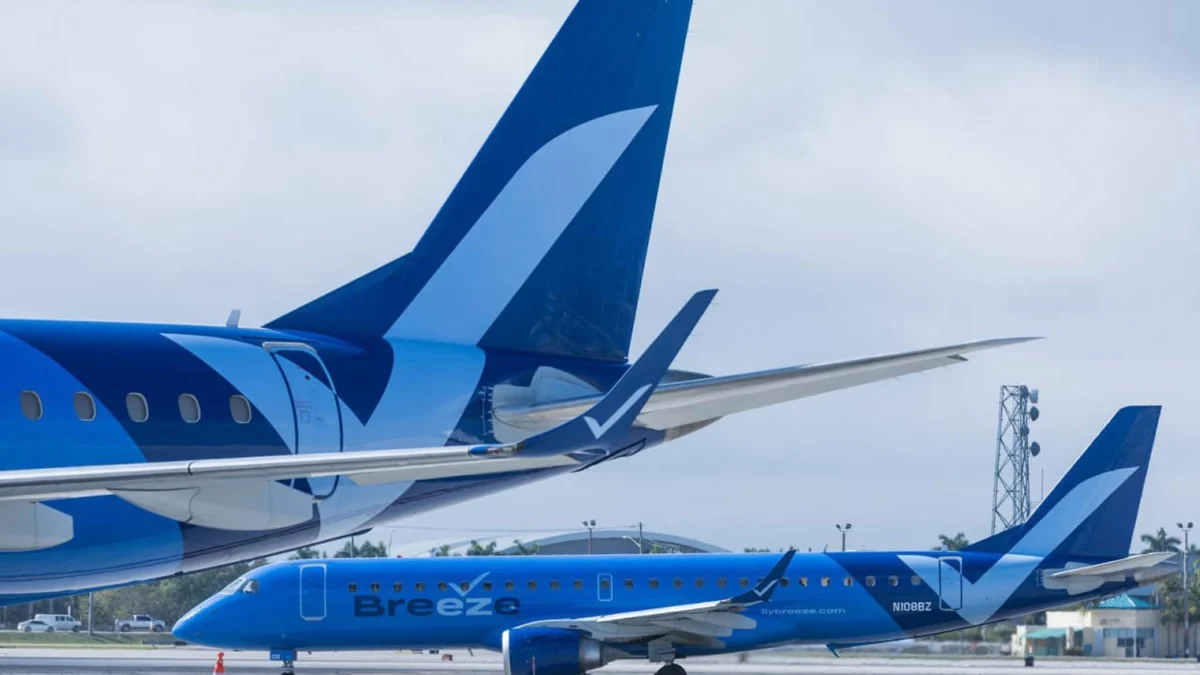
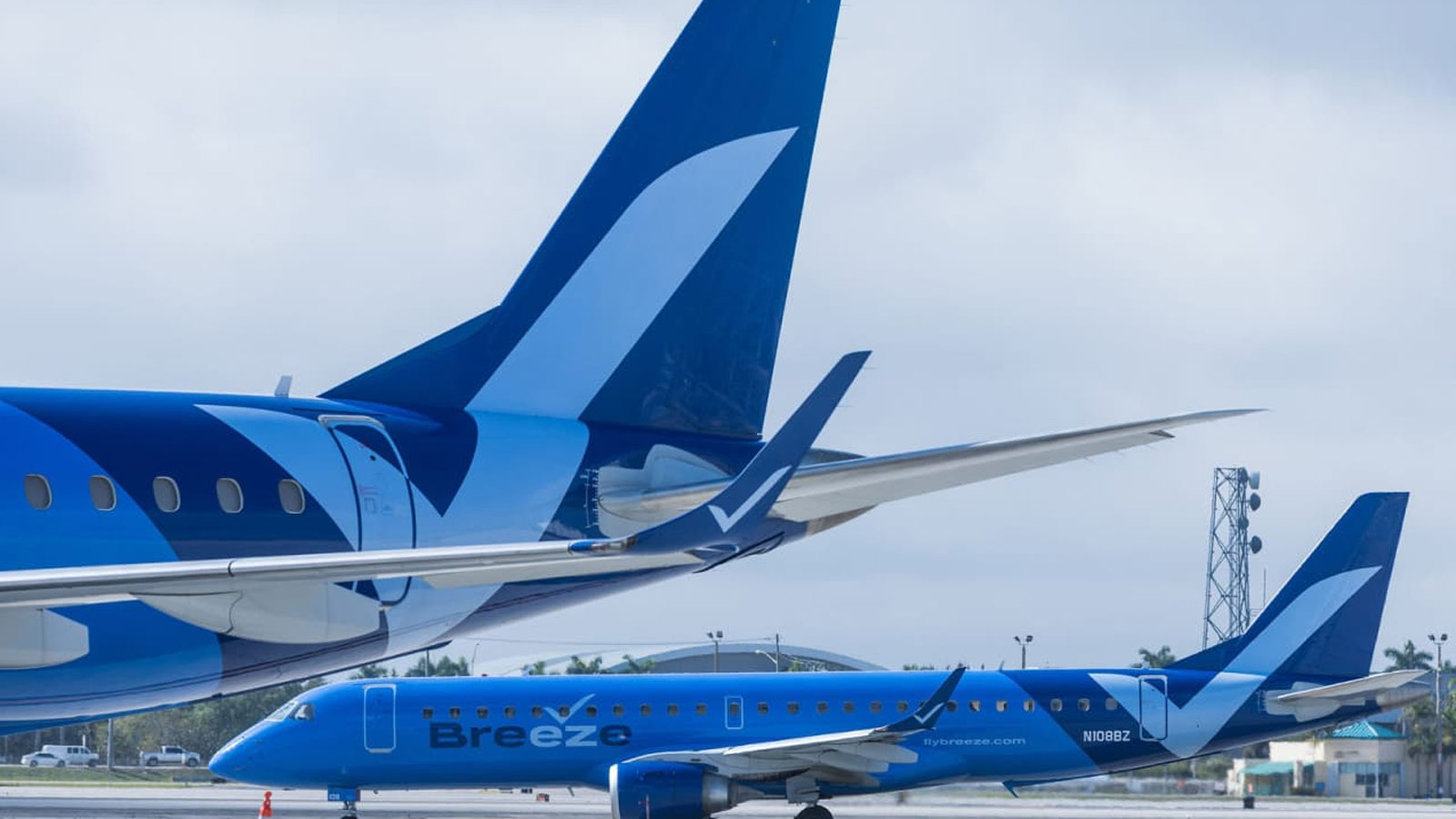
Breeze Airways has announced a significant expansion of its flight schedule from Atlantic City International Airport (ACY), positioning itself as the primary low-cost successor following the sudden cessation of operations by Spirit Airlines. The Utah-based carrier will launch a series of new routes to high-demand leisure destinations, primarily in Florida and South Carolina, beginning in July 2024 and continuing through the end of the year. This move is designed to restore critical air connectivity to the South Jersey region, which faced a severe reduction in available seat capacity after the departure of its long-term dominant carrier.
The expansion involves a phased rollout of four key routes that were previously staples of the Atlantic City market. According to the airline’s schedule, service to Orlando International Airport (MCO) will commence on July 3, initially launching with a high-frequency schedule that will quickly scale to daily service. In the autumn, Breeze will add Myrtle Beach (MYR) and Fort Myers (RSW) on October 22, with two and three weekly flights, respectively. The expansion will conclude for the calendar year on December 17 with the introduction of three weekly flights to West Palm Beach (PBI).
A Strategic Response to Market Volatility
The collapse of Spirit Airlines created an immediate vacuum at Atlantic City International Airport, where the carrier had historically accounted for the vast majority of commercial passenger traffic. For decades, ACY served as a secondary alternative to Philadelphia International Airport (PHL), offering travelers in Southern New Jersey and the Philadelphia suburbs a more convenient, less congested gateway to vacation spots.
Breeze Airways’ decision to step into this market reflects its core business philosophy: identifying underserved routes and providing point-to-point service that bypasses major hubs. Founded by David Neeleman, the aviation entrepreneur behind JetBlue, WestJet, and Azul, Breeze has built its reputation on "seriously nice" service and a flexible fleet strategy. By moving into Atlantic City, the airline is not only capturing a displaced passenger base but also securing favorable positioning in an airport that is eager to maintain its relevance as a regional transit hub.
Industry analysts note that the speed of Breeze’s expansion is indicative of a broader trend in the domestic aviation sector. As larger carriers undergo consolidation or financial restructuring, agile low-cost carriers (LCCs) and ultra-low-cost carriers (ULCCs) are increasingly competing for mid-sized markets where demand remains high but legacy service is absent.
Detailed Chronology of Service Launch
The rollout of these routes is timed to coincide with peak seasonal demand for the New Jersey traveler demographic. The timeline for the new Atlantic City service is as follows:
- July 3, 2024: Service to Orlando (MCO) begins. This route is expected to be the flagship of the ACY operation, catering to summer vacationers and families visiting Florida’s theme parks. The frequency will increase to seven flights per week (daily) to match the high volume previously handled by Spirit.
- October 22, 2024: Service to Myrtle Beach (MYR) launches with two weekly flights. This route targets the "golf tourism" and coastal vacation market, which remains popular through the mid-Atlantic fall.
- October 22, 2024: Service to Fort Myers (RSW) commences with three weekly flights. This route is strategically placed to capture the "snowbird" demographic—residents who travel to Southwest Florida for the winter months.
- December 17, 2024: Service to West Palm Beach (PBI) begins with three weekly flights. Launching just before the winter holiday season, this route serves the affluent leisure market and visiting friends and relatives (VFR) traffic.
Economic Implications for Southern New Jersey
The South Jersey Transportation Authority (SJTA), which operates Atlantic City International Airport, has long sought to diversify the carriers serving the region. The departure of Spirit Airlines was initially viewed as a significant blow to the local economy, threatening jobs at the airport and reducing tourism revenue for the Atlantic City casino and resort industry.
The entry of Breeze Airways is expected to mitigate these losses. By restoring daily service to Orlando and frequent service to other Florida hubs, Breeze ensures that the airport remains a viable entity for commercial travel. Furthermore, the use of the Airbus A220-300 aircraft on many of these routes brings a more modern, fuel-efficient, and quieter alternative to the older narrow-body jets often used by discount carriers.
Local officials have expressed a cautious optimism that Breeze’s presence might lead to further diversification. Unlike Spirit, which operated on a high-volume, low-margin model that often required high load factors to remain profitable, Breeze’s model allows for more surgical entries into markets. This could potentially lead to future routes connecting Atlantic City to mid-western hubs or other East Coast cities that have lacked direct service for years.
Comparative Market Analysis
Breeze is not the only airline looking to capitalize on the Spirit Airlines shutdown. Earlier this year, JetBlue announced a significant expansion of its own, adding 11 routes from Fort Lauderdale to compensate for the reduction in Spirit’s capacity. However, while JetBlue focuses on major metropolitan hubs, Breeze’s focus on Atlantic City highlights its commitment to secondary airports where it can be a "big fish in a small pond."
The competitive landscape at ACY now shifts. While Frontier and American Airlines (via land-bus connections) have a presence, Breeze is positioned to become the dominant player in the leisure segment. To compete, Breeze will offer its tiered fare structure: "Nice," "Nicer," and "Nicest." This includes options for extra legroom and bundled perks, a strategy that differs from the unbundled, "bare fare" model that Spirit pioneered. This shift in service style may appeal to a broader demographic of travelers who are looking for low costs but desire a more comfortable onboard experience.
Fleet and Operational Capacity
A critical component of Breeze’s ability to scale quickly in Atlantic City is its fleet of Airbus A220-300 aircraft. These planes are specifically designed for the "long-thin" routes—flights that cover significant distances but do not necessarily have the passenger volume to fill a larger Boeing 737 or Airbus A321.
The A220 offers several advantages for the Atlantic City market:
- Fuel Efficiency: The A220 consumes significantly less fuel per seat than previous generation aircraft, allowing Breeze to keep fares low despite fluctuating oil prices.
- Range: The aircraft has the range to easily reach any point in the continental United States from the East Coast, providing flexibility for future route expansion.
- Passenger Comfort: With a 2-3 seating configuration, larger windows, and modern cabin amenities, the A220 is often preferred by passengers over traditional low-cost carrier equipment.
Breeze’s operational model also relies on high aircraft utilization. By scheduling these Florida and South Carolina routes, the airline can keep its planes in the air for maximum hours per day, a necessity for maintaining profitability in the low-cost sector.
The Future of Atlantic City International Airport
The transition from Spirit to Breeze marks a new chapter for Atlantic City International Airport. For years, the airport’s growth was tethered to the fortunes of a single carrier. This new era provides an opportunity for the SJTA to market the airport as a multi-carrier facility with a focus on premium low-cost service.
However, challenges remain. The proximity of Philadelphia International Airport continues to provide stiff competition, particularly regarding international travel and transcontinental routes. To succeed long-term, Breeze will need to maintain high reliability and aggressive pricing to convince South Jersey travelers to choose ACY over the larger hubs.
As the aviation industry continues to stabilize in the post-pandemic era, the realignment of routes in markets like Atlantic City serves as a case study in market resilience. The swift entry of Breeze Airways suggests that while individual airlines may fail or retract, the underlying demand for regional, affordable air travel remains robust.
For travelers in the Atlantic City region, the announcement provides much-needed clarity for future travel plans. With tickets for the new routes expected to go on sale immediately, the focus now turns to the execution of these flights and the potential for Breeze to further cement its status as a cornerstone of New Jersey’s aviation infrastructure.




 Anjar Salim
 Chandra Hamzah
 Tatiana Tantri Indah Sari

