
 Budi Mulyono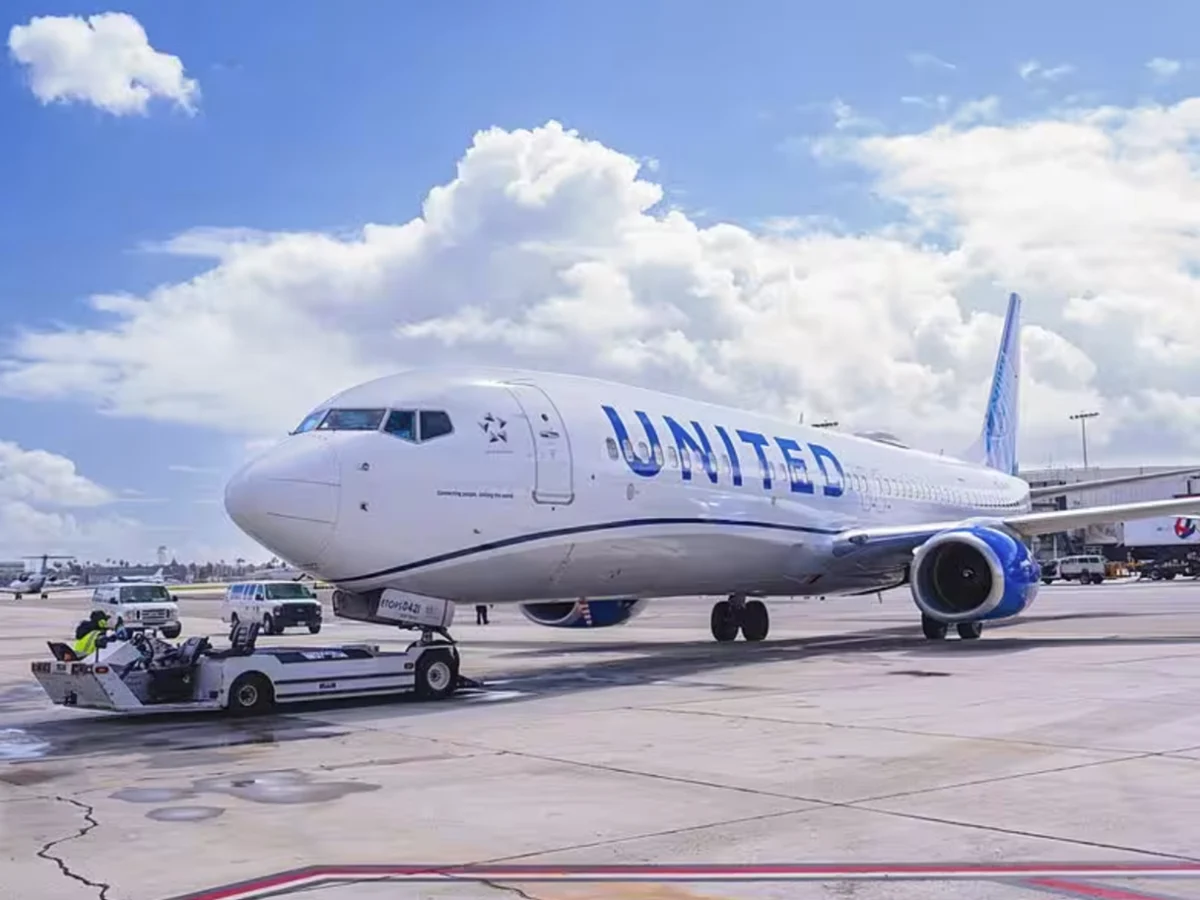
United Airlines Flight 1837, traveling from Puerto Plata, Dominican Republic, to Newark Liberty International Airport, became the scene of a high-stakes security emergency on Saturday after a passenger allegedly launched a physical assault on a flight attendant and attempted to breach the aircraft’s flight deck. The incident, which occurred mid-flight aboard a Boeing 737 MAX, prompted the flight crew to declare an emergency and request an immediate police presence upon arrival. With 170 passengers and six crew members on board, the situation necessitated a rapid response from both the cockpit crew and ground-based law enforcement to ensure the safety of the aircraft and those within it.
The Sequence of Events: A Mid-Air Crisis
The flight departed from Gregorio Luperón International Airport in Puerto Plata according to its scheduled itinerary, heading north toward the New York metropolitan area. For the initial portion of the journey, the flight proceeded without incident. However, as the aircraft approached the United States, a 48-year-old male passenger reportedly began exhibiting erratic and aggressive behavior. According to reports from the flight deck and corroborated by witness accounts, the individual’s conduct escalated from verbal non-compliance to physical violence.
Witnesses and crew members indicated that the passenger targeted a flight attendant, engaging in a physical altercation that disrupted the cabin environment. Following the assault, the individual reportedly moved toward the front of the aircraft. In a sequence that triggered the highest level of security protocols, the passenger allegedly attempted to open the forward main cabin door and sought to gain unauthorized access to the flight deck, where the pilots were operating the aircraft.
Upon being notified of the breach attempt and the assault on the crew, the captain of Flight 1837 immediately declared an emergency with Air Traffic Control (ATC). Audio recordings from the incident capture the captain’s calm but urgent communication, informing controllers of the "Level 4" threat—a classification used in aviation to denote an attempted or actual breach of the flight deck. The captain requested that emergency vehicles and law enforcement meet the aircraft as soon as it touched down at Newark Liberty International Airport.
Emergency Protocols and Cockpit Security
The attempt to access the flight deck is considered one of the most serious violations of federal aviation law. Since the terrorist attacks of September 11, 2001, commercial aircraft have been equipped with reinforced, bulletproof cockpit doors designed to remain locked throughout the duration of a flight. These doors are engineered to withstand significant force and are governed by strict access protocols.
When a passenger attempts to breach this barrier, the flight crew is trained to implement specific defensive measures. This includes the "lockdown" of the cockpit, where the pilots cease all communication with the cabin except through secure interphone systems and focus entirely on landing the aircraft at the nearest suitable airport. In the case of Flight 1837, the proximity to Newark allowed the crew to continue to their destination while maintaining a state of high alert.
The assault on the flight attendant further complicated the situation. Flight attendants are the first line of defense in cabin security, and an injury to a crew member reduces the cabin’s operational safety capacity. Under Federal Aviation Administration (FAA) regulations, crew members are authorized to use "any means necessary" to restrain a passenger who poses an immediate threat to the safety of the flight. While it has not been confirmed if the passenger was restrained by fellow passengers or crew members using zip ties or other devices, the aircraft was successfully stabilized for its final approach.
Law Enforcement Intervention and Arrival at Newark
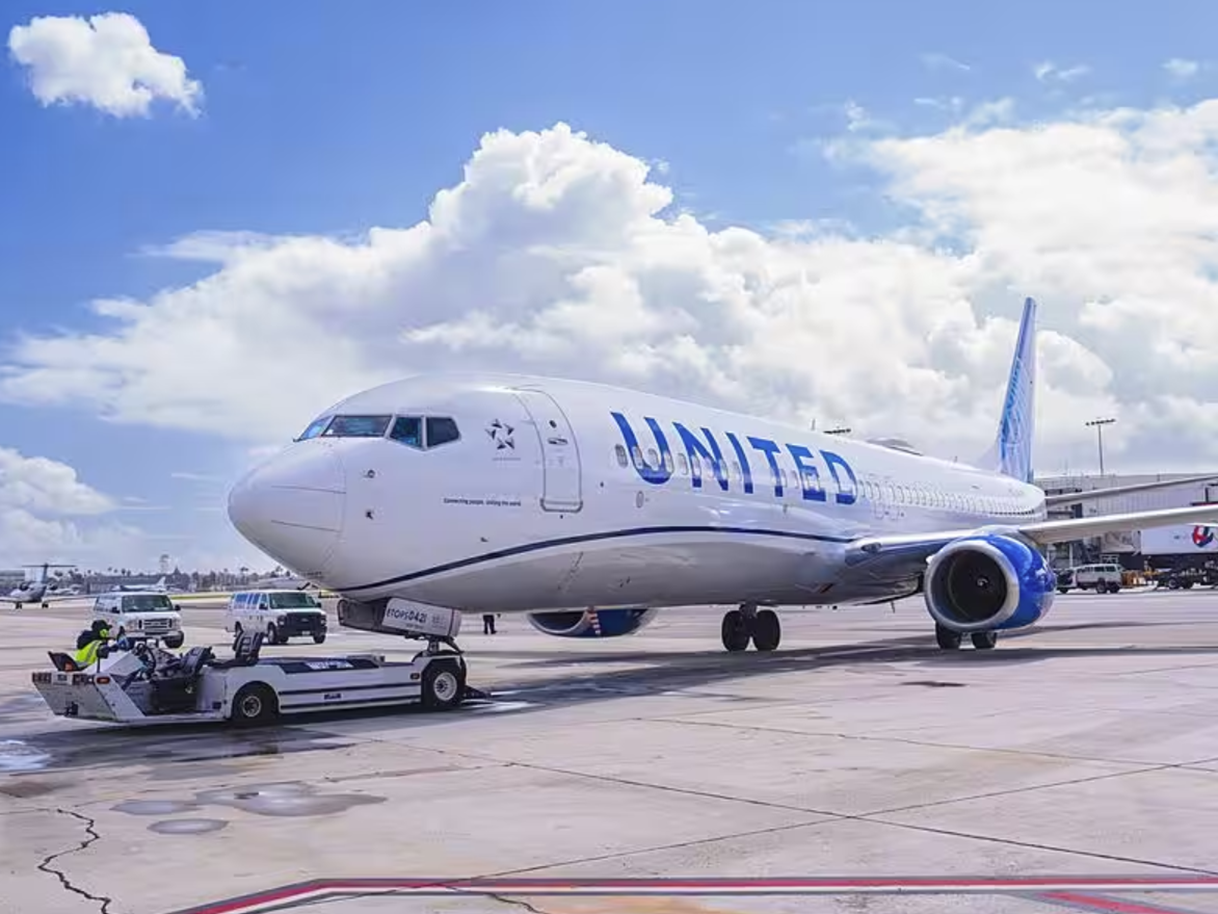
United Airlines Flight 1837 landed at Newark Liberty International Airport on schedule, despite the ongoing emergency. As the Boeing 737 MAX taxied toward the gate, it was met by a significant contingent of law enforcement officers, including officers from the Port Authority Police Department (PAPD) and federal agents.
The 48-year-old male suspect was removed from the aircraft in handcuffs immediately after the plane came to a halt. He was taken into custody for questioning and medical evaluation. The flight attendant who was attacked received immediate medical attention; while the extent of the injuries was not publicly detailed, the psychological and physical toll of such encounters remains a primary concern for airline labor unions.
The remaining 169 passengers were eventually deplaned. Many described a scene of confusion and fear, noting that the crew acted professionally to contain a situation that could have easily spiraled into a broader catastrophe. United Airlines issued a formal statement shortly after the incident, expressing gratitude for the professionalism of their staff. "Local law enforcement met United flight 1837 upon its scheduled arrival at Newark International Airport to address an unruly passenger," the airline stated. "We’re grateful to our crew for their efforts to ensure the safety of fellow crew members and our customers."
Statistical Context: The Rising Trend of Unruly Passengers
The incident aboard Flight 1837 is part of a broader, troubling trend within the aviation industry. Since 2020, there has been a documented surge in "unruly passenger" reports, ranging from verbal abuse and non-compliance with safety instructions to physical assaults and attempted cockpit breaches.
According to data provided by the FAA, there were over 2,000 reports of unruly passengers in 2023 alone. While this is a decrease from the record-high peak of nearly 6,000 reports in 2021, the numbers remain significantly higher than pre-pandemic levels. The FAA has adopted a "Zero Tolerance" policy regarding such behavior, which allows the agency to bypass warning letters and move directly to civil penalties. These fines can reach up to $37,000 per violation, and a single incident can result in multiple violations if a passenger interferes with crew duties and assaults personnel.
Furthermore, the Department of Justice (DOJ) has increased the number of criminal prosecutions for in-flight disturbances. Interfering with a flight crew is a federal felony under 49 U.S.C. § 46504, carrying a maximum sentence of 20 years in federal prison. If a dangerous weapon is used—which can include the use of the aircraft’s own fixtures or physical assault—the penalties can be even more severe.
Analysis of Implications for Aviation Security
The attempted breach of the flight deck on Flight 1837 highlights several critical areas of concern for the aviation industry and federal regulators.
First is the issue of international flight security. Because the flight originated in the Dominican Republic, the suspect would have passed through international security screening. This raises questions about the pre-flight detection of individuals who may be experiencing a mental health crisis or who are under the influence of substances. While airlines have "gate-keeper" protocols to prevent intoxicated individuals from boarding, detecting a passenger who may become violent mid-flight remains a challenge.
Second is the ongoing debate regarding the installation of secondary flight deck barriers. Many aviation safety experts and pilot unions, such as the Air Line Pilots Association (ALPA), have long advocated for a second wire-mesh barrier that can be deployed whenever the reinforced cockpit door must be opened (for example, for pilot meal service or physiological breaks). While the FAA recently mandated these barriers for newly manufactured aircraft, the vast majority of the current global fleet, including many Boeing 737 MAX aircraft, does not yet have them installed.
Third is the long-term impact on the aviation workforce. Flight attendants are increasingly reporting high levels of stress and burnout due to the frequency of passenger confrontations. This has led to calls for increased self-defense training for crew members and more stringent "No-Fly" lists that are shared across different airlines to prevent repeat offenders from moving from one carrier to another.
Legal and Regulatory Consequences for the Accused
The 48-year-old suspect faces a battery of potential legal consequences. In addition to local charges of assault and battery that may be filed by the Port Authority Police, federal authorities are expected to take the lead in the prosecution due to the nature of the interference with a flight crew.
The Federal Bureau of Investigation (FBI) typically holds jurisdiction over crimes committed "in the special aircraft jurisdiction of the United States." This includes any civil aircraft of U.S. registry while the aircraft is in flight. Attempting to open an emergency exit or a cockpit door while in flight is classified as a significant threat to the safety of the aircraft, often resulting in federal charges that carry substantial prison time.
In addition to criminal charges, the suspect is likely to face a permanent ban from United Airlines. Furthermore, the FAA may seek the maximum civil penalty allowed by law. If the suspect is placed on the TSA’s internal watch list, he may be barred from commercial air travel entirely for a significant period.
Conclusion
The events aboard United Airlines Flight 1837 serve as a stark reminder of the volatility that can occur in the confined environment of a commercial aircraft. The successful landing and subsequent arrest of the suspect are a testament to the effectiveness of post-9/11 security enhancements and the rigorous training of flight crews. However, the incident also underscores the persistent challenges of managing passenger behavior in an era where air travel has become increasingly fraught with tension.
As the investigation continues, the aviation community will likely use this incident to further the dialogue on cabin safety, mental health resources for travelers, and the necessity of federal protections for airline employees. For the 170 passengers on board, what was supposed to be a routine flight from the Caribbean became a harrowing experience that ended safely only through the swift and decisive actions of the crew and the waiting law enforcement at Newark Liberty International.




 Anjar Salim
 Chandra Hamzah
 Tatiana Tantri Indah Sari

