
 Budi Mulyono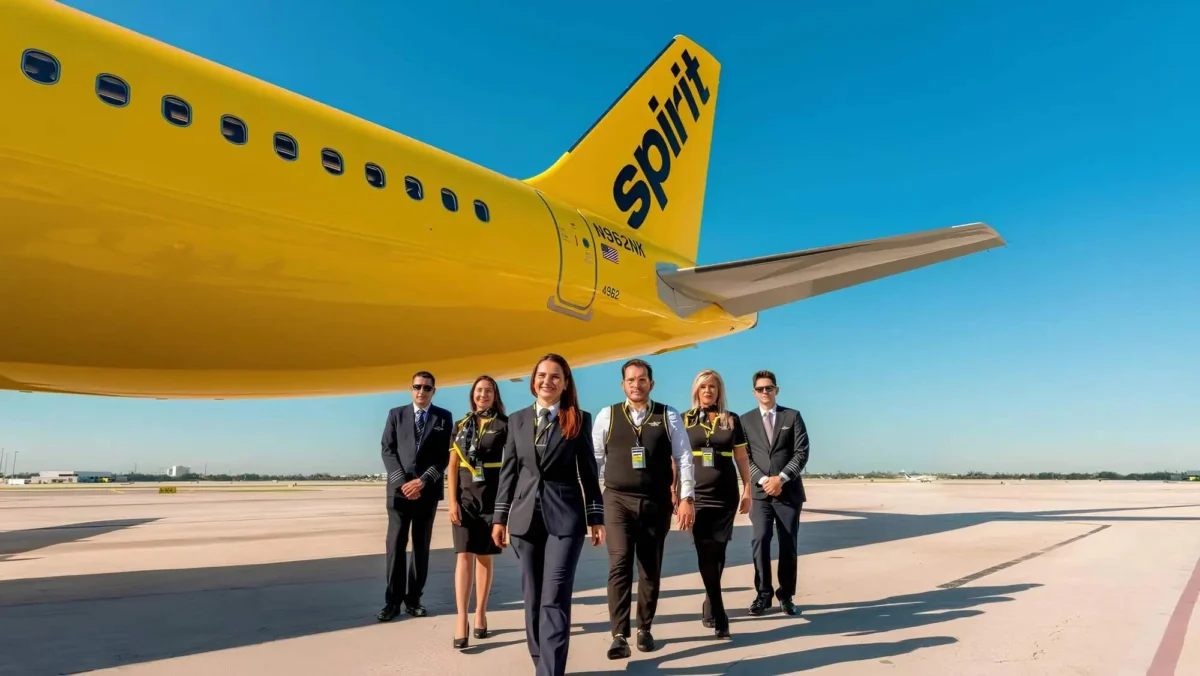
The landscape of American commercial aviation has undergone a seismic shift following the cessation of operations by Spirit Airlines, a move that carries profound implications for travelers across the United States, the Caribbean, and Central America. The Florida-based carrier, long recognized as the pioneer of the ultra-low-cost carrier (ULCC) model in North America, officially shuttered its operations after failing to secure a viable path forward following two bankruptcy filings and a collapsed merger attempt. The dissolution of the airline has sparked an intense national debate regarding the efficacy of federal regulatory oversight, the role of government intervention in private enterprise, and the long-term impact on consumer pricing in an increasingly consolidated industry.
The Final Descent: A Chronology of Collapse
The path to Spirit’s liquidation was marked by a series of legal, financial, and strategic hurdles that proved insurmountable for the carrier. The decline began in earnest in early 2022, when Spirit became the subject of a bidding war between Frontier Airlines and JetBlue Airways. While Spirit’s board initially favored a merger with Frontier, JetBlue eventually secured a $3.8 billion acquisition agreement in July 2022.
However, the deal immediately drew the scrutiny of the Department of Justice (DOJ). In March 2023, the DOJ filed a lawsuit to block the merger, arguing that the elimination of Spirit would significantly harm competition and lead to higher fares for budget-conscious travelers. This stance was bolstered by the Department of Transportation (DOT), led by then-Secretary Pete Buttigieg, who broke with decades of precedent by publicly backing the DOJ’s action. Prominent legislative voices, including Senator Elizabeth Warren and Representative Alexandria Ocasio-Cortez, also lobbied heavily against the deal, framing the block as a victory for consumer protection.
The legal battle culminated in January 2024, when a federal judge ruled in favor of the DOJ, effectively killing the merger. Without the capital infusion and strategic pivot the JetBlue deal would have provided, Spirit’s financial position deteriorated rapidly. Faced with mounting debt and a shifting post-pandemic travel market where the cost advantage of ULCCs was eroding, the airline entered its first bankruptcy filing shortly thereafter. A second filing followed in late 2025, leading to the ultimate decision to liquidate in the spring of 2026.
The Regulatory Paradox and the "Spirit Effect"
The irony of Spirit’s demise lies in the very arguments used to block its merger with JetBlue. Regulators argued that Spirit was an "essential" fixture of the American aviation market, serving as a "floor-setter" for pricing. This phenomenon, often referred to as the "Spirit Effect," forced legacy carriers like American, Delta, and United, as well as mid-tier carriers like JetBlue, to maintain lower fares on routes where Spirit operated.
Data from the Bureau of Transportation Statistics (BTS) historically supported this thesis. On routes where Spirit competed, average fares were frequently 20% to 50% lower than on routes dominated by a single legacy carrier. For example, on nonstop routes between Pittsburgh and South Florida, Spirit’s entry-level pricing often hovered around $100 round-trip. While legacy carriers might charge upwards of $500 for a similar flight into Miami International Airport, the presence of Spirit at nearby Fort Lauderdale-Hollywood International Airport compelled competitors to offer more aggressive pricing to retain market share.
With the removal of Spirit from the board, market analysts suggest that this pricing floor has effectively vanished. JetBlue’s President, Marty St. George, recently indicated to analysts that the airline is seeing robust unit revenue in South Florida despite adding capacity—a signal that the industry is already beginning to capitalize on the reduced competition. Without a ULCC to anchor the bottom of the market, fares on formerly competitive routes are expected to trend upward, potentially increasing by an average of $30 to $100 per ticket over the next 18 to 24 months.
The Failed $500 Million Federal Intervention
In the final weeks of Spirit’s existence, a last-ditch effort to save the airline emerged from the federal government. The Trump administration proposed a $500 million emergency loan aimed at maintaining Spirit’s operations and preserving the 14,000 jobs tied to the carrier. The proposed deal was structured aggressively: the federal government would take a 90% equity stake in the company and demand "super-priority" status in the repayment hierarchy, placing the taxpayers ahead of existing bondholders.
This structure proved to be the deal’s undoing. Major bondholders, including Ken Griffin’s Citadel and Ares Management, refused to subordinate their claims to the federal government. For these private creditors, the risk of a third bankruptcy or a failed restructuring outweighed the benefits of a short-term cash infusion. Without the consent of its primary debtors, Spirit was unable to accept the government’s terms, leading to the immediate suspension of flights.
The debate over the bailout has since become a focal point for economic critics. Proponents of the intervention argued that $500 million—roughly $1.49 per American citizen—was a small price to pay to maintain competitive pressure on an industry that serves nearly a billion passengers annually. They contend that the aggregate cost to consumers in the form of higher airfares will far exceed the cost of the proposed loan. Conversely, critics of the bailout, including various conservative fiscal groups and the Wall Street Journal’s editorial board, initially argued that using taxpayer funds to prop up a fundamentally flawed business model was a violation of free-market principles. However, following the shutdown, even some critics have softened their stance, acknowledging that the resulting "pricing vacuum" may have more severe economic consequences than a temporary intervention would have.
Immediate Market Reaction and the "Rescue Fare" Phenomenon
In the immediate aftermath of Spirit’s shutdown, the aviation industry moved swiftly to fill the void, albeit in ways that underscore the loss of the ULCC model. Within hours of the announcement, major carriers including JetBlue, American, and United announced "rescue fares" for passengers stranded by Spirit’s cancellation of service.
JetBlue, for instance, offered $99 one-way fares for Spirit ticket holders, but restricted the offer to a narrow seven-day window. While these gestures provided temporary relief for travelers currently in transit, they offered little solace to the hundreds of thousands of passengers with bookings for later in the season. These travelers were forced back into a market where prices had already begun to spike.
Simultaneously, competitors have begun an aggressive land grab for Spirit’s vacated slots and gates. JetBlue announced the addition of 11 new routes into Fort Lauderdale almost immediately after Spirit went dark. While this ensures that the physical capacity—the number of seats available—will eventually return to the market, it does not guarantee the return of Spirit-level pricing. Industry experts note that JetBlue’s cost structure is significantly higher than Spirit’s, meaning the airline cannot sustainably offer the $19 or $29 base fares that were Spirit’s hallmark.
Broader Implications for the U.S. Economy and Labor
The liquidation of Spirit Airlines is more than a story of corporate failure; it is a significant blow to the U.S. labor market and secondary airport economies. The loss of 14,000 jobs—including pilots, flight attendants, mechanics, and ground crew—represents one of the largest single-day employment contractions in the history of the U.S. airline industry. While Transportation Secretary Sean Duffy has stated that the administration is working to facilitate the transition of these workers to other carriers, the sudden influx of job seekers is expected to suppress wage growth in the aviation sector in the short term.
Furthermore, Spirit was a primary tenant in several secondary airports that relied on the carrier for the bulk of their passenger traffic. Airports in cities like Atlantic City, New Jersey, and Latrobe, Pennsylvania, now face an uncertain future. These facilities often provided a lower-cost alternative to major hubs, and the loss of Spirit’s high-frequency service could lead to a decline in local tourism and tax revenue.
Analysis: A New Era of Consolidation
The fall of Spirit Airlines marks the end of an era of experimentation in American aviation. The ULCC model, which unbundled every aspect of the flight experience to offer the lowest possible base fare, struggled to adapt to rising fuel costs and the increasing demand for "premium" experiences among post-pandemic travelers. Spirit’s inability to maintain a significant cost advantage over legacy carriers—who introduced their own "Basic Economy" tiers to compete—eventually made its business model unsustainable.
However, the regulatory decision to block the JetBlue-Spirit merger will likely remain a subject of intense study for years to come. By preventing a merger intended to create a "fifth major" competitor to the "Big Four" (American, Delta, United, and Southwest), regulators inadvertently cleared the way for those same giants to enjoy a market with even less pricing discipline.
As the industry consolidates, the burden of proof now shifts to the regulators and lawmakers who celebrated the block of the merger as a "win for flyers." If airfares continue to rise and the "Spirit Effect" is not replaced by a new market entrant, the legacy of this period may be remembered not as a victory for consumer protection, but as a cautionary tale of how regulatory intervention can sometimes accelerate the very outcomes it seeks to prevent. For the millions of Americans who relied on Spirit to visit family, attend school, or explore new regions, the sky has become a significantly more expensive place.




 Anjar Salim
 Chandra Hamzah
 Tatiana Tantri Indah Sari

