
 Walid Sujud Trenggono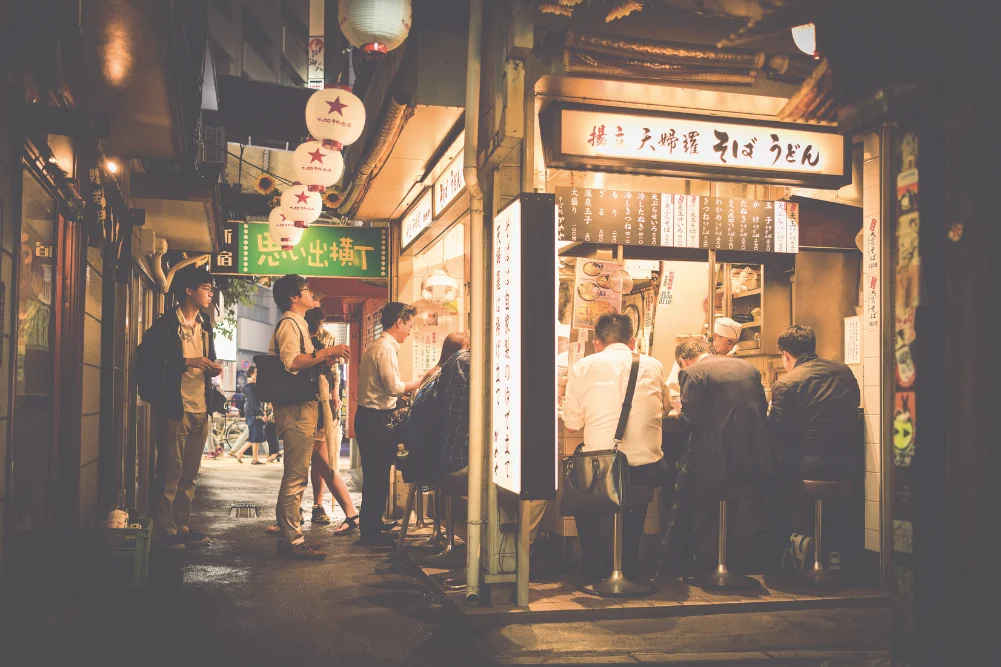
The narrative of the expatriate experience in Japan has long been defined by a tension between deep cultural immersion and the persistent status of the outsider, a journey often marked by both professional growth and physical peril. For many who spent their formative years in the "concrete jungle" of Tokyo, returning as an adult represents a complex effort to reconcile childhood memories with the rigorous demands of a society built on ancient traditions and precise social hierarchies. This transition from the sheltered life of an "expat kid" to a solo traveler and professional intern highlights the evolution of personal resilience, particularly when tested by the unforgiving environment of Japan’s high-altitude terrain and the psychological weight of the nation’s "Forbidden Forests."
The Historical Context of the Expatriate Influx
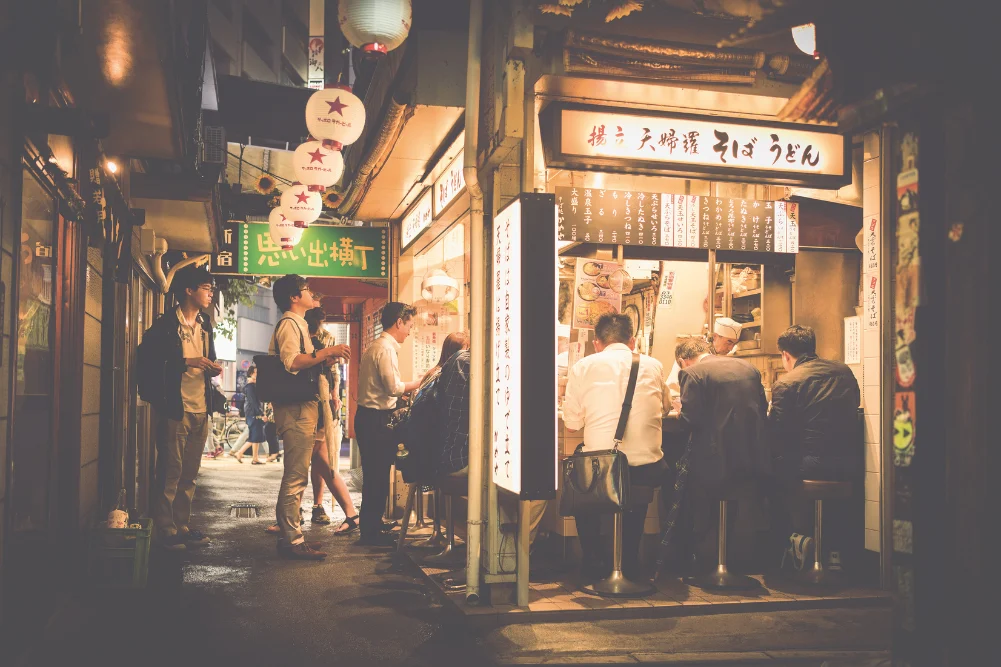
To understand the environment described by returning residents, one must look at the economic landscape of the early 1980s. During this period, Japan emerged as a global economic powerhouse, leading to a significant influx of Western professionals. Families relocated to Tokyo during the "Bubble Economy" era, a time when the city was characterized by a unique olfactory profile—a blend of industrial cement, traditional yakitori smoke, and the umami of a rapidly modernizing culinary scene.
For the children of these professionals, the experience was defined by "long-haul" lifestyles. Statistical data from the era shows a sharp increase in international school enrollments and the development of expat enclaves in districts like Minato and Shibuya. This generation was raised in a state of perpetual transit, where the "soft, glutinous" textures of airline catering became more familiar than the traditional staples of their home countries. This upbringing planted the seeds for a life of adventure, albeit one "grafted to a stalk of discomfort."
Gender and Autonomy: The Evolution of Solo Travel
The shift from family-led relocation to solo exploration in the 1990s serves as a benchmark for changing social norms regarding female travelers. Historically, travel for women was a restricted endeavor. Records from the mid-19th century indicate that approximately 95 percent of passports were issued to men. Women typically traveled under the protection of a husband’s passport, with independent travel being a rarity reserved for the unmarried or the exceptionally affluent.
By the 1990s, however, a new wave of solo female travelers began to redefine these boundaries. For many, the first solo trip to Japan was not merely a return to a childhood home but a declaration of independence. This period saw a rise in educational exchange programs and senior projects that encouraged young adults to navigate foreign bureaucracies—such as customs and immigration—independently. The act of signing one’s own customs declaration form became a symbolic "Declaration of Independence," marking the transition from a dependent minor to an autonomous global citizen.
Professional Integration and the "Gaijin" Dynamic
The late 1990s introduced a different challenge: the integration of Westerners into the Japanese corporate world. Internships at multinational companies in Tokyo required a mastery of nuances far beyond linguistic proficiency. The Japanese term gaijin, composed of the kanji for "outside" and "person," remains a central theme in the expat narrative. While some view the term as exclusionary, cultural analysts suggest it is a factual reflection of a homogenous society with thousands of years of shared history.
In the professional sphere, the concept of "saving face" and the ritual of meishi (business card) exchange are paramount. Observational data from corporate environments suggests that the depth of a bow, the degree of eye contact, and the placement of a business card on a conference table are critical indicators of respect and status. For a 22-year-old intern, navigating these "rites and ceremonies" is a trial by fire. It requires a softening of Western assertiveness—reducing wild arm gestures and modulating vocal tones—to align with Japanese social cues. This adaptation is often a survival mechanism, intended to make others comfortable and ensure the traveler is correctly understood in a high-stakes environment.
The Mount Fuji Incident: A Case Study in Risk and Resilience
The most physical manifestation of the expat challenge often occurs on Mount Fuji (Fuji-san). Standing at 3,776 meters, the mountain is a cultural icon but also a site of significant physical danger for the underprepared. In the late 1990s, a trend emerged among young expats to treat the summit as a casual excursion rather than a technical climb.
Chronology of a Near-Disaster
The following timeline reconstructs a common trajectory for ill-prepared climbers during this era:
- 06:00 AM: Departure from Tokyo via bus to the Fuji 5th Station (Base Camp).
- 08:00 AM: Acquisition of traditional walking sticks. Climbers often rely on "makeshift layers" and standard running shoes rather than technical hiking gear.
- 12:00 PM: Mid-ascent. Weather conditions on Fuji are notoriously volatile. Sudden rain and wind frequently force climbers into "cheap plastic rain ponchos," which provide minimal protection against the elements.
- 03:00 PM: Reaching the crater. The "euphoric" peak experience is often short-lived as the physical toll of the ascent begins to manifest.
- 05:00 PM: The descent begins. This is statistically the most dangerous period. The volcanic scree is slippery and unforgiving on the knees.
- 07:00 PM: Disorientation sets in as light fades. The dense "San Francisco fog" of the lower forest levels makes trail markers nearly impossible to see.
The "Forbidden Forest" Warnings
A recurring element in these narratives is the warning regarding the "Forbidden Forest." This likely refers to Aokigahara, a dense woodland at the base of Mount Fuji known for its association with mythology and its reputation as a place where people frequently become lost. The forest’s floor is composed of hardened lava, which absorbs sound and interferes with compasses due to magnetic iron deposits in the rock.
Local colleagues and friends often issue "circuitous, kind questions" and warnings about this area, reflecting the Japanese cultural tendency to protect others without causing direct alarm. When climbers ignore these warnings and lose their way, the psychological shift from "bravado" to "unraveling" is rapid. The realization that one is "not fine" marks the point where internal resilience must override physical agony.
The Role of "Omotenashi" in Emergency Situations
The resolution of many such mountain ordeals is often attributed to Omotenashi, the Japanese philosophy of wholehearted hospitality. In many documented cases of lost hikers, local residents or mountain hut workers have stepped in to provide "grace embodied."
Rescue stories frequently involve locals taking in distressed travelers, offering warm food such as ramen, and facilitating their safe return to the city. These interactions often bridge the linguistic gap through mutual respect and "deep bows." The gratitude of the rescued travelers highlights the profound impact of human connection in the face of life-threatening errors.
Analysis of Implications: The Enduring Impact of Solo Travel
The expat experience in Japan, particularly when it involves surviving the "Forbidden Forests" of both the mind and the geography, yields several long-term implications for the individual:
- Development of Intuition: Navigating a foreign culture and a dangerous mountain requires a heightened state of sensory awareness. Travelers learn to "palpate the moment" and rely on intuition when traditional maps (or guidebooks) fail.
- Resilience Through Discomfort: The transition from the "comfort zone" of childhood to the "hot poker" pain of a failed descent builds a unique form of psychological durability.
- Refinement of Cultural Competency: Moving between worlds teaches the traveler to speak in a way that prioritizes the comfort of the listener, a skill that is invaluable in international diplomacy and business.
- Self-Trust: Ultimately, the "needle of the compass" for the solo traveler points back to self-trust. The ability to move forward "one step at a time" when lost is a foundational element of the modern expat identity.
In conclusion, the journey of the expat in Japan is more than a series of flights and business meetings; it is a testing of limits. Whether it is the 1982 move that introduced a child to the scent of Tokyo or the 1990s climb that nearly ended in the Aokigahara shadows, each experience contributes to a narrative of resilience. The "Forbidden Forest" remains a metaphor for the challenges that feel impossible until they are overcome, one step at a time, through a combination of personal strength and the unexpected kindness of strangers.


 Anjar Salim
 Chandra Hamzah
 Tatiana Tantri Indah Sari
 Budi Mulyono

