
 Chandra Hamzah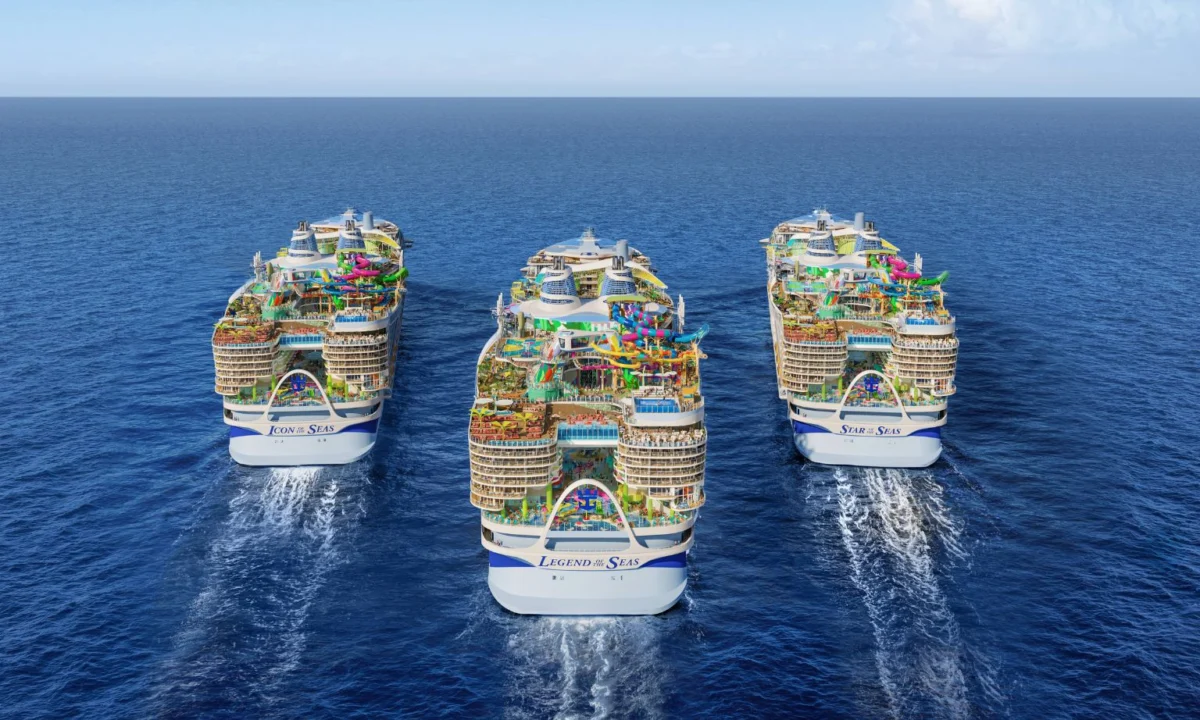
Royal Caribbean International is not slowing down its ambitious expansion of its groundbreaking Icon Class fleet, announcing plans for two additional megaships, slated for delivery in 2029 and 2030. This latest commitment significantly bolsters the cruise line’s presence in the ultra-large vessel segment, solidifying its position as a dominant force in the industry. With the first two Icon Class ships, Icon of the Seas and Star of the Seas, already captivating the cruising world since their respective launches in 2024 and 2025, and Legend of the Seas set to join the fleet in the coming months, followed by Hero of the Seas in 2027, this latest announcement brings the total number of Icon Class vessels on order or in operation to a remarkable seven by the end of the decade.
The sheer scale of this commitment underscores Royal Caribbean’s strategy to redefine the cruise experience through colossal, feature-rich vessels. Each of these Icon Class ships boasts a capacity of approximately 7,600 passengers, meaning that by 2030, Royal Caribbean will be able to accommodate an astonishing 53,200 guests simultaneously across its Icon Class fleet alone. This represents a significant increase in passenger capacity and a bold statement about the future of mass-market leisure travel at sea.
A Timeline of Unprecedented Growth
The genesis of the Icon Class can be traced back to Royal Caribbean’s unwavering commitment to innovation and passenger experience. Icon of the Seas, the inaugural ship of this revolutionary class, made its debut in January 2024, immediately earning the title of the world’s largest cruise ship. Its unveiling marked a significant milestone, not just for Royal Caribbean, but for the entire cruise industry, showcasing advancements in design, amenities, and capacity.
The momentum continued with Star of the Seas, which entered service in 2025, mirroring the groundbreaking design and passenger appeal of its predecessor. The upcoming delivery of Legend of the Seas in the near future, and Hero of the Seas in 2027, further cements the rapid deployment of this class. The addition of the sixth and seventh vessels, scheduled for 2029 and 2030, signals a sustained investment and a long-term vision for the Icon Class. This sequential rollout allows Royal Caribbean to leverage lessons learned from each vessel, incorporating incremental improvements and refinements into subsequent builds, ensuring each new ship builds upon the success of the last. While the core dimensions and passenger capacity remain largely consistent, subtle enhancements in onboard features, entertainment options, and operational efficiencies are expected to be integrated throughout the fleet.
The Escalating Race for Maritime Supremacy
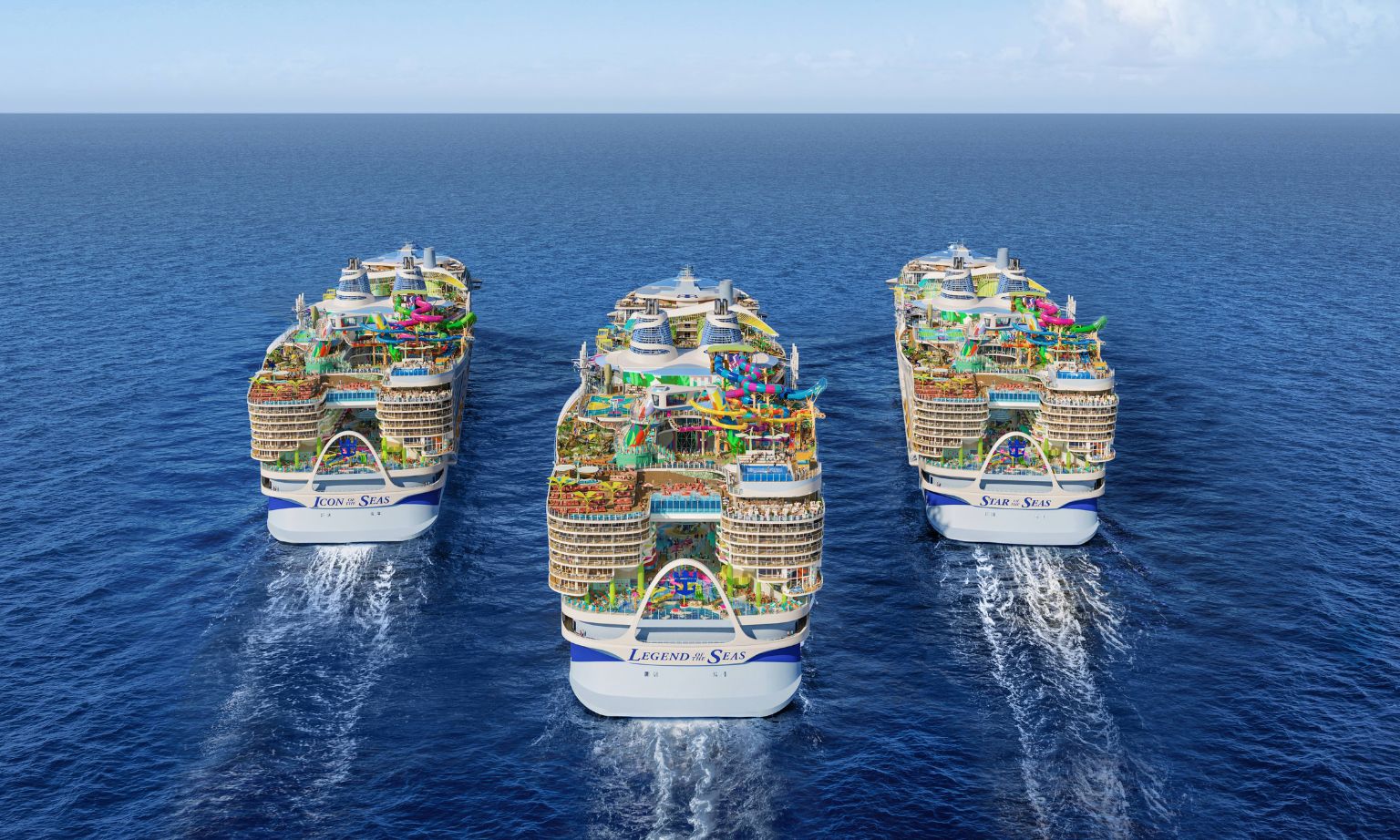
Royal Caribbean’s aggressive expansion with the Icon Class is not occurring in a vacuum. The cruise industry is witnessing an intense competition among major players to operate the largest and most feature-packed vessels. By 2028, when Royal Caribbean’s fifth Icon Class ship is set to sail, the line will possess the five largest cruise ships globally. However, the landscape is poised for significant shifts from 2029 onwards, as competitors prepare to launch their own colossal new builds.
Carnival Cruise Line is reportedly developing its "Project Ace" initiative, which aims to introduce a new generation of megaships designed to push the boundaries of passenger capacity. These vessels are projected to carry nearly 8,000 passengers, potentially surpassing the Icon Class’s maximum of approximately 7,600. The first of these Project Ace ships is anticipated to set sail in 2029, with further vessels planned for 2031 and 2033. While these ships are expected to have a projected gross tonnage of around 230,000, falling slightly short of Icon of the Seas‘s 250,000 gross tons, their increased passenger capacity could allow Carnival to claim the title of the ship with the highest passenger count.
Adding another layer of complexity to this maritime arms race is MSC Cruises. The European cruise giant is reportedly planning a new class of ships, dubbed the "Constellation class," which are expected to tip the scales at an impressive 265,000 gross tonnage. These vessels would not only outweigh Royal Caribbean’s Icon Class ships in terms of sheer volume but could also establish MSC Cruises as the operator of the largest cruise ships by gross tonnage.
Navigating Projections and Future Implications
It is crucial to acknowledge that such ambitious shipbuilding projects are subject to the inherent uncertainties of the maritime industry. Projections for tonnage and passenger capacity do not always translate directly into reality, and unforeseen challenges can arise during the design, construction, and commissioning phases. However, Royal Caribbean’s demonstrated ability to consistently deliver on its ambitious shipbuilding goals provides a strong precedent.
The simultaneous introduction of these new megaships from Carnival and MSC Cruises in the late 2020s and early 2030s will undoubtedly intensify the competition for market share and passenger attention. Should Carnival’s Project Ace vessels achieve their targeted passenger capacity, they would emerge as the ships carrying the most guests at sea. Concurrently, if MSC’s Constellation class ships meet their gross tonnage projections, they would become the largest in terms of volume. This dual challenge could compel Royal Caribbean to reassess its claim of operating the "biggest cruise ships at sea," prompting a strategic response.
The timing of Royal Caribbean’s announcement of two new Icon Class ships, coinciding with the projected rollout of Carnival and MSC’s megaships, is particularly noteworthy. This strategic move suggests a proactive approach to maintaining its leadership position. It is plausible that Royal Caribbean may consider further enhancements or expansions to its future Icon Class vessels, potentially increasing their size or capacity beyond current specifications, in an effort to preemptively counter the advancements of its competitors and preserve its coveted title. The cruise line’s unwavering commitment to pushing the envelope in ship size and passenger experience indicates that the race for maritime supremacy is far from over, and the coming years promise exciting developments for cruise enthusiasts worldwide. The ongoing evolution of these colossal vessels underscores a significant trend in the cruise industry: a relentless pursuit of scale, innovation, and unparalleled guest experiences.




 Anjar Salim
 Tatiana Tantri Indah Sari
 Budi Mulyono
