
 Budi Mulyono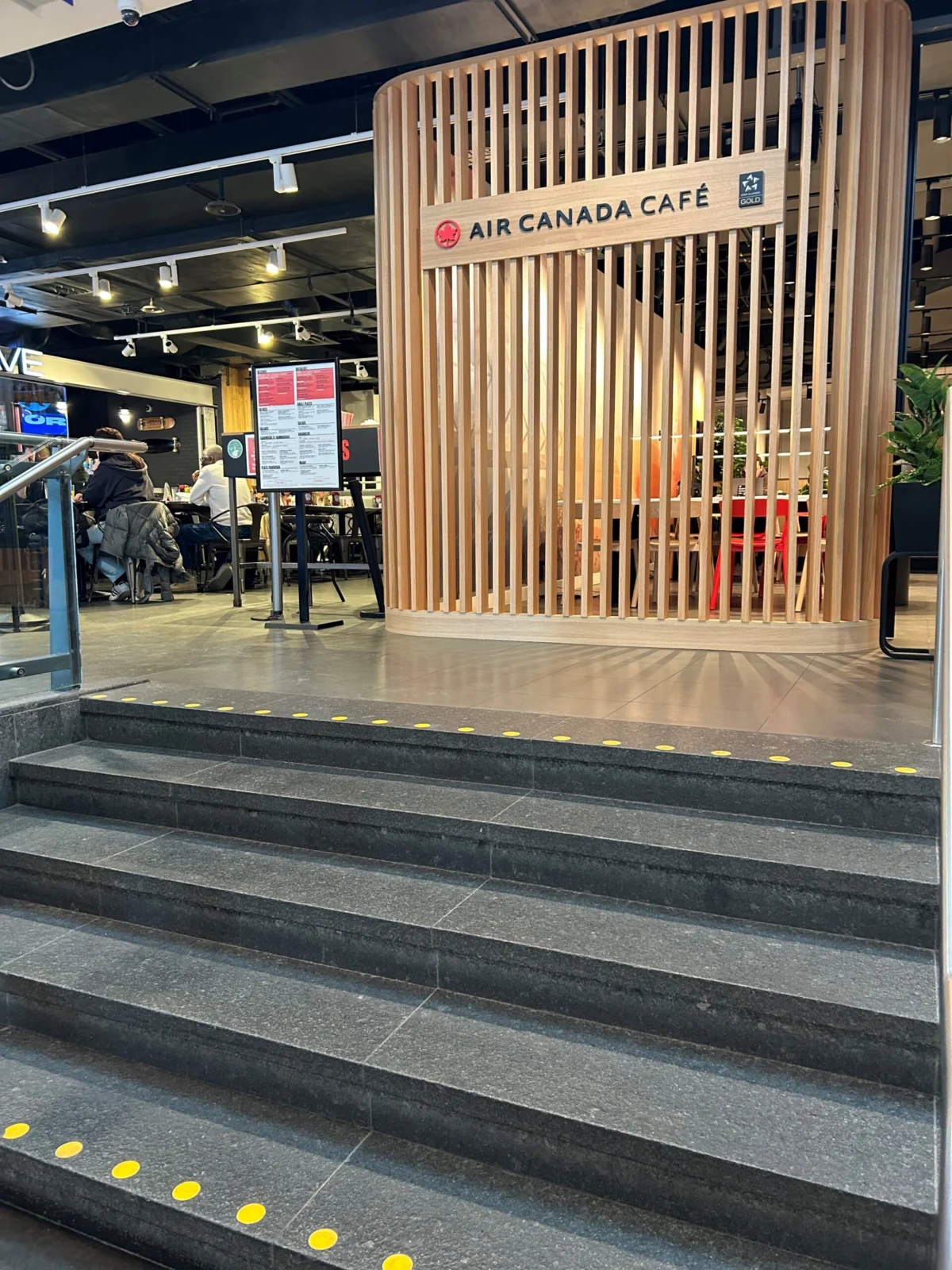
The aviation industry has witnessed a significant shift in the design and purpose of premium ground services, moving toward specialized environments that cater to the evolving needs of the modern traveler. A prime example of this evolution is the Air Canada Café located within the Transborder (United States) concourse at Montreal-Trudeau International Airport (YUL). Positioned as a specialized alternative to the traditional Maple Leaf Lounge, this facility emphasizes high-quality culinary options and efficient service models designed for travelers navigating the rigorous pre-clearance processes associated with US-bound flights. Despite the absence of certain traditional amenities, such as internal restrooms, the facility has garnered attention for its standout food program, professional bar services, and contemporary aesthetic.
Strategic Location and Access Protocols
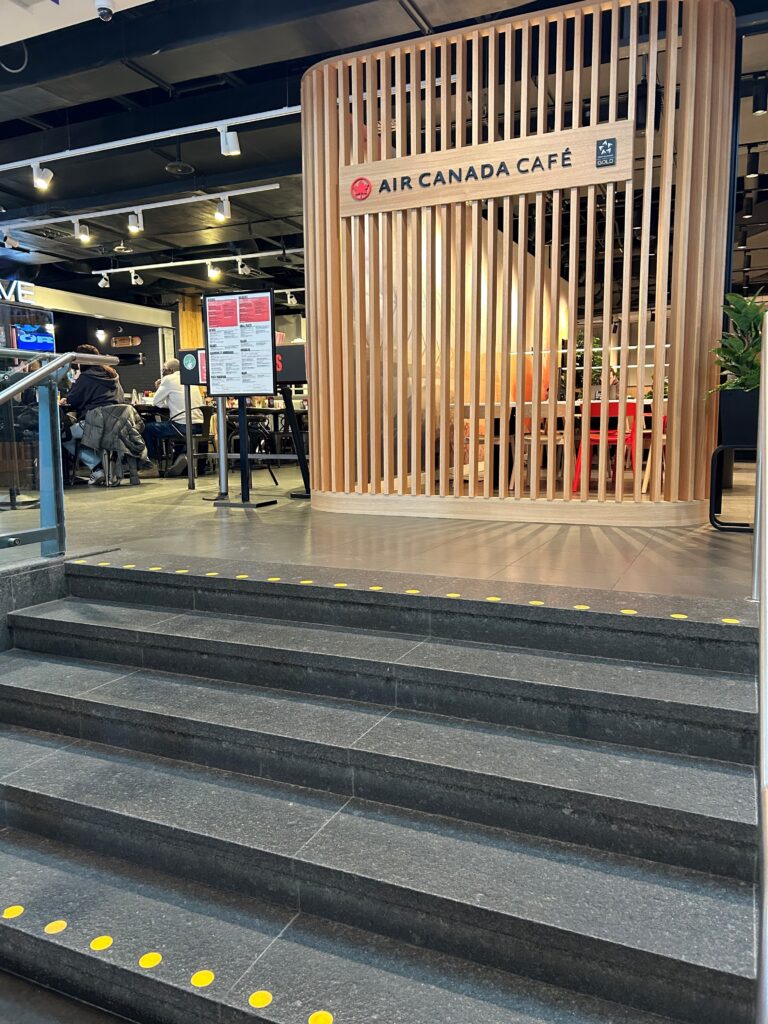
The Air Canada Café is situated in a high-traffic area of Montreal-Trudeau’s Transborder concourse, specifically near Gates 73 and 74. This location is strategically accessible only to passengers who have successfully navigated the United States Customs and Border Protection (CBP) pre-clearance facility. In the typical flow of the Montreal terminal, travelers proceed through security, clear US customs, and pass through the duty-free shopping arcade before arriving at the lounge area.
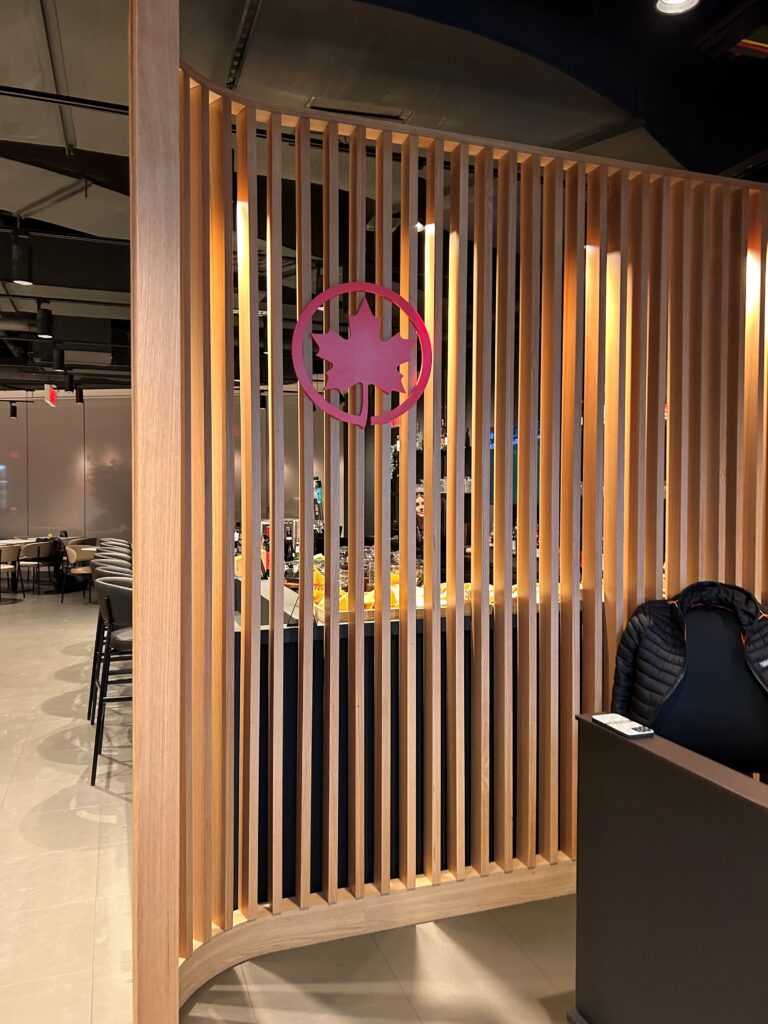
The entrance to the Café is distinguished by modern architectural elements, including distinctive wood dividers and the prominent red maple leaf branding synonymous with Air Canada’s premium identity. The facility sits directly across from the standard Transborder Maple Leaf Lounge, providing eligible passengers with a choice between a traditional lounge environment and the more agile, food-focused Café concept.
Access requirements for the Air Canada Café mirror those of the broader Maple Leaf Lounge network. This includes passengers traveling in Air Canada Business Class, Aeroplan Super Elite, 75K, and 50K members, as well as Star Alliance Gold members. Notably, this reciprocity provides significant benefits to United Airlines frequent flyers with Premier Gold status or higher, who often frequent this concourse when connecting to United’s hubs in Newark, Chicago, or Washington D.C.
Historical Context and the Rise of the Café Concept
The introduction of the "Café" concept by Air Canada represents a strategic response to the changing demographics of business travel. The first Air Canada Café was launched at Toronto Pearson International Airport (YYZ) in the domestic terminal to alleviate overcrowding in traditional lounges and provide a faster alternative for commuters. Following the success of the Toronto model, the Montreal Transborder location was developed to address the specific needs of the "transborder warrior"—the frequent traveler between Canada and the United States who often prioritizes high-quality nutrition and productivity over extended relaxation.
Montreal-Trudeau International Airport serves as a vital gateway for North American commerce. As of early 2026, YUL has continued to see a robust recovery and growth in transborder traffic, necessitating more diversified ground services. The Café model allows the airline to maximize a smaller footprint by focusing on high-turnover service rather than long-dwell seating.
A Contemporary Industrial Aesthetic
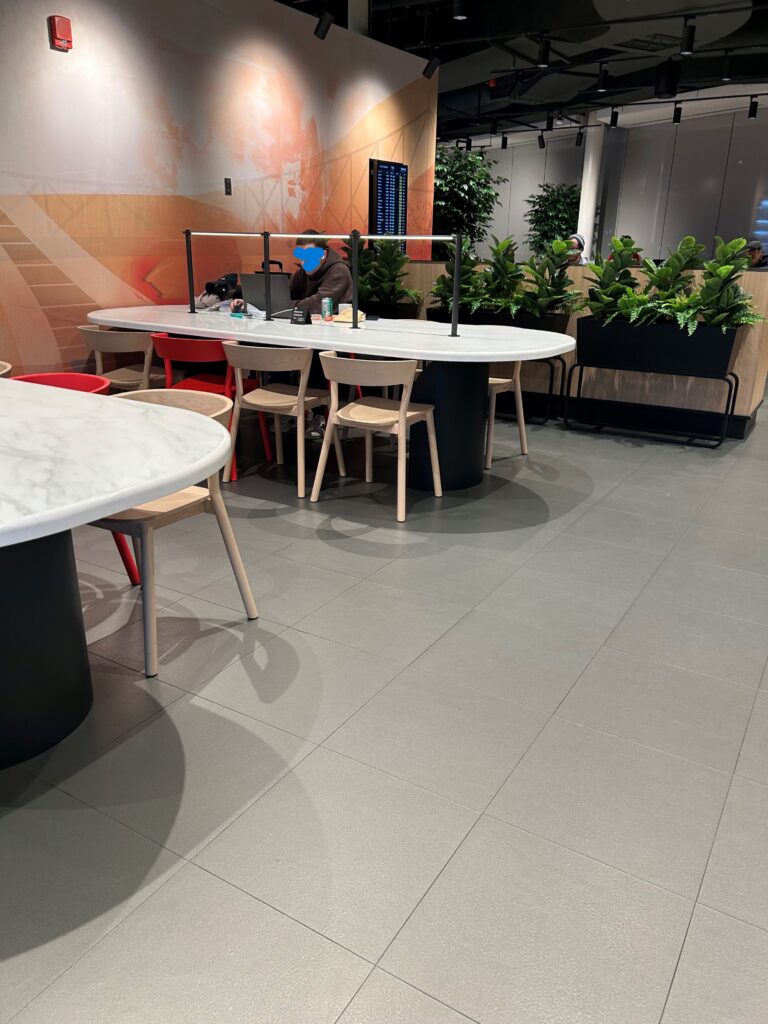
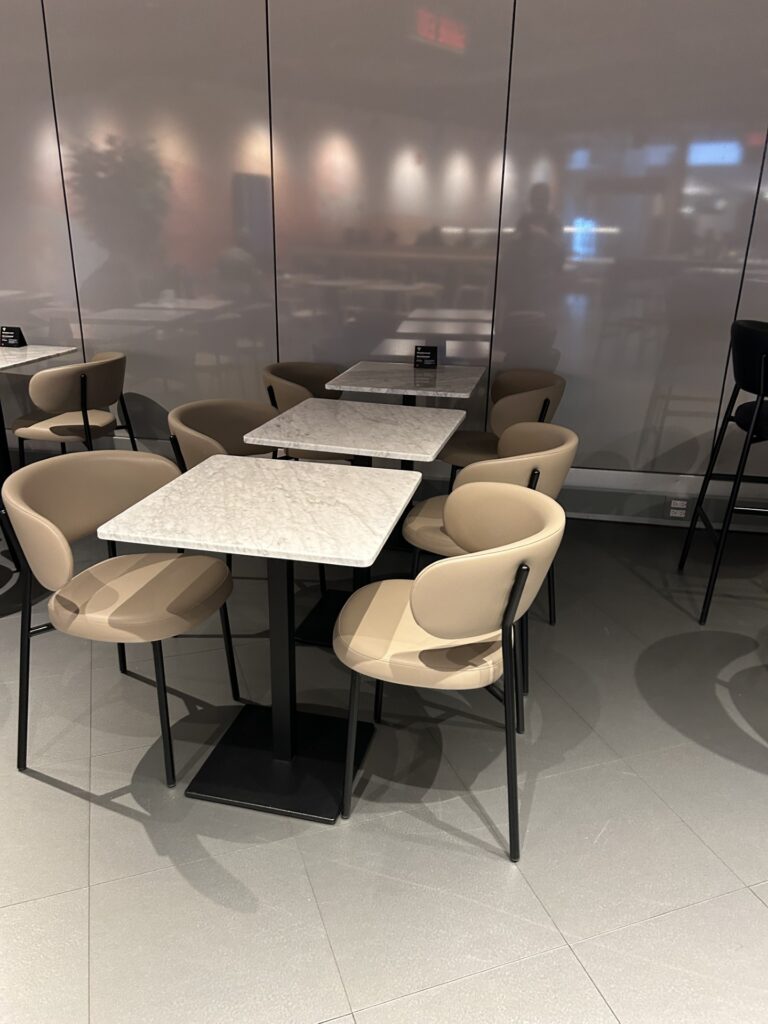
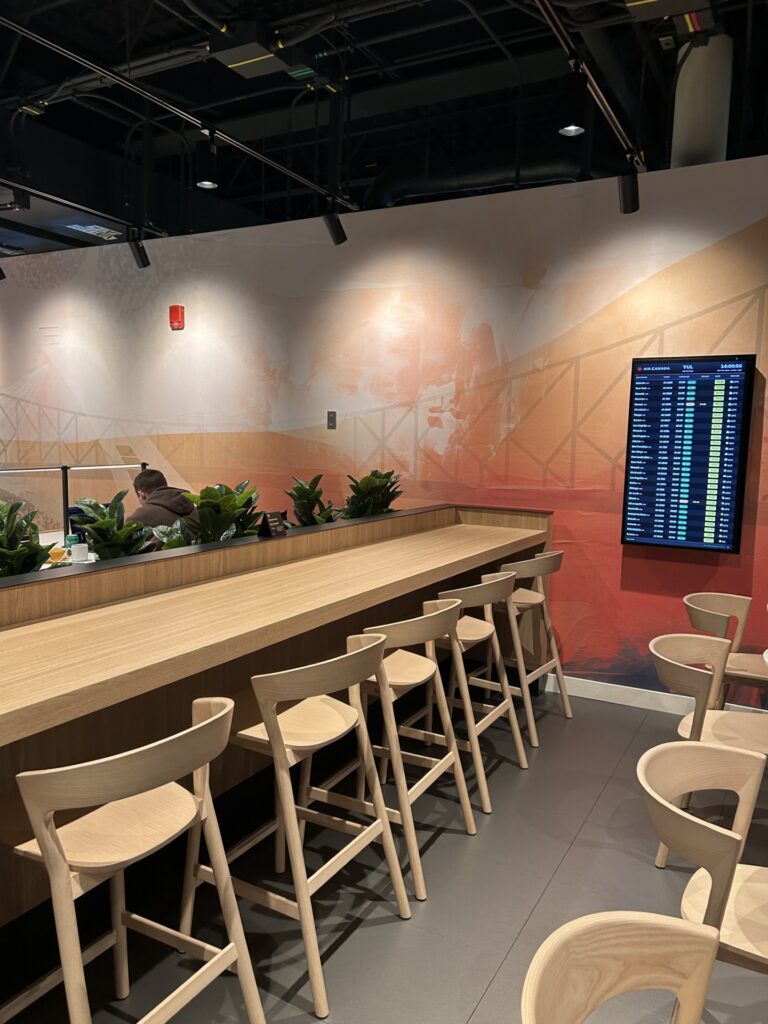
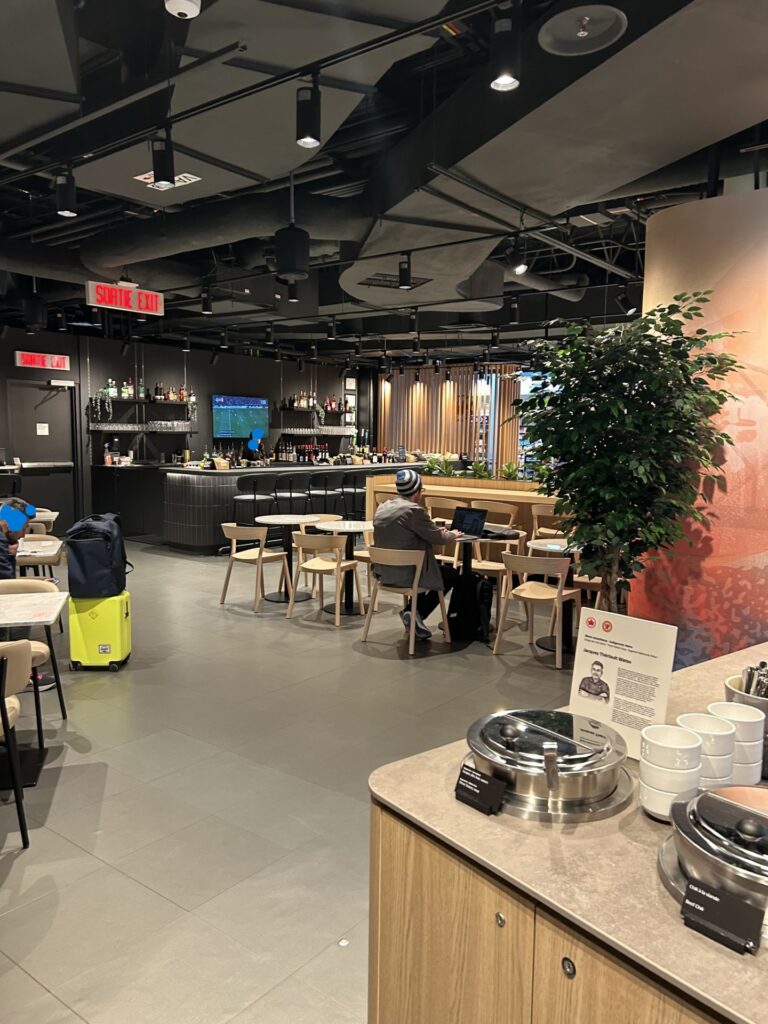
The interior design of the Montreal Transborder Café deviates from the classic, often conservative, corporate aesthetic of older Maple Leaf Lounges. Instead, it adopts an "industrial loft" vibe, characterized by open ceilings, modern lighting fixtures, and a mixture of wood and metallic finishes. The seating arrangement is primarily table-based, favoring functionality for dining or brief work sessions.
The layout includes:
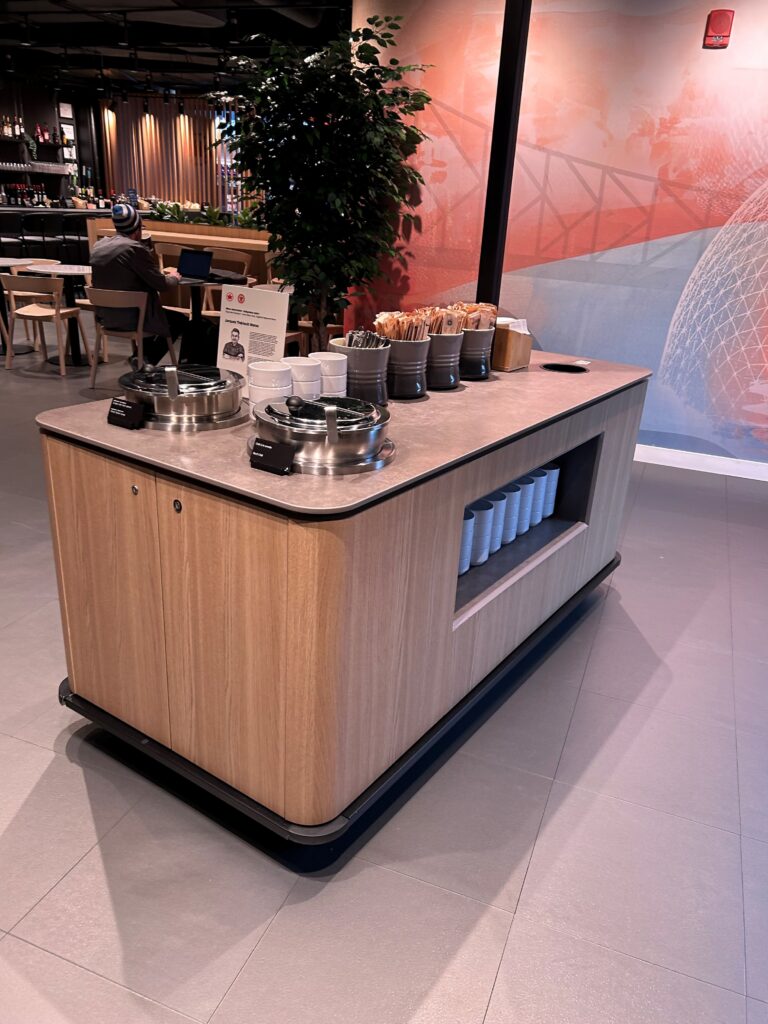
- Long Oval Tables: Designed for communal use or for travelers needing extra space for laptops and documents.
- Traditional Dining Tables: Configured for groups of two or four, facilitating a restaurant-style experience.
- Perimeter Seating: Bench and stool options along the walls, which are equipped with integrated power outlets.
While the facility is smaller than a standard lounge, the use of glass and thoughtful lighting prevents the space from feeling cramped. High-speed Wi-Fi is a standard feature, supporting the needs of business travelers who require seamless connectivity for video conferencing or data-intensive tasks.
Culinary Excellence: A Focus on Local and Portable Options
The most significant differentiator for the Air Canada Café is its culinary program. Unlike the buffet-style offerings common in many North American lounges, the Café emphasizes fresh, individual portions and "grab-and-go" convenience. This approach caters to the reality of US-bound travel, where boarding times can be unpredictable due to security and customs fluctuations.
The Grab-and-Go Program
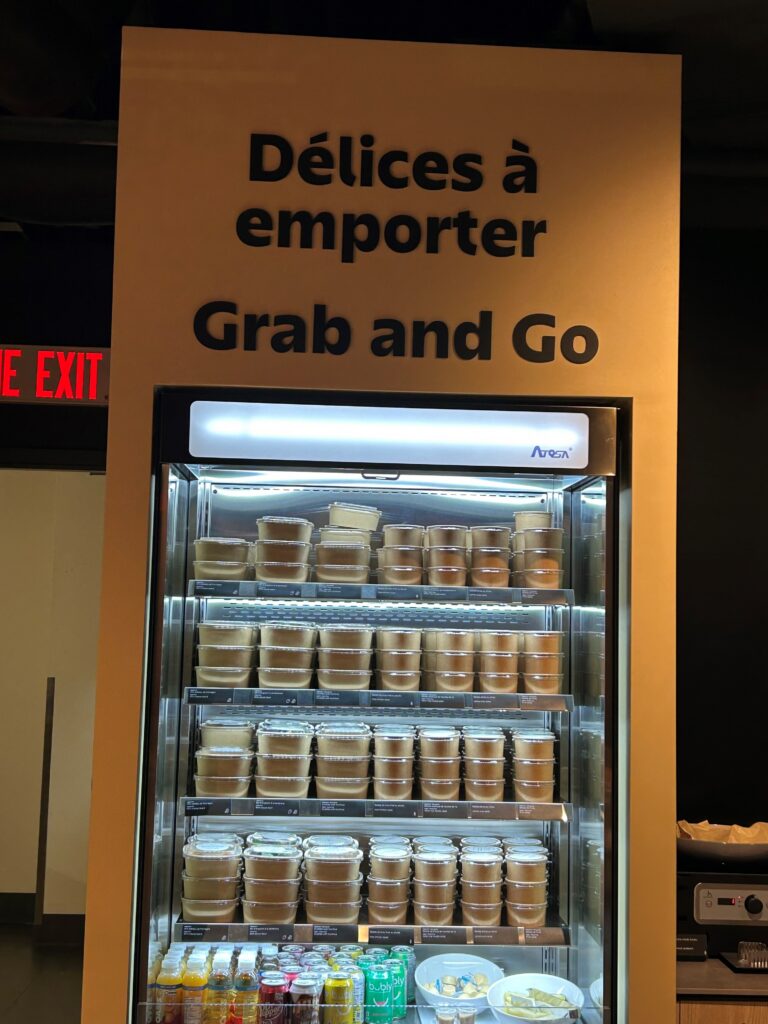
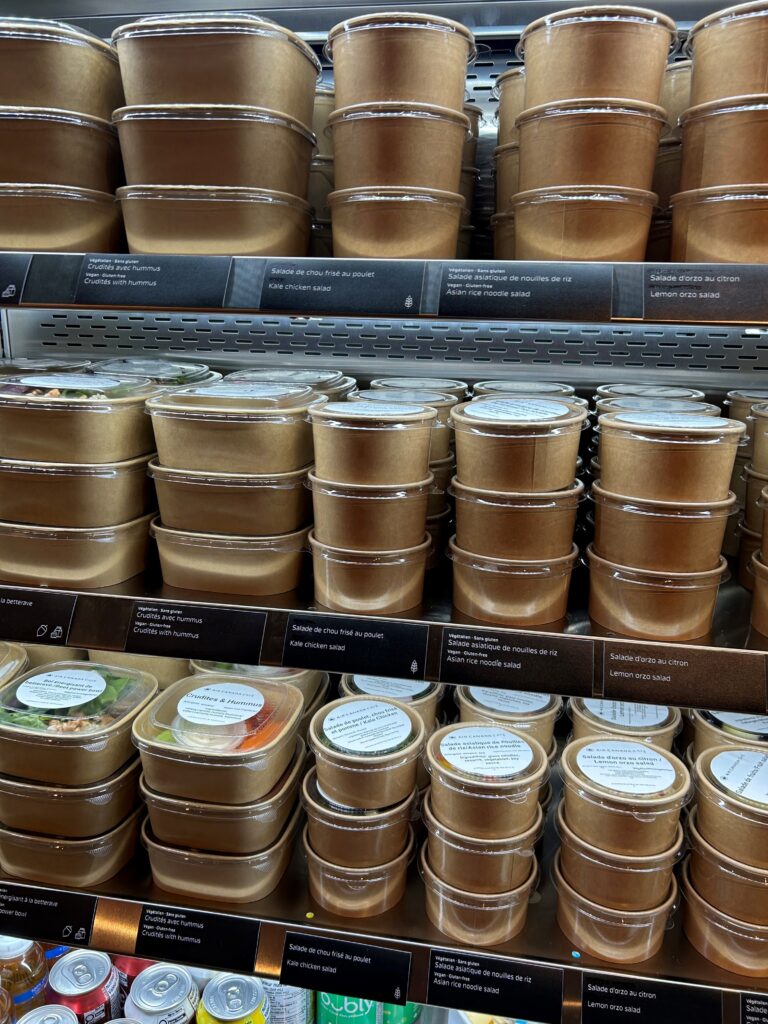
Located toward the rear of the lounge, the refrigerated section offers an extensive variety of mini-salads and cold entrées. These are packaged for easy consumption within the lounge or for travelers to take with them on their flights—a rare and highly valued feature in the lounge industry. Options observed in May 2026 include:
- Kale and chicken salads with lemon vinaigrette.
- Rice noodle bowls with fresh vegetables.
- Lemon orzo pasta salads.
- Fresh fruit medleys and hummus plates.
- A variety of cold wraps, including vegetarian and protein-heavy options.
Hot Food and Regional Staples
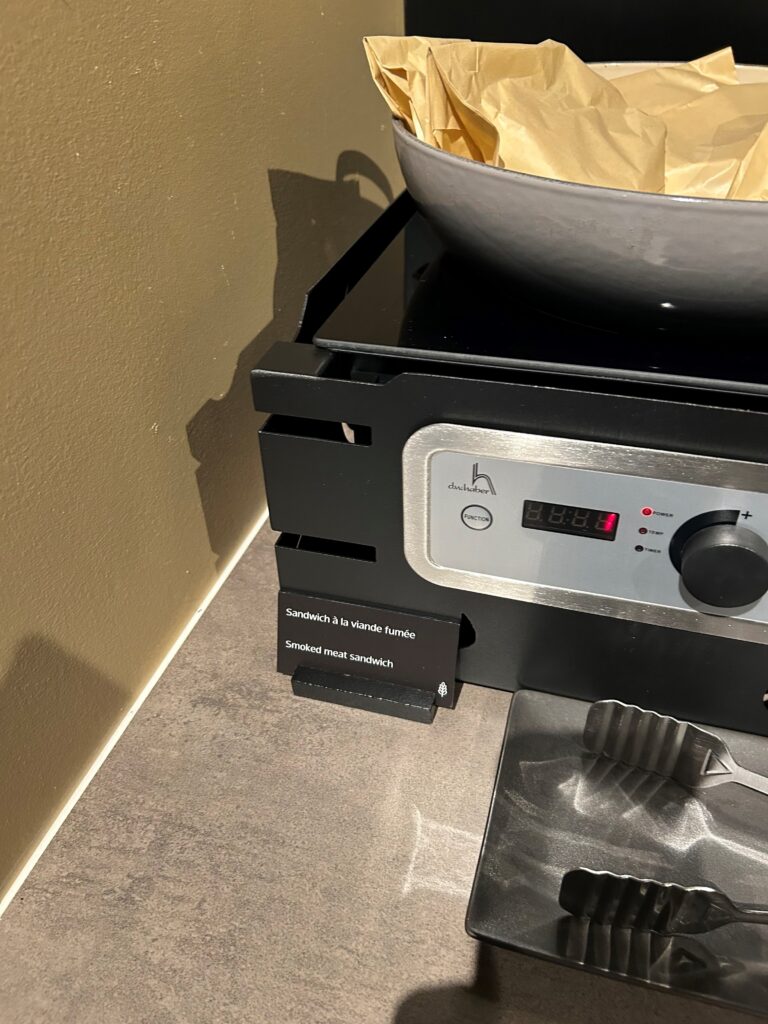
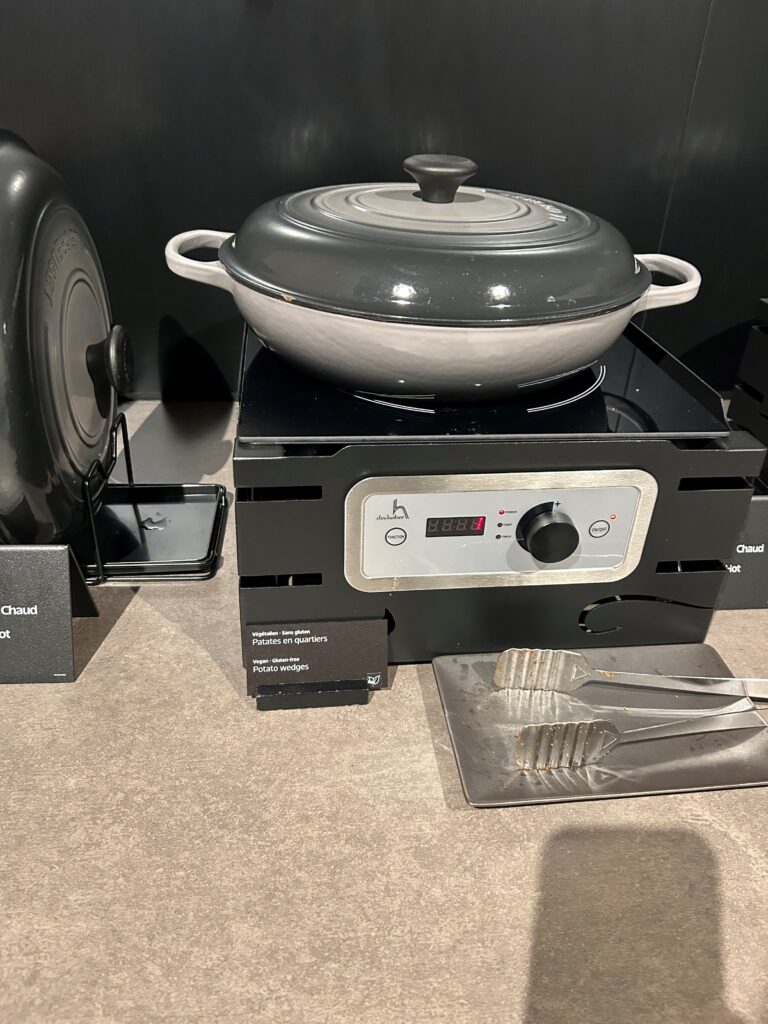
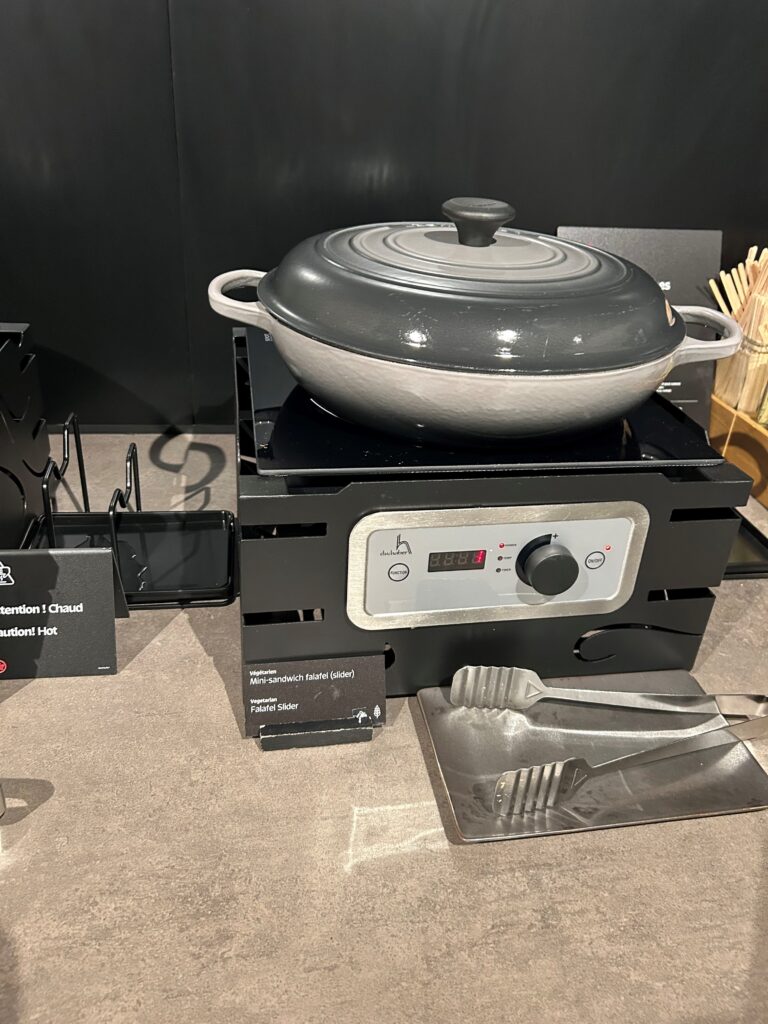
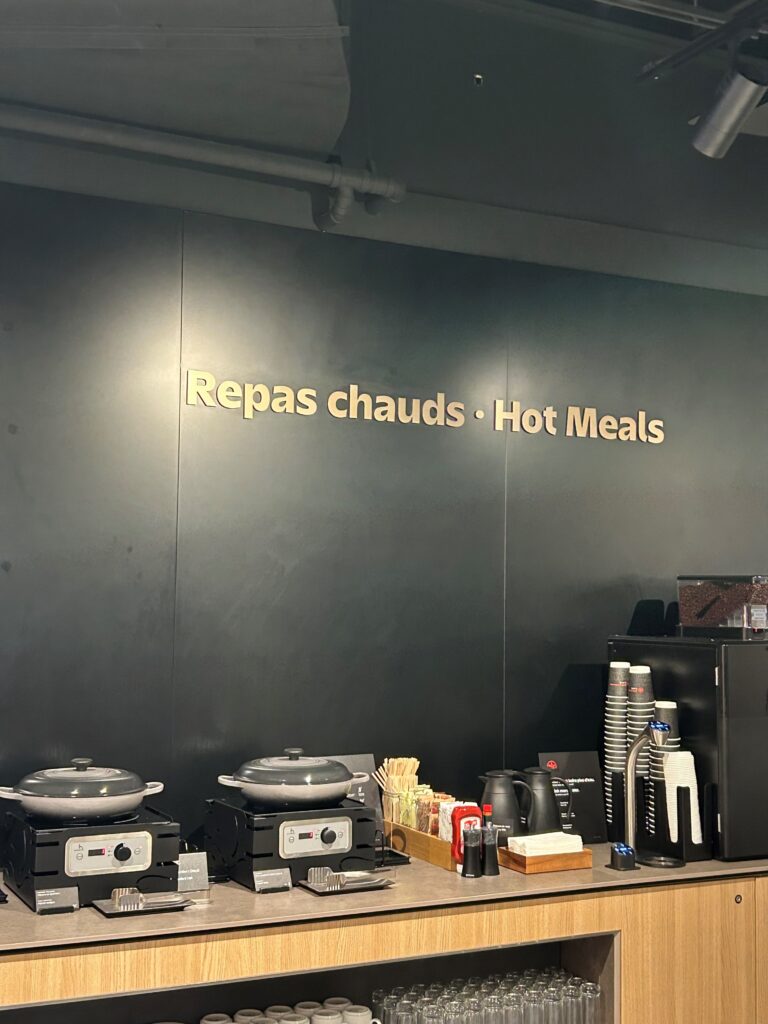
Adjacent to the cold section is a hot meal station that incorporates local Montreal culinary identity. A centerpiece of this station is the Montreal smoked meat sandwich, a staple of the city’s food culture. Other hot offerings include crispy potato wedges and falafel sliders, providing a balance of comfort food and plant-based alternatives. A soup station provides daily rotations of seasonal broths and hearty stews.
The Montreal Bagel Tradition
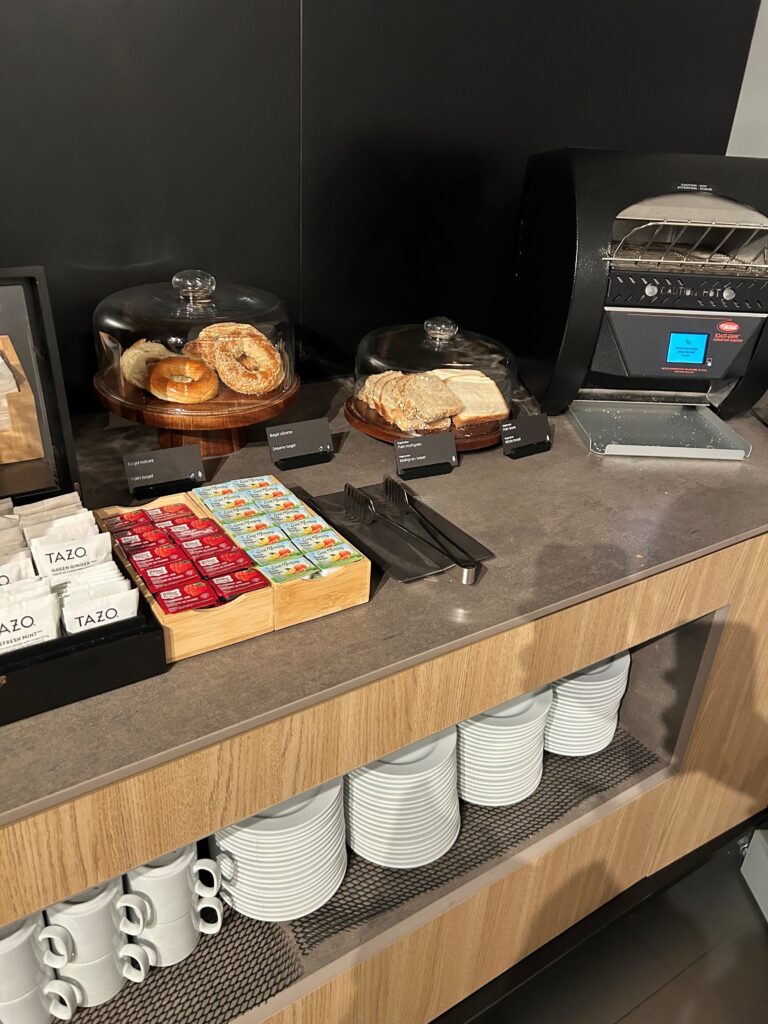
In a nod to the city’s world-renowned bakery culture, the Café features authentic Montreal-style bagels. Unlike the larger, doughier New York-style bagels, these are typically smaller, denser, and boiled in honey-sweetened water before baking. Providing these in the lounge serves as a final cultural touchpoint for departing travelers.
Beverage Program and Manned Bar Services
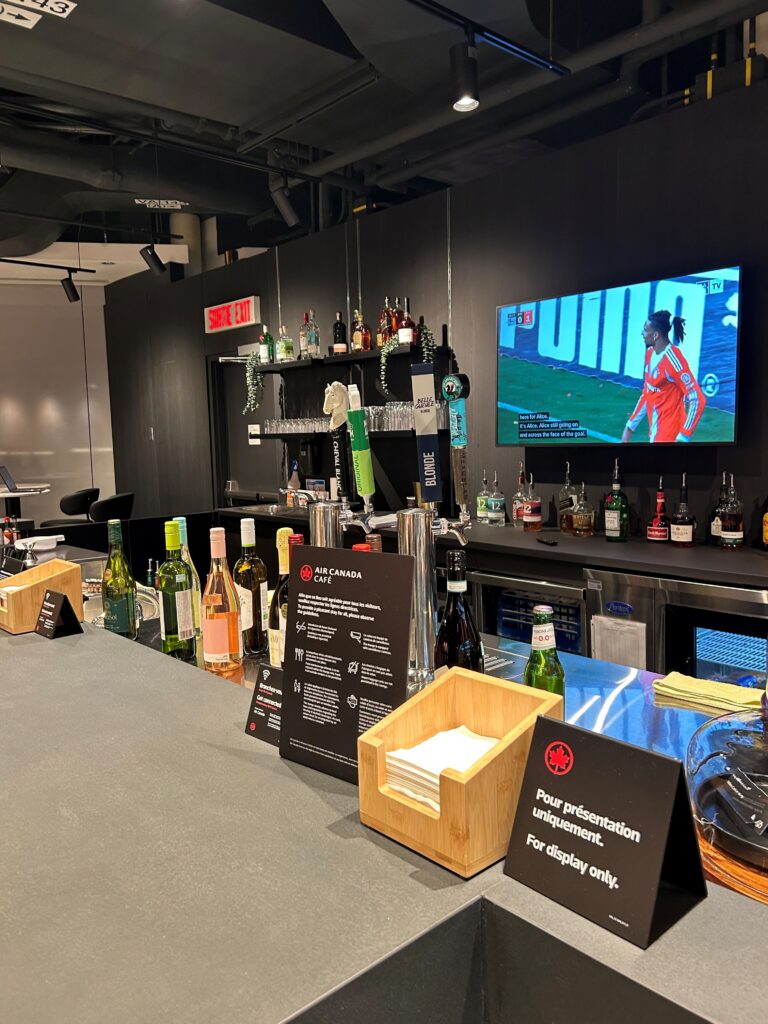
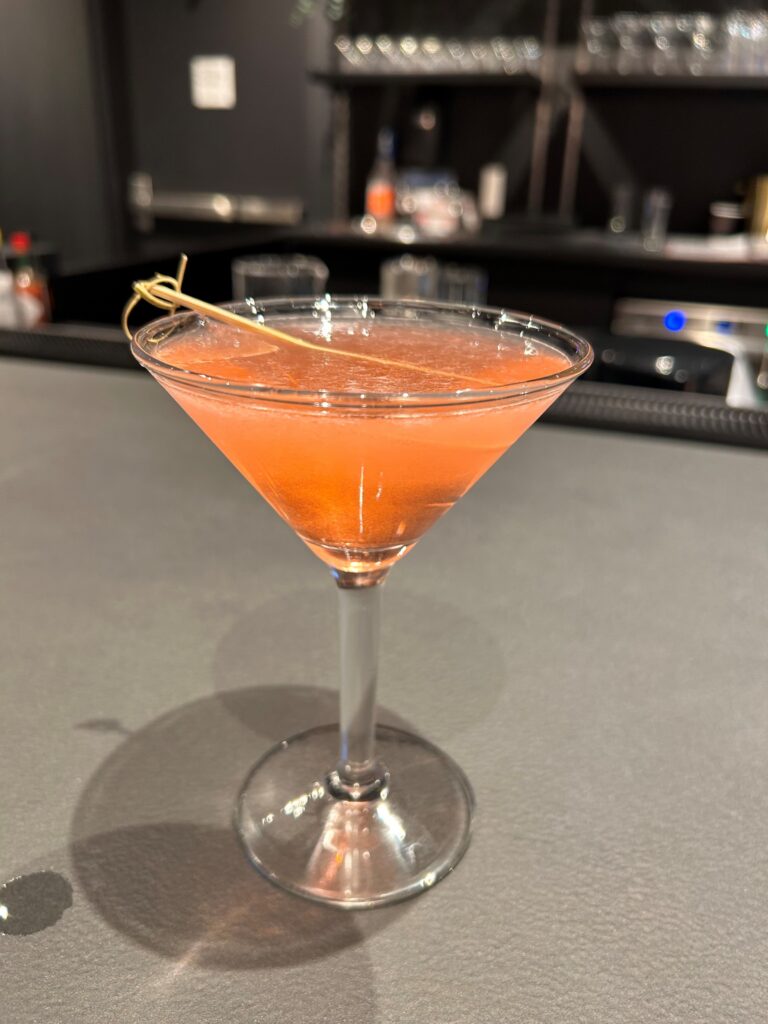
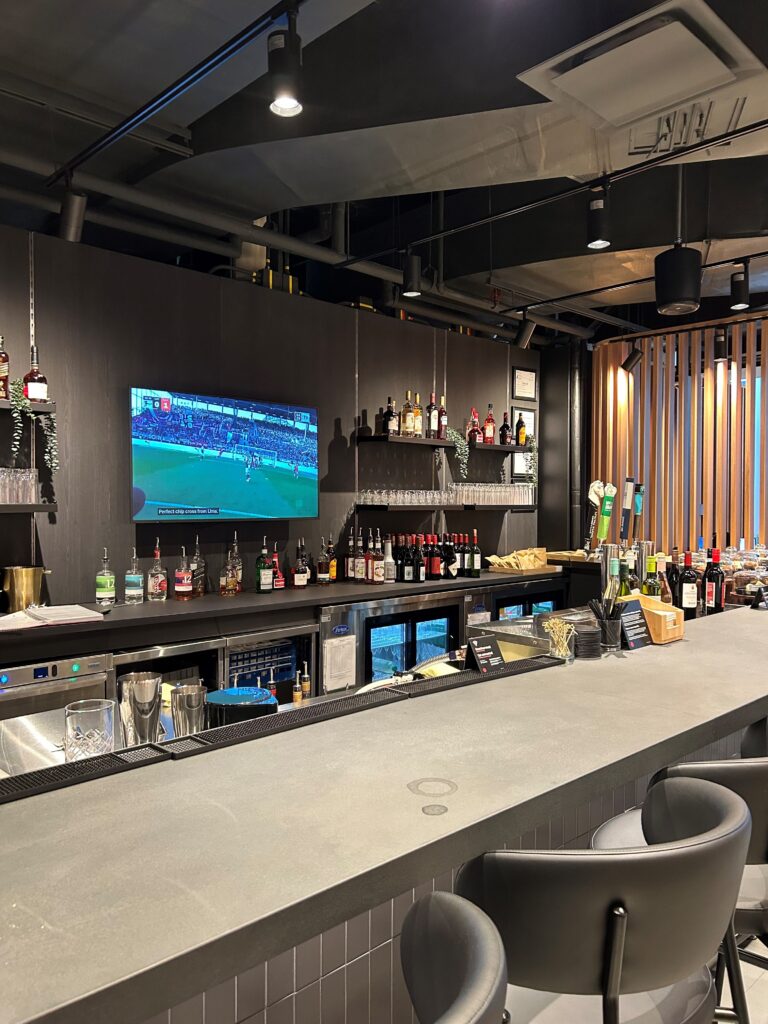
A surprising feature of the Air Canada Café, given its "express" branding, is the inclusion of a full-service, manned bar. While many traditional Maple Leaf Lounges utilize self-service liquor dispensers, the Café employs professional bartenders. This allows for a more sophisticated beverage program, including made-to-order cocktails such as Cosmopolitans and Old Fashioneds.
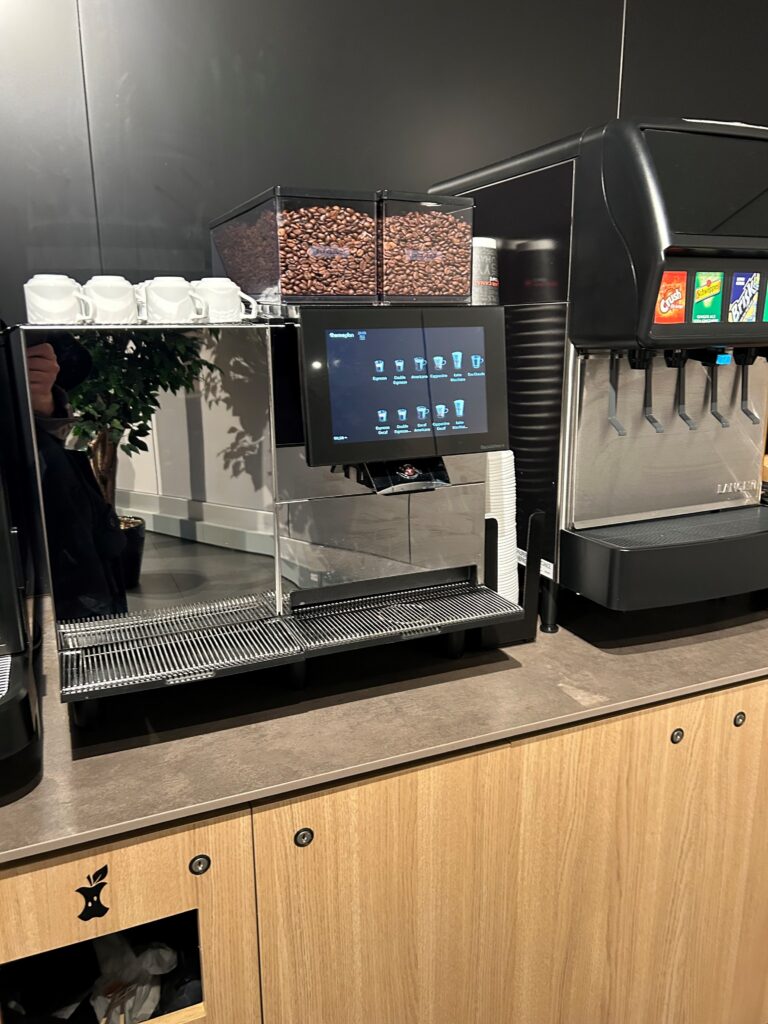
The coffee and soft drink station is equally robust. It features two types of automated machines:
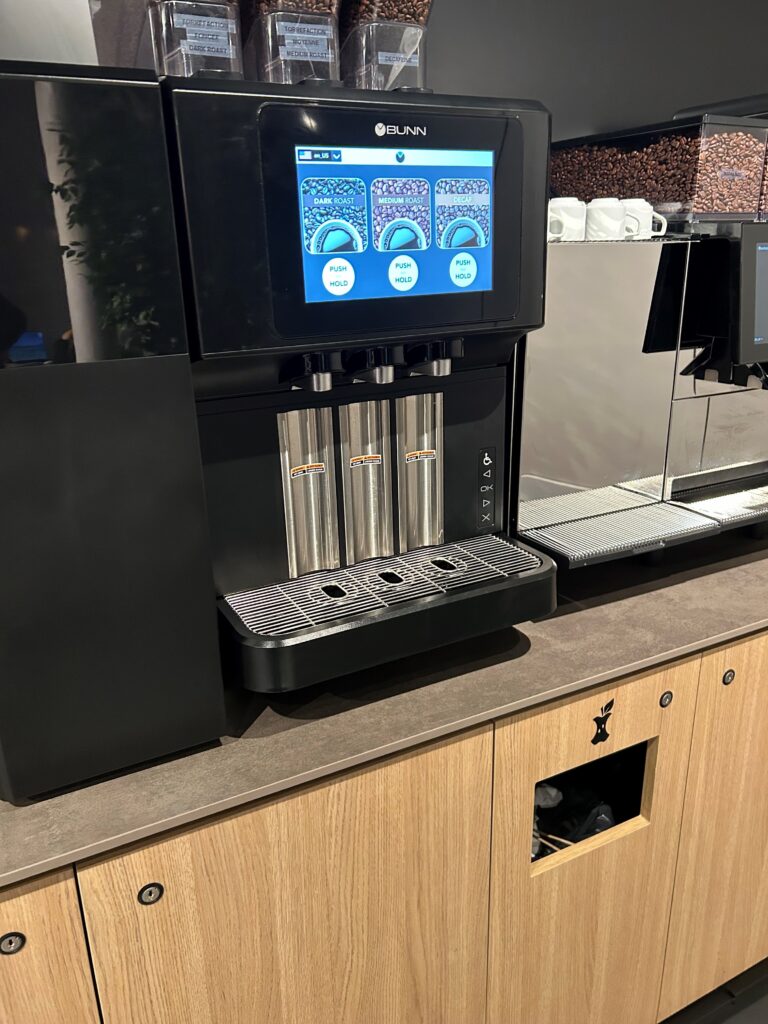
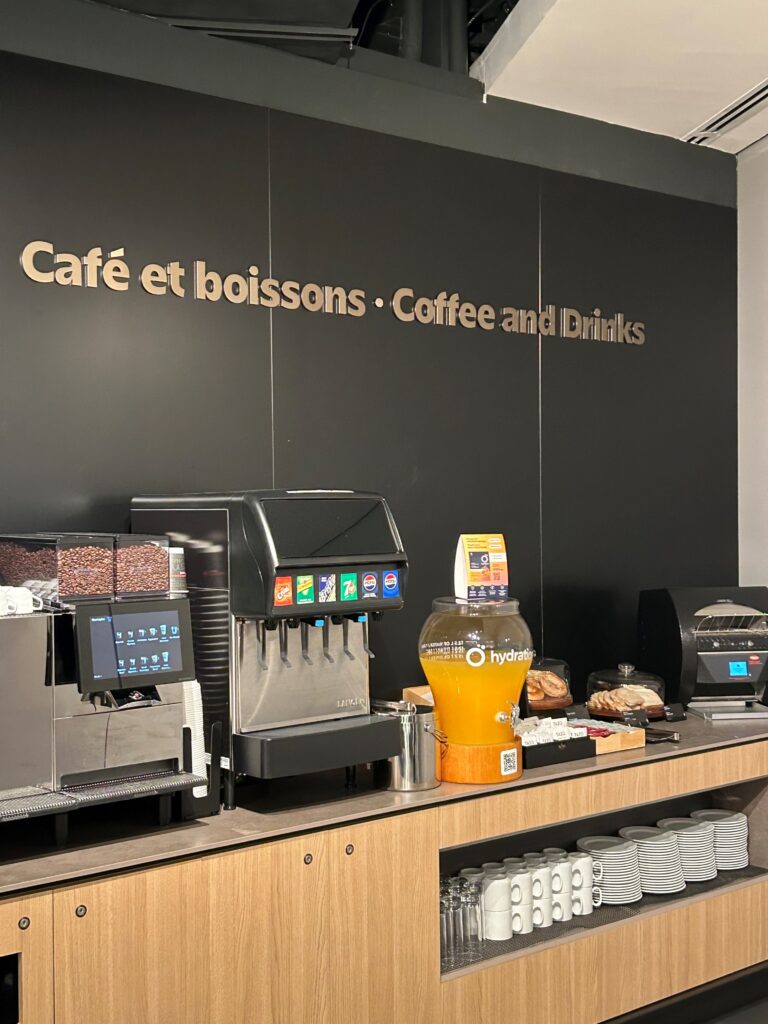
- Standard Brew Machines: For quick, high-volume "regular" coffee.
- Specialty Espresso Machines: Capable of producing lattes, americanos, and cappuccinos with customizable settings.
A selection of premium teas and a standard array of chilled soft drinks and sparkling waters complement the caffeine and alcohol offerings.
Infrastructure Limitations: The Restroom Challenge
One of the most frequent criticisms of the Air Canada Café model is the lack of internal washroom facilities. This design choice is similar to other "express" lounge concepts, such as the United Club Fly in Denver. Because the Café is built into existing terminal infrastructure that may not have easily accessible plumbing for high-capacity restrooms, travelers must exit the lounge and use the public airport facilities located in the main concourse.
While this is a notable inconvenience for passengers with tight connections or significant carry-on luggage, it is a trade-off for the superior food and beverage quality provided within the space. Analysts suggest that by omitting restrooms and showers, the airline can dedicate more square footage to food preparation and seating in premium terminal real estate.
Comparative Market Analysis
The Air Canada Café competes in an increasingly crowded market for premium ground space at YUL. With the rise of independent lounge operators like Plaza Premium and the expansion of credit card-branded lounges (such as the American Express Centurion network or DragonPass-affiliated spaces), airlines are under pressure to innovate.
The Café concept positions Air Canada favorably by offering something different from the "waiting room" atmosphere of traditional lounges. By focusing on the quality of the meal—traditionally a weak point for North American carriers—Air Canada creates a "halo effect" for its brand. This is particularly important on transborder routes where the in-flight service on narrow-body aircraft may be limited compared to long-haul international flights.
Broader Implications for the Future of Airport Lounges
The success of specialized facilities like the Air Canada Café suggests a bifurcated future for airport lounges. Large, "flagship" lounges will likely continue to offer showers, nap pods, and full buffets for long-haul travelers. Meanwhile, "Café" or "Express" models will become more common in domestic and transborder concourses.
The data from traveler feedback in mid-2026 indicates a high preference for the Café’s food quality over the traditional lounge’s amenities. This shift reflects a broader consumer trend toward "premium convenience"—the desire for high-end products delivered with speed and flexibility.

Conclusion
The Air Canada Café at Montreal-Trudeau’s Transborder concourse represents a successful departure from the standard lounge formula. By prioritizing a high-end "grab-and-go" food program, incorporating local Montreal flavors, and maintaining a professional bar service, it provides a superior experience for the short-haul and medium-haul business traveler. While the lack of internal restrooms remains a point of contention, the facility’s ability to deliver a "Very Fine" level of service (as rated in May 2026) within a compact footprint demonstrates a sophisticated understanding of modern traveler priorities. As Air Canada continues to refine its ground services, the Café model stands as a benchmark for how airlines can utilize limited space to deliver maximum brand value and passenger satisfaction.




 Chandra Hamzah
 Tatiana Tantri Indah Sari
 Anjar Salim

